

French Classical Desk Lamps
These French classical desk lamps bring enduring architectural form and rich metalwork directly to a workspace.
French Classical Desk Lamps
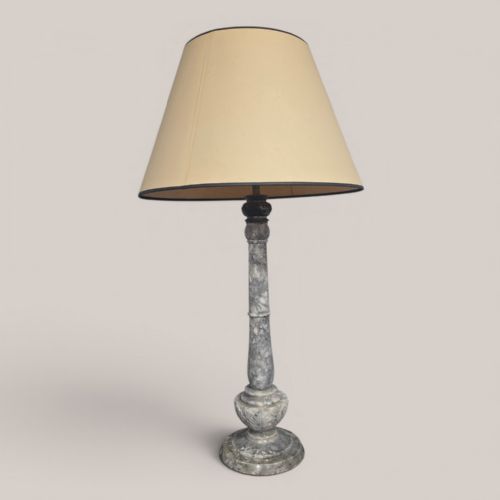
When you search for french classical desk lamps, you encounter lighting solutions derived from classical antiquity, the Louis XVI period, and the French Empire style. These pieces frequently manifest as table lamps, lamp bases, and table lights originating from the nineteenth century through the early twentieth century.
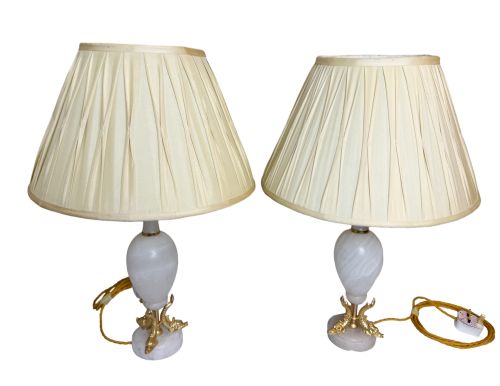
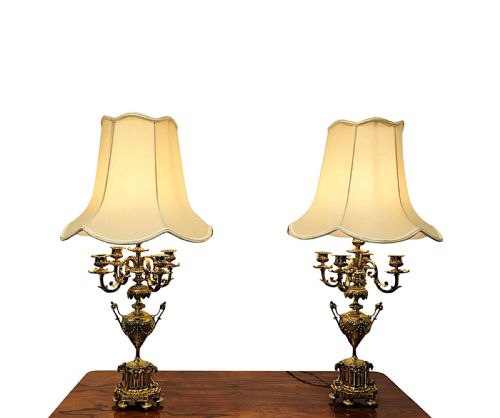
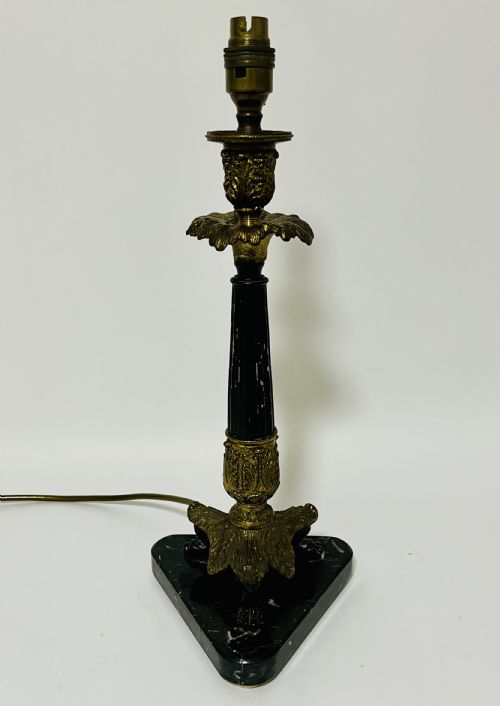
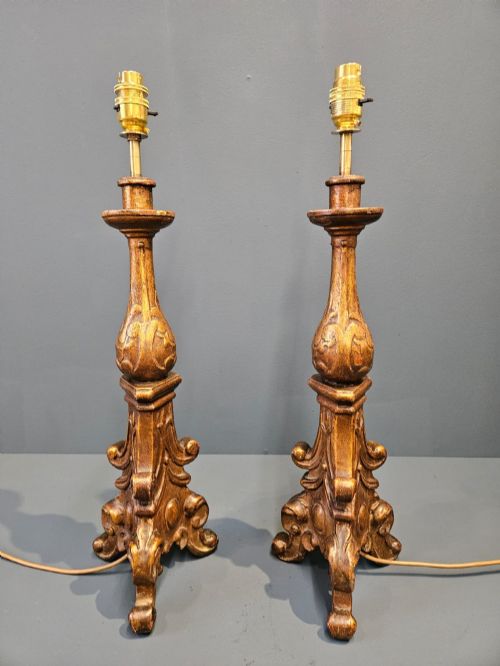
You are most likely to meet pairs or single examples constructed from heavy stone bases combined with cast metal mounts. Many items began life as candelabra, cassolettes, or candlesticks before conversion to electricity in later decades.
How they were made
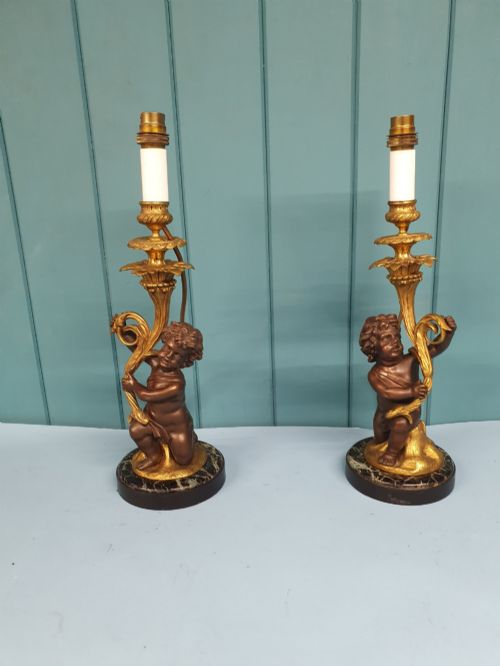
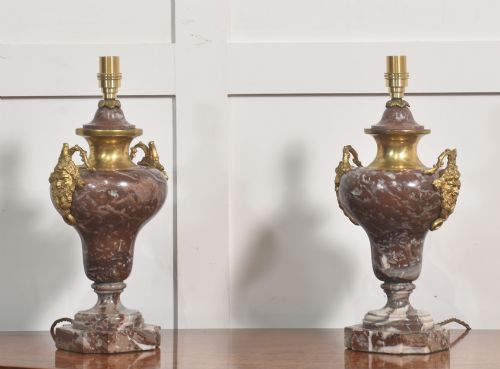
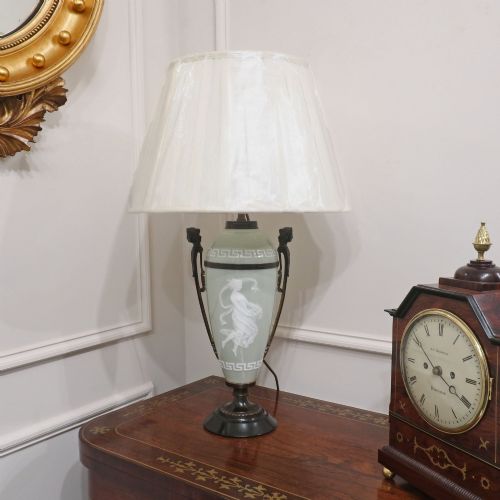
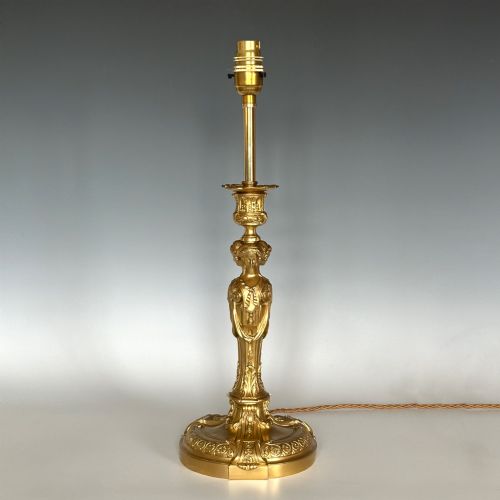
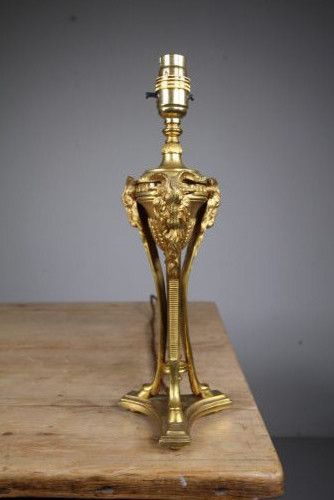
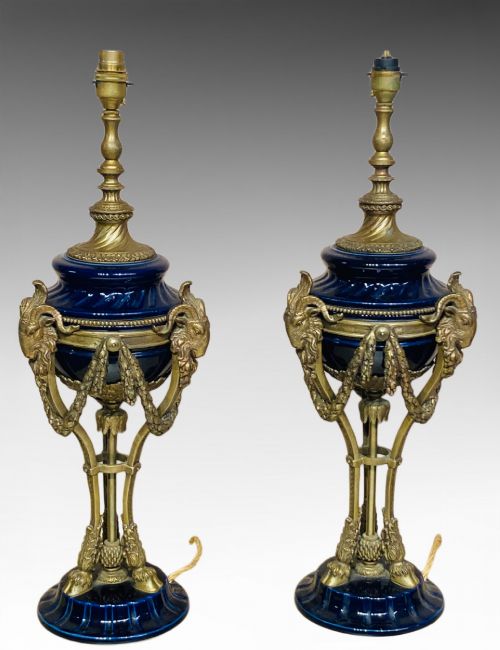
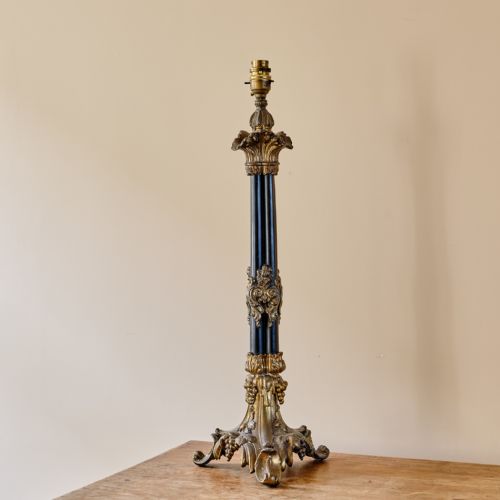
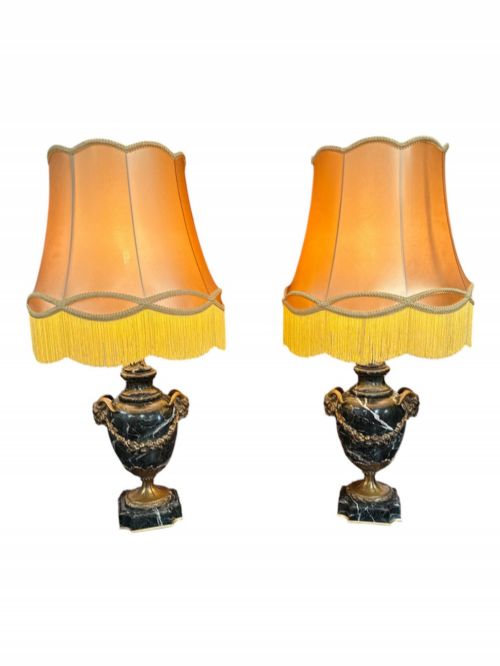
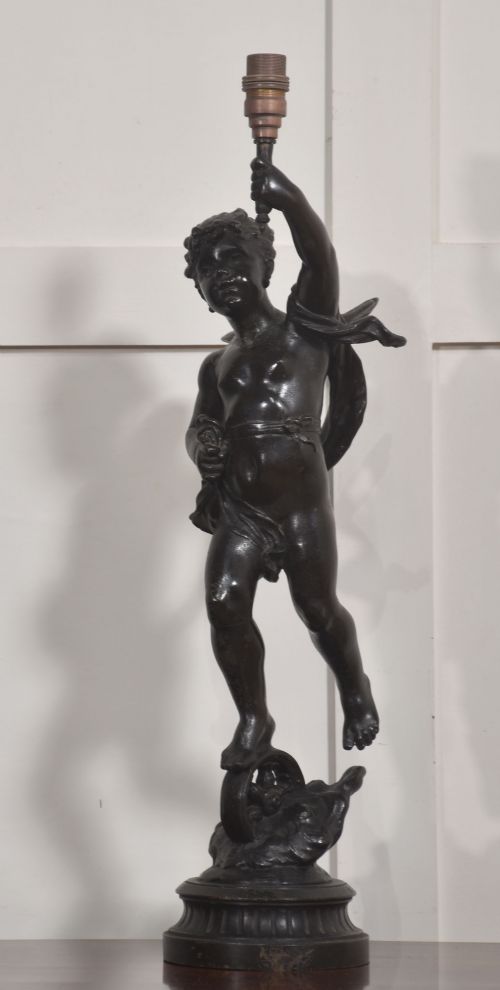
Maker workshops utilised durable metals such as bronze, brass, and ormolu, often applying fire-gilding or patination to the surfaces. Structural bodies frequently incorporated natural materials including rouge marble, white onyx, and moulded porcelain.
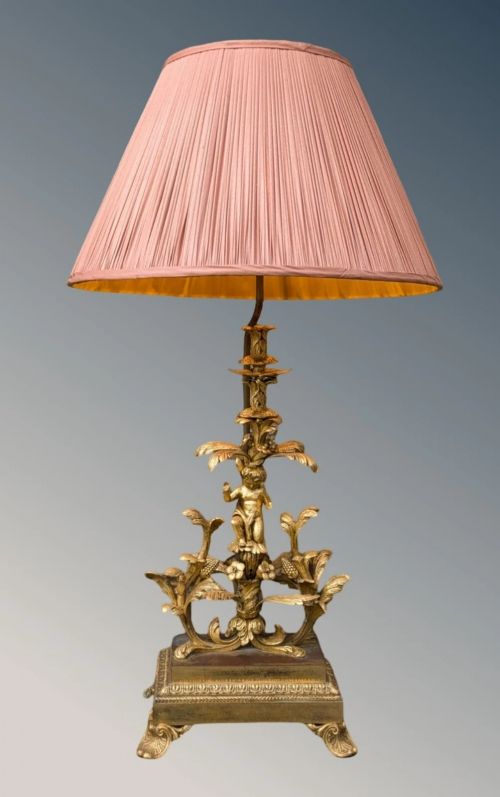
Craftsmen cast metal components in sections before assembling them with threaded rods, integrating decorative motifs like rams' heads, cherubs, and classical columns.
Several unfortunate cherubs and mermaids have spent the last century holding up light bulbs instead of torches.
What varies in quality
The standard of a piece rests primarily on the crispness of the metal chasing and the depth of the casting work. Finer examples display sharp detail in figural elements and foliage, whereas simpler versions show softer definition from worn moulds.
The selection of the underlying stone also dictates grade, with solid, highly figured marble or unblemished onyx commanding greater visual weight than minor fragments or alternative materials.
L & F Moreau·Emile Picault
The French Classical Desk Lamps Glossary
- Ormolu
- Gilded bronze produced through a mercury amalgamation process on metalwork. This technique creates a rich, lasting surface sheen found on many classical mounts.
- Cassolette
- A decorative vessel shaped like an urn, often reversible to function as a burner or candleholder. These frequently form the main body of converted classical lamps.
- Pate sur pate
- A ceramic decorating technique where wet white porcelain slip is built up in layers on a coloured body. It creates a low-relief cameo effect on porcelain lamp bodies.
- Neoclassical
- A style drawing inspiration from the classical art and culture of ancient Greece and Rome. It prioritises symmetry, straight lines, and classical architectural motifs.
- Patinated bronze
- Bronze that has been chemically treated to alter its surface colour rather than gilded. This finish highlights modelled details on figural bases.
French Classical Desk Lamps: Frequently Asked Questions
Were these lamps originally electric?
Most of these items began as oil lamps, candlesticks, or candelabra during the nineteenth and early twentieth centuries. Conversion to electricity typically occurred during subsequent decades to suit modern interiors.
Wiring methods and internal fittings often reflect the period of conversion rather than the original date of the metalwork or stone body.
How do I identify French Empire style?
French Empire pieces draw heavily on the military and symbolic motifs of Napoleon's rule, featuring laurel wreaths, sphinxes, and classical pillars. The forms are bold, symmetrical, and project an air of formal authority.
Ormolu mounts on dark patinated bronze or deep marble bases serve as standard markers for this specific aesthetic.
What is rouge marble?
Rouge marble is a deep red natural stone characterised by complex white, grey, or dark veining patterns. French makers favoured this material for urns, columns, and plinths to provide rich colour contrast against gilt metal mounts.
Each stone block yields unique veining, making every marble lamp base distinct in its visual grain.
How do I clean gilt bronze?
Gilt bronze requires gentle dusting with a soft, dry brush to prevent accumulation of particles in recessed chased areas. Avoid commercial liquid metal cleaners, as abrasive substances can strip away thin historic gilding.
Stable patinas and residual historical wax should be preserved rather than scrubbed down to bare bright metal.