



French Cherub Wall Lights
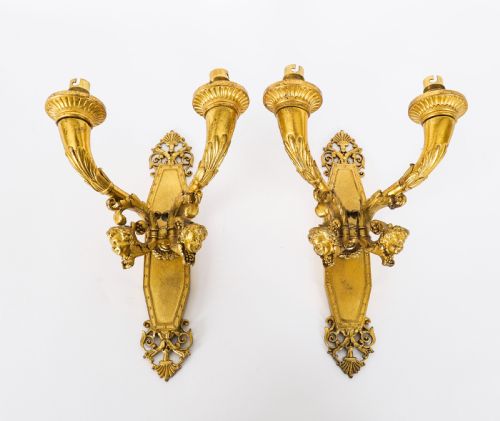
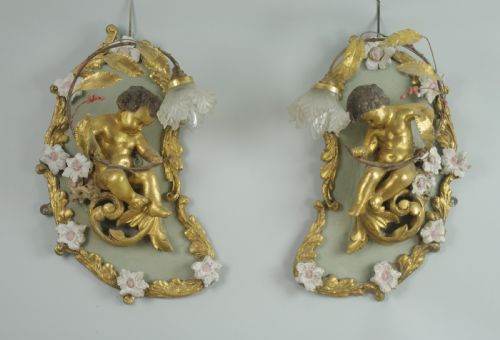
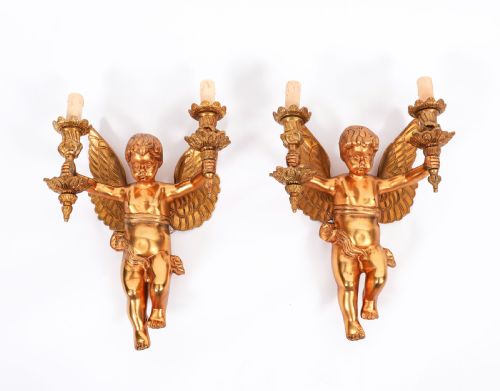
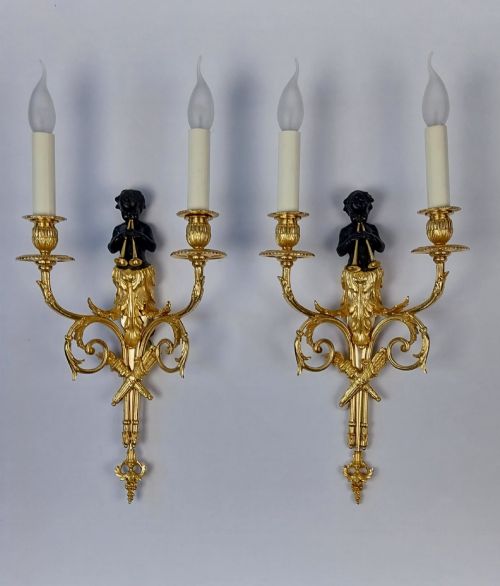
French cherub wall lights bring figurative brilliance and sculptural charm to interiors, drawing the eye with winged putti rendered in gilt bronze, brass, and carved giltwood.
French Cherub Wall Lights
French cherub wall lights combine decorative illumination with figurative sculpture, depicting winged putti supporting single, twin, or multi-branch light fittings. These fixtures appear frequently in pairs or sets of four, designed to mount directly onto interior walls.
The pieces available trace origins from the early nineteenth century through to the mid twentieth century, encompassing revivalist aesthetics such as Louis XIV, Louis XVI, and Rococo Revival. Buyers will encounter both grand gilded bronze examples and lighter twentieth-century cast metal variations.
Functionally serving as wall sconces, appliqués, and light fittings, these pieces harness motifs of cherubs, putti, and flying figures. Occasional water feature designs also emerge within the broader scope of wall-mounted decorative hardware.
Materials and construction
The construction relies heavily on metal casting, utilising gilt bronze, ormolu, brass, and silver plate to shape durable armatures and detailed figures. Artisans also employed carved giltwood and cast metal to achieve elaborate sculptural contours.
Surface ornamentation frequently involves fire-gilding or applied surface finishes that impart a rich golden tone to the bronze and brass components. Glass elements, including lustres and shades, occasionally accompany the metalwork to diffuse the light.
Workshops utilised mechanical assembly methods to join multiple branches, drip pans, and backplates to the central cherub figures. Woodcarving techniques define the mid seventeenth-century manner giltwood pieces seen in the period selections.
Flying cherubs share wall space with winged infants holding branch lights, proving that even illumination needs supernatural assistance.
Standards of craftsmanship
Quality separates through the crispness of the chasing and the depth of the casting in the metal figures, where superior examples retain sharp facial expressions and feathered wing details. Lesser items display softer contours and blurred decorative flourishes resulting from worn moulds.
The choice of base metal and the application of gilding distinguish finer pieces, with genuine ormolu and heavy gilt bronze exhibiting a warmer, more durable lustre than thin silver plate or painted brass. Substantial weight and rigid structural integrity in the branch junctions indicate superior manufacture.
Artistic proportion and the integration of the arms with the cherub figure dictate overall refinement, separating standard production pieces from exceptionally ornate or large-scale commissions.
The French Cherub Wall Lights Glossary
- Ormolu
- Gilded bronze produced by applying a mercury and gold amalgam to a bronze object and heating it until the mercury vaporised. This historic technique creates a distinct, durable golden finish found on high-end nineteenth-century lighting.
- Putto
- A plump, often winged male infant figure frequently depicted in classical art and decorative hardware. These figures form the central sculptural motif of the wall lights.
- Appliqué
- A French term for a wall-mounted light fitting or sconce designed to hold candles or electric lamps. The listings use this interchangeably with wall lights.
- Lustre
- A glass pendant or drop suspended from a light fixture to reflect and enhance illumination. These elements appear on specific early twentieth-century pieces.
- Rococo Revival
- A nineteenth-century design movement resurrecting the asymmetrical scrolls, natural motifs, and ornate curves of the eighteenth century. Many cherub wall lights adopt this theatrical style.
French Cherub Wall Lights: Frequently Asked Questions
How are french cherub wall lights wired?
Many antique wall lights require professional rewiring to meet modern electrical standards upon acquisition. Historic fixtures often arrive with remnants of older wiring or adapted lampholders.
Electricians can safely integrate contemporary cable through the hollow arms or backplates without altering the exterior bronze or brass structure.
What periods do these wall lights date from?
The available pieces span the nineteenth and twentieth centuries, featuring revivals of earlier seventeenth and eighteenth-century aesthetics. Dates range from the early eighteen-hundreds through to the nineteen-fifties.
Earlier examples tend to utilise heavy cast bronze and fire gilding, while later twentieth-century items often employ lighter brass or cast metal.
Do french cherub wall lights come in pairs?
Sconces and wall lights of this design frequently survive as matched pairs or larger sets of four. Symmetrical placement flanking a mirror, fireplace, or doorway represents their traditional interior arrangement.
Single pieces also appear, though pairs remain the predominant format recorded in the listings.
How do I identify Louis XIV revival style?
Louis XIV revival pieces display heavy symmetry, classical architectural proportions, and formal ornamentation such as acanthus leaves and bold scrolls. The cherubs integrated into these designs tend to possess a robust, sculptural gravity.
This aesthetic contrasts with the lighter, more fluid asymmetry typical of later Rococo revival pieces.