




French Chateau King Bed
These french chateau king bed examples bring grand proportions and classic woodwork into modern bedrooms.
French Chateau King Bed
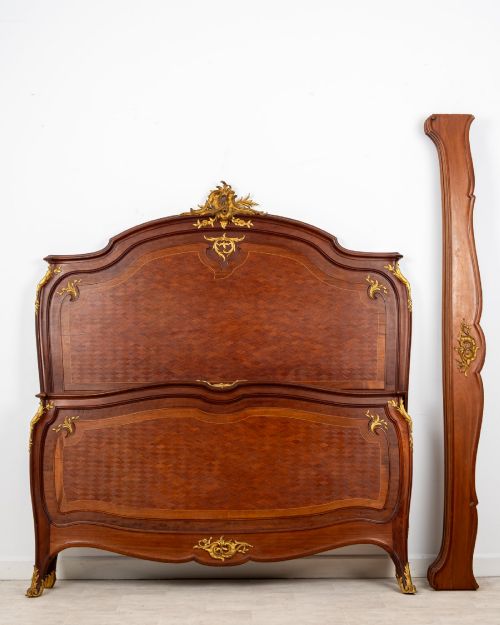
A french chateau king bed encompasses large wooden bedsteads and bedroom suites built in styles ranging from Louis XV and Louis XVI revivals to the Regency period and the early twentieth century. Buyers seeking this phrase encounter imposing pieces designed for spacious chambers, often carrying the elaborate carvings characteristic of chateau furnishings.
Origins span nineteenth century workshops up through nineteen-thirty designs, uniting continental styling with large format sleeping frames. These beds serve as principal focal points in bedrooms, combining historical aesthetic weight with modern mattress dimensions.
Materials and Construction
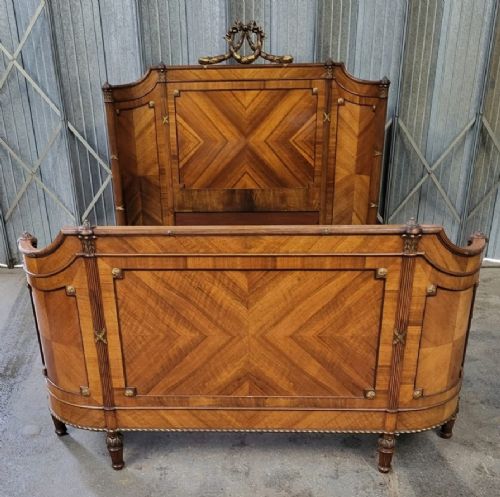
Walnut and beech form the primary structural timbers for these beds, frequently enhanced by quarter veneered panels and intricate parquetry work. Cabinetmakers employed traditional joinery to support the large spans required for king size proportions.
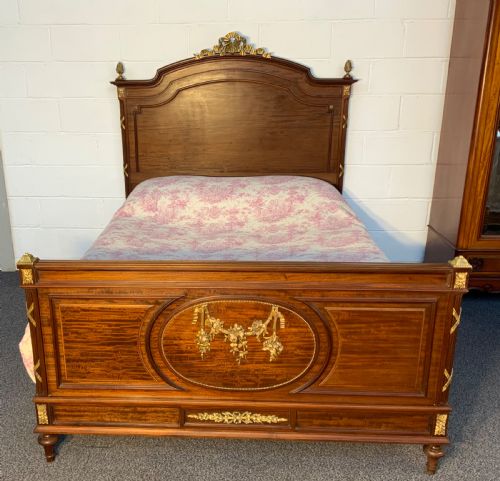
Metal mounts in ormolu and brass add decorative detailing to corners, rails, and crestings, elevating the visual richness of the woodwork. Upholstered versions utilise traditional stuffing methods beneath period textiles or modern replacement fabrics.
Several beds arrive wearing their original fabric, preserving decades of quiet bedroom history within the weave.
Assessing Quality
Quality rests upon the crispness of the hand carving and the selection of cabinet timbers such as figured walnut and detailed parquetry. Superior examples display deep, three-dimensional foliage and scrollwork rather than shallow mechanical stamping.
The integration of original decorative hardware, including cast ormolu mounts and brass detailing, distinguishes finer workshops from standard production. Cohesion across matching suites, where beds share exact design vocabularies with accompanying cabinets, indicates higher original commissioning standards.
The French Chateau King Bed Glossary
- Ormolu
- Gilt bronze mounts applied to furniture for decorative enrichment. These metallic elements highlight key architectural points on the bedstead.
- Parquetry
- Geometric wood mosaic work used for surface decoration on headboards and footboards. This technique showcases contrasting timber tones in precise patterns.
- Caning
- Woven rattan material used to create open panels in headboards and footboards. It introduces a lighter textural element to heavy wooden frames.
- Quarter Veneered
- Wood veneers cut from the quarter of a log and arranged symmetrically to create grain patterns. This method enhances the visual symmetry of large panels.
- Parcel Gilt
- Partial application of gold leaf over painted or polished wooden surfaces. It accentuates carved details and mouldings.
French Chateau King Bed: Frequently Asked Questions
What mattress size fits these beds?
These beds accommodate standard modern king, super king, or emperor mattresses depending on the specific frame dimensions listed. Many historical frames require custom slat systems or base adjustments to support contemporary mattress depths.
Buyers should verify the internal dimensions of the bedstead before purchasing a mattress. Tailoring the support base ensures the frame maintains structural integrity under modern loads.
How do I distinguish Louis XV from Louis XVI styles?
Louis XV style beds feature asymmetrical curves, scrolling foliage, and flowing cabriole lines. The overall aesthetic prioritises organic movement and rich carved ornamentation.
Louis XVI style moves towards neoclassical symmetry, straight fluted columns, and geometric proportions. Rectangular shapes and classical architectural motifs replace the flowing curves of the earlier period.
Are these beds supplied with bases?
Some listings include supportive bases while others provide only the wooden headboard, footboard, and side rails. Checking individual descriptions clarifies whether a slatted base or mattress platform comes with the frame.
When a base is absent, modern upholstered divan bases or custom wooden slats can be integrated. Professional installation ensures the antique side rails remain secure.
How should I care for painted and caned surfaces?
Painted wooden surfaces benefit from dusting with a soft, dry cloth and protection from direct sunlight. Avoid harsh chemical cleaners that can degrade nineteenth century or vintage paint layers.
Caned panels require occasional light moisture to prevent the rattan from becoming brittle. Keeping the room humidity stable preserves both the woven cane and the surrounding timber.