


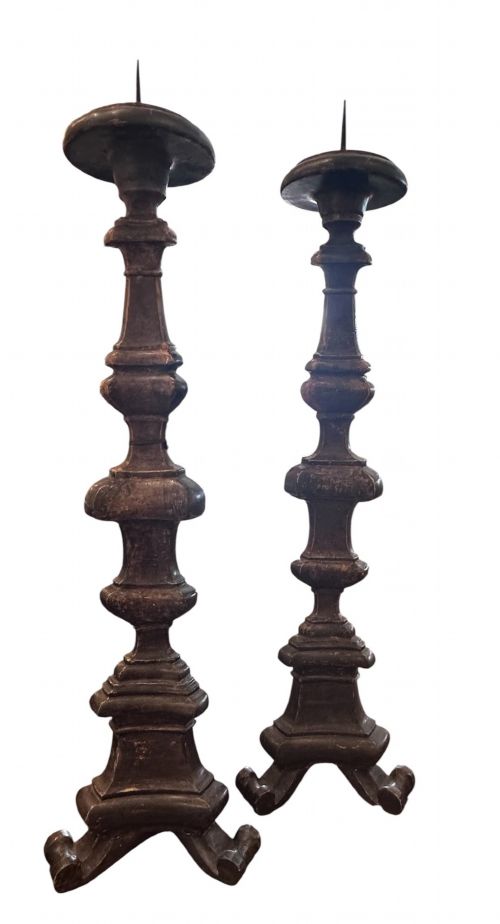


French Carved Wooden Candlesticks
These French carved wooden candlesticks bring genuine continental warmth and texture to a room, offering sculptural form carved from timber.
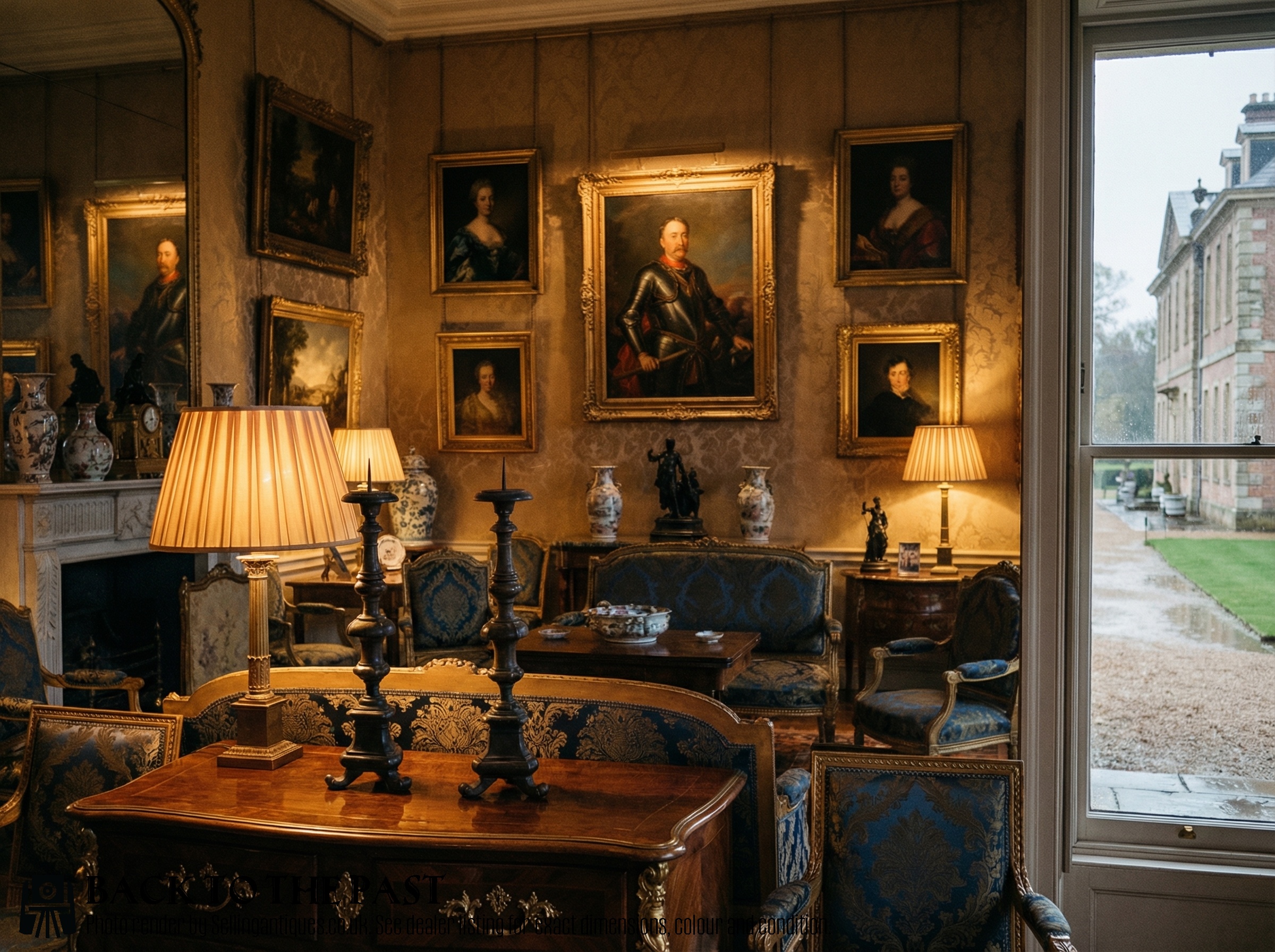
French Carved Wooden Candlesticks
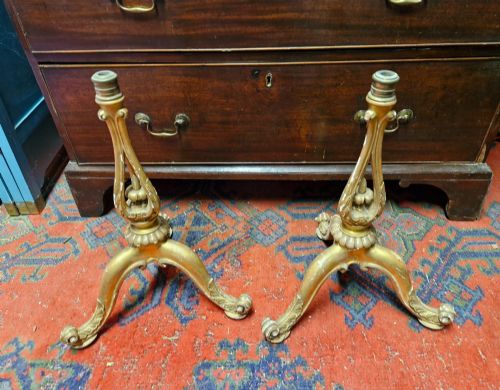
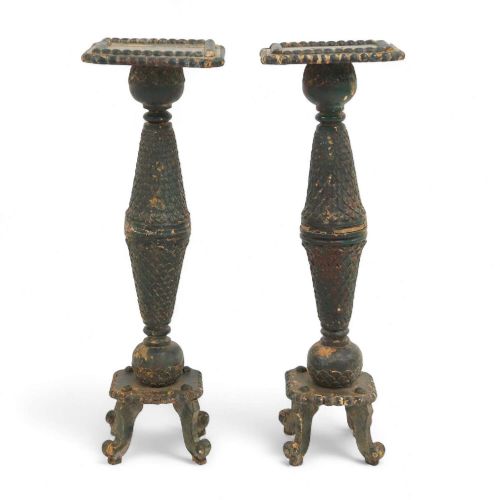
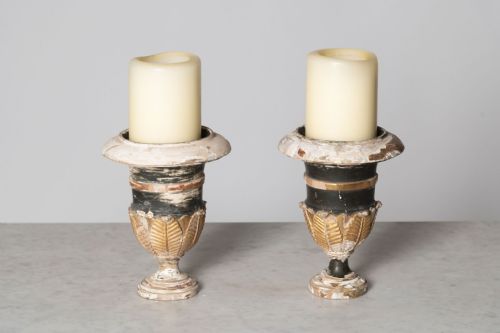
French carved wooden candlesticks appear in various forms on this page, ranging from standard candlesticks and candle holders to converted lamp bases, torcheres, and prickets. Buyers looking for french carved wooden candlesticks will encounter pairs most frequently, often standing tall with carved timber structure.
The objects span multiple centuries and stylistic revivals, taking inspiration from periods like the eighteenth century, the Victorian era, and early twentieth century production. Surviving examples often display the marks of continental craftsmanship, appearing in styles such as Baroque Revival, Rococo, Neoclassical, and French Chateau.
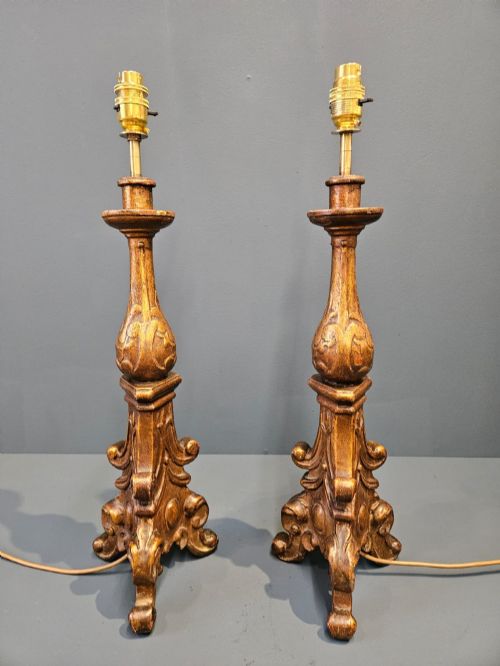
Many pieces have been adapted over time to function as table lamps, utilising the original turned and carved wooden bodies while incorporating modern electrical fittings. Whether kept in their original candle-holding format or adapted with lamps, these pieces retain their sculptural presence within a domestic interior.
Factors of quality
The distinction between standard examples and finer items rests in the crispness and depth of the hand carving across the wooden body. Superior pieces exhibit confident tool marks and balanced proportions, whereas lesser items may show simpler turning with softer, less defined ornamentation.
The condition and integrity of the original surface finish play a major role in determining the character of each piece. Giltwood and painted surfaces that survive with authentic wear and minimal modern intervention demonstrate greater fidelity to the period of manufacture.
Several items on this page started life holding altar candles before finding a second career illuminating a Victorian sideboard.
The French Carved Wooden Candlesticks Glossary
- Giltwood
- Wood that has been coated with gold leaf or metal leaf, usually over a preparatory layer of gesso. This technique creates a rich, reflective surface common on continental decorative objects.
- Pricket
- A candlestick featuring a central metal spike designed to impale the base of a candle, rather than a socket that holds the candle inside. These are frequently found on altar sticks and larger decorative forms.
- Torchiere
- A tall stand or candlestick designed originally to carry a torch or large candle, often taking a slender columnar or pedestal form. On this page, they appear as decorative antique fixtures.
- Treen
- Small handmade wooden household objects and decorative items collected for their material patination. These pieces display the natural grain and age of the timber.
French Carved Wooden Candlesticks: Frequently Asked Questions
How do I clean wooden candlesticks?
Dust gently with a soft, dry cloth to protect fragile giltwood or painted surfaces from moisture and abrasion. Avoid chemical polishes that can strip aged finishes and gold leaf.
Keeping them away from direct sunlight and heat sources preserves the underlying timber and prevents the gesso from cracking or lifting over time.
Are these converted lamps safe?
Many historical candlesticks have been adapted into table lamps to suit modern domestic lighting needs while retaining their original wooden bases. It is advisable to have any vintage wiring inspected by a qualified electrician before daily use.
Check that the conversion respects the structure of the original carving and does not cause permanent damage to the antique timber body.
What is the difference between a pricket and a candlestick?
A pricket holds the candle using an upward-pointing metal spike that presses directly into the wax base. Standard candlesticks instead use a hollow socket or cup to support the lower portion of the candle.
Both forms appear across nineteenth-century continental lighting, often serving decorative functions in domestic interiors.
How can I date a wooden candlestick?
Dating relies on examining the tool marks left by the carver, the species of timber used, and the style of ornamentation relative to known decorative periods. Neoclassical, Baroque, and Rococo revival styles each indicate specific aesthetic influences from the eighteenth and nineteenth centuries.
The wear patterns on the base, oxidation of the wood, and the composition of the gesso and leaf layers also provide clues to the age of the object.