



French Carved Storage Cabinet
A french carved storage cabinet brings regional timber, heavy panelling and historic utility into domestic spaces.
French Carved Storage Cabinet
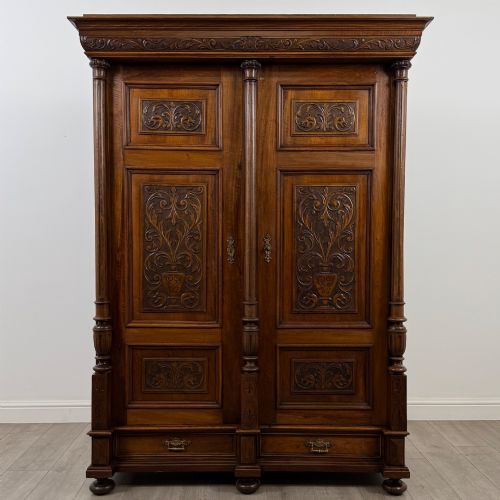
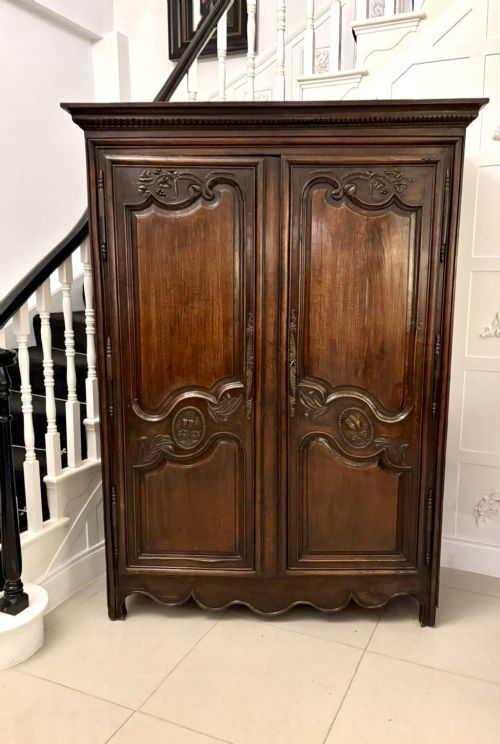
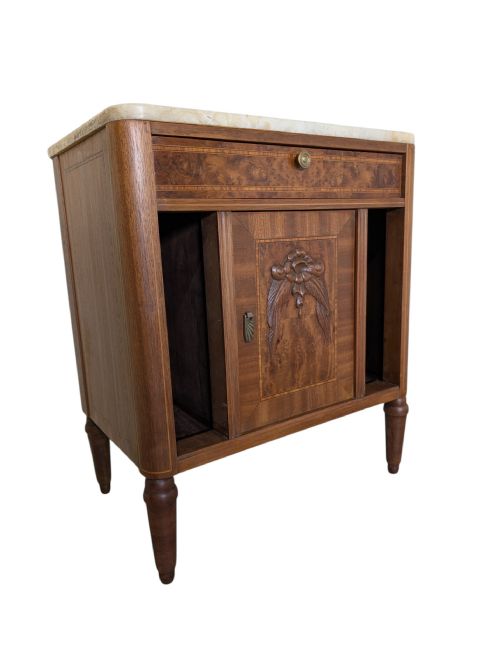
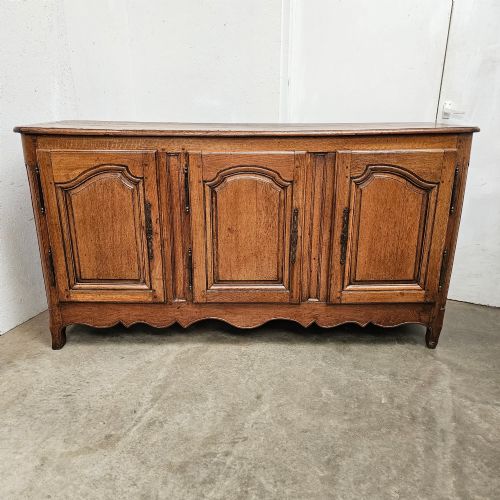
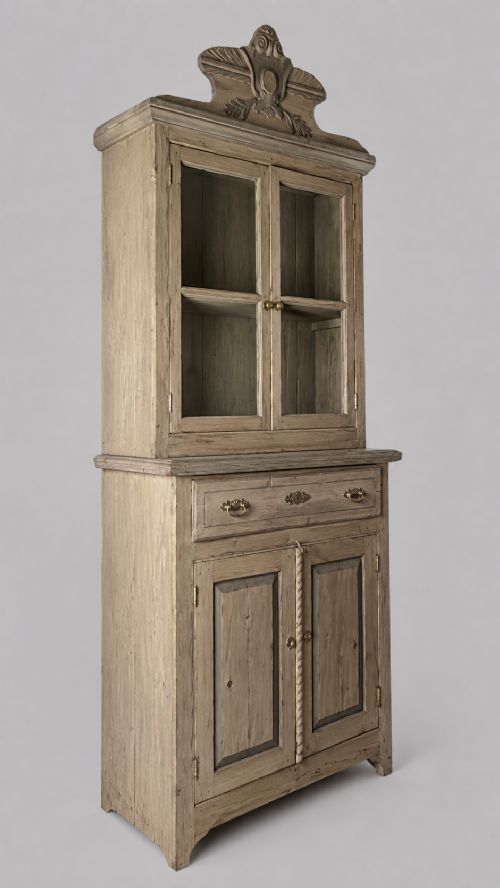
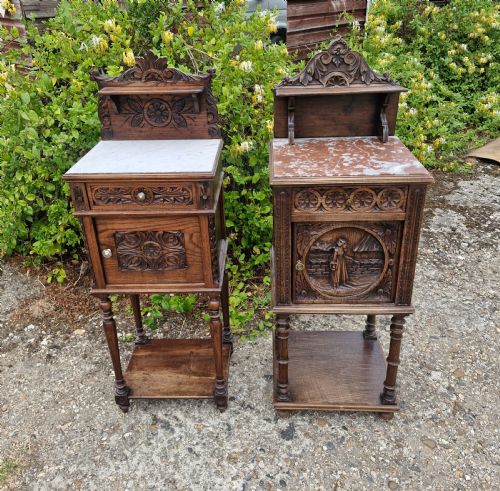
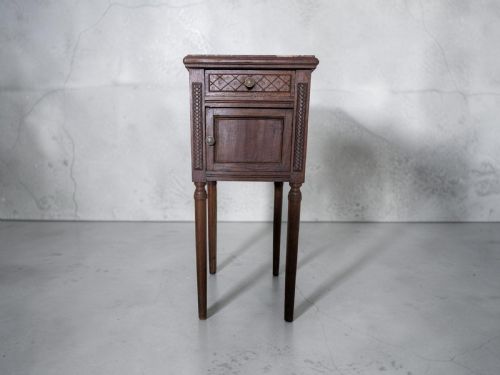
A french carved storage cabinet appears in various regional forms, including armoires, commodes, sideboards, and bedside cupboards. These pieces originate from provincial workshops and chateaux across France, spanning the seventeenth century through to the mid-twentieth century.
Oak and walnut dominate the offerings, often shaped into robust doors, panelled sides, and deep drawers. Buyers encounter both provincial vernacular furniture and refined revival styles from the Victorian and later eras.
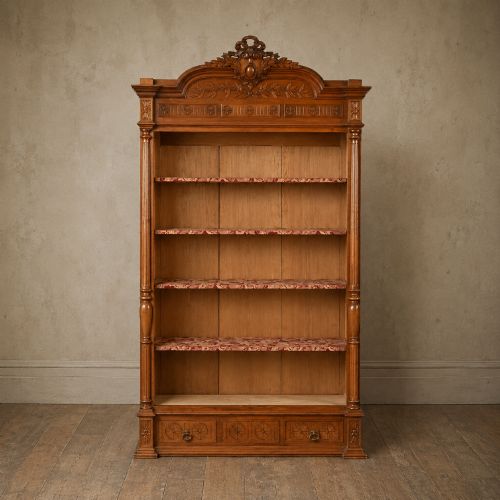
The selection ranges from tall housekeeping cupboards and larder cabinets to low side cabinets with marble tops and glazed library bookcases. Each piece reflects the specific domestic storage needs of its original French context.
Materials and Construction
Carpenters utilised solid timbers such as oak, walnut, cherrywood, and burr elm, joining panels with traditional frame-and-panel construction to accommodate natural wood movement. Carving is applied directly to the solid wood of doors, cornices, and stiles rather than applied as separate compo mouldings.
Iron, brass, and wrought iron provide structural hardware and decorative mounts, securing heavy doors and drawers. Selected examples incorporate marble tops, painted finishes, or contrasting ebony detail mounts alongside glazed panels.
The listings span from the seventeenth century through the 1940s, featuring oak, walnut, cherrywood, and marble.
Design and Execution
Quality rests in the depth and crispness of the hand carving, the choice of timber figure, and the proportion of the architectural mouldings. Pieces from earlier periods show robust joinery and regional regional quirks, while later revival items depend on the fidelity of their historical styling.
The integrity of the original hardware, hinges, and locks separates standard utility cupboards from finer salon pieces. Surface treatments, whether scrubbed oak, polished walnut, or aged paint, dictate the visual weight of the item.
Charles Dudouyt
The French Carved Storage Cabinet Glossary
- Armoire
- A tall freestanding wardrobe or cupboard with doors enclosing shelving or hanging space. They often feature prominent crown moulding and deep relief carving on the doors.
- Commode
- A low chest of drawers or cabinet originating in France. These pieces commonly stand on short legs and display shaped drawer fronts or marble tops.
- Enfilade
- A long sideboard or buffet designed to stand against a wall. The form typically incorporates multiple doors and drawers in a continuous facade.
- Buffet de Corps
- A large two-tier sideboard or cupboard structure. The upper section generally sits recessed upon a heavier lower buffet base.
- Lit-clos
- An enclosed bed frame from Brittany. Elements from these historic sleeping compartments are occasionally repurposed into cabinets.
French Carved Storage Cabinet: Frequently Asked Questions
How do I clean a carved wooden cabinet?
Dust the carvings regularly using a soft dry brush to prevent dirt accumulation in the recesses. Apply microcrystalline wax sparingly to nourish the timber without building up heavy residue.
Avoid commercial liquid polishes and keep the furniture away from direct heat sources and strong sunlight. Proper humidity control prevents the solid oak or walnut panels from splitting.
Where should I place a heavy sideboard?
Position these substantial storage pieces against structural walls capable of supporting their considerable weight. Ensure the floor is level so that heavy double doors hang true and latch correctly.
Allow clearance for doors to swing fully open, particularly on models with wide panelled leaves. Keep them away from damp exterior walls to protect the historic timber.
What is the difference between an armoire and a commode?
An armoire is a tall vertical storage cabinet enclosed by full-length doors. A commode is a lower, horizontal chest of drawers designed for general storage.
Armoires suit bedrooms and hallways for hanging or shelved items, while commodes function well in living areas or dining rooms.