

French Carved Center Table
A French carved centre table brings architectural presence and classical proportion to a room, offering a functional surface rooted in centuries of European cabinet-making.
French Carved Center Table
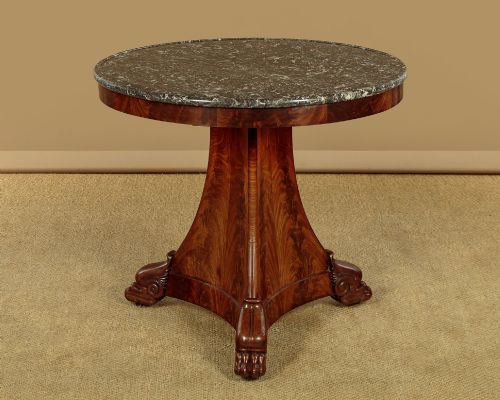
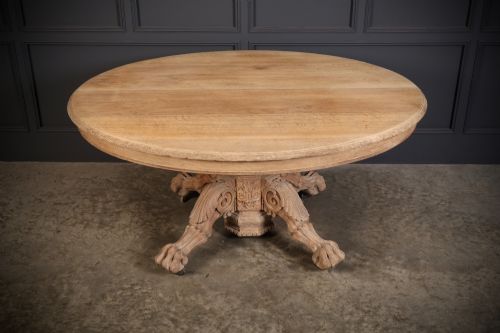
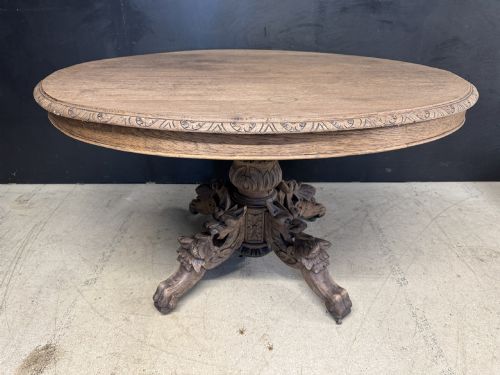
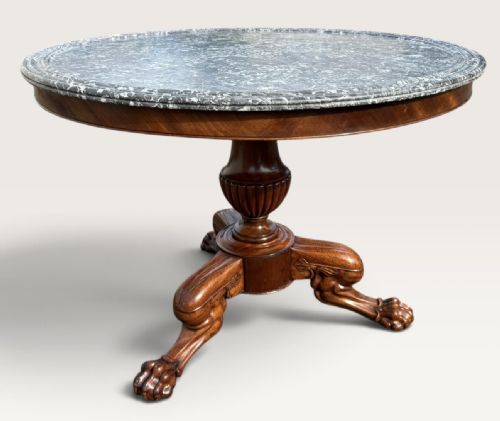
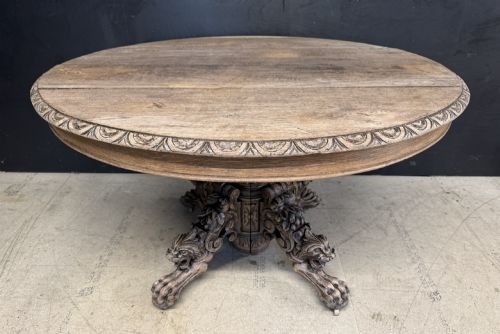
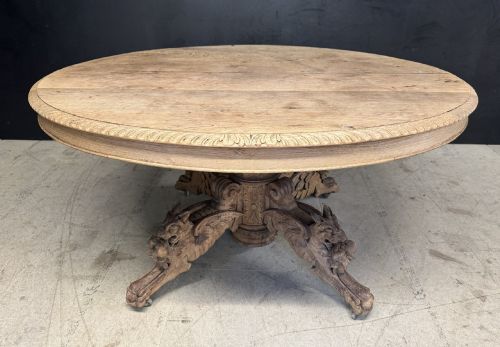
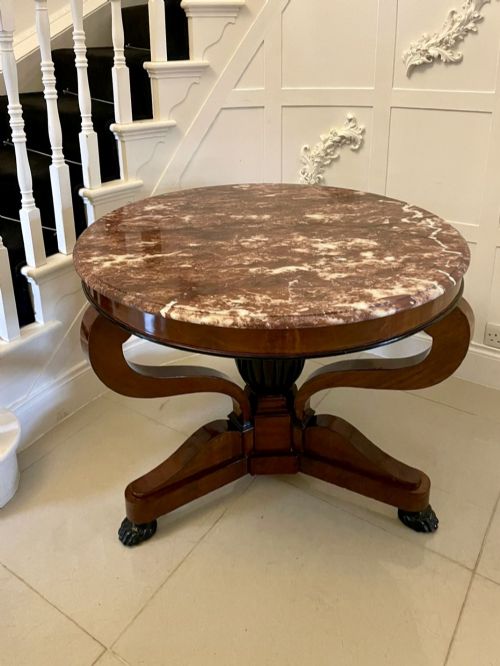
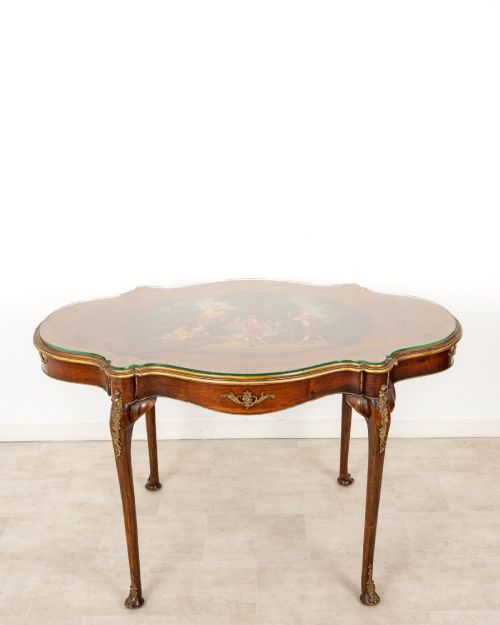
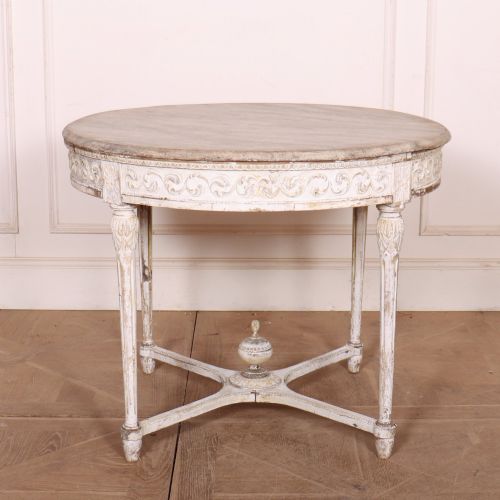
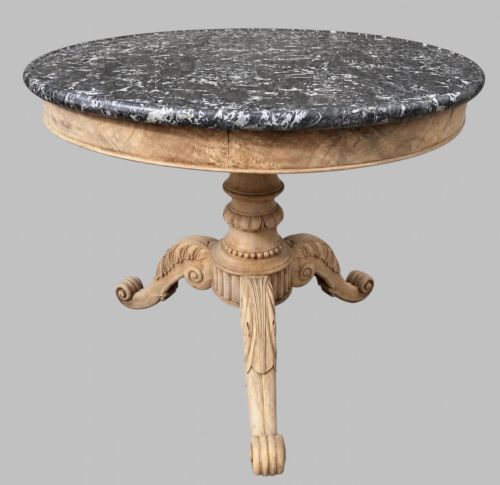
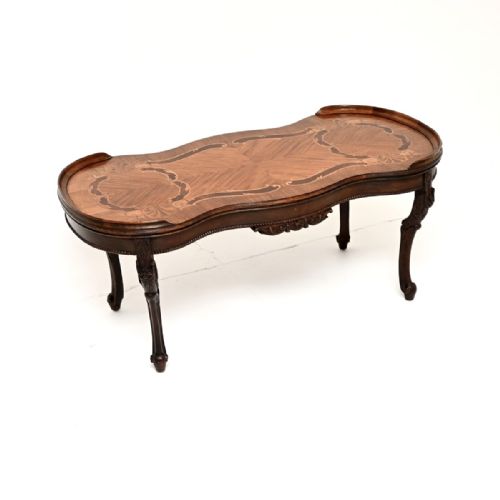
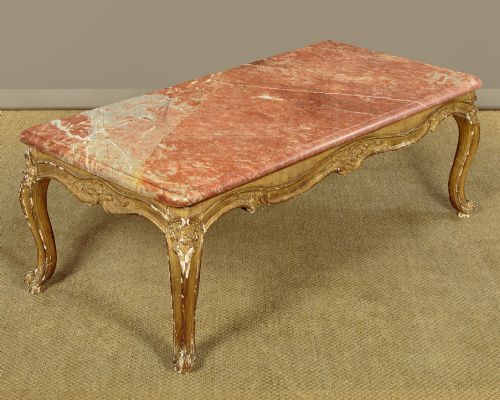
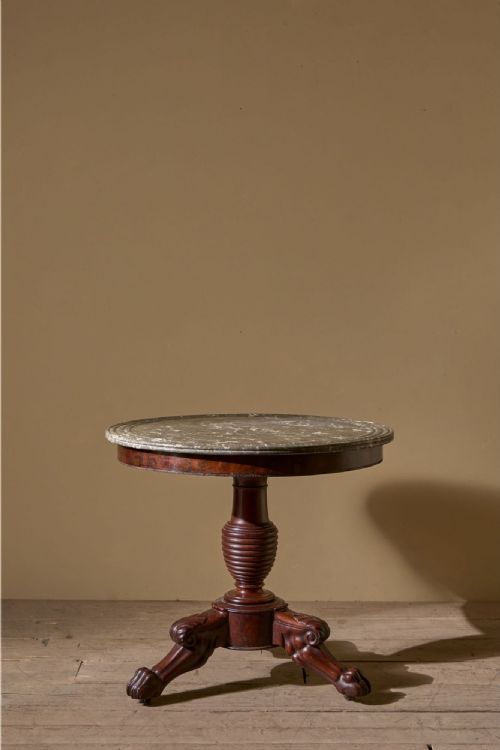
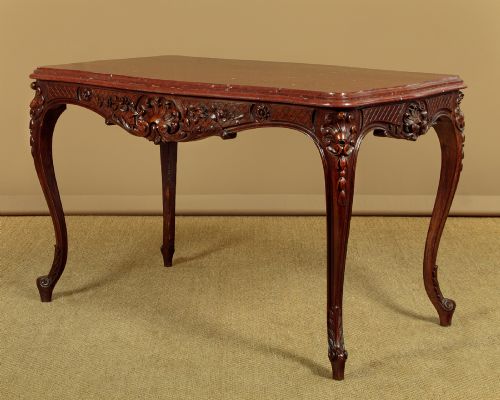
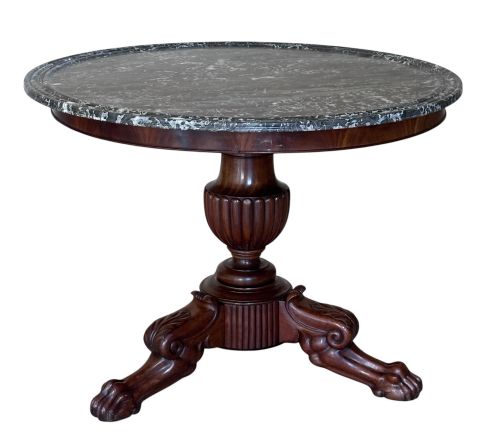
A french carved centre table is a freestanding piece designed to sit in the middle of a room rather than against a wall, finished on all sides for viewing from any angle. The form appears primarily as round gueridon tables, occasional tables, and larger library or hunting tables.
The selection ranges from early nineteenth century Empire and Louis Philippe mahogany designs to later Victorian, Rococo Revival, and rustic oak hunting tables. Most examples feature inset stone tops, supported by carved pedestals, pillar columns, or cabriole legs.
Makers drew on established idioms including French Louis XVI, French Provincial, and Renaissance Revival styles. Buyers encounter pieces spanning the eighteenth century through to the interwar decades.
Materials and Construction
Cabinet-makers constructed these tables using dense timbers such as mahogany, walnut, oak, chestnut, and satinwood, often applied as veneers over secondary woods or shaped from solid stock. Finer pieces incorporate burr walnut or flame mahogany to display striking grain patterns.
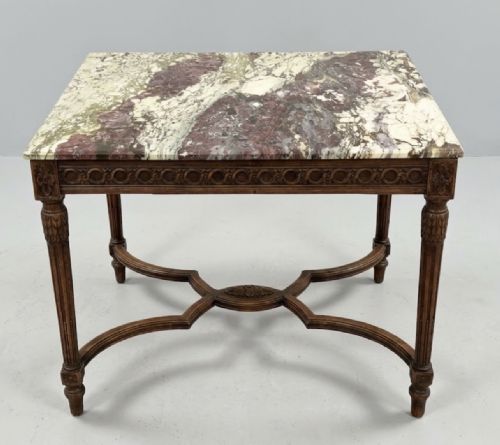
Heavy marble slabs - including white, grey, rouge, and Breccia Medicea violetta varieties - form the working surfaces of many gueridons, secured within rebated wooden rims. Ormolu mounts, brass galleries, and giltwood enrichments provide structural highlights and decorative contrast.
French Carved Center Table Retail Price Guide 2026
Typical asking prices for french carved center table among the pieces listed under this phrase on Sellingantiques today, from the lower quarter to the upper quarter. They describe what is for sale here now, not the wider market.
Marble tops appear in various tones including green, grey, white, and violetta.
Assessing Quality and Execution
The distinction between standard production and exceptional work rests on the crispness of the hand-carving and the selection of raw materials. Fine examples display deeply undercut timber foliage or sharply chased ormolu mounts rather than cast-imitation detail.
Weight and stability dictate structural integrity, particularly in gueridons carrying heavy stone tops. Tables retaining original fire-gilt mounts, matching veined marble slabs, and signed or stamped maker marks command greater attention from discerning collectors.
JACOB
The French Carved Center Table Glossary
- Gueridon
- A small circular table on a central pillar or tripod base. Originating in the seventeenth century, the form remained popular throughout the nineteenth century for domestic display.
- Ormolu
- Gilded bronze applied as decorative mounts to furniture. The technique involves coating cast bronze with a mercury-gold amalgam and firing it to leave a durable metallic finish.
- Marquetry
- The art of applying pieces of veneer to a structure to form decorative patterns. Craftsmen utilised contrasting woods to build pictorial or geometric designs.
- Breccia
- A composite rock made of broken mineral fragments held together by a fine-grained matrix. It yields highly figured marble slabs with varied colouration.
- Empire
- A neoclassical design style spanning the late eighteenth and early nineteenth centuries. It relies on monumental forms and classical motifs inspired by ancient Rome and Greece.
French Carved Center Table: Frequently Asked Questions
What is a gueridon table?
A gueridon is a circular table supported by a central column or pillar base. These tables frequently feature inset marble tops and compact proportions suitable for central placement in a room.
Originally designed to hold candlesticks or small decorative objects, they evolved into versatile occasional and centre tables during the nineteenth century.
How do I date a French centre table?
Dating relies on identifying the prevailing design style, such as Empire, Louis Philippe, or Renaissance Revival, alongside timber selection and construction methods. The presence of specific hardware or maker stamps offers further chronological markers.
Examining the underside and joinery reveals whether a piece belongs to the early nineteenth century or later revival periods.
Where should I place a centre table?
A centre table requires a freestanding position in the middle of a room, allowing 360-degree access and visibility. They function effectively in large hallways, drawing rooms, or libraries as focal points.
Because these tables are finished on all sides, keeping them away from walls highlights their carved pedestals and circular geometry.
Are marble top tables fragile?
Marble slabs are heavy and durable but remain susceptible to scratching, staining, or chipping along the polished edges. The stone sits loose or bedded within the wooden frame of the table.
Lifting or moving the piece requires removing the marble top first to prevent structural strain on the wooden base.