
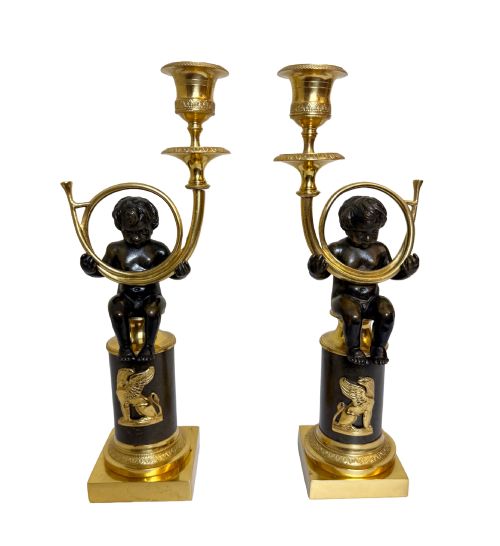
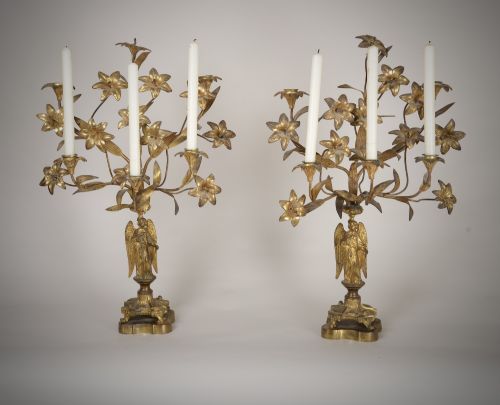
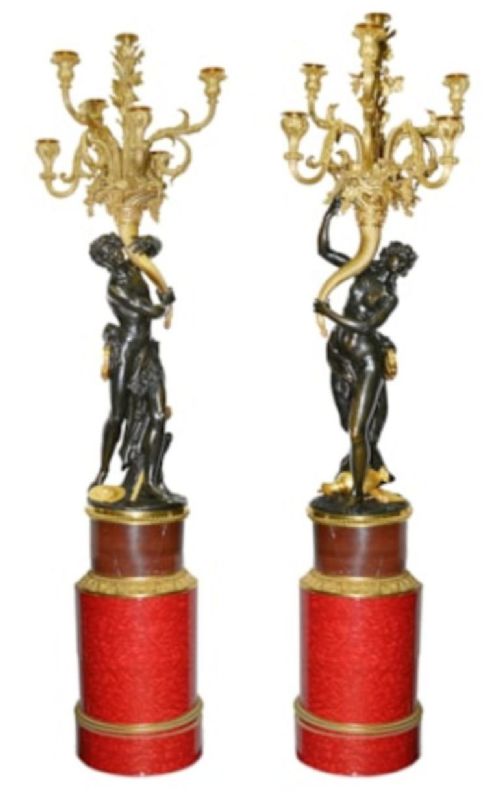
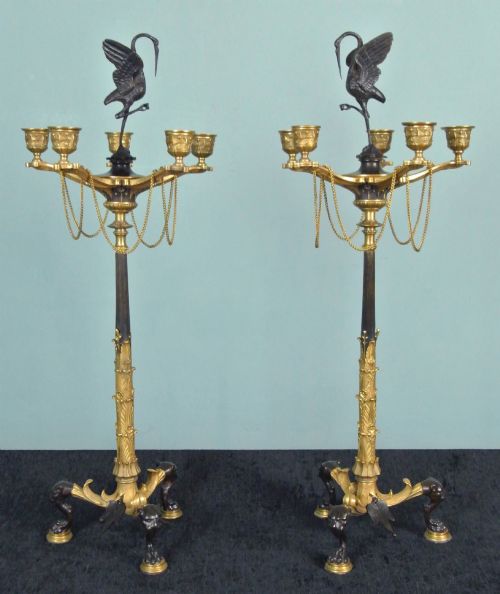
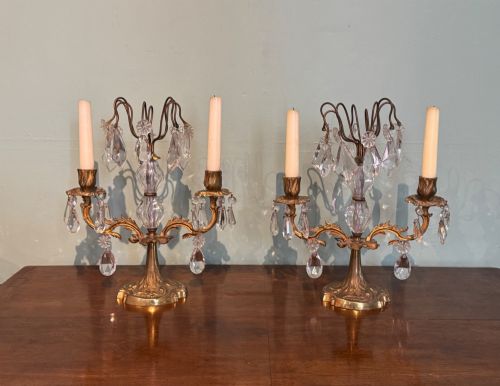
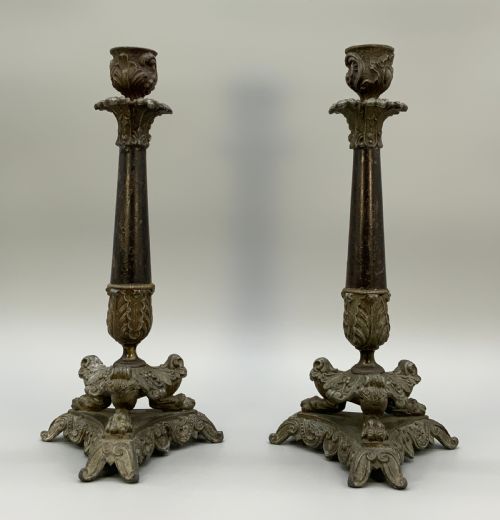
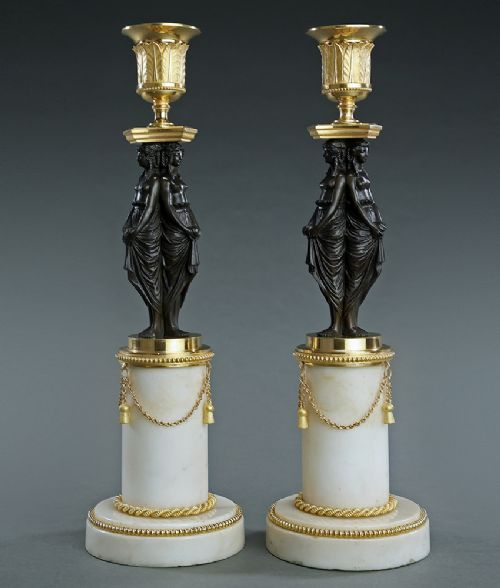
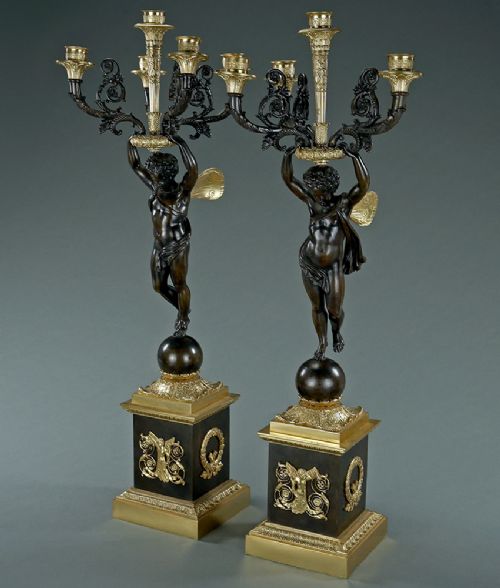
French Candlestick Holder
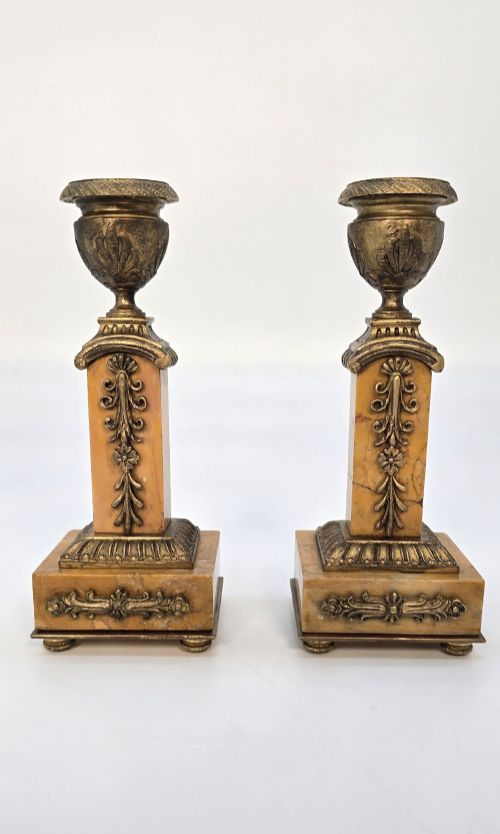
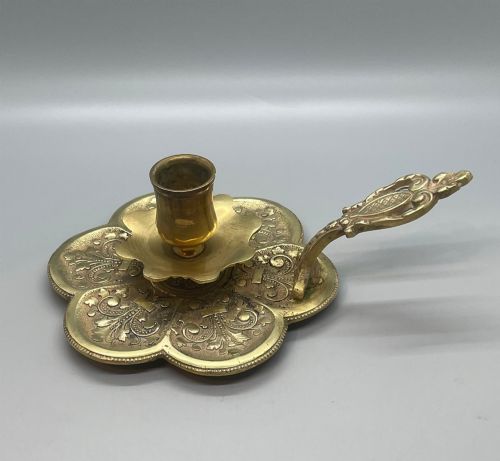
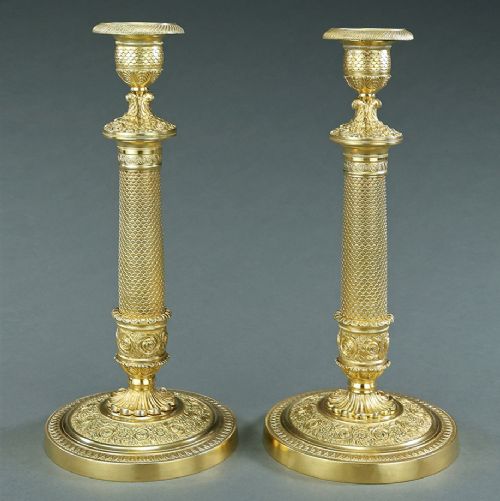
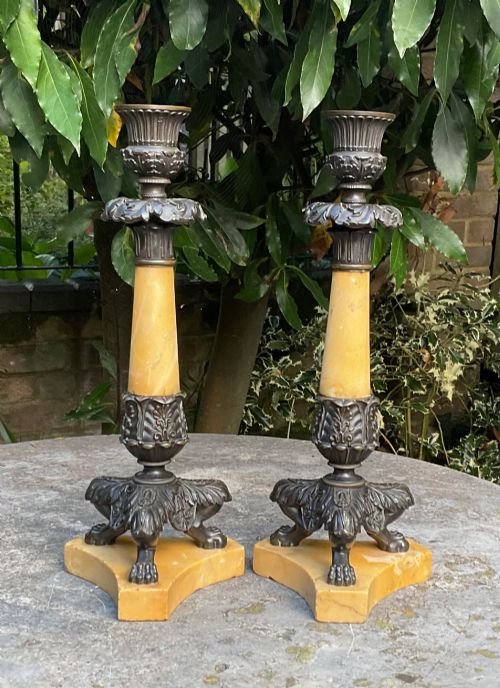
These french candlestick holder selections bring nineteenth century bronze, ormolu and marble illumination to interior spaces.
French Candlestick Holder
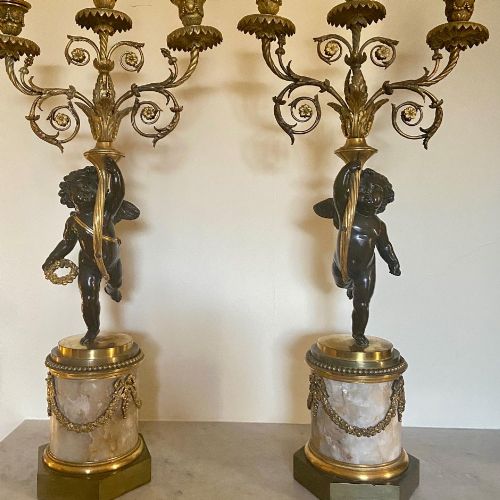
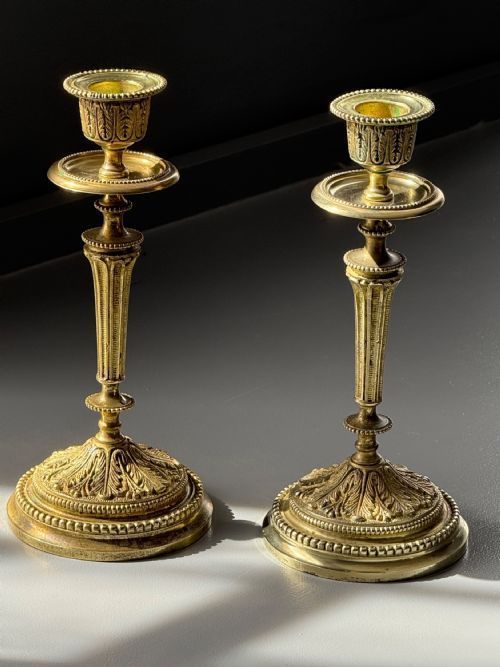
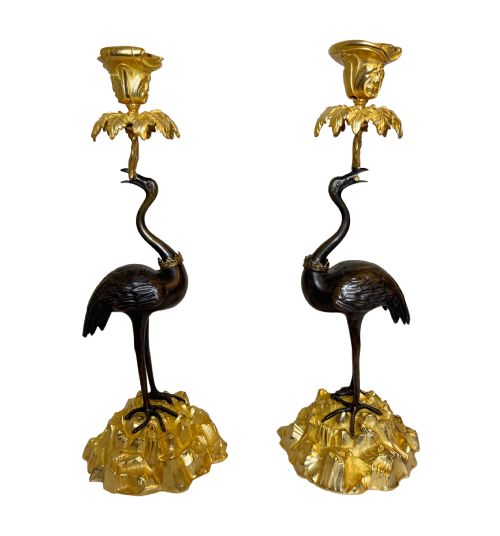
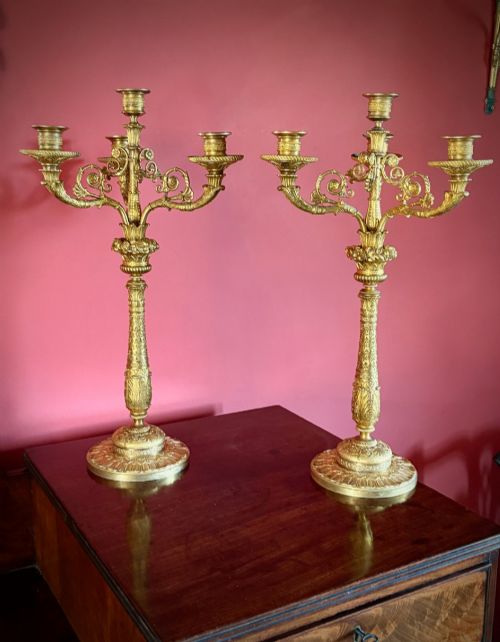
A french candlestick holder typically takes the form of a single sconce, a multi branch candelabra, or a table lustre designed for nineteenth century domestic interiors. The pieces span periods from the eighteenth century through to the art nouveau era, including regency, napoleon iii and louis xvi styles. Most examples appear as matched pairs cast in bronze, brass, or ormolu, often combined with marble or onyx plinths.
Buyers encounter architectural motifs, figural supports featuring putti, caryatids and animals, alongside ornate champleve enamel decorations. Forms range from compact desk accessories and inkstands to large multi light mantel pieces and table lamps. The predominant output originates from nineteenth century French workshops working in classical revival idioms.
Materials and technique
Construction relies on metal casting using bronze, brass, spelter, and copper alloys finished with patination, fire gilding, or ormolu. Ormolu application involves mercury gilding onto bronze to yield a durable golden surface layer that retains crisp detail. Many models integrate natural stone elements such as white marble, sienna marble, and onyx as structural plinths.
Detailing often incorporates hand chased surface decoration, champleve enamel panels fused into metal recesses, and cut glass components. Individual cast sections are mechanically assembled using threaded rods and screws, allowing for complex figural compositions and multi branch candelabra configurations.
Listings feature eighteenth and nineteenth century periods alongside materials including ormolu, champleve enamel, marble, and patinated bronze.
Factors of quality
Quality rests upon the crispness of the metal chasing and the depth of the original gilding or patination. Superior specimens exhibit sharp relief work in figural elements like putti and foliage, whilst lesser examples show softened contours from worn casting moulds.
The choice and execution of secondary materials dictate overall merit, with dense decorative marbles and intricate champleve enamel work marking out superior productions. Heavier cast weight and precise assembly of multiple branches demonstrate higher workshop standards.
Barbedienne·Francois Redmond·Dugourc·Abel Landry·Rene Lalique
The French Candlestick Holder Glossary
- Ormolu
- Gilded bronze produced by applying a mercury and gold amalgam to a bronze base and firing it. The technique creates a rich golden finish characteristic of decorative metalwork.
- Champleve
- An enamelling technique where troughs or cells are carved into the metal surface and filled with vitreous enamel paste before firing. This method produces colourful patterned ornamentation.
- Candelabra
- A branched candlestick holder designed to hold multiple candles simultaneously. These items often feature a central light surrounded by several arm candle cups.
- Patinated bronze
- Bronze that has been chemically treated to alter its surface colour and texture. This treatment produces tones ranging from dark brown to greenish verdigris.
- Caryatid
- A sculpted female figure serving as an architectural support element instead of a column. They frequently appear supporting the stem of classical revival lighting pieces.
- Table lustre
- A candlestick fitted with glass prisms or pendants hanging from the sconce rim. These pendants refract candlelight to enhance visual brightness.
French Candlestick Holder: Frequently Asked Questions
How do I clean bronze ormolu?
Dust gently with a soft dry cloth to remove surface particles without scratching the gilded surface.
Avoid abrasive polishes or chemical cleaners that strip the original ormolu layer entirely.
Are these wired for electricity?
Most antique examples remain in their original candle holding configuration without electrical wiring.
Some pieces have been adapted into table lamps during past decades while retaining their antique bases.
How do I date an empire style piece?
Examine the casting quality, the specific patination style, and the type of marble used on the plinth.
Compare the decorative motifs against nineteenth century revival trends and documented workshop designs.
Can I burn real candles in them?
Standard taper candles fit securely into most period sconces and candle cups.
Use drip protectors or snug fitting inserts to prevent hot wax from contacting delicate metal or enamel surfaces.