





French Bronzes of Dogs
French bronzes of dogs capture the muscle and character of hounds and pets through the hands of accomplished animaliers.

French Bronzes of Dogs
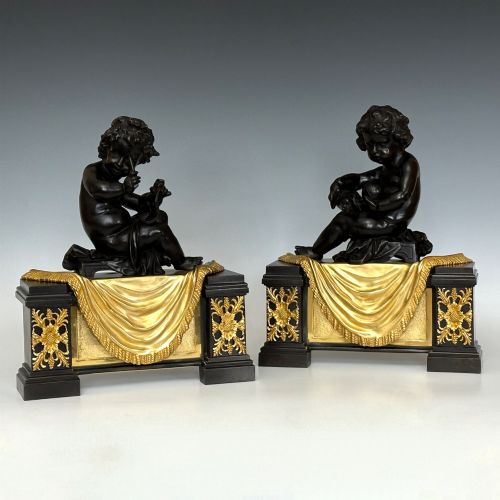
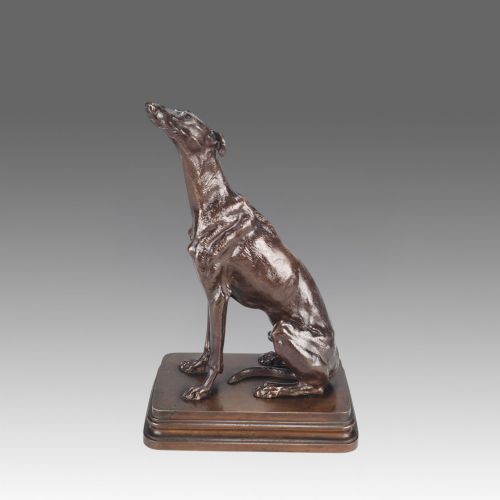
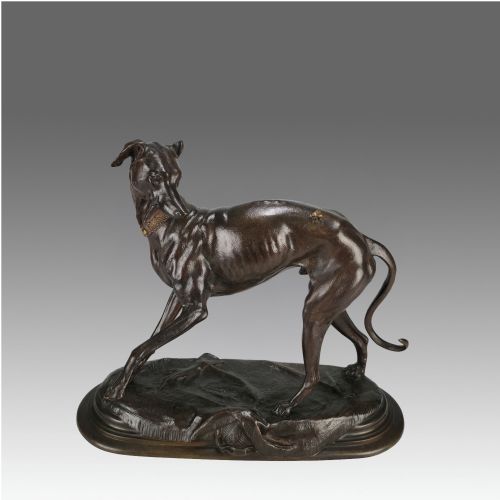
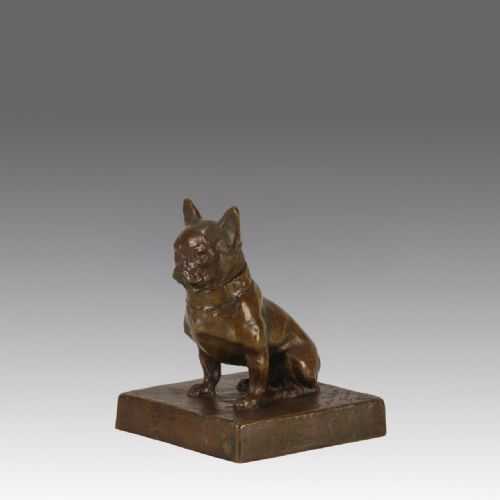
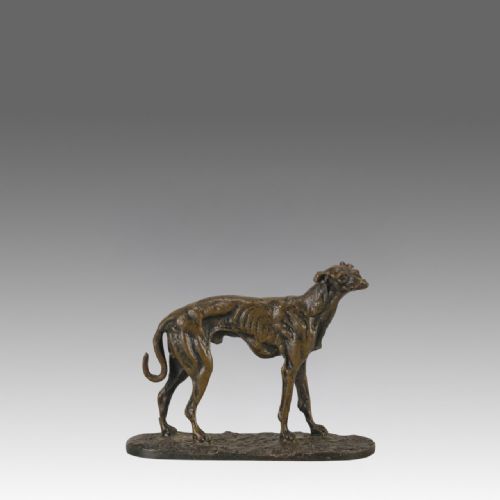
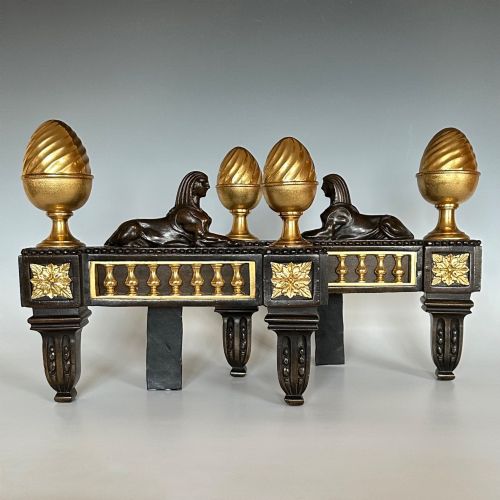
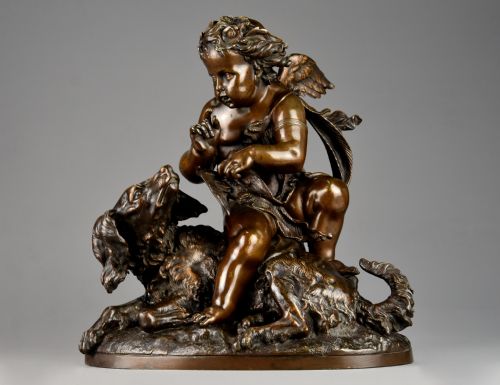
French bronzes of dogs encompass sculptural figures, mantel clocks, table lamps, and fireplace accessories such as chenets or fire dogs. The selection relies heavily on nineteenth-century animalier works portraying gundogs, greyhounds, spaniels, and terriers in naturalistic poses.
Makers shaped these subjects in patinated bronze, gilt bronze, ormolu, and occasionally spelter, frequently mounting the figures on marble bases. Pieces range from tabletop ornaments and paperweights to large hearth figures produced during the Victorian and Art Deco eras.
How they were made
Foundries utilised the lost-wax casting method or sand casting to achieve fine anatomical detail in bronze and spelter. Artisans applied patination chemicals to heated metal or added layers of gilt bronze and ormolu to highlight texture in fur and musculature.
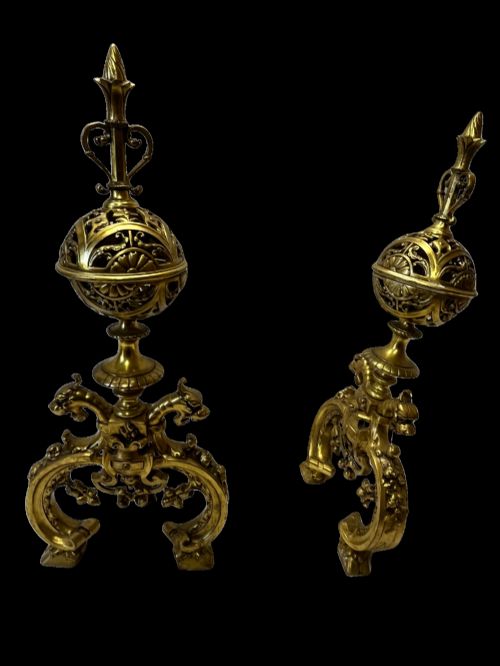
Many sculptures incorporate fitted marble plinths, while functional items like chenets combine cast brass, iron, and gilt bronze elements joined mechanically to withstand fireplace heat.
A playful Art Deco table lamp pairs a French dog with a perched parrot.
What varies in quality
Casting crispness defines the superior examples, where individual hairs, facial expressions, and paw structures remain sharp without softening from worn moulds. The depth and hand-finished nuance of the patination or the richness of the gilding further separate standard commercial foundry output from masterworks.
The precision of the signature or foundry mark and the integration of the figure with its marble base indicate the level of care taken during production.
Alfred Dubucand·Alfred Barye·Dora Heber·P J Mêne·Prosper Lecourtier·Jules Moigniez·Delabrierre·Antoine Louis Barye·Louis Riche·C Masson·Alexandre Kelety·Arthur Waagen·Geo Maxim
The French Bronzes of Dogs Glossary
- Animalier
- A nineteenth-century artistic movement focused on the realistic portrayal of animals. Sculptors in this genre studied live beasts at menageries to capture authentic movement.
- Chenet
- An alternative term for an andiron used in pairs to support logs in a fireplace. French versions often feature decorative cast figures, including dogs.
- Ormolu
- Finely ground high-carat gold applied to a bronze object using a mercury amalgamation technique. This finish produces a durable golden lustre characteristic of decorative French metalwork.
- Patinated bronze
- Metal treated with chemical solutions to alter its surface colour, creating brown, green, or near-black tones. The treatment protects the alloy and emphasises sculptural contours.
- Spelter
- An alloy of zinc and lead used as a cheaper substitute for bronze. It takes patination well but feels lighter and softer under examination.
French Bronzes of Dogs: Frequently Asked Questions
What are French animalier dog bronzes?
These are nineteenth-century and early twentieth-century metal sculptures depicting canine subjects with anatomical precision. Artists focused on capturing the specific breeds, from greyhounds to setters, in active or resting postures.
Such pieces reflect the period fascination with natural history and precise observation of animal behaviour.
How do I identify a nineteenth-century cast?
Examine the underside and surface for foundry stamps, signatures in the metal, and the quality of the chasing work. Nineteenth-century pieces generally show sharp detail and hand-finished chasing rather than the softness typical of later reproductions.
The weight and composition of the base, often slate or marble, also offer clues to the period of manufacture.
Were these figures used as fire dogs?
Yes, many larger bronze and ormolu dog sculptures form parts of paired chenets or andirons designed for display in formal fireplaces. These functional items placed hounds or hunting dogs on guard beside the hearth.
Artisans built them to withstand heat while serving as decorative metalwork during warmer months.
What is the difference between bronze and spelter?
Bronze is an alloy of copper and tin that yields a heavy, durable sculpture capable of holding fine chisel work and complex patinas. Spelter utilises zinc, making the metal softer, lighter, and more prone to surface wear.
Objects cast in spelter often carry a painted or faux-bronze finish rather than a true chemical patina.