



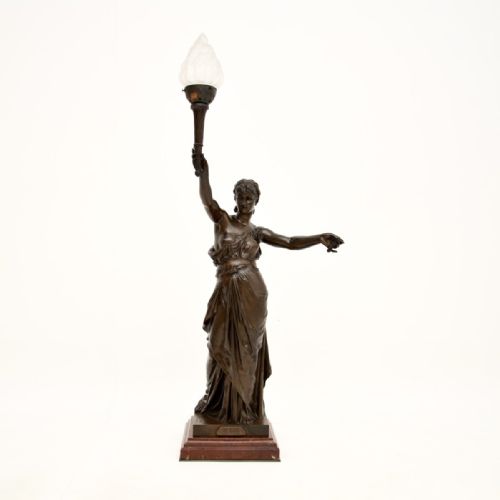


French Bronze Torcheres
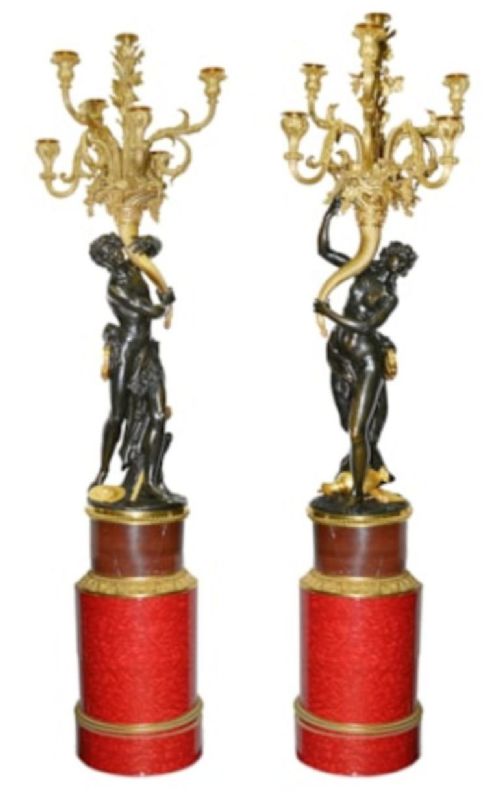
French bronze torcheres bring sculptural presence and classical lighting to a room, cast in heavy metal and finished with patination or gilding.
French Bronze Torcheres
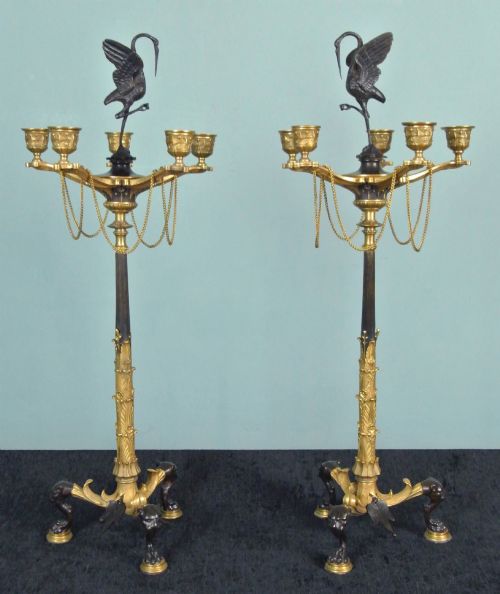
When you search for french bronze torcheres, you encounter heavy figural lampbases, candelabra, and classical columns designed to hold lights high. These pieces span the nineteenth century into the early twentieth century, showing influences from Louis XVI style to Neo-Classical and Rococo aesthetics.
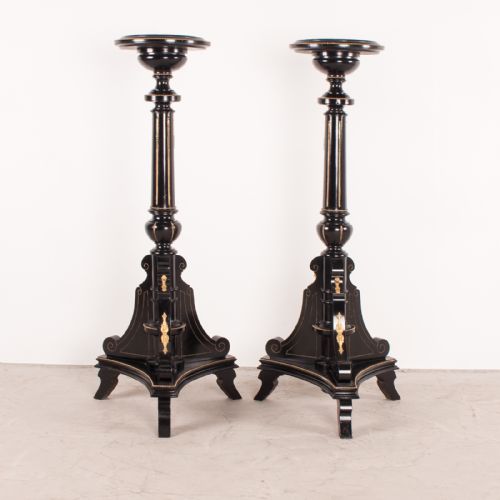
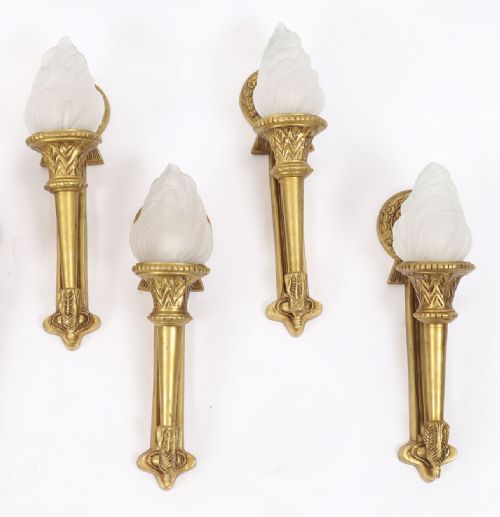
The selection on this page ranges from tall columnar stands and pedestal pairs to figural table lamps and wall lights. Many incorporate materials such as marble, onyx, and glass alongside the primary bronze or ormolu structure.
Makers and sculptors appear directly on several pieces, connecting domestic lighting to nineteenth-century foundry traditions. Buyers often select them to anchor a corner, flank a fireplace, or illuminate a grand interior space with historical character.
How they were made
Foundries utilised traditional lost-wax or sand-casting techniques to shape the bronze, creating complex figural forms and sharp architectural details. Artisans then finished the surfaces through patination, cold chiselling, or the application of mercury gilt and ormolu.
Combinations of contrasting media define the construction of these works, pairing dark patinated metal with bright gilded highlights. Many incorporate structural elements of natural stone, such as marble or onyx columns, secured with threaded metal rods.
Materials recorded across the inventory include bronze, ormolu, onyx, marble, frosted glass, and alternative metal alloys like spelter.
What varies in quality
The crispness of the chased detail across the metalwork distinguishes superior casting from routine production. Fine examples display sharp definition in facial expressions, drapery folds, and acanthus leaf mounts without softening from worn moulds.
Substantial weight and the use of genuine fire-gilding or deep chemical patination separate high-grade works from simpler painted spelter alternatives. The integration of secondary materials, such as rock crystal columns or matched marble bases, also signals ambition in the original workshop.
Barbedienne·Emile Picault·Jean-Jules Cambos·François-Christophe-Armand Toussaint·Coutan·Moreau
The French Bronze Torcheres Glossary
- Ormolu
- Gilded bronze produced by applying a mixture of gold and mercury to the metal base before heating. This technique creates a rich, matte gold surface characteristic of fine French decorative objects.
- Patinated bronze
- Bronze treated with chemical solutions to alter its surface colour, usually resulting in deep browns or blacks. This finish protects the metal and highlights sculptural contours.
- Torchere
- A tall stand, column, or figural lamp designed to support a light source at an elevated position. The form derives from ancient stands used to hold torches.
- Spelter
- A zinc alloy frequently used as a less expensive substitute for bronze in nineteenth-century decorative figures. It is softer and lighter than true bronze.
- Vernis Martin
- A simulated Japanese lacquer technique developed in France, prized for its translucent multi-layered finish on furniture and small stands.
French Bronze Torcheres: Frequently Asked Questions
What is a french bronze torchere?
A french bronze torchere is a tall ornamental lamp, candelabrum, or pedestal stand cast in metal during the nineteenth or early twentieth century. These pieces often feature classical figures, mythical subjects, or architectural columns.
Originally designed to illuminate large rooms, they combine sculptural art with functional lighting. Today they serve as statement pieces in traditional and eclectic interiors.
How do I tell bronze from spelter?
Bronze is heavier, colder to the touch, and allows for much sharper detail in the cast than spelter. Spelter is a softer zinc alloy that often shows a greyish metal beneath worn paint or plating.
Many nineteenth-century pieces are clearly marked by founders or sculptors if they are cast in true bronze. Examining the underside or base often reveals the heavier density of genuine bronze work.
Where should I place a torchere lamp?
These tall lights suit dark corners, entrance hallways, or flanking large pieces of furniture where they add vertical interest. Floor-standing columns work well to lift a light source above eye level.
Table-top versions and candelabra find a natural home on sideboards, mantels, or heavy timber tables. Ensure the weight of the base matches the stability of the surface it occupies.
How do I care for antique bronze and ormolu?
Dust the surface regularly with a soft, dry brush to prevent dirt accumulation in the recessed details of the casting. Avoid harsh chemical cleaners or polishes that strip away original patination or historical gilding.
Keep pieces away from direct heat sources and moisture to protect any integrated stone bases like marble or onyx. Professional conservation is recommended if structural repairs are needed.