


French Bronze Table Centrepiece
A French bronze table centrepiece brings nineteenth-century grandeur to a dining room, combining cast metalwork with glass or marble.
French Bronze Table Centrepiece
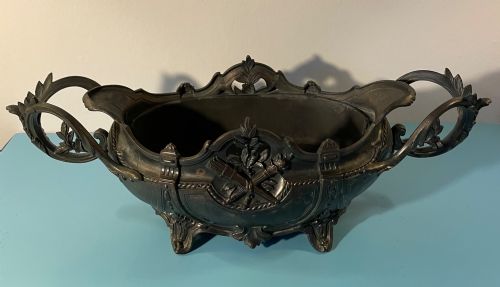
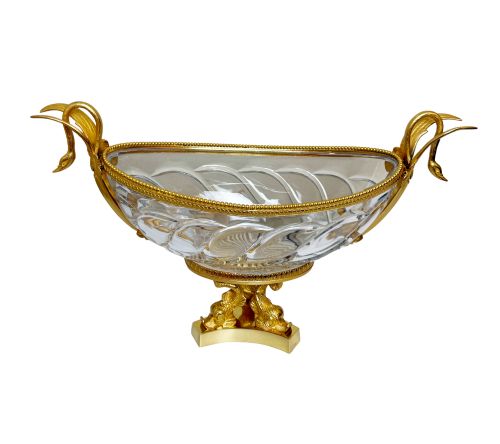
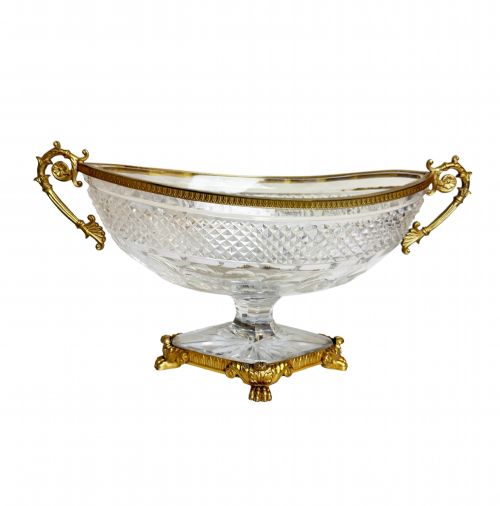
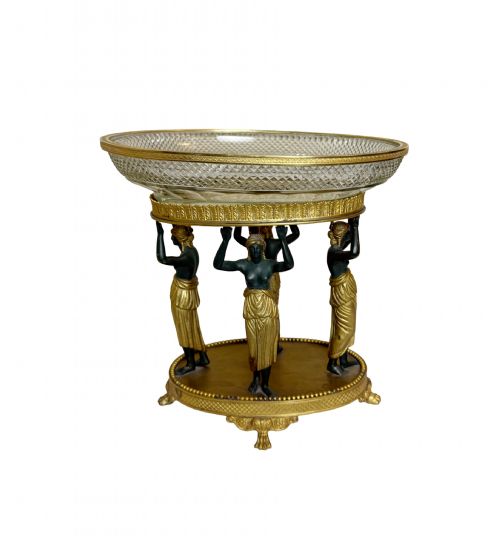
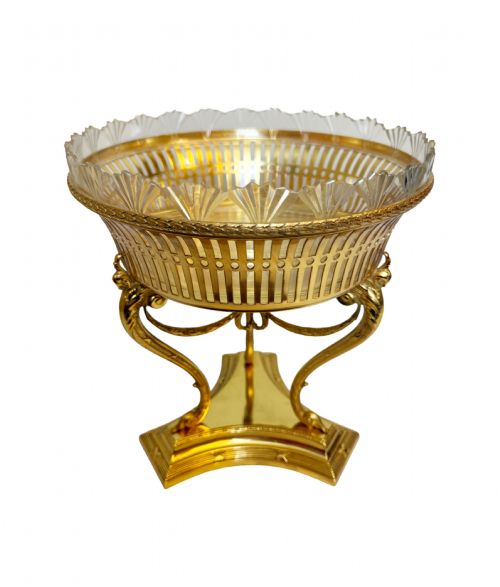
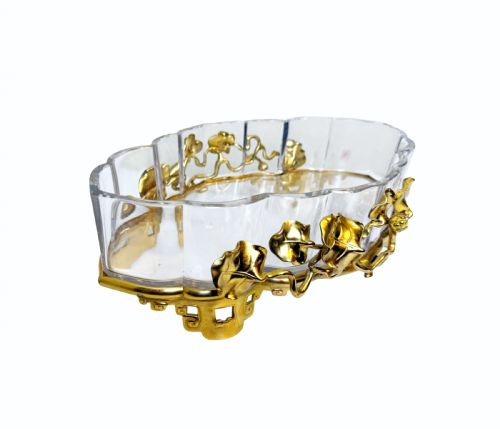
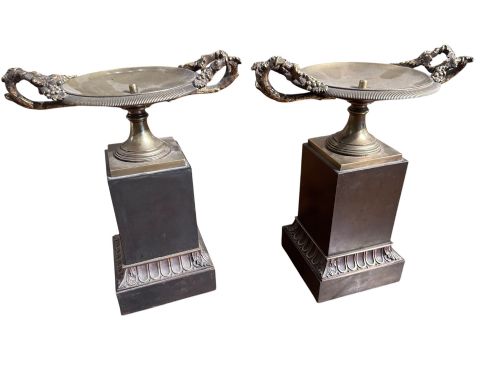
A French bronze table centrepiece takes several sculptural forms across nineteenth-century dining and display furniture, including open bowls, jardinieres, and tazzas. These pieces sit low on tables or sideboards, frequently incorporating glass inserts, crystal bowls, or porcelain elements to hold fruit or floral arrangements.
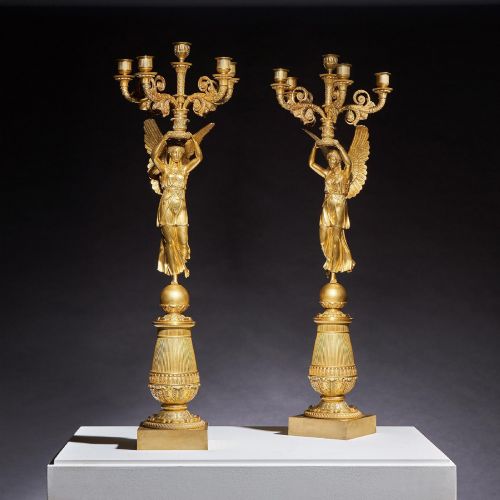
The aesthetic draws heavily from Empire, Régence, and Rococo Revival idioms, mixing patinated and gilded bronze surfaces with mythological figures, cherubs, and mermen. Many examples pair the central vessel with matching candelabra to create a uniform tablescape.
Originating largely from the nineteenth century, including the Regency and Napoleon III periods, these works demonstrate the era's ambition for ornate dining decoration. A buyer encounters various scales, from compact tazzas to substantial epergnes resting on marble bases.
Distinctions in craftsmanship
Quality rests in the crispness of the bronze chasing and the depth of the ormolu gilding. Superior examples display sharply defined figural work, such as cherubs or winged figures, where hand-tooling refines the cast surface after it leaves the foundry.
The integration of materials also dictates standing, with heavy cut crystal, fine porcelain inserts, and substantial marble plinths marking out the more ambitious commissions from standard workshop output.
Common motifs include winged cherubs, mermen, and classical figures derived from Empire and Rococo styles.
Pierre Philippe Thomire·Christofle Paris
The French Bronze Table Centrepiece Glossary
- Ormolu
- A method of applying finely ground high-carat gold to a bronze object using a mercury amalgamation technique. This gives the metal a warm, golden finish characteristic of French decorative arts.
- Tazza
- A shallow bowl or vase raised on a stem and foot, commonly used for serving fruit or displaying decorative objects. In nineteenth-century metalwork, these are often mounted with gilt bronze handles and figures.
- Jardiniere
- A decorative container designed to hold plants or floral arrangements, frequently constructed from bronze, crystal, or porcelain. They often mirror the stylistic motifs of contemporary centrepieces.
- Patinated bronze
- Bronze that has been treated with chemical solutions to produce a controlled surface colour, typically brown, green, or near-black. This contrasts with the bright finish of adjacent ormolu mounts.
- Epergne
- A large table centrepiece featuring a central bowl with branching arms and smaller hanging baskets or dishes. They were used in nineteenth-century dining to present multiple types of fruit or sweetmeats.
French Bronze Table Centrepiece: Frequently Asked Questions
How were table centrepieces used?
These pieces served as the visual focal point of formal nineteenth-century dining tables. They held fruit, flowers, or sweetmeats during elaborate multi-course meals.
Beyond dining use, owners placed them on sideboards and console tables as permanent decorative ornaments. Their reflective glass and gilt surfaces helped brighten candlelit rooms.
What is the difference between ormolu and gilt bronze?
Ormolu specifically denotes the historical French process of mercury gilding applied to bronze during the eighteenth and nineteenth centuries. The term is often used interchangeably with gilt bronze in modern trade descriptions.
Gilt bronze is a broader category that can include modern electroplating methods as well as traditional fire gilding. Examining the warmth and depth of the gold layer usually reveals the older technique.
How do I date a French centrepiece?
Dating relies on stylistic clues, such as the heavy classical symmetry of Empire pieces versus the asymmetrical curves of Rococo Revival works. The choice of materials, like Napoleon III silvered bronze or turn-of-the-century champlevé enamel, provides further chronological markers.
Foundry marks, signatures, or attribution to known makers help narrow the timeframe. Construction methods, including the type of screws and cast seams, also indicate the period of manufacture.