




French Bronze Sculpture Lamp
A french bronze sculpture lamp brings classical figures and animals into domestic lighting through cast metal and marble.
French Bronze Sculpture Lamp
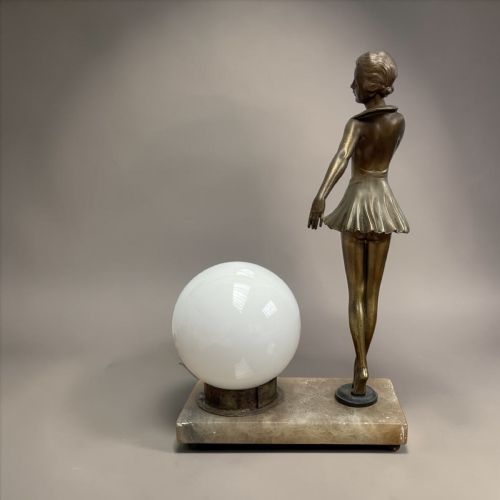
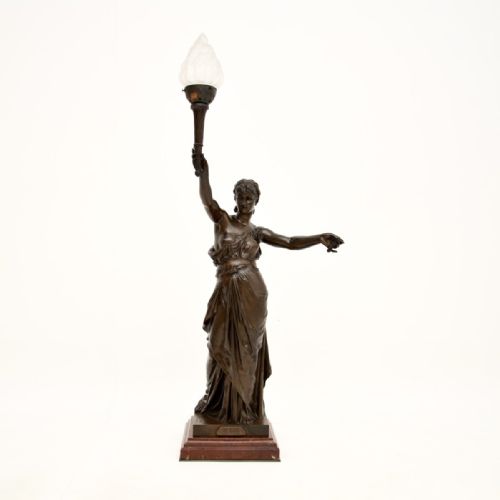
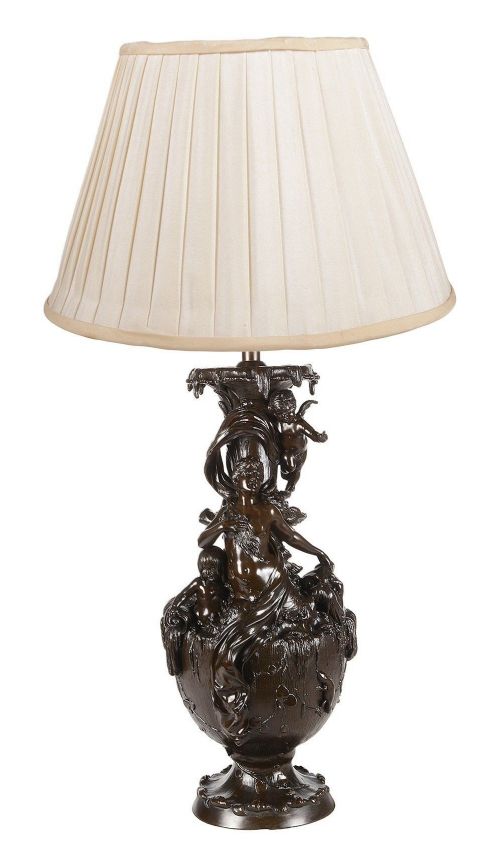
A french bronze sculpture lamp combines figurative sculpture with functional illumination, taking the form of table lamps, floor lamps, and night lights. These pieces frequently depict mythological figures, maidens, putti, and animals integrated into the body of the lighting fixture.
The pieces on this page span the nineteenth century and the early twentieth century, encompassing styles from French nineteenth-century and Neoclassical designs to Art Nouveau and Art Deco. Figures stand upon marble plinths or bases, sometimes paired with fabric shades or torchere shades.
Makers and sculptors represented in the record include Emile Picault, Jean-Jules Cambos, H. Moreau, Aug. Moreau, François-Christophe-Armand Toussaint, Coutan, P. Sega, Henri Honore Ple, and Adrien Gaudez. Alongside cast bronze, the listings include patinated bronze, gilt bronze, ormolu, and spelter.
Materials and Construction
Foundry work relied on metal casting techniques to shape bronze, patinated bronze, gilt bronze, ormolu, and spelter into complex human and animal forms. Many figures rest upon solid marble plinths, providing a heavy, stable base for the sculpture and lighting hardware.
Surface finishing involved chemical patination, gilding, and silvering to create varied tonal effects on the metal surfaces. Glass and fabric components were incorporated to diffuse the light emitted by the integrated torchere or table lamp fittings.
Greyhounds and Alsatians share the spotlight with classical goddesses, proving that Art Deco canines guard night lights just as fiercely as ancient deities.
Assessing Quality in Figural Lamps
Materials dictate the underlying caliber of the object, with solid bronze and heavy ormolu mounts sitting at a different level from patinated spelter alternatives. The integration of the lighting mechanism with the sculptural body without compromising the integrity of the figure demonstrates thoughtful design.
Emile Picault·Jean-Jules Cambos·H. Moreau·Aug. Moreau·François-Christophe-Armand Toussaint·Coutan·P. Sega·Henri Honore Ple·Adrien Gaudez·Auguste Moreau
The French Bronze Sculpture Lamp Glossary
- Spelter
- A zinc alloy frequently used as a cost-effective substitute for bronze in figural sculptures and lamps during the nineteenth and early twentieth centuries. It accepts patination well to mimic bronze finishes.
- Ormolu
- Gilt bronze created by applying a finely ground high-carat gold-mercury amalgam to a bronze object. The technique produces a rich, durable golden surface.
- Torchere
- A tall ornamental stand or floor lamp designed to hold lights pointing upwards. In these listings, torchere often describes the shade or the figurative form holding the light source.
- Patinated Bronze
- Bronze that has been treated with chemical solutions to produce a specific surface colour or aged finish. This process highlights the sculptural contours of the figure.
French Bronze Sculpture Lamp: Frequently Asked Questions
How do I date a french bronze sculpture lamp?
Dating relies on stylistic markers such as Neoclassical drapery, Art Nouveau whiplash lines, or Art Deco geometric symmetry. Signatures of known sculptors active in the nineteenth or early twentieth centuries also help anchor the period.
Material choices further refine the date, as spelter alternatives and marble bases became particularly prevalent around the turn of the century and into the nineteen-twenties and thirties.
Are these lamps converted from older artifacts?
Many figural sculptures were cast specifically as lampbases or torchères from the outset, while others incorporated existing decorative vases or statues into functional lighting. The wiring channels and mounts are often integrated directly into the casting or mounted through the base.
Examining the underside and the fitting attachments reveals whether the lighting hardware was planned during the creation of the sculpture or added later.
What is the difference between bronze and spelter?
Bronze is an alloy of copper and tin known for its strength, weight, and capacity to hold fine sculptural detail. Spelter is a softer, lighter zinc-based metal that was widely utilised for decorative figures and lamps.
Objects cast in spelter often feature a bronzed or painted patination to simulate the appearance of true bronze.
Where should I place a large figural lamp?
These pieces function well as floor lamps or substantial table lamps where their sculptural presence can serve as a focal point in a room. Placing them on sturdy surfaces like sideboards or heavy pedestals accommodates their weight and height.
Ensure the surrounding decor complements the specific period style, whether that is nineteenth-century classical or Art Deco animal sculpture.