
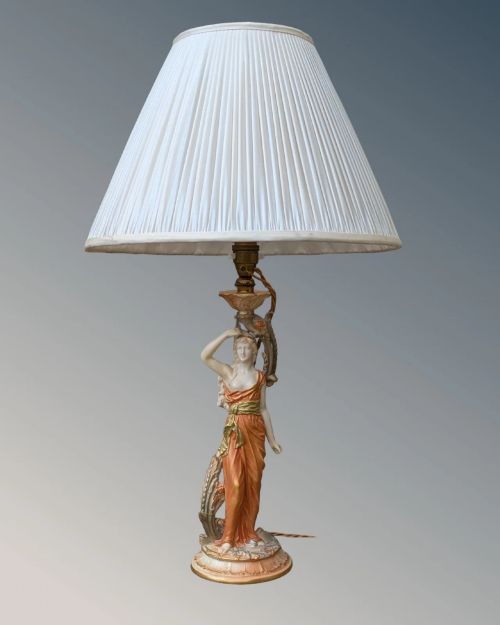


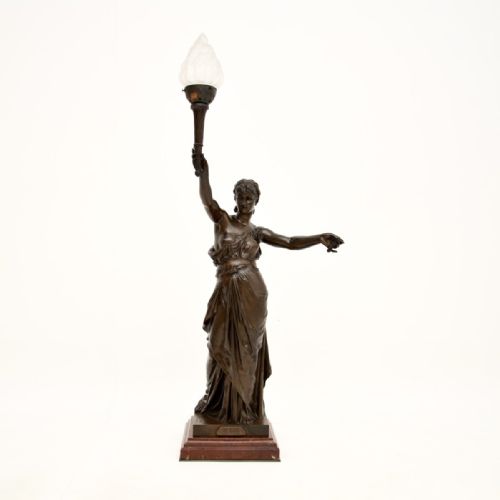


Classical Female Figure Lamp
A classical female figure lamp brings sculptural grace to a room, casting soft illumination through historic forms.
Classical Female Figure Lamp
A classical female figure lamp combines sculptural representation with functional lighting, drawing on historic motifs from ancient traditions. These pieces take the form of figures holding lamps, or integrated torchere structures that support illumination.
The selections encountered here span multiple eras, notably the nineteenth century, the Victorian period, and the early twentieth century. Common formats include table lamps, floor standing torcheres, and figural lampbases referencing neoclassical and art nouveau aesthetics.
Makers and sculptors represented in these works include Humphrey Hopper, Jean-Jules Cambos, Coutan, and Auguste Moreau. Their creations utilise distinct sculptural vocabularies to render female figures with drapery, classical pose, and symbolic attributes.
How they were made
Many of these figural works utilise bronze or spelter cast through traditional foundry methods, capturing fine details in drapery and facial expression. Cold painting, silvering, and gilt finishes are frequently applied to enhance the metallic surfaces.
Other examples incorporate carved wood such as oak, moulded plaster, or porcelain from houses like Royal Worcester. Glass elements, including frosted glass and fabric shades, complete the upper portions designed to diffuse light.
Several figures hold aloft lamps as if eternally commuting through a very bright, very metal museum.
What varies in quality
The distinction between standard production items and signed works by recognised sculptors often determines the prominence of the piece. Materials also contribute, with heavy cast bronze or fine porcelain sitting differently in hand than lighter spelter or plaster.
Royal Worcester·Humphrey Hopper·Jean-Jules Cambos·Coutan·Auguste Moreau
The Classical Female Figure Lamp Glossary
- Torchere
- A tall ornamental stand or floor lamp designed to hold a light source. In older pieces, this takes the form of a classical figure bearing a torch or vessel.
- Spelter
- A zinc alloy commonly utilised as a less expensive alternative to bronze during the nineteenth and early twentieth centuries. It accepts patination and metallic paint finishes readily.
- Caryatid
- A sculpted female figure serving as an architectural support taking the place of a column or pillar. These forms frequently transition into lighting fixtures in later periods.
- Neoclassical
- A style reviving the art and culture of ancient Greece and Rome. It prioritises symmetry, dignified restraint, and classical drapery.
- Cold painted
- A method of applying non-fired paint to bronze or metal figures after the casting process is complete. This technique permits vivid polychrome surfaces on historic bronzes.
Classical Female Figure Lamp: Frequently Asked Questions
What is a classical female figure lamp?
A classical female figure lamp is a lighting fixture formed around a sculptural depiction of a woman, often holding a torch, lamp, or vessel.
These pieces draw upon ancient architectural and artistic traditions, incorporating styles like neoclassical and art nouveau into domestic illumination.
How do I identify the period of a figural lamp?
Dating relies on observing the materials, manufacturing techniques, and stylistic markers recorded in the piece. Nineteenth-century examples often utilise heavy cast bronze or cold painting, whereas later twentieth-century works frequently employ spelter or porcelain.
Signatures or foundry marks stamped onto the base can also link the work to known sculptors or makers active in specific decades.
Where were these lamps placed in historic interiors?
Taller torchere lamps and figural floor stands were traditionally positioned in grand reception rooms, hallways, or beside staircases to provide ambient illumination. Smaller table lamps found use on desks, side tables, and mantelpieces within parlours.
Their dual role as sculpture and light source allowed them to serve as focal points in period domestic spaces.
How should I care for bronze and spelter lamps?
Metal figures require gentle dusting with a soft, dry cloth to prevent the accumulation of grit on patinated or painted surfaces. Avoid liquid cleaners or chemical polishes, which can strip historic cold-painted finishes or vintage patination.
Check wiring periodically to ensure internal components meet current safety standards for historic lighting.