






French Bronze Sculpture Clock
These french bronze sculpture clock pieces combine sculptural figures with functional timekeeping, offering a striking centrepiece for any room.
French Bronze Sculpture Clock
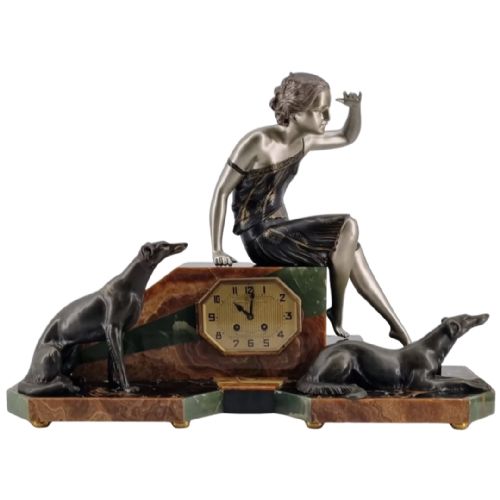
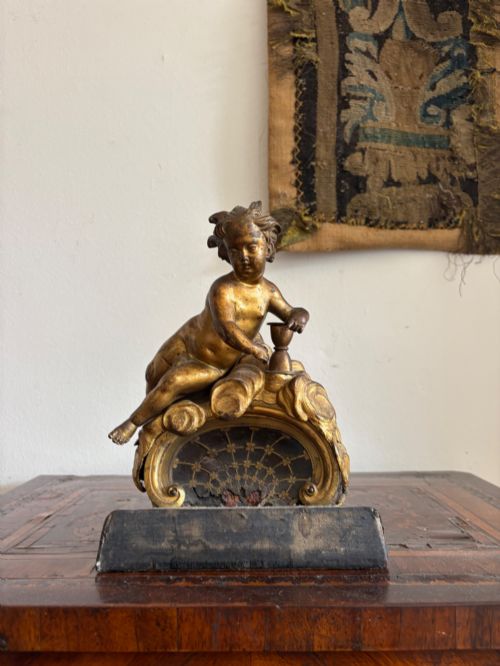
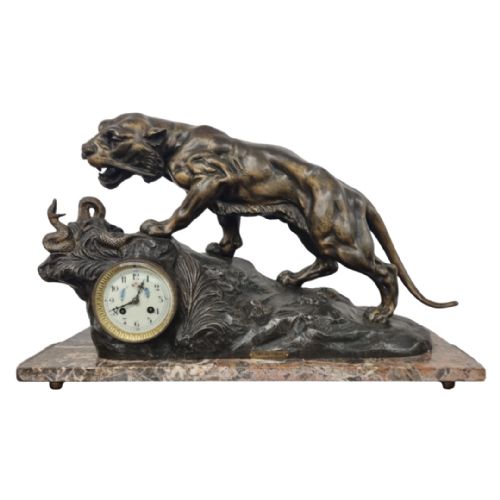
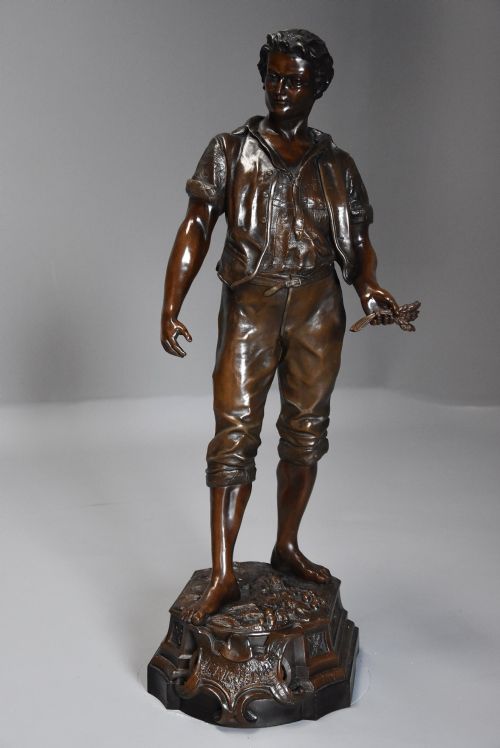
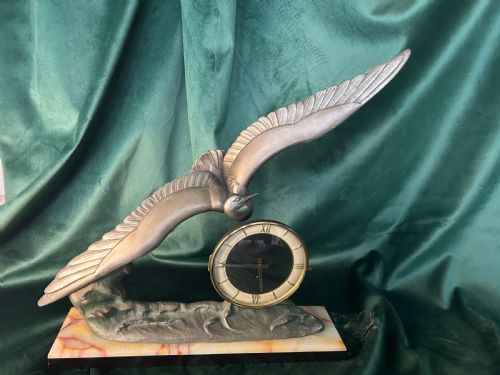
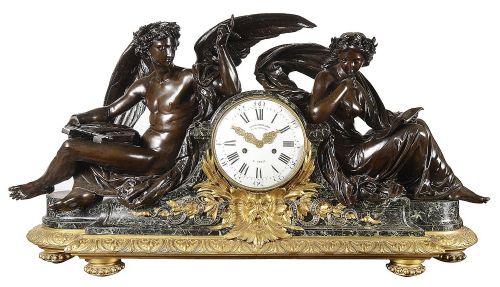
A french bronze sculpture clock marries metalwork and horology, featuring cast figures ranging from classical deities and animals to human labourers integrated into the timepiece design. You will most frequently encounter nineteenth century examples, spanning periods from the French Empire and Rococo revivals through to later Art Deco designs.
The physical form typically pairs a central dial housing the movement with substantial figural bronzes, often mounted on marble bases or accompanied by matching side ornaments in clock garniture sets. Pieces range from large architectural mantel clocks to intricate figural works depicting historical or mythological scenes.
Origins trace directly to Parisian workshops and prominent makers of the nineteenth and early twentieth centuries, where bronze casting and clockmaking were unified into luxury household goods. These objects served both as reliable timekeepers and as status symbols in wealthy domestic interiors.
Evaluating Quality and Craftsmanship
The refinement of the casting and the crispness of the chiselling separate finer examples from standard production, as skilled metalworkers spent hours hand-finishing details in the bronze. Greater depth in the patination and more complex multi-metal combinations, such as silvered bronze paired with gilt elements, indicate higher workshop standards.
The integration between the sculpture and the clock housing also dictates worth, where bespoke sculptural compositions designed specifically for the movement outrank generic figures simply mounted beside a standard dial. The reputation of the founding house or signed artist adds significant weight to the piece.
Listings feature periods spanning from eighteen-hundred through to nineteen-thirty, with materials including bronze, marble, ormolu, and spelter.
R Varnier·F Milliot·Leon Message·Jollet et Cie·Auguste Moreau·Andre Guilmet·Victor Paillard·Deniere and Cailleaux·Japy Freres·Louis Hottoot·Bruchon
The French Bronze Sculpture Clock Glossary
- Ormolu
- Gilt bronze produced by applying a finely ground high-carat gold-mercury amalgam to a bronze object before heating. This technique creates a durable, luminous golden finish characteristic of luxury nineteenth-century decorative arts.
- Spelter
- A zinc alloy frequently used as a less expensive alternative to bronze for sculptural castings. It was often bronzed or painted to imitate true bronze in more accessible decorative clocks.
- Garniture
- A set of matching ornamental objects consisting of a central clock flanked by side pieces such as vases or matching sculptures. These sets were designed to create a balanced display across a mantelpiece.
- Clock movement
- The internal mechanical mechanism driven by springs or weights that powers the gear train and drives the hands. In these pieces, French movements often strike the hours and halves on a tuned bell.
- Patina
- The surface sheen or coloration developed by bronze over time through oxidation and handling. Cleaners value a rich, undisturbed patina for the historical depth it adds to the sculpture.
French Bronze Sculpture Clock: Frequently Asked Questions
What is a clock garniture?
A clock garniture is a matched set consisting of a central timepiece accompanied by two matching side ornaments, such as vases or sculptural figures. These items were designed to sit together on a mantelpiece to create a unified decorative arrangement.
The side pieces share the same materials, such as marble or bronze, and stylistic motifs as the main clock body, reflecting the interior design tastes of the nineteenth century.
How do I identify the period?
Periods can be identified through the stylistic vocabulary of the bronze sculpture, ranging from ornate Rococo scrolls and Empire classical motifs to geometric Art Deco lines. Examining the casting style, materials like onyx or ormolu, and any signatures on the dial or movement helps narrow down the date.
Most surviving pieces originate from the nineteenth century, with distinct shifts from revival styles in the eighteen-fifties toward cleaner modern forms by nineteen-thirty.
Are these clocks heavy?
These clocks are exceptionally heavy because they combine solid bronze sculptures with dense marble or onyx bases and internal metal movements. A large mantelpiece clock or a full garniture set requires a sturdy surface for safe placement.
Lifting or moving these pieces typically requires two people to avoid damaging the delicate protruding bronze elements or cracking the stone bases.
Who made these sculptures?
Many sculptures were created by named artists and produced in Parisian foundries, while others were standard workshop castings sold through retailers. Signatures from sculptors or bronze-casters occasionally appear cast directly into the metal base.
Foundries often reproduced popular salon sculptures by artists like Auguste Moreau or Louis Hottoot alongside specialised works by horological makers.