



French Bronze Mounted Porcelain
French bronze mounted porcelain brings together glazed ceramic bodies and cast metallic fittings to create ornate furniture, clocks, and decorative objects.
French Bronze Mounted Porcelain
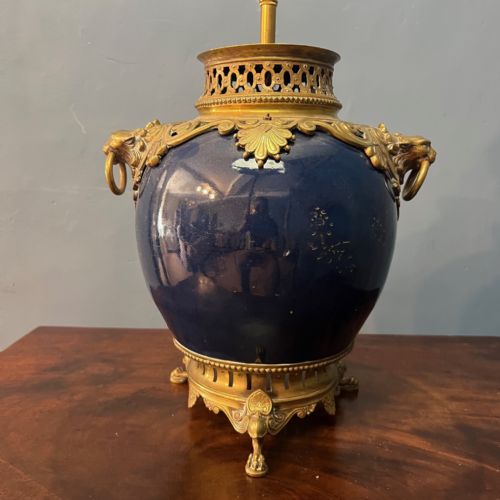
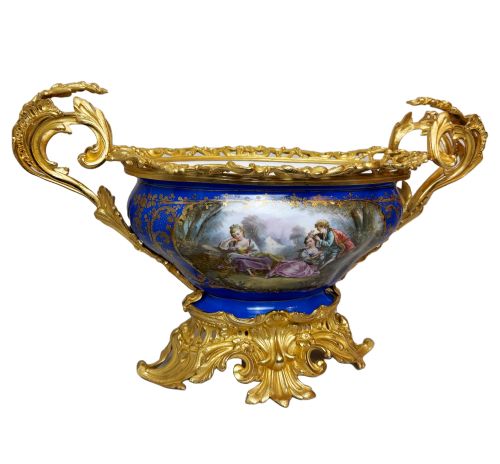
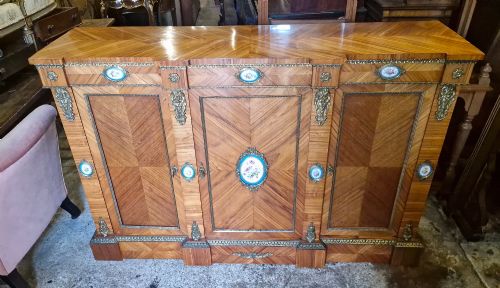
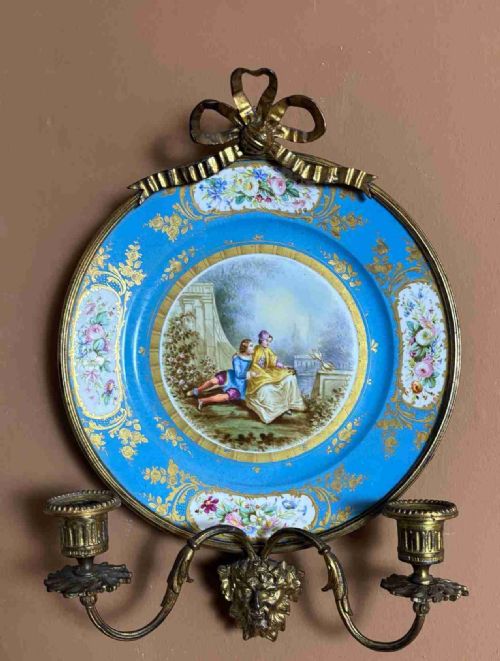
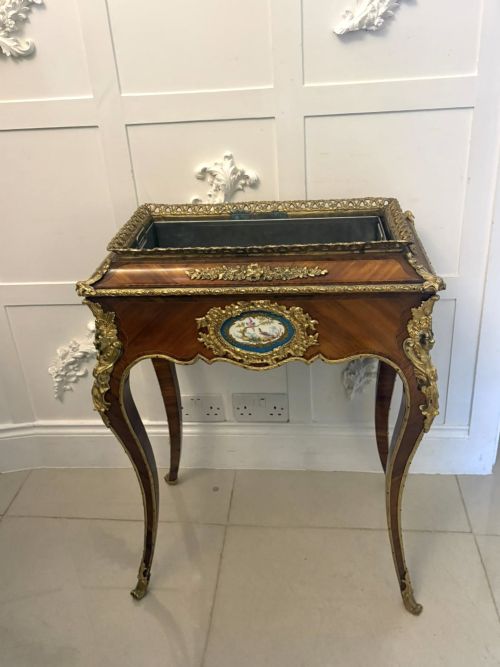
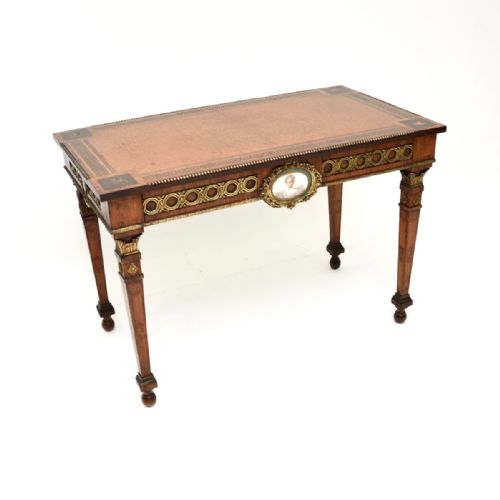
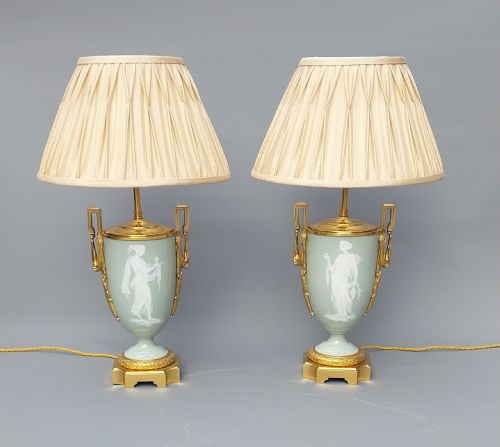
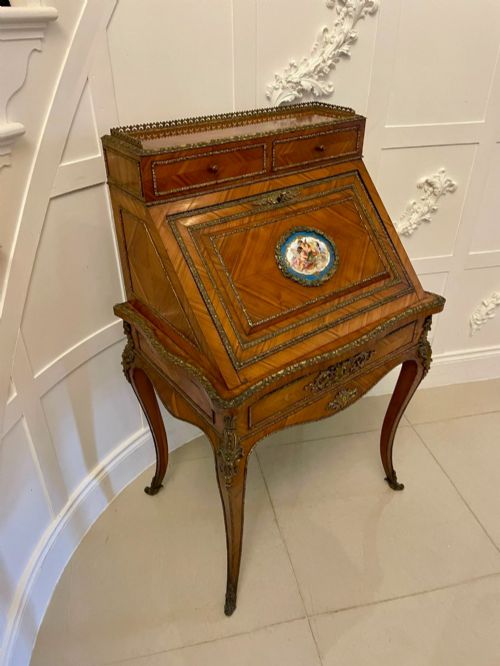
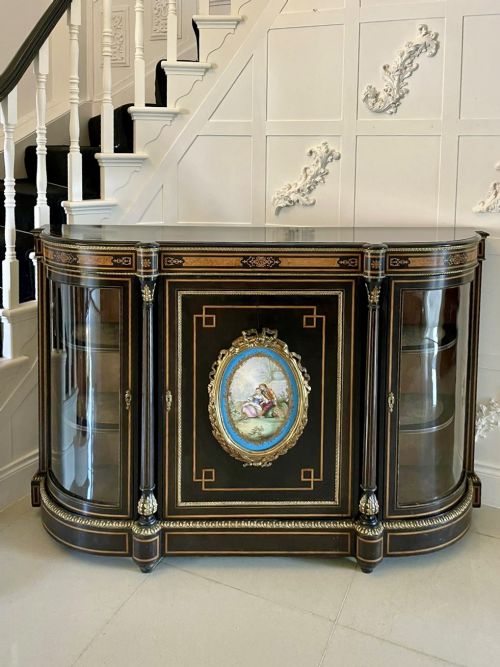
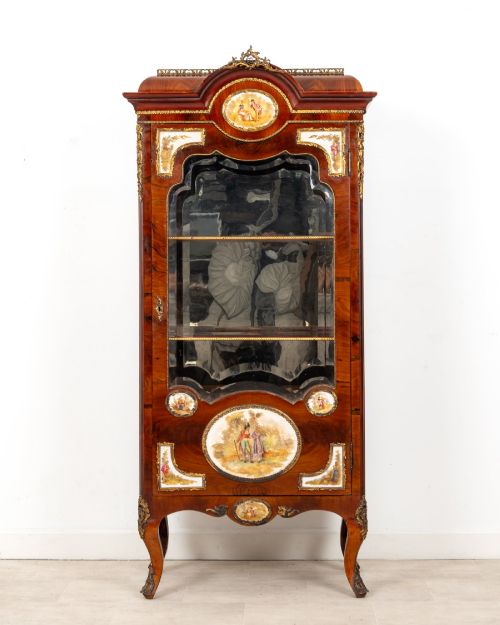
French bronze mounted porcelain encompasses items such as mantel clocks, table lamps, jardinières, and display cabinets that incorporate ceramic elements secured with metal mounts.
The pieces appearing on this page belong primarily to the nineteenth century, including specific dates from eighteen seventy through nineteen hundred, alongside eighteenth-century examples.
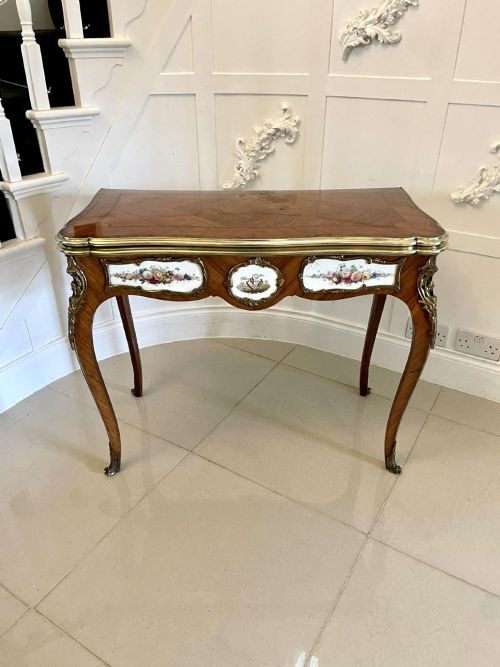
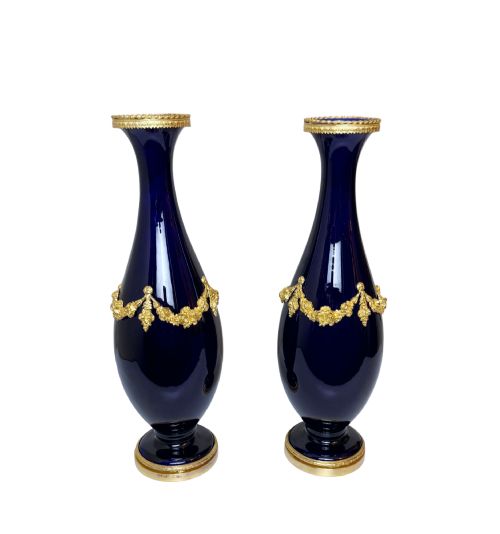
Object types span practical furniture like writing tables and bureaus alongside decorative vessels including vases, urns, and centrepieces.
Materials and Technique
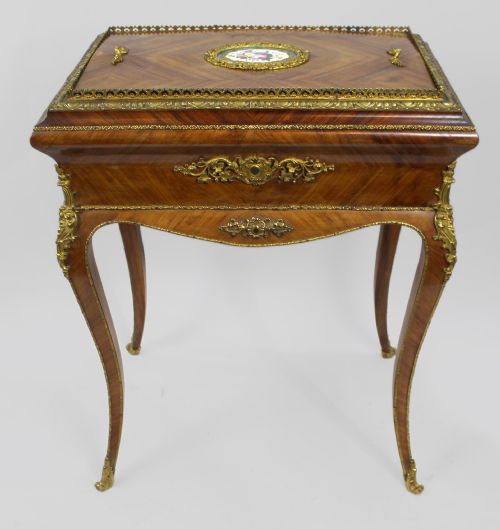
Craftsmen utilised porcelain bodies glazed in blue, turquoise, celadon, and white, sometimes incorporating inlaid timbers like kingwood, walnut, and tulipwood for supporting furniture frames.
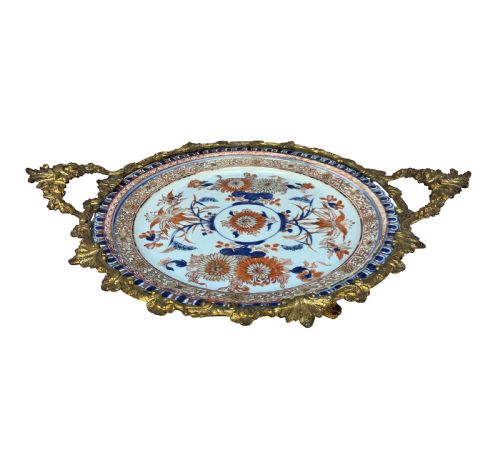
Metal components take the form of cast ormolu, gilt bronze, and brass, shaping mounts, handles, and decorative trim that secure or frame the ceramic sections.
Techniques recorded in the evidence include pâte-sur-pâte decoration, champlevé enamel, and marquetry inlay alongside hand-painted ceramic plaques.
French Bronze Mounted Porcelain Retail Price Guide 2026
Typical asking prices for french bronze mounted porcelain among the pieces listed under this phrase on Sellingantiques today, from the lower quarter to the upper quarter. They describe what is for sale here now, not the wider market.
One listed clock pairs a gilded brass windmill with porcelain figures of Harlequin and Columbine.
Evaluating Quality
Quality rests upon the crispness of the bronze casting and the precision with which the metal mounts follow the contours of the porcelain vessels and furniture carcasses.
The refinement of the ceramic painting, especially in figural scenes or pâte-sur-pâte work, distinguishes standard production from exhibition pieces.
Sevres·Meissen·Etienne Lenoir
The French Bronze Mounted Porcelain Glossary
- Ormolu
- Gilded bronze used for decorative furniture mounts and decorative hardware. The technique involves applying a mercury and gold amalgam to cast bronze.
- Pâte-sur-pâte
- A ceramic decoration technique where liquid clay is applied layer by layer to a damp body to build up a low relief design. This creates a cameo-like effect against a contrasting background.
- Jardinière
- An ornamental receptacle designed to hold plants or floral arrangements. These containers often feature ceramic bodies set within metal stands.
- Vitrine
- A glass-fronted cabinet designed for displaying porcelain, curiosities, and decorative objects. Such furniture typically incorporates marquetry and metal mounts.
- Champlevé
- An enamelling technique where troughs are dug into a metal surface and filled with vitreous enamel paste before firing. The piece is then polished smooth.
French Bronze Mounted Porcelain: Frequently Asked Questions
What is french bronze mounted porcelain?
French bronze mounted porcelain refers to decorative objects and furniture where ceramic bodies, often originating from factories like Sevres or Meissen, are fitted with cast ormolu or gilt bronze mounts.
These pieces combine functional or display utility with ornate metalwork, spanning table lamps, mantel clocks, and cabinets.
How were these items used originally?
In period interiors, these objects served both practical and decorative functions as lighting sources, timekeepers, and display vessels in formal reception rooms.
Items like jardinières held indoor plants, while display cabinets and writing desks showcased the refined tastes of their owners.
How do I style these pieces at home?
Living with these items involves integrating them as focal points within a room, allowing their gilded mounts and coloured porcelain glazes to contrast against neutral walls or timber furniture.
Lamps, clocks, and small decorative vessels function well on mantelpieces, side tables, and desks.
How can I tell the period of a piece?
Dating relies on observing the stylistic indicators of the mounts and woodwork, such as Louis XV or Rococo Revival curves versus Neoclassical symmetry, alongside specific nineteenth-century construction methods.
Factory marks on the porcelain plaques or ceramic bases also provide direct evidence of origin and date.