


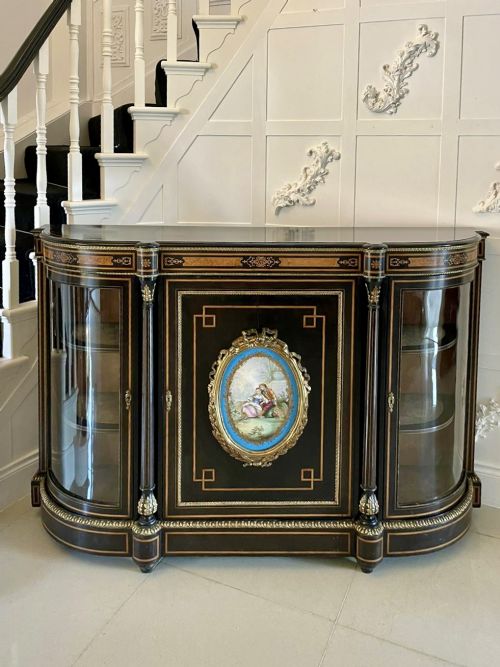
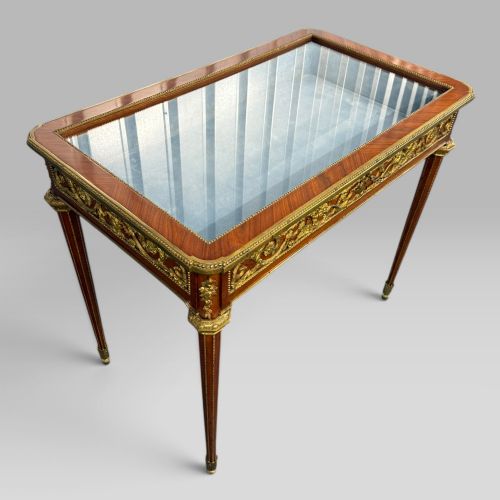
French Bronze Mounted Cabinet
A french bronze mounted cabinet brings together rich timbers and cast metal mounts in pieces built to display or conceal.
French Bronze Mounted Cabinet
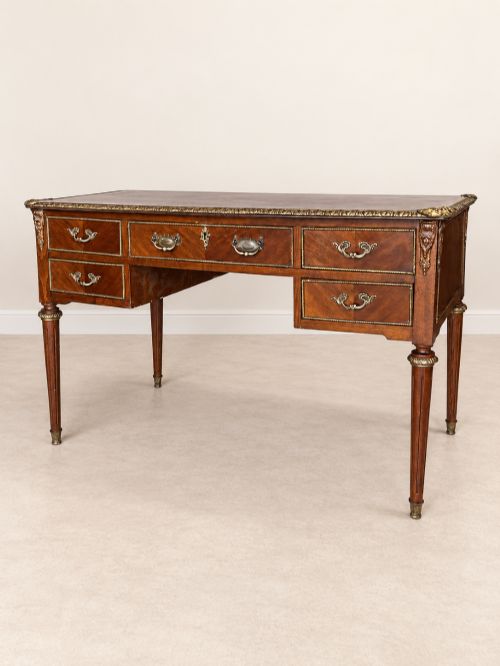
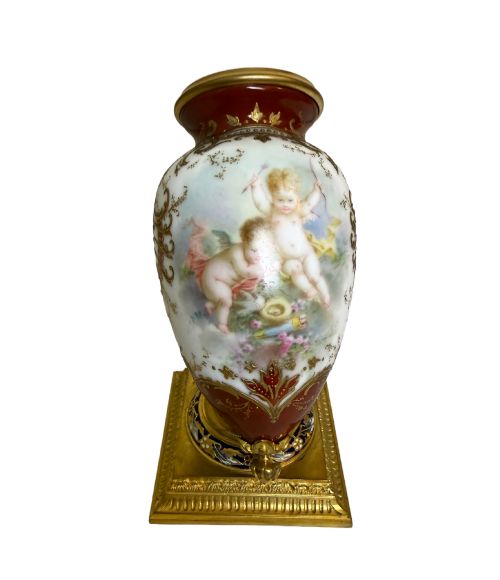
A french bronze mounted cabinet is a formal storage piece or display unit embellished with cast metal ornamentation. These pieces range from towering vitrines and side cabinets to smaller commodes, credenzas and writing desks.
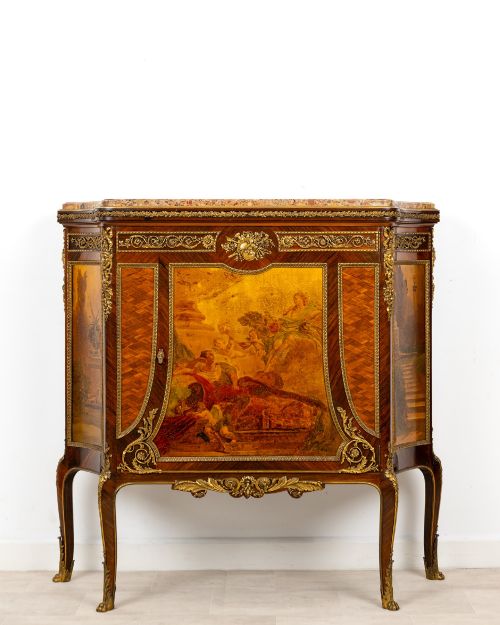
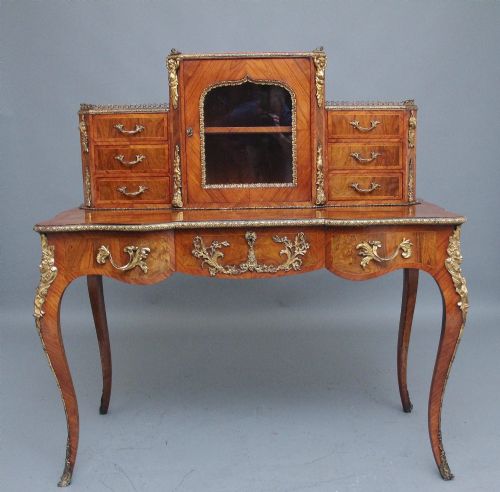
The versions most commonly met on this page date from the nineteenth century and follow revival styles including Louis XV, Louis XVI and Napoleon III. Makers applied gilt bronze or ormolu mounts to frames built from woods such as kingwood, walnut, mahogany and ebonised timber.
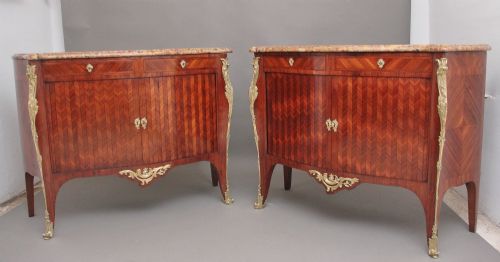
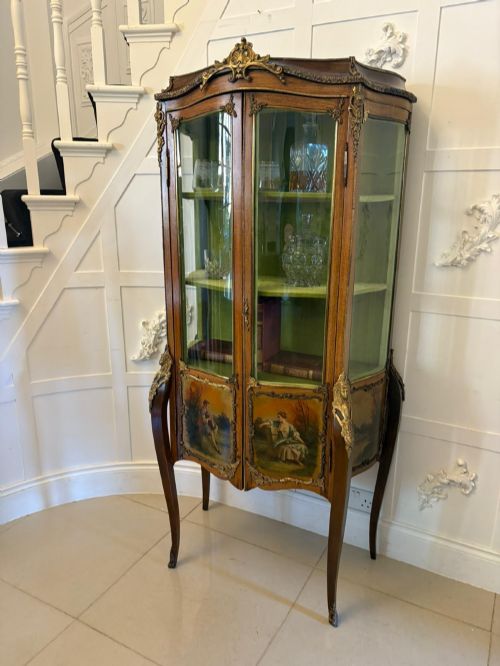
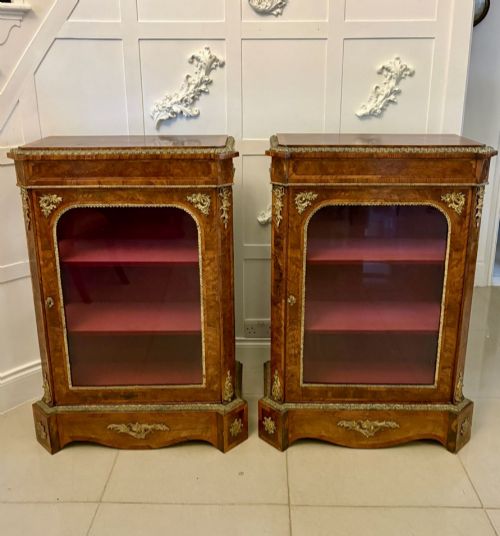
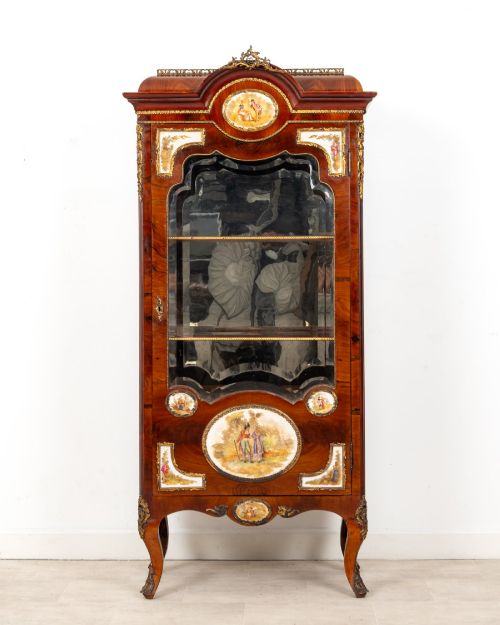
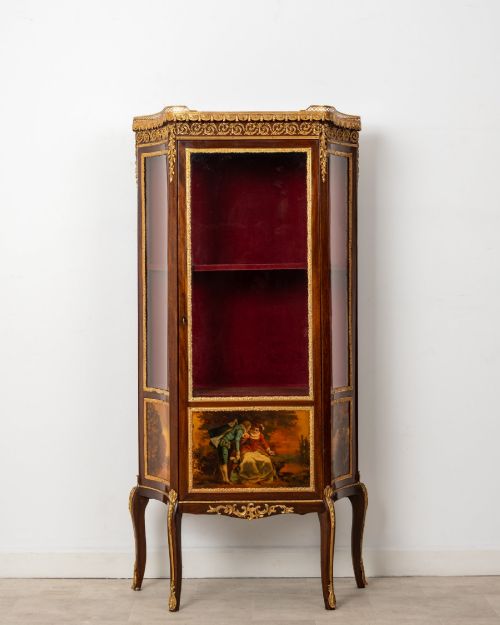
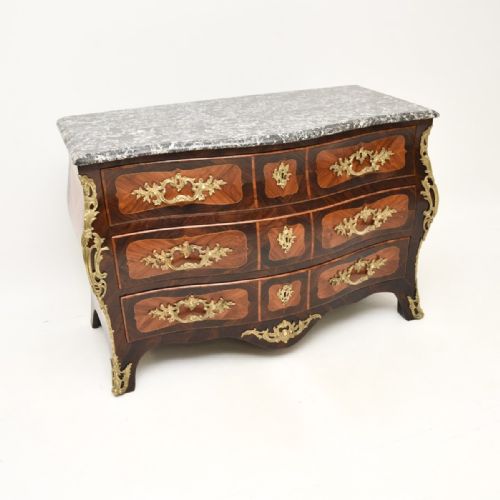
Forms vary according to their original purpose, encompassing glass-fronted display cases for porcelain and curiosities alongside solid-door credenzas and serpentine chests of drawers topped with marble.
Materials and construction
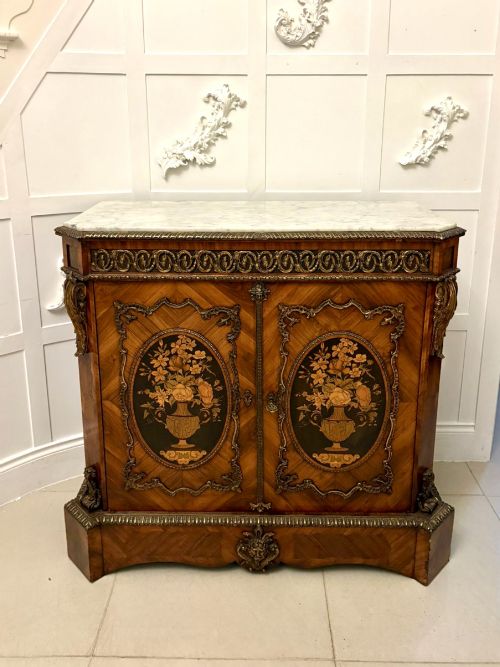
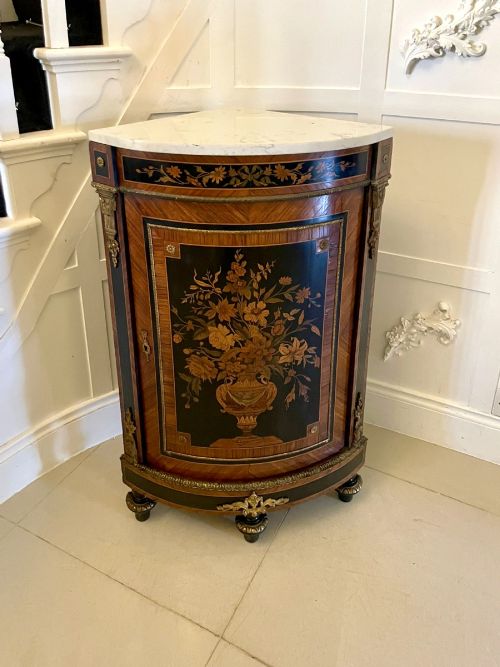
Makers constructed the carcases using native and exotic hardwoods like mahogany, walnut and kingwood, frequently applying intricate marquetry, parquetry or Vernis Martin painted panels across the surfaces. Many forms incorporate heavy marble tops in white or coloured varieties, fitted precisely to the upper surface of the timber frame.
Ormolu and gilt bronze mounts were cast, chased and fire-gilt before being secured to the corners, feet and friezes of the furniture. These metal elements accentuate the structural lines and curves of revival designs such as the bombé and serpentine shapes.
Some nineteenth-century makers hid secret drawers behind gilded bronze mounts, ensuring your love letters stayed safer than your porcelain.
Distinctions in quality
The refinement of the bronze or ormolu casting separates standard production from exceptional examples, with sharper chiselling and deeper gilding indicating superior workshop output. The complexity and precision of the underlying marquetry or parquetry patterns also dictate the standing of a piece.
Construction methods within the carcase, including the choice of secondary timbers and the crispness of the joinery, reflect the skill invested by makers such as François Linke, Mercier Frères or Maison Krieger.
Gabriel Viardot·H. J. Hatfield and Sons·Maison Krieger·Henry Dasson·Mercier Freres·E. Kahn
The French Bronze Mounted Cabinet Glossary
- Ormolu
- Gilded bronze used for furniture mounts and decorative hardware. The technique involves applying a mercury and gold amalgam to cast bronze before heating.
- Vernis Martin
- A European imitation of East Asian lacquer developed by the Martin brothers in the eighteenth century. It appears as translucent painted decoration on cabinets and vitrines.
- Marquetry
- The art of applying pieces of veneer to a structure to form decorative patterns and pictures. Makers utilised woods of contrasting colours to achieve pictorial depth.
- Vitrine
- A glass-fronted display cabinet designed for porcelain, glass and small objects of vertu. These pieces often feature glass sides to maximise light penetration.
- Bombé
- A swelling or outwardly curving furniture shape characteristic of mid-eighteenth-century French design and its later nineteenth-century revivals.
- Boullework
- Marquetry consisting of tortoiseshell and brass inlaid in counter-change patterns. Named after the cabinetmaker André-Charles Boulle, it is frequently seen on Napoleon III pieces.
French Bronze Mounted Cabinet: Frequently Asked Questions
Where were these cabinets placed in a nineteenth-century home?
These pieces were typically positioned in formal reception rooms, drawing rooms and salons to display valuable porcelain, glass and decorative art objects to visiting guests. Larger credenzas and side cabinets served both decorative functions and practical storage needs.
In domestic settings, vitrines and display cabinets occupied prominent wall spaces where natural light could illuminate the interior shelves and highlight the gilt bronze mounts.
How do I distinguish between eighteenth-century originals and nineteenth-century revivals?
The vast majority of pieces available date from the nineteenth century, reflecting enthusiastic revivals of earlier French monarchical styles. Examination of the secondary timbers, construction hardware and interior linings generally reveals nineteenth-century workshop practices rather than eighteenth-century construction.
Stylistic proportions and the uniformity of the cast bronze mounts provide further clues, as nineteenth-century cabinetmakers utilised advanced industrial techniques alongside traditional hand-finishing.
What is the difference between a vitrine and a credenza?
A vitrine is primarily a display cabinet featuring glazed doors and often glass side panels designed to showcase objects from multiple angles. It stands as an upright case intended for visual exhibition.
A credenza functions as a low side cabinet with solid or panelled doors, sometimes accompanied by central display sections, originally utilised for serving food or storing dining accessories before evolving into a purely decorative drawing-room piece.
How should I care for marble-topped furniture?
Marble surfaces require gentle cleaning with a damp cloth and mild, pH-neutral soap to avoid damaging the polished stone. Acidic substances like citrus juice or wine can etch the surface and must be wiped away immediately.
When moving these cabinets, lift the marble top off the timber base separately if possible, as stone slabs are heavy, brittle and easily cracked if the frame twists during transit.