


French Bronze Iron
French bronze iron objects bring together heavy industrial metalwork and finely chased decorative metal, creating pieces that anchor a room with substance.
French Bronze Iron
When you search for french bronze iron, you encounter a selection spanning the nineteenth century and the early twentieth century, dominated by fireplace furnishings and architectural elements. The domestic hearth forms the centre of this category, appearing as pairs of chenets, fire dogs, and companion sets designed for coal and wood fires.
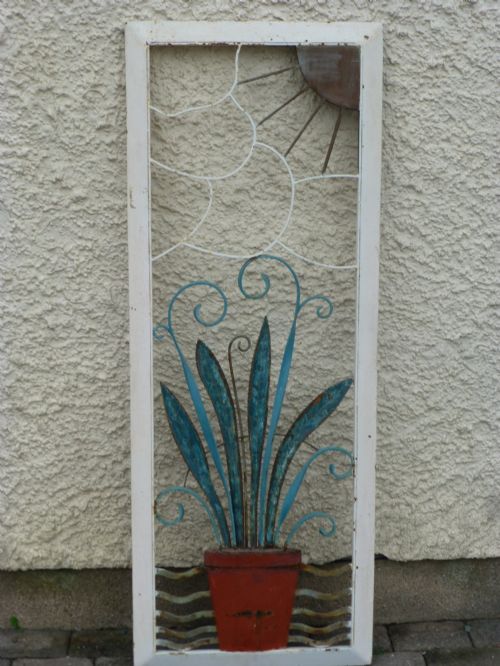
Beyond the fireside, the selection extends to lighting fixtures, architectural garden screens, and scale models such as field gun replicas and duck presses. These objects combine the structural strength of wrought or cast iron with the decorative warmth of bronze and ormolu.
The aesthetic reaches from ornate nineteenth-century Rococo revival and Empire designs to clean-lined Art Deco and rustic country house forms. Most examples date from the Victorian era up to the nineteen-twenties, reflecting both formal salon tastes and utilitarian utility.
Assessing Quality
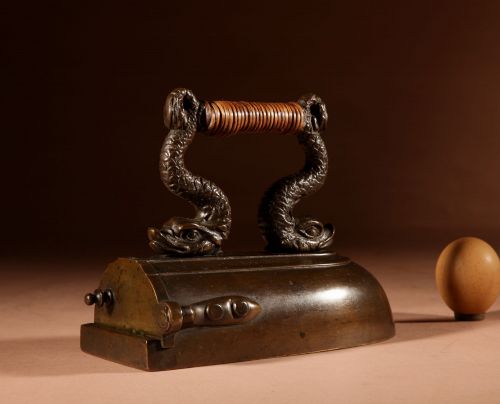
Quality rests in the crispness of the bronze chasing and the harmony between the heavy iron framework and the applied mounts. Superior examples show meticulous detail in human figures, animals, and foliate scrolls without soft edges or heavy clean-up marks from the foundry.
Construction methods also dictate standard, where hand-forged ironwork and securely bolted bronze mounts demonstrate greater craftsmanship than mass-produced later variants.
Among the heavy ironwork, a nineteenth-century duck press waits to crush poultry for sauce with surprising Victorian mechanical precision.
Raymond Subes·André Vincent Becquerel
The French Bronze Iron Glossary
- Chenet
- An alternative term for a fire dog, placed at the hearth to support logs. These often feature decorative bronze or ormolu mounts facing into the room.
- Ormolu
- Gilded bronze produced by applying a mercury and gold amalgam to a bronze base and firing it. This technique creates a rich, lasting golden surface common in French decorative arts.
- Wrought Iron
- Iron heated and hammered into shape by hand, resulting in a fibrous texture and visible hammer marks. It provides flexible strength for chandeliers, screens, and furniture bases.
- Cast Iron
- Iron poured in a molten state into a mould to take complex shapes. It offers rigidity and heavy mass for architectural elements and structural bases.
- Animalier
- A nineteenth-century artistic style focusing on the realistic depiction of animals. Sculptures in this manner frequently appear on French bronze and iron works.
French Bronze Iron: Frequently Asked Questions
What are french chenets?
Chenets are decorative firedogs positioned at the front of a hearth to keep logs raised on the grate for better airflow. They typically feature heavy iron bases with ornate bronze or ormolu mounts.
In period interiors, they served both a practical role in tending fires and an aesthetic one as focal points of the chimney piece.
How do I clean bronze and iron?
Iron elements benefit from light dusting and occasional treatment with neutral wax to prevent oxidation. Bronze and ormolu require gentle cleaning with a soft cloth to avoid stripping patination or parcel gilt details.
Harsh chemical polishes should be avoided, particularly on antique surfaces where the aged patina contributes to the character of the metal.
Are these pieces functional today?
Many fireplace accessories, such as fire tools, companion sets, and fenders, remain fully usable in active hearths. Architectural iron screens, chandeliers, and console tables adapt easily to modern interior schemes as decorative fixtures.
Care should be taken with antique mechanical items like duck presses or scale models, which are best preserved as display pieces rather than for heavy daily use.
How do I date nineteenth-century ironwork?
Dating relies on stylistic markers, such as the exuberant curves of Rococo revival pieces versus the geometric lines of Art Deco designs. Evidence of hand-forging techniques and the specific composition of bronze mounts also help narrow the period of manufacture.
Comparing construction joints and fastener types provides further clues to whether a piece originates from the mid-nineteenth century or the later Victorian era.