


Antique Laundry Iron
An antique laundry iron is a domestic metalwork piece that brings tactile history to a room.
Antique Laundry Iron
When you search for an antique laundry iron, you are looking at utilitarian domestic hardware used for pressing and smoothing textiles before the advent of electricity. These objects survive in several distinct forms, including flat irons, goffering irons for lace, and travellers' samples.
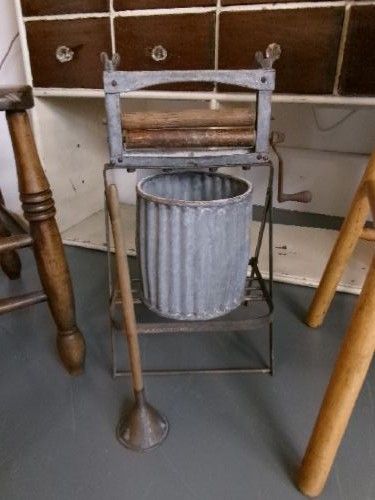
The versions you are most likely to meet on this page span the eighteenth, nineteenth, and early twentieth centuries. They range from small tabletop heating tools to larger laundry room equipment such as wash tubs and clothes airers.
Makers and foundries produced these utilitarian items across various styles, including Georgian, Victorian, and industrial vernacular. Each piece carries the marks of heavy domestic labour from a bygone age.
Materials and construction methods
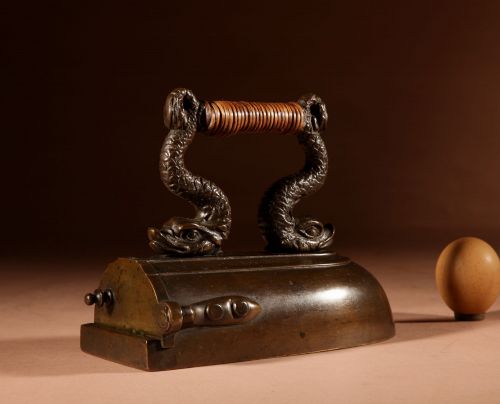
These pieces are primarily fashioned from heavy cast iron and wrought iron, engineered to retain heat or withstand rigorous washing tasks. Some examples incorporate brass elements or delicate bronze bodies, particularly in specialised heating tools.
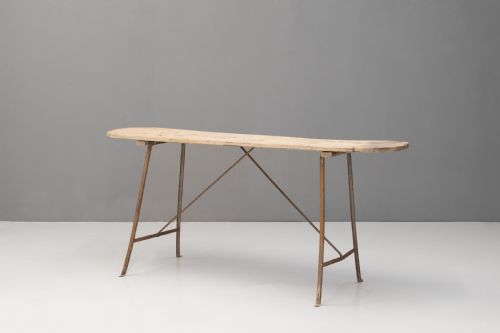
Support structures and ancillary items frequently utilise timber, with pine tops and wooden handles appearing alongside galvanised steel tubs and cane details. Every material was chosen for its durability in domestic service rather than purely decorative effect.
Listings for antique laundry iron pieces span materials from cast iron and brass to pine and galvanised steel across the nineteenth and early twentieth centuries.
Assessing quality and authenticity
The distinction between ordinary utility items and superior examples lies in the crispness of the casting and the survival of original components such as wooden handles. Finer irons and goffering tools exhibit clean lines and well-finished metal surfaces without crude repairs.
Context and completeness also define the grade of a piece, whether it is a miniature children's sample mangle or a fully articulated wall-mounted clothes airer. Original patination on the cast iron and bronze indicates genuine age and honest domestic use.
Burgess Brothers of Weaverham Cheshire
The Antique Laundry Iron Glossary
- Flat iron
- A solid metal smoothing tool heated on a stove before use. These represent the standard domestic iron of the nineteenth century.
- Goffering iron
- A specialised tool featuring a metal cylinder heated by a red-hot iron slug, used for fluting frills and lace. Examples date from the Georgian period onwards.
- Mangle
- A heavy laundry machine with rollers used for squeezing water from wet clothing. Surviving frames often find a second life as garden tables.
- Cast iron
- A sturdy alloy poured into moulds to create heavy utilitarian objects. It forms the primary structural material for most laundry equipment.
- Travellers sample
- A small-scale model carried by manufacturing salesmen to demonstrate full-sized machinery to prospective buyers.
Antique Laundry Iron: Frequently Asked Questions
What is an antique laundry iron?
An antique laundry iron is a solid metal smoothing device or heating tool used before electrical appliances became common.
These pieces were typically heated on a kitchen range and utilised heavy cast iron construction to maintain high temperatures during use.
How were goffering irons used?
Goffering irons were specifically designed for pressing ruffles, collars, and lace cuffs during the eighteenth and nineteenth centuries.
A heated metal rod was inserted into the cylindrical body to warm the metal surface for delicate textile work.
How can I date my laundry iron?
Dating relies on examining the manufacturing technique, material composition, and overall design style relative to known periods.
Earlier eighteenth-century pieces often feature wrought ironwork, whilst later Victorian and Edwardian examples show mass-produced cast iron foundations.