


Antique Pressing Iron
These heavy metal tools of the laundry room and workshop are antique pressing iron examples built to last for generations of domestic work.
Antique Pressing Iron
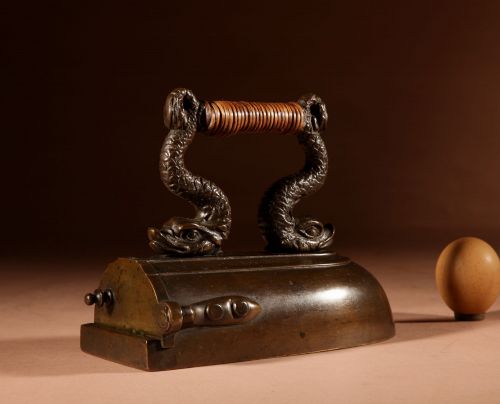
When you search for an antique pressing iron, you find utilitarian metal devices shaped for smoothing fabrics or binding papers in homes and businesses. The examples seen here include heavy cast iron and bronze pieces from periods spanning the Georgian era to the early twentieth century.
You are most likely to encounter robust flat irons and related mechanical presses rather than delicate ornaments. These items reflect the heavy physical labour of historical ironing rooms and workshops.
How they were made
Makers utilised durable metals such as cast iron, wrought iron, and bronze to withstand intense heat and daily physical pressure. Handles were frequently fashioned from wood, including solid oak, to protect the user's hands.
Foundries poured molten metal into sand moulds to create the solid bodies of these tools. Simple mechanical joints and stout metal fasteners held the moving parts together.
Listings for this phrase feature cast iron and bronze materials spanning the Georgian and Victorian eras.
What varies in quality
The distinction between standard utility items and finer pieces lies in the crispness of the foundry casting and the retention of original surface patination. Heavier metal gauge and clean lines indicate careful manufacturing rather than hurried mass production.
Makers who took greater care produced balanced proportions and smooth operating mechanisms on presses and smoothing tools. Simpler variants prioritise sheer weight over decorative finish.
The Antique Pressing Iron Glossary
- Cast iron
- A strong, heavy iron-carbon alloy poured into moulds to form solid shapes. It forms the primary body of most heavy domestic and industrial presses.
- Wrought iron
- Tough, malleable iron beaten or rolled into shape rather than cast. It is frequently seen in handles, latches, and structural brackets.
- Bronze
- A copper alloy mixed with tin, valued for its durability and corrosion resistance. It appears in decorative fittings and mechanical components of better-made tools.
- Georgian
- A design period spanning the eighteenth and early nineteenth centuries. Pieces from this era often display robust proportions and straightforward functional engineering.
Antique Pressing Iron: Frequently Asked Questions
What is an antique pressing iron?
An antique pressing iron is a heavy metal device historically heated on a stove or used with mechanical pressure to smooth garments and linens.
These tools served a purely domestic or workshop function before the invention of electric irons.
How were these irons heated?
Solid metal irons were placed directly upon a kitchen stove or range until they reached the desired temperature for smoothing fabrics.
Some specialised variants utilised internal charcoal burners or heated slugs inserted into the body.
How do I clean an old iron?
Dust away loose debris with a dry cloth and preserve the aged metal surface with a light application of protective wax or oil.
Avoid harsh chemical cleaning agents that strip away historical patination and cause active rusting.