


French Bronze Candelabra
French bronze candelabra combine metalwork and classical ornament, bringing sculptural lighting to mantelpieces and side tables.
French Bronze Candelabra
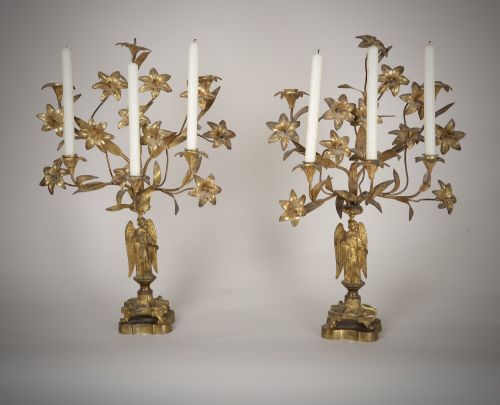
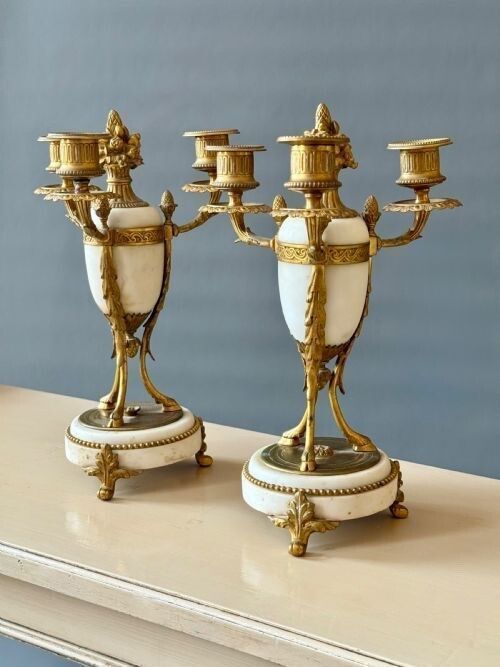
When browsing french bronze candelabra, buyers encounter multi-branched lighting fixtures designed to hold taper candles, often matched in symmetrical pairs. These objects emerged principally during the eighteenth and nineteenth centuries, spanning design idioms from Louis XVI and Empire to Rococo Revival.
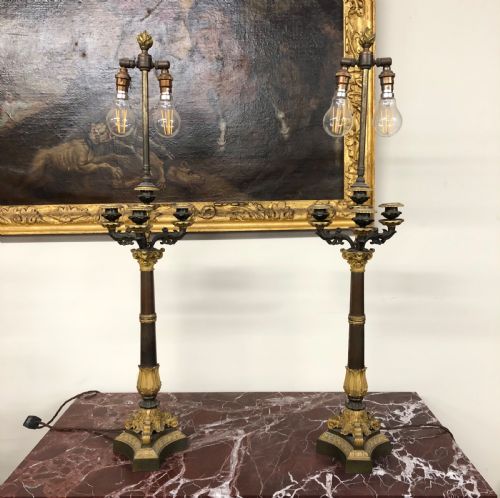
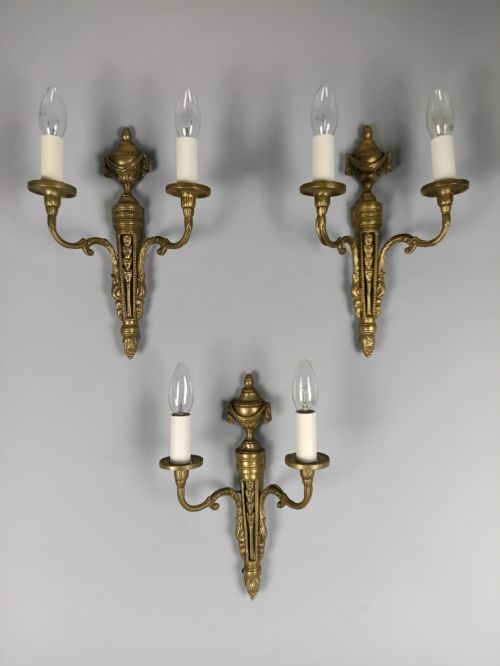
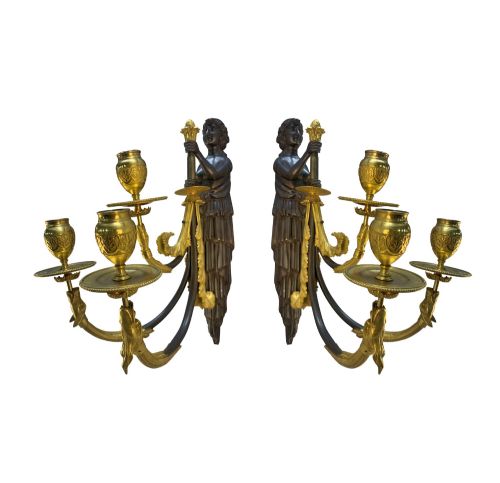
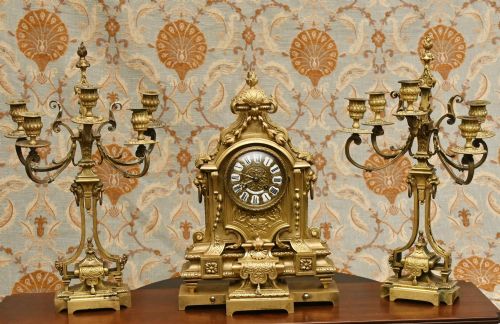
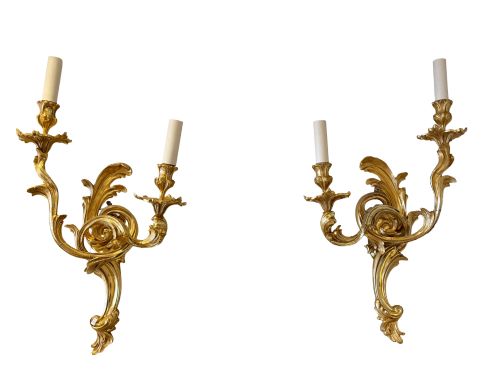
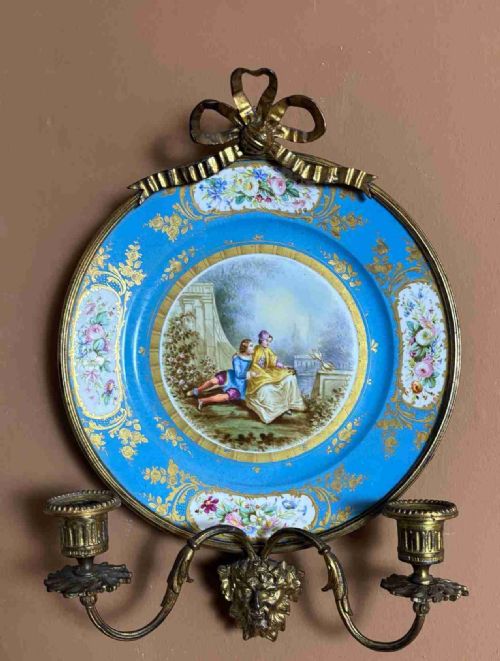
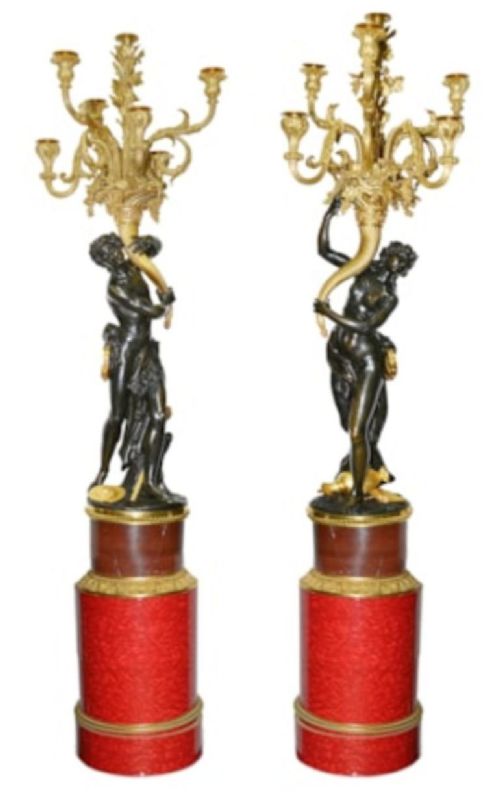
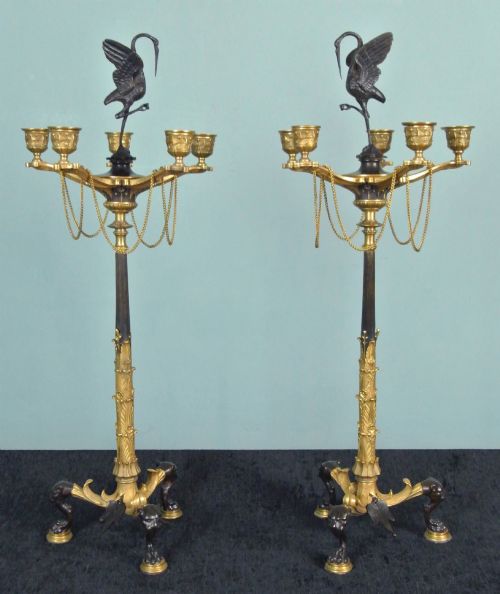
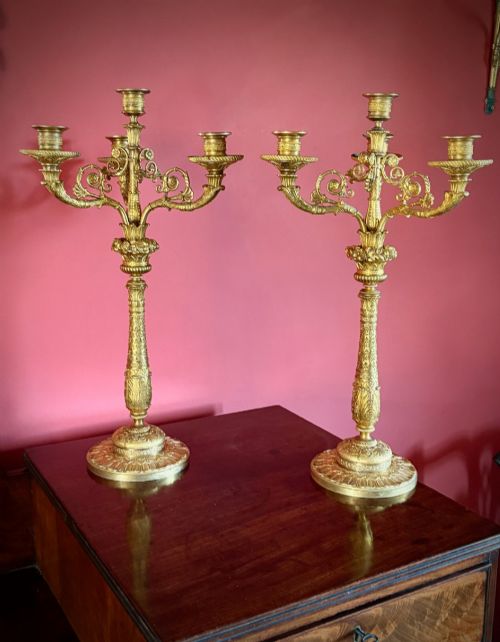
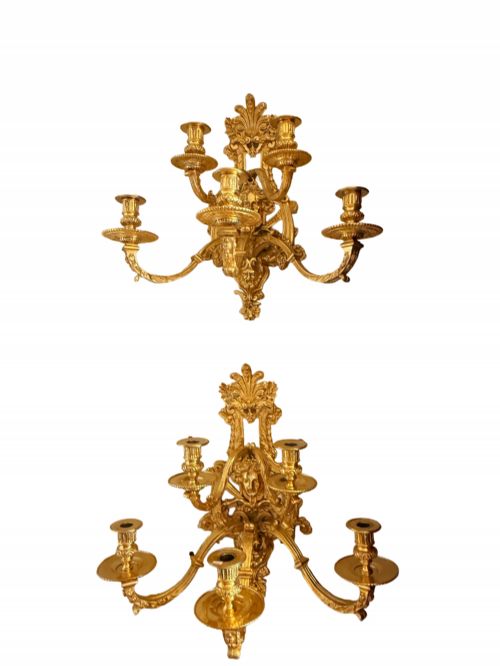
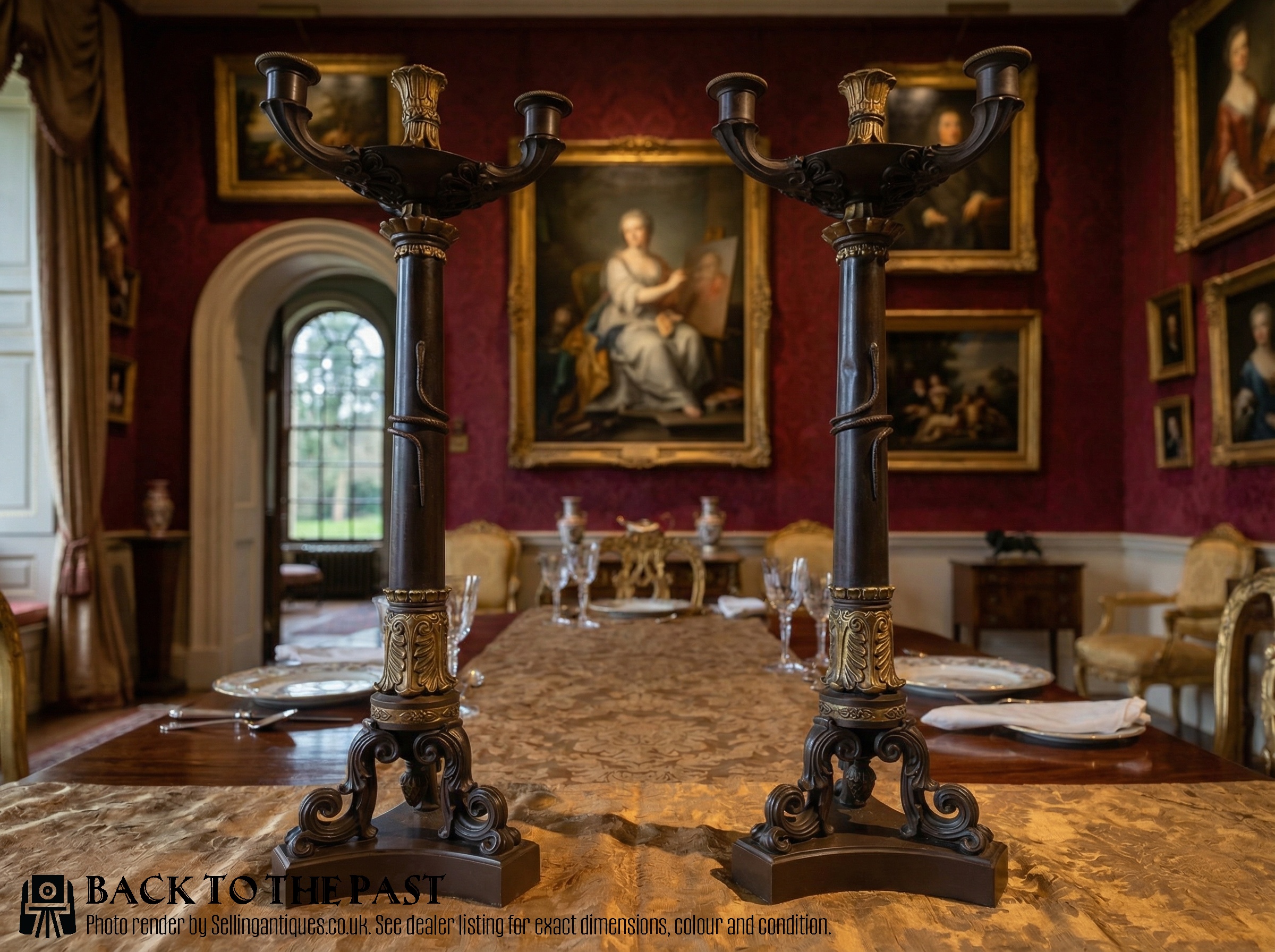
The inventory on this page consists predominantly of nineteenth-century examples produced in France, alongside related wall sconces, clock garnitures, and candlesticks. Workshops utilised patinated dark bronze paired with bright golden ormolu to create strong visual contrast across multiple arms.
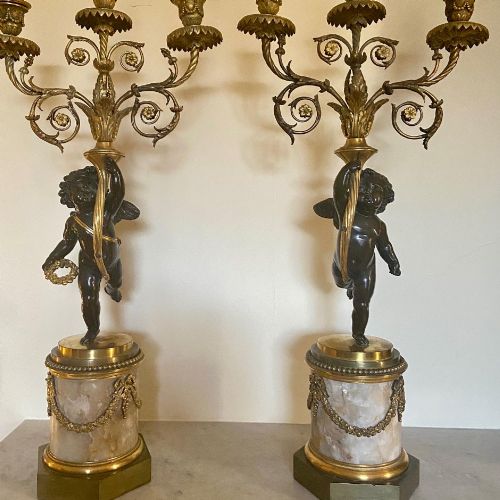
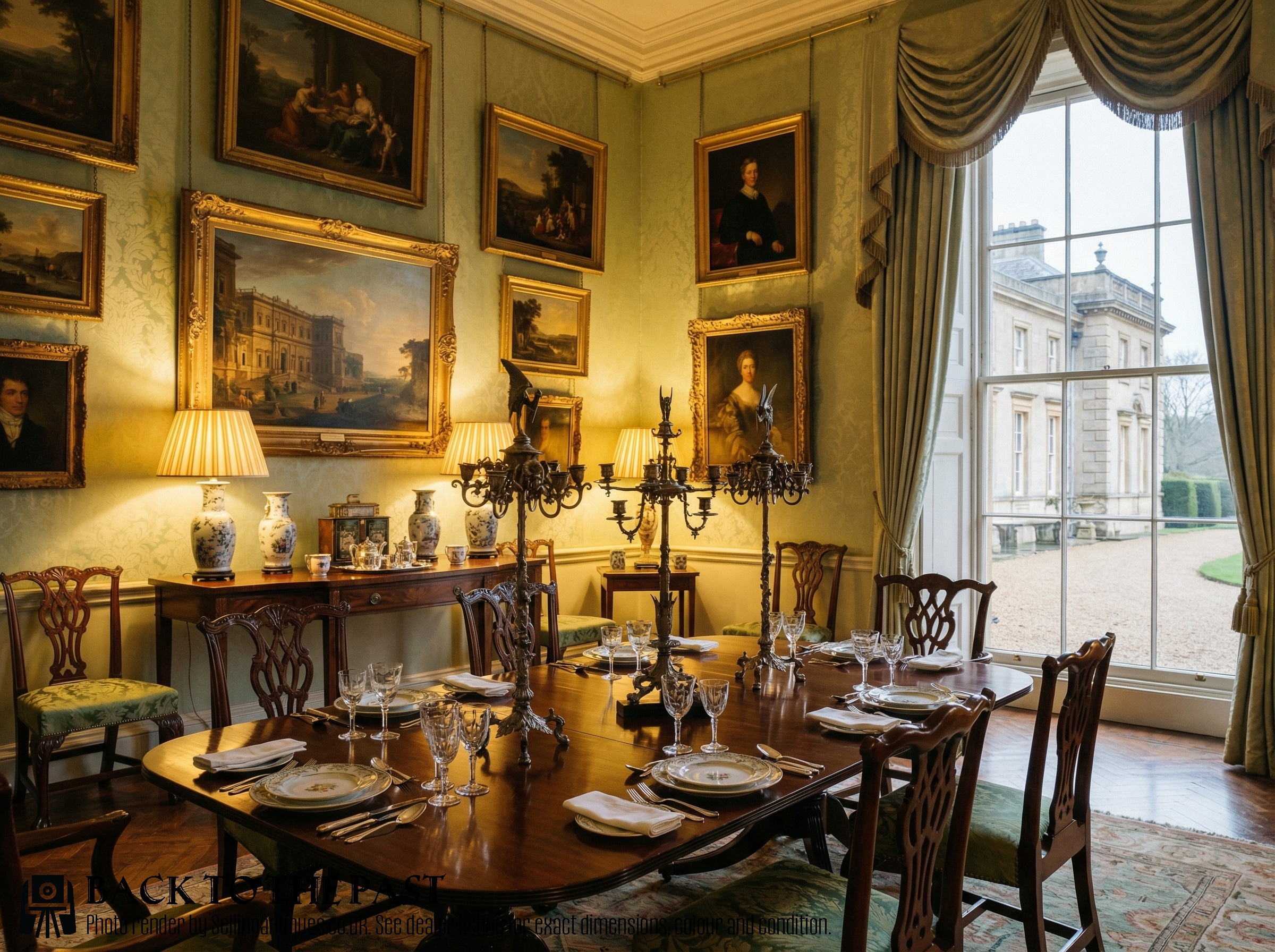
Figural subjects frequently populate these pieces, including putti, cherubs, classical hero figures, and animals such as stags or greyhounds. Formats range from modest two-light tabletop versions up to massive multi-branch candelabra integrated into clock garniture sets.
How they were made
Foundry workers cast the structural components in bronze or brass using traditional sand-casting and lost-wax methods, achieving crisp detail in acanthus leaves, classical drapery, and figural anatomy. Artisans then chased the cooled metal surfaces by hand with chisels and punches to sharpen textures and clean up cast seams.
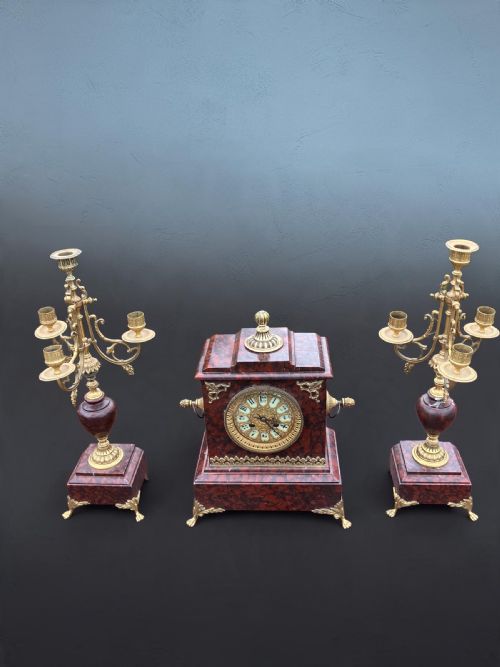
Makers applied decorative finishes through mercury gilding to produce ormolu, or utilised chemical patination to turn the bronze surfaces dark brown or near-black. Combinations frequently incorporated white marble or onyx bases, porcelain plaques, and occasionally jewelled champlevé enamel work.
French Bronze Candelabra Retail Price Guide 2026
Typical asking prices for french bronze candelabra among the pieces listed under this phrase on Sellingantiques today, from the lower quarter to the upper quarter. They describe what is for sale here now, not the wider market.
Listings feature eighteenth-century pieces alongside nineteenth-century revivals spanning Louis XVI, Empire, and Rococo styles in bronze and marble.
What varies in quality
Quality rests upon the crispness of the initial casting and the depth of the subsequent hand-chasing work on the bronze. Superior examples display sharply defined facial expressions on putti and distinct veining on foliage, whereas lesser pieces exhibit smoothed details from worn moulds.
The heft of the bronze and the quality of the ormolu gilding separate standard production from exceptional workshop output. Heavy, stable bases and securely fitted candle nozzles indicate careful construction designed to support heavy branched tiers without listing.
Barbedienne·Pierre Philippe Thomire·Thiebaut Freres·Rabiat·Claude Galle
The French Bronze Candelabra Glossary
- Ormolu
- Gilding technique applying a mixture of gold and mercury to bronze, creating a rich golden surface finish. This method was widely practiced by Parisian bronziers during the eighteenth and nineteenth centuries.
- Patinated bronze
- Metal treated with chemical solutions to produce a darkened brown, green, or near-black surface tone. It provides a foil to bright gilt highlights.
- Garniture
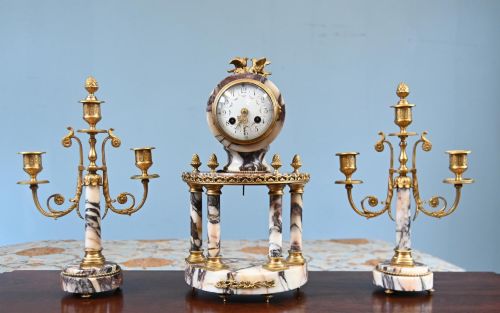
- A matching set of ornamental objects designed for display together, typically comprising a central mantel clock flanked by two matching candelabra or vases. These sets anchored nineteenth-century interior decoration.
- Chasing
- The manual process of refining cast metal using small steel punches and hammers to sharpen details and textures. Master bronziers spent hours tooling each component before gilding.
- Putto
- A plump, winged infant figure, frequently depicted as a cherub or classical attendant within nineteenth-century figural metalwork. These motifs populate the bases and stems of decorative lighting.
French Bronze Candelabra: Frequently Asked Questions
How do I clean antique bronze?
Dust surfaces gently with a soft dry cloth to prevent the accumulation of grit within intricate chased recesses. Avoid harsh chemical polishes that can strip away original patination or historical ormolu gilding.
Water and commercial metal cleaners will damage delicate gilt surfaces and chemical patinas built up over centuries. Professional conservation is recommended for pieces showing heavy accumulation of grime.
Were these electrified later?
Many nineteenth-century candelabra were converted to electricity during the twentieth century to serve as table lamps. Such adaptations frequently involved running internal wiring through the central stem or candle nozzles.
Buyers should examine the underside and candle holders to determine whether original wiring paths or drilling alterations were introduced. Unconverted examples retain their original hollow sockets intended strictly for wax tapers.
How can I tell Empire style apart?
Empire style pieces draw heavily on ancient Roman, Greek, and Egyptian motifs, featuring strict symmetry and military trophies. Look for patinated bronze figures contrasted with bright ormolu mounts depicting laurel wreaths, sphinxes, and classical deities.
By contrast, Rococo Revival pieces embrace asymmetrical scrolling foliage, naturalistic curves, and shell motifs without strict classical restraint. Understanding these decorative vocabularies helps date the workshop production period.
What is a clock garniture set?
A clock garniture set groups a mantel clock with matching side ornaments, most commonly a pair of candelabra or decorative vases. These matching triads were manufactured to sit together on a fireplace mantel or large sideboard.
The central clock and flanking candelabra share identical bronze casting styles, marble bases, and decorative themes to create a unified focal point. Complete surviving sets command strong interest among collectors.