





French Breakfront Cabinet
A french breakfront cabinet offers grand proportions and refined display space, bringing architectural presence and practical storage to a principal room.
French Breakfront Cabinet
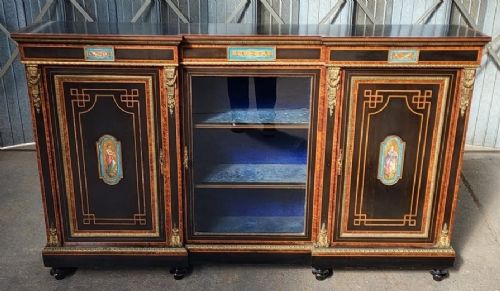
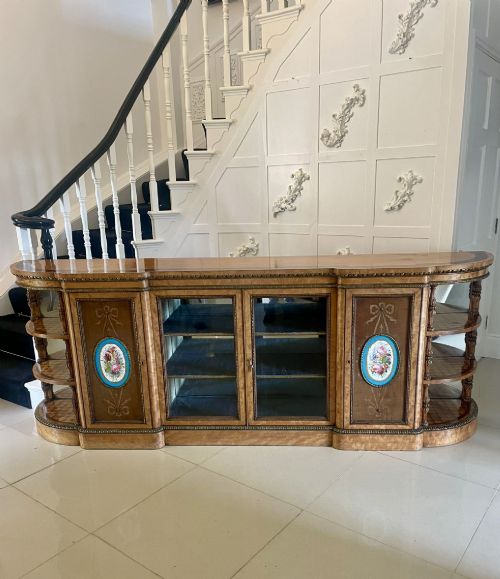
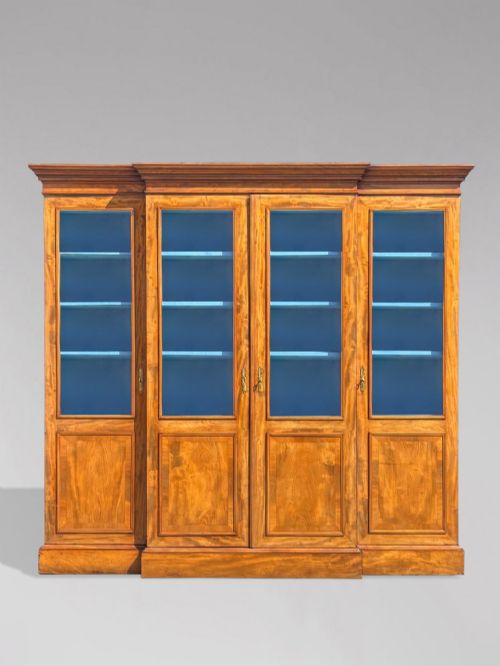
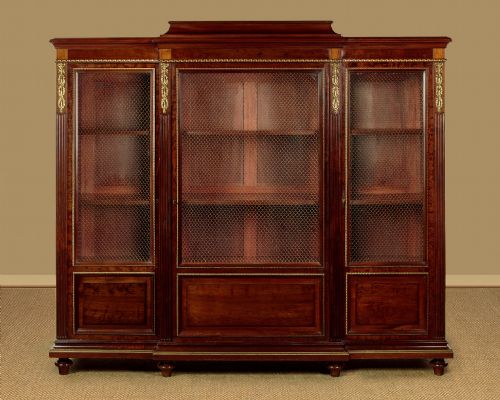
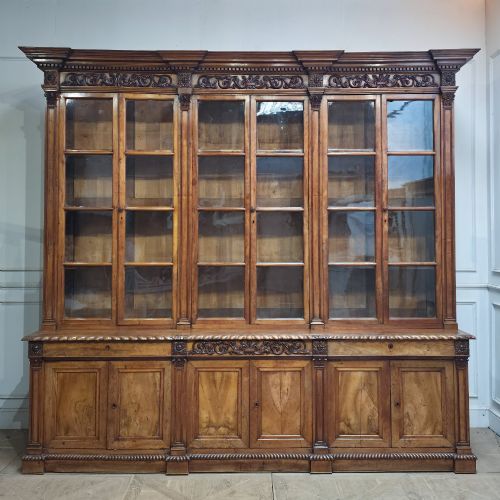
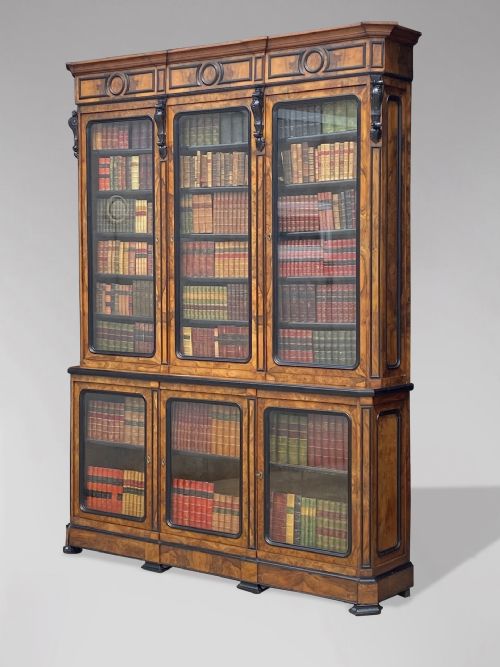
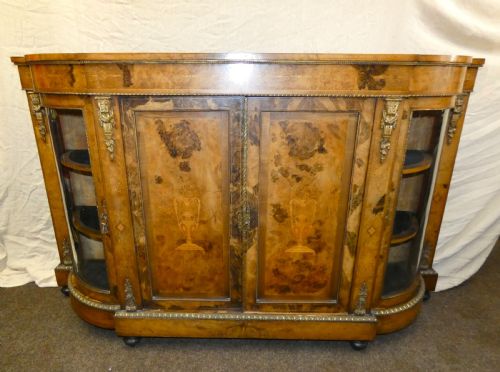
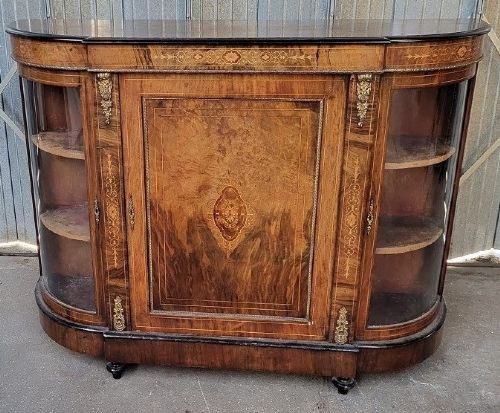
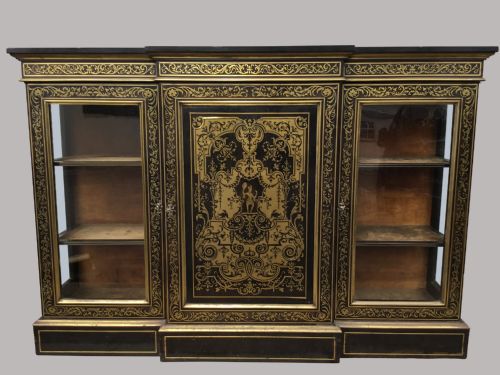
A french breakfront cabinet is primarily encountered in nineteenth-century manifestations, spanning Victorian interpretations and continental revivals such as Louis XVI and Napoleon III. These pieces manifest chiefly as bookcases, side cabinets, credenzas, and vitrines, characterised by a central section that projects forward from the flanking wings. Walnut, burr walnut, and mahogany form the structural core of these grand storage items.
The aesthetic vocabulary draws heavily upon French chateau and provincial traditions, incorporating glazed doors for display alongside panelled cupboards. Within this selection, walnut and ebonised carcasses dominate, frequently detailed with marquetry inlays or mounted with porcelain plaques. Pieces range from modest library bookcases to monumental multi-door exhibition pieces.
Materials and Construction
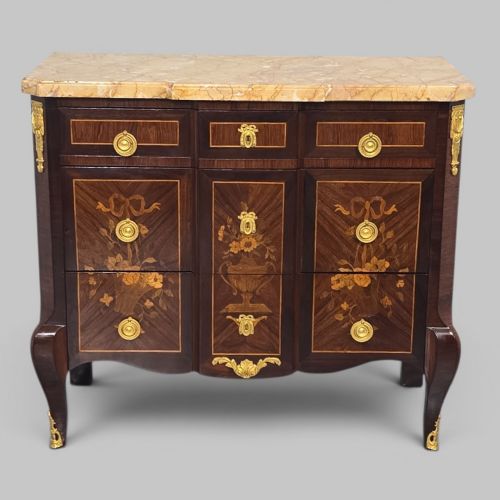
Construction relies upon dense timber substrates such as walnut, mahogany, and kingwood, often enhanced by decorative veneers including burr walnut and satinwood. Cabinetmakers utilised precise cross-banding and marquetry techniques to create intricate geometric and floral patterns across the expansive flat surfaces. Ebonised finishes appear frequently, providing a dark contrast to gilt metal mounts.
Gilt bronze or brass ormolu mounts punctuate the timber frames, highlighting corners, cornices, and central friezes. Many examples incorporate inset porcelain panels, notably Sevres plaques, alongside polished marble tops in white or coloured varieties. Glass is integrated into framed doors for bookcases and display vitrines, held by wooden glazing bars.
Styles span Victorian and Edwardian periods alongside French revival movements like Napoleon III and Louis XVI.
Standards of Execution
Quality rests upon the crispness of the cast ormolu mounts and the precision of the marquetry inlays rather than mere size. Superior examples exhibit finely figured burr timber selections and hand-chiselled bronze mounts rather than mass-produced metal stampings. The integration of hand-painted porcelain plaques elevates the standing of a cabinet within its period.
Structural integrity reveals itself in the alignment of the breakfront facade and the smooth operation of large glazed or panelled doors. Cabinetmakers who employed sophisticated internal shelving arrangements and robust mahogany carcass linings achieved greater longevity. The subtlety of the polish and the depth of the timber grain determine the visual success of the piece.
The French Breakfront Cabinet Glossary
- Breakfront
- A piece of furniture whose central section projects forward from the flanking sections. This architectural arrangement creates depth and breaks up long elevations.
- Ormolu
- Gilt bronze mounts applied to furniture for decorative effect. The technique involves treating metal with an amalgam of mercury and gold.
- Marquetry
- Inlaid patterns of wood veneers applied to a carcass to create pictures or geometric designs. It differs from parquetry through its use of pictorial motifs.
- Credenza
- A sideboard or display cabinet featuring cupboards, often fitted with glass doors. The form gained prominence during the nineteenth century for display purposes.
- Vitrine
- A glass-displayed cabinet designed for showing porcelain, silver, or curiosities. These pieces rely on extensive glazing to maximise interior visibility.
French Breakfront Cabinet: Frequently Asked Questions
What is a french breakfront cabinet used for?
These cabinets serve as principal storage and display furniture in formal rooms. Their internal shelving accommodates books, porcelain collections, and silverware behind glazed or solid doors.
The projecting central section provides a strong visual anchor while offering deep interior capacity for household items. Their flat tops also function as surfaces for decorative objects and lamps.
How do I identify the period of a cabinet?
Dating relies upon observing the combination of timber veneers, mount styles, and revival influences present in the construction. Nineteenth-century pieces frequently employ burr walnut, ebonised finishes, and ormolu mounts reflecting Louis XVI or Napoleon III tastes.
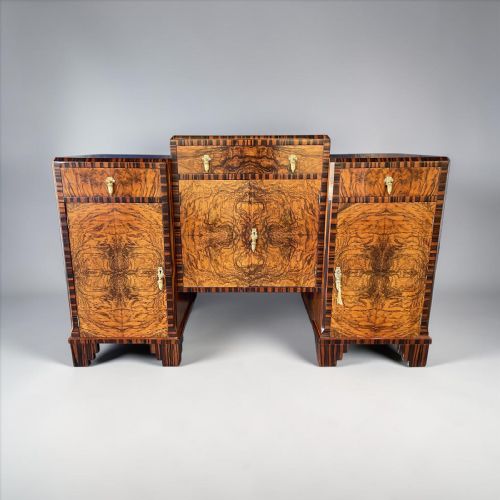
Later interpretations from the early twentieth century often adopt simpler lines or Art Deco geometry. Examining the secondary timbers inside the carcass helps confirm nineteenth-century manufacturing methods.
How do I care for polished walnut furniture?
Maintenance requires keeping timber cabinets away from direct sunlight and steady heat sources to prevent veneer lifting. Regular dusting with a soft cloth preserves the sheen of the polish without chemical buildup.
Application of appropriate paste wax feeds the wood grain periodically. Ormolu mounts should be cleaned gently with a dry cloth, avoiding abrasive metal polishes.