




French Brass Horology
French brass horology brings precision timekeeping into domestic spaces through heavy carriage clocks and ornate mantel pieces.
French Brass Horology
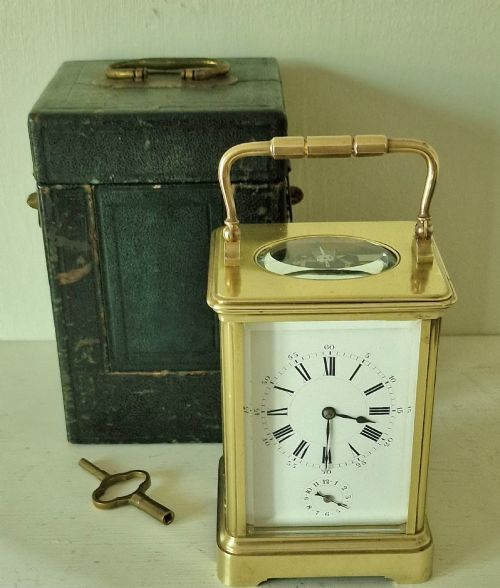
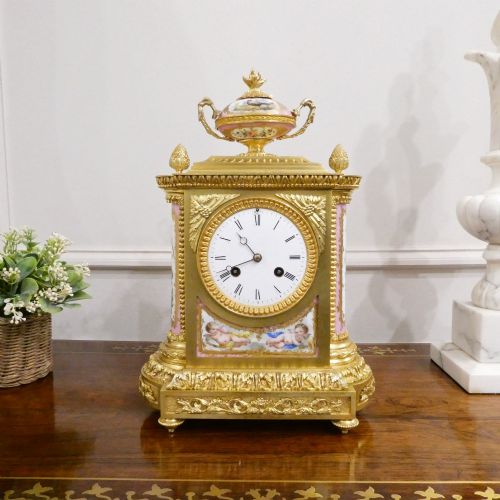
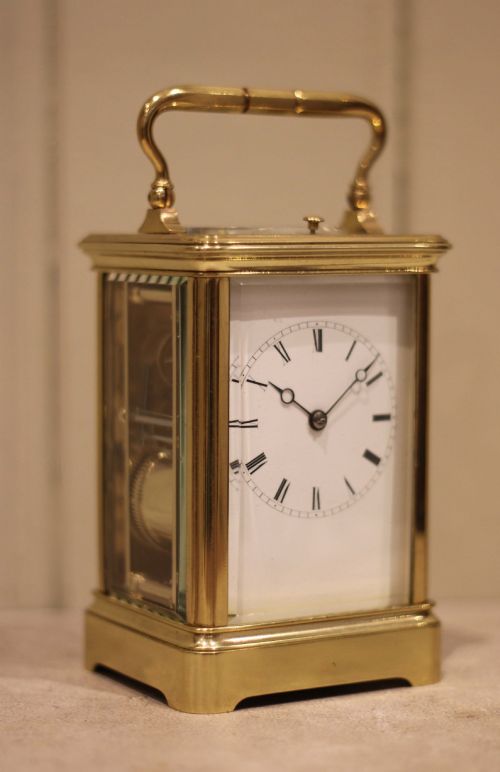
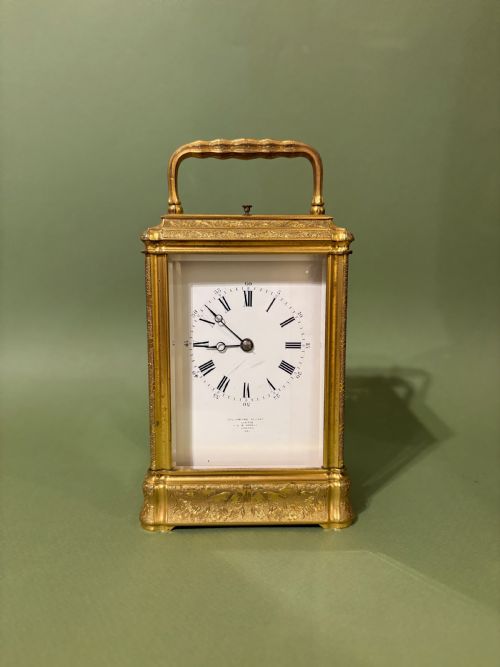
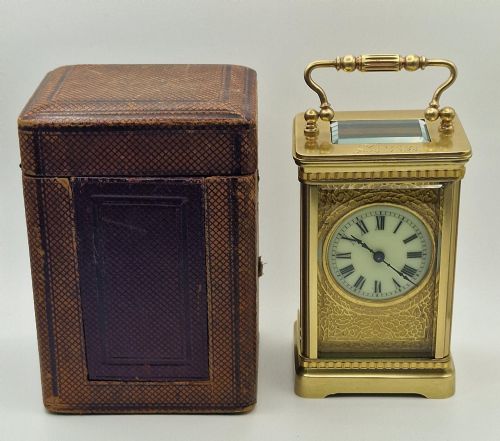
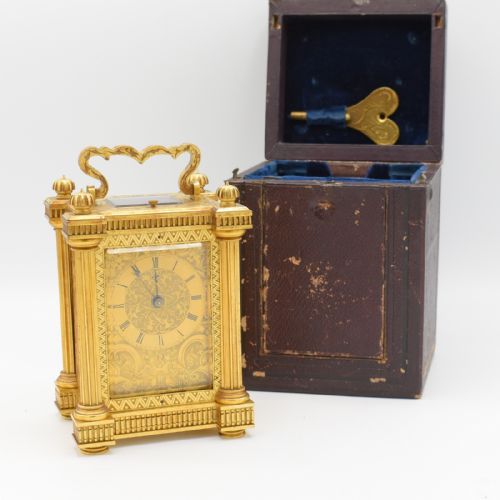
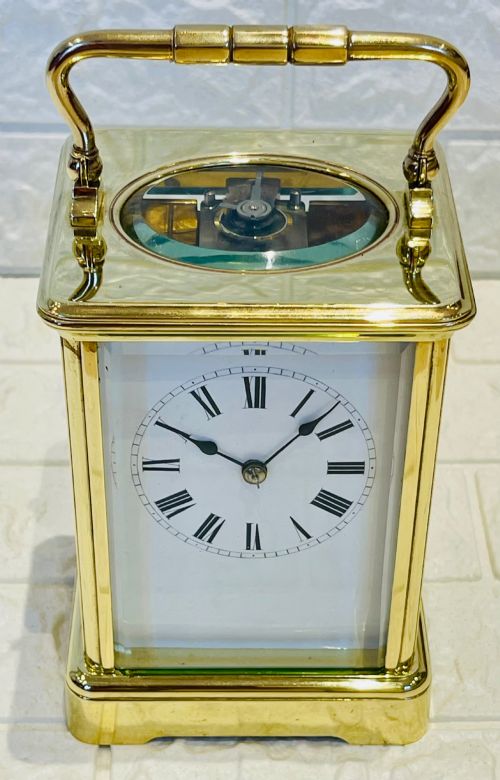
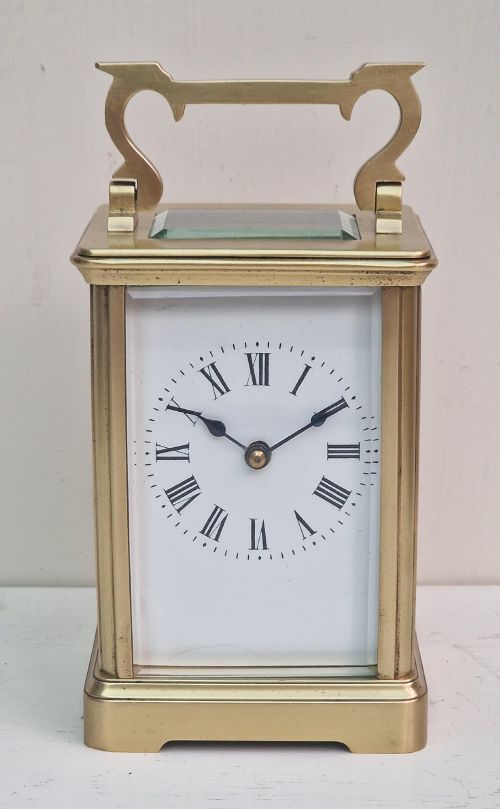
French brass horology encompasses portable carriage clocks and stationary mantel clocks produced primarily during the nineteenth century. These items range from plain brass travel timepieces with glass panels to decorative mantel clocks featuring gilt bronze and porcelain.
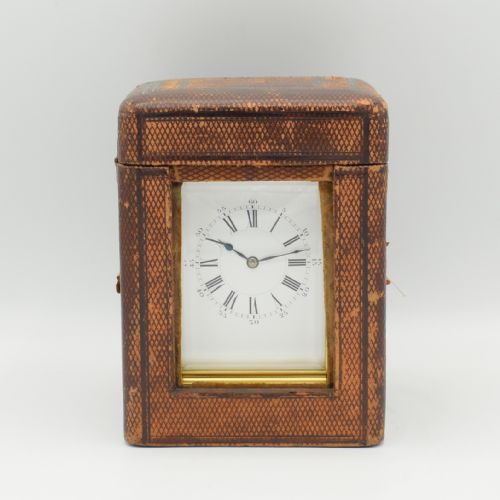
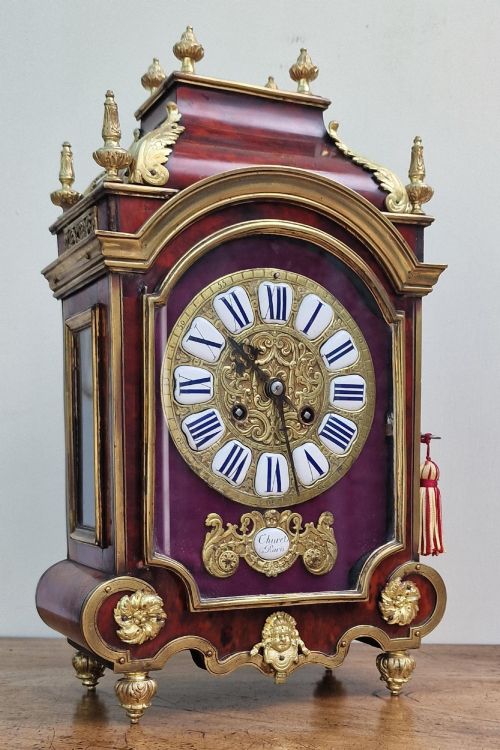
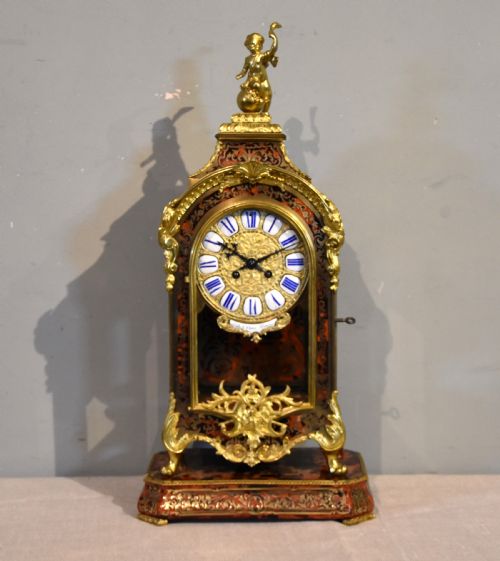
Carriage clocks dominate the selection on this page, often equipped with striking mechanisms, repeating functions, and original leather travel cases. Mantel clocks appear less frequently, utilising materials such as tortoiseshell, red marble, and ormolu alongside traditional brass cases.
Materials and construction
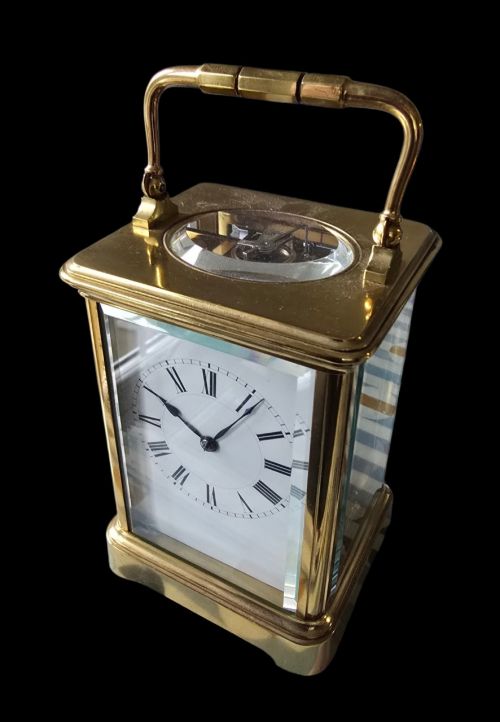
Makers constructed these clocks using heavy brass frameworks fitted with bevelled glass panels to display the intricate internal gear trains and escapements. Gilt bronze, ormolu, and porcelain provided decorative mounts and dial faces for the more elaborate domestic models.
Movements relied on eight-day spring-driven mechanisms, frequently incorporating platform escapements, striking trains, and alarm complications. Enamel dials with Roman or Arabic numerals received painted details before assembly inside the metal cases.
French Brass Horology Retail Price Guide 2026
Typical asking prices for french brass horology among the pieces listed under this phrase on Sellingantiques today, from the lower quarter to the upper quarter. They describe what is for sale here now, not the wider market.
The listings span the Victorian era up to the early twentieth century, with brass carriage clocks representing the most frequent form alongside ormolu mantel clocks.
Quality differences
Quality in these pieces rests upon the complexity of the movement and the weight of the metal case. Heavier cast brass frames, sophisticated repeating mechanisms, and multichannel striking complications separate workshop standards from everyday production.
The precision of the platform escapement and the inclusion of signed enamel dials or original leather travel cases further distinguish higher tier examples. Finer execution shows in the crispness of the gilt bronze mounts and the integration of decorative materials like tortoiseshell or porcelain.
Jean-Baptiste Delettrez·Henri Jacot·Drocourt Paris·C. Detouche Paris·Antoine Redier·L Epee
The French Brass Horology Glossary
- Carriage clock
- A portable spring-driven timepiece designed for travel, typically housed in a brass and glass case with a folding handle on top.
- Platform escapement
- The small horizontal assembly mounted above the movement that regulates the speed of the clock, visible through the top glass of a carriage clock.
- Repeating mechanism
- A complication that strikes the hours and quarters upon demand when a lever or cord is activated by the user.
- Gorge case
- A distinct style of carriage clock housing characterised by stepped mouldings around the top and bottom of the brass frame.
- Ormolu
- Finely ground high-carat gold mercury-gilded to a bronze object, frequently utilised on decorative nineteenth-century French clock mounts.
French Brass Horology: Frequently Asked Questions
What is a carriage clock?
A carriage clock is a portable mechanical timepiece developed in the nineteenth century for officers and travellers. They are encased in brass with glass panels to protect the delicate movement while allowing visibility from all sides.
Most feature a small folding handle on top and are wound using a dedicated key. They rely on a spring-driven movement rather than hanging weights.
How do repeating clocks work?
Repeating clocks can chime the last hour or quarter-hour when the user presses a button or pulls a cord on the case. This allowed owners to check the time in the dark without lighting a candle.
The mechanism uses extra racks and snails inside the movement to remember the last counted hour separate from the main striking train.
How do I wind a brass clock?
Wind these clocks using a properly fitted key inserted into the winding squares on the backplate of the movement. Turn the key gently until you feel firm resistance, avoiding over-winding which can snap the mainspring.
Keep the travel case or key in a safe place and ensure the clock sits on a completely level surface to keep the escapement beating evenly.
How do I identify the period?
Dating relies on stylistic clues, case architecture, escapement types, and maker signatures engraved on the backplate. Earlier mid-nineteenth-century pieces often feature gorge cases and simpler platforms, while later examples frequently incorporate complex complications.
Serial numbers and maker marks recorded on the brass movement plates offer the most reliable guide to a specific decade of manufacture.