
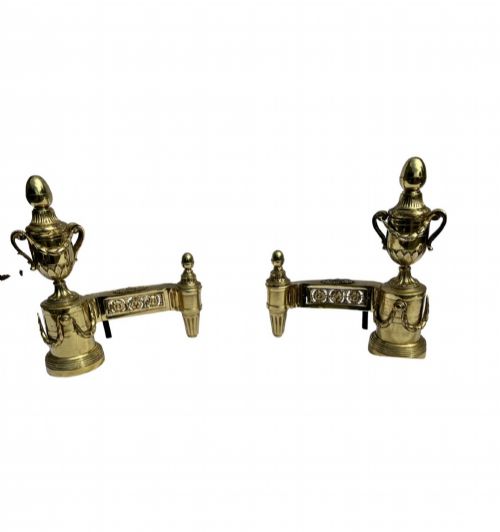

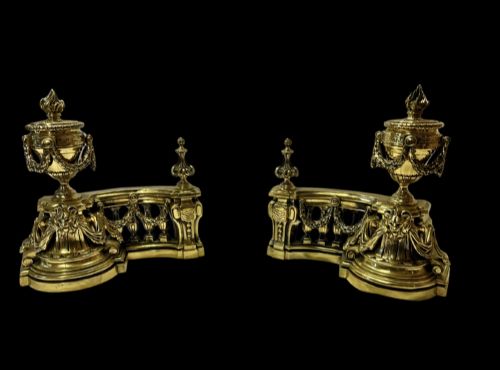
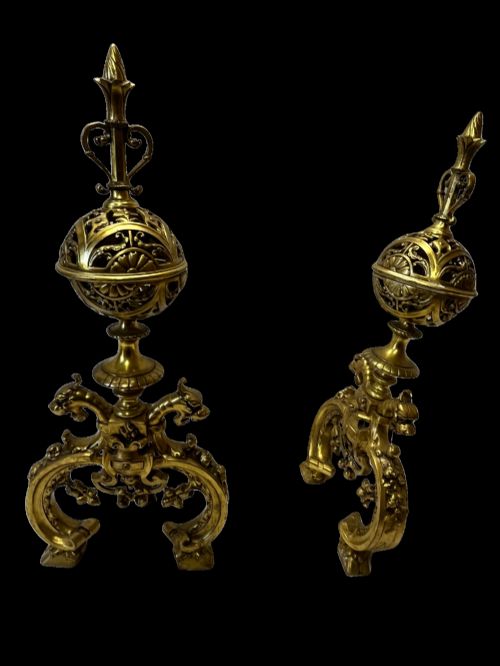


French Brass Fire Dogs
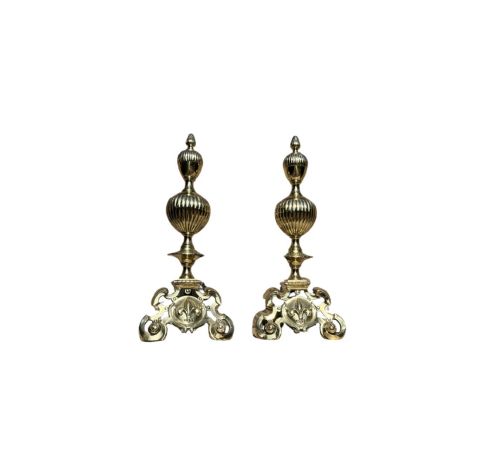
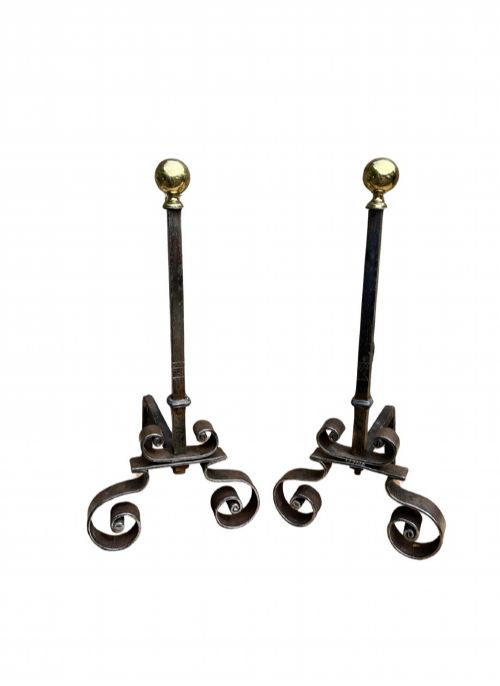
French brass fire dogs hold the hearth with architectural weight and cast metal flourish, bringing decorative fire furniture to life.
French Brass Fire Dogs
The selections span the nineteenth century, including examples dated across the decades from eighteen hundred to nineteen twenty, alongside Regency and twentieth century pieces. Forms range from heavy structural designs combining cast iron with brass to ornamental gilt bronze chenets.
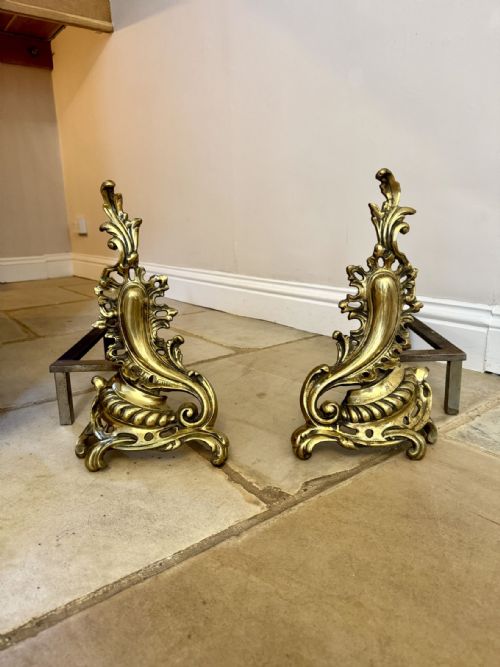
You meet variations incorporating French Rococo, Baroque, Neoclassical, and Empire styles, often featuring asymmetrical scrollwork, cherubs, or architectural motifs. Many pieces appear as matched pairs intended to sit on either side of the hearth basket or fire grate.
Materials and construction
Makers utilised brass, cast brass, and iron to build the structural bodies and horizontal bars of the fire dogs, ensuring they could bear the weight of burning logs. Ormolu and gilt bronze surface treatments provided a bright, reflective finish that caught the flickering light of the hearth.
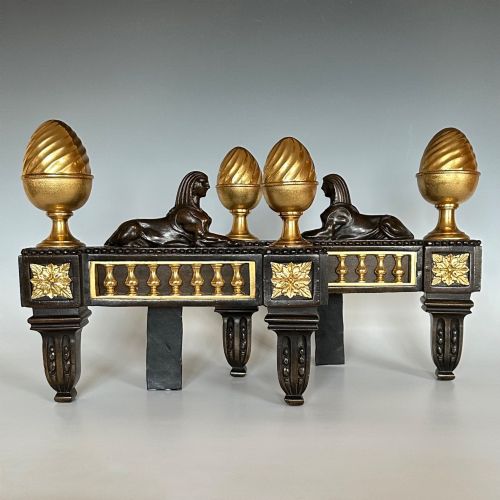
Foundries employed casting techniques to shape intricate rococo scrolls, cherub figures, and classical mounts, assembling the heavy components with iron internal bars. Some examples combined parcel gilt bronze with patinated bronze to create contrast between the figures and the structural mounts.
Periods represented on the page span from the year eighteen hundred through the nineteenth century and into nineteen twenty.
Quality differences
The distinction between standard hearth accessories and finer pieces rests in the depth of the casting and the crispness of the chased detail on the ormolu surfaces. Heavier gauge metal and solid construction distinguish substantial pairs from lighter decorative versions.
Proportion and the quality of the fire gilding separate workshop pieces from later copies, with superior examples retaining sharp relief in the scrollwork and securely mounted decorative figures.
The French Brass Fire Dogs Glossary
- Chenet
- An alternative French term for an andiron or fire dog, typically featuring an ornamental front support. These items sit within the hearth to hold fuel above the ash.
- Ormolu
- Gilt bronze created by applying a finely ground high-carat gold mercury amalgam to a bronze object, then firing it to drive off the mercury. This technique produces a durable, rich golden surface.
- Andiron
- A horizontal iron bar supported by legs with an upright decorative front, used in pairs to hold logs in an open fireplace. They often incorporate rests for fire tools.
- Firedog
- A heavy metal support for logs in a fireplace, synonymous with andirons and chenets. The front upright often displays sculptural ornamentation.
- Baroque
- A heavy, dramatic decorative style characterised by ornate carving, grand scale, and vigorous movement. In hearth furniture, this translates to robust scrolls and imposing symmetry.
French Brass Fire Dogs: Frequently Asked Questions
What is the difference between fire dogs and andirons?
Fire dogs and andirons are identical items of hearth furniture, with the former term derived from French tradition and the latter more common in English usage. Both describe a pair of metal supports used to hold logs off the floor of an open fireplace.
While regional naming conventions vary, collectors use the terms interchangeably when discussing French hearth equipment from the nineteenth century.
How do chenets work in a fireplace?
Chenets stand on the floor of the hearth with their upright decorative faces turned toward the room. The horizontal bars behind the decorative fronts support the logs, while the back legs rest on the hearth floor.
Some designs include integrated tool rests or adjustable widths to fit different fireplace openings and basket sizes.
How do I identify a Regency period fire dog?
Regency fire dogs and chenets display classical restraint, often incorporating Neoclassical motifs, bronze patination, and restrained ormolu mounts rather than flowing rococo asymmetry. The profiles tend to feature cleaner architectural lines and geometric symmetry.
Dating relies on stylistic markers from the early nineteenth century and the combination of dark bronze with gilt brass detailing.
Are these fire dogs suitable for an active fireplace?
Most antique french brass fire dogs feature heavy cast iron and brass construction originally built to hold wood fires. However, modern usage requires assessing the structural integrity and stability of each individual pair.
Many collectors utilise heavy nineteenth-century pairs for decorative hearth displays or combine them with compatible fire baskets.
What styles are common in nineteenth century French fire dogs?
Nineteenth century French fire dogs frequently adopt French Rococo Revival styles with asymmetrical scrollwork, along with Baroque, Empire, and Neoclassical designs. Makers also produced later copies inspired by earlier Louis styles.
Stylistic indicators include cast cherubs, acanthus leaves, and heavy gilt bronze mounts.