


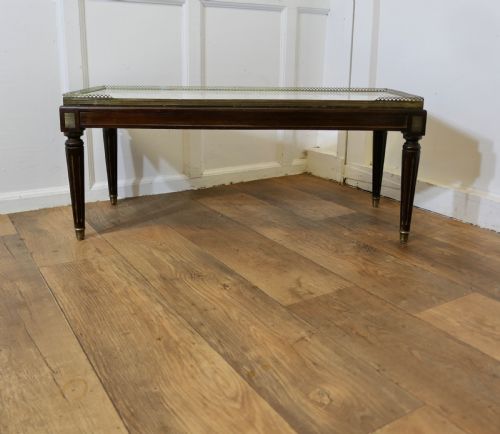


French Brass Cocktail Table
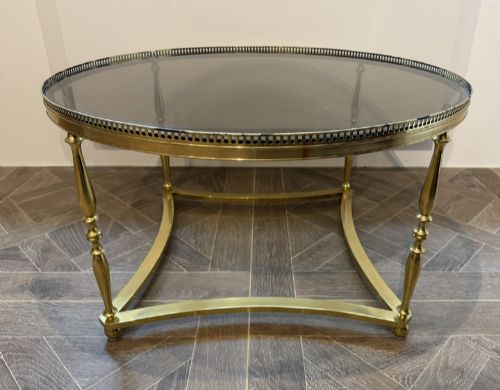
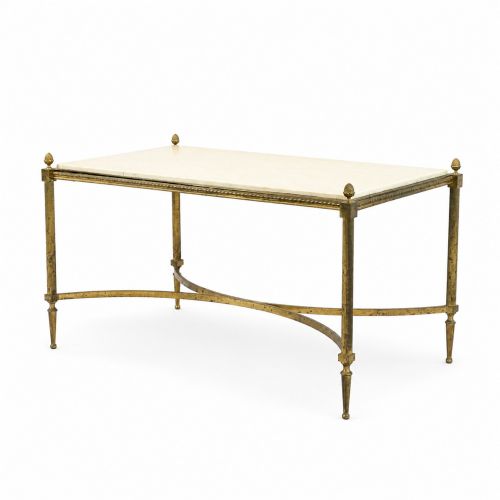
A French brass cocktail table brings together polished metal and marble or glass to anchor a reception room with continental elegance.
French Brass Cocktail Table
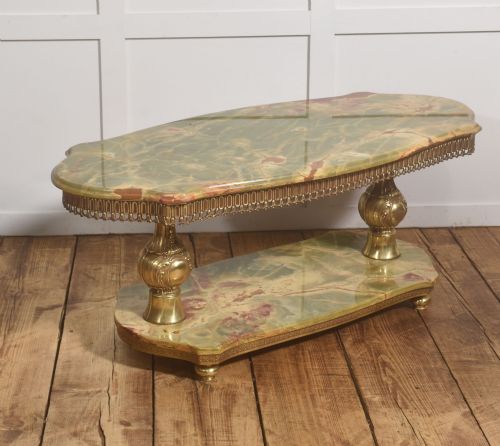
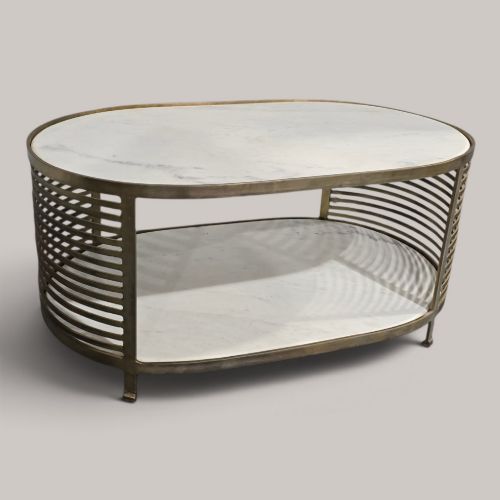
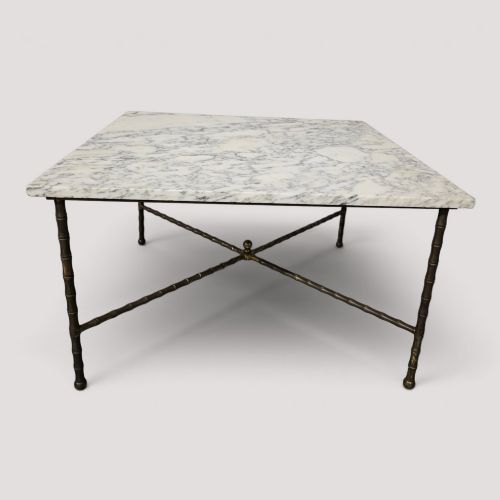
A french brass cocktail table typically takes the form of a low coffee table or occasional table, designed to sit centrally before seating. These pieces span from the nineteenth century through the art deco era and mid-century periods, capturing diverse historical revivals.
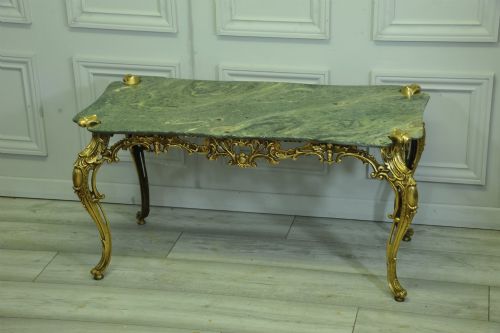
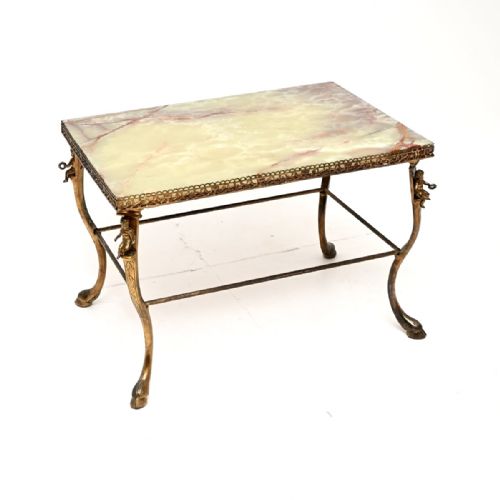
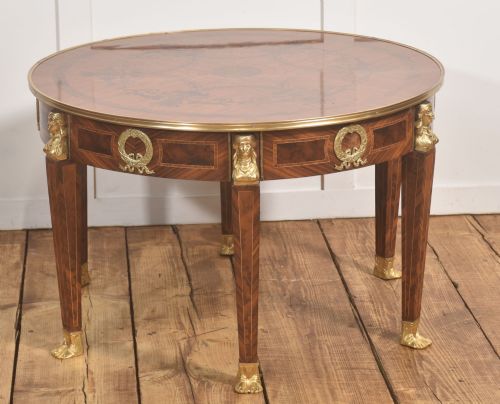
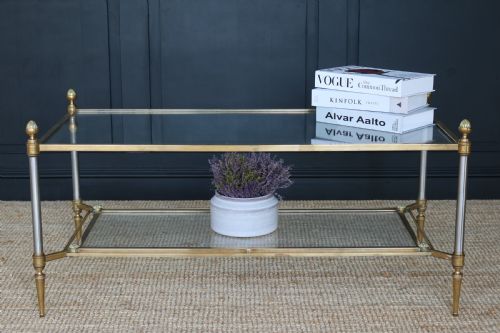
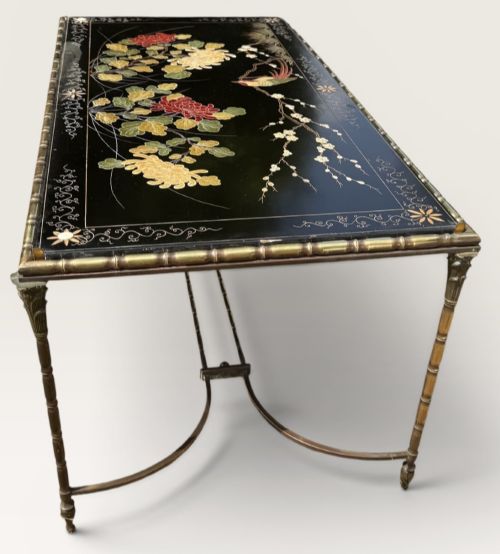
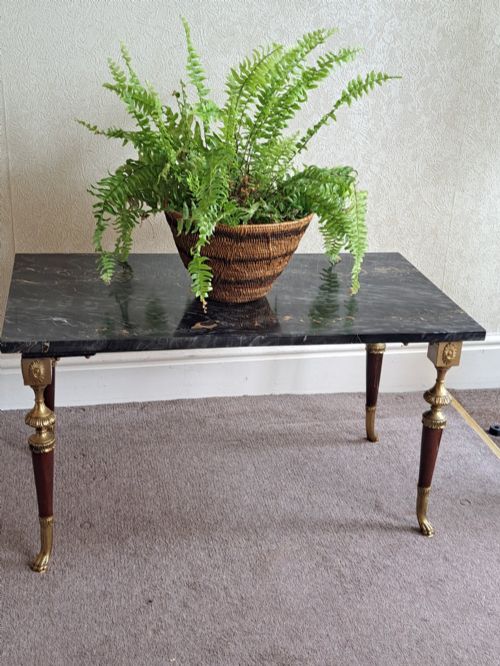
The materials combined in these tables include brass, gilded brass, and bronze, frequently paired with green marble, black marble, onyx, glass, wood, mahogany, kingwood, and black lacquer. Surfaces often display marquetry and parquetry work or intricate wrought iron elements alongside the primary brass structure.
Buyers will encounter items adhering to Louis XV style, Louis XVI style, French neoclassicism, and art deco designs. The proportions vary from square formats to longer coffee table silhouettes intended for practical daily use in sitting rooms.
How they were made
The construction of a french brass cocktail table relies on the pairing of metal frameworks with inset stone, glass, or wooden tops. Brass and gilded brass form the structural legs and decorative mounts, sometimes accompanied by wrought iron for added support.
French Brass Cocktail Table Retail Price Guide 2026
Typical asking prices for french brass cocktail table among the pieces listed under this phrase on Sellingantiques today, from the lower quarter to the upper quarter. They describe what is for sale here now, not the wider market.
Some tables require four people just to lift the marble top, proving that morning coffee was once a serious upper-body workout.
What varies in quality
The refinement of the metal casting and the depth of the gilding set individual examples apart. Finer pieces demonstrate crisp detail in brass mounts and structural frames, whereas simpler versions rely on standard commercial production methods of their period.
The choice and thickness of the inset material also dictate the standing of a piece. Solid marble or onyx slabs, complex parquetry and marquetry arrangements in hardwoods like kingwood, and original glass tops distinguish more ambitious workshop output from standard variants.
Maison Jansen·Maison Bagues·Masion Ramsay
The French Brass Cocktail Table Glossary
- Marquetry
- Decorative veneer work arranged in pictorial or geometric patterns across a wooden surface. It is commonly found on the wooden tops of period occasional tables.
- Parquetry
- Geometric mosaic woodwork used to create repeating patterns on table surfaces. This technique adds visual texture to the top panels.
- Kingwood
- A dense, richly grained hardwood utilised for fine cabinetmaking and decorative veneers. It often appears in French tables from the early twentieth century.
- Onyx
- A banded variety of chalcedony stone employed for decorative table tops. It provides a translucent, polished surface alternative to standard marble.
- Gilded Brass
- Brass treated with a thin layer of gold leaf or gilt finish to enhance its lustre. This treatment elevates the decorative presence of the metal frame.
French Brass Cocktail Table: Frequently Asked Questions
What periods do these tables represent?
The selection spans the nineteenth century through the 1920s, 1930s, and 1940s, extending to pieces made later than the 1960s.
Design influences range from earlier Louis XV and Louis XVI revivals to art deco and mid-century Parisian styles.
How are marble tops fitted?
Marble and onyx slabs generally rest directly within the brass or wooden frame of the table, held in place by their own considerable weight.
Heavier stone inserts provide a stable, cool surface suited to daily placement in a sitting room.
What wood types are used?
Cabinetmakers utilised timbers such as mahogany and kingwood for the structural frames and decorative veneered panels of these low tables.
These woods frequently form the background for geometric parquetry or intricate marquetry compositions.
How do I distinguish art deco examples?
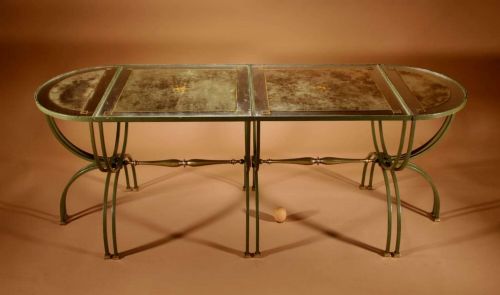
Art deco pieces often incorporate streamlined geometric lines, contrasting materials like wrought iron and glass, and simplified brass detailing.
These tables diverge from the ornate curves and classical motifs seen in the earlier Louis style revivals.