

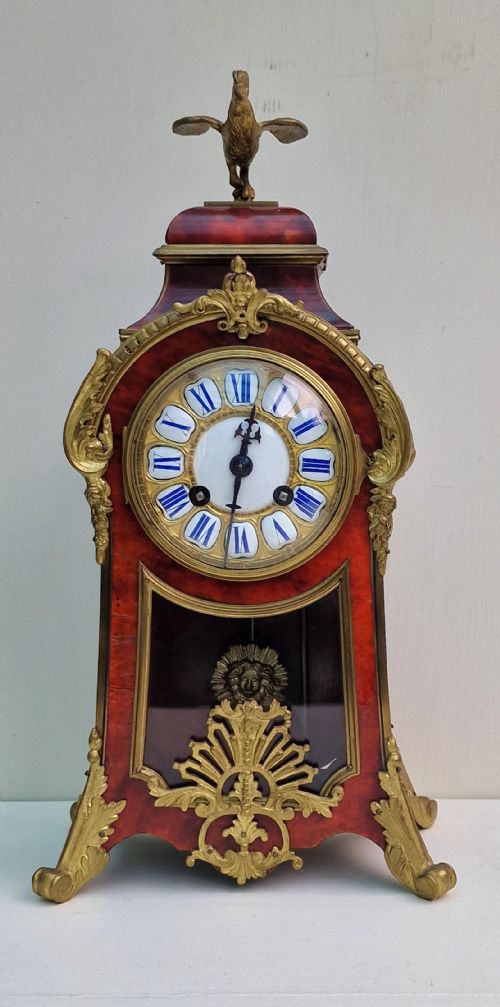
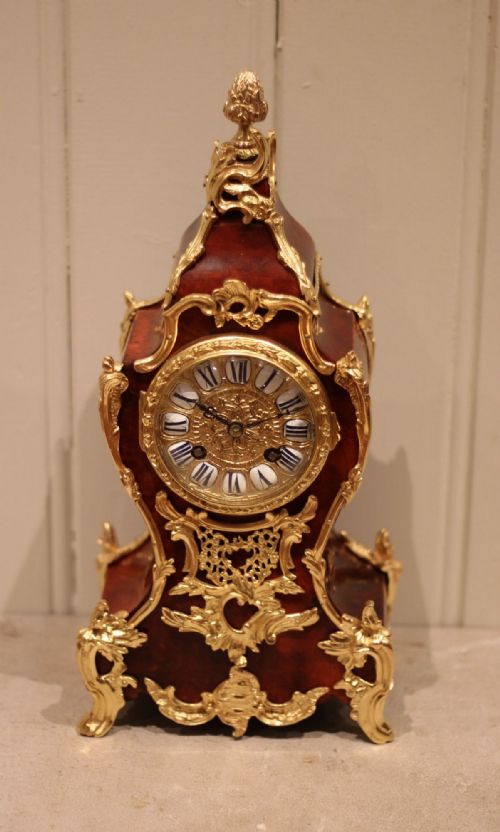


French Boulle Mantel Clock
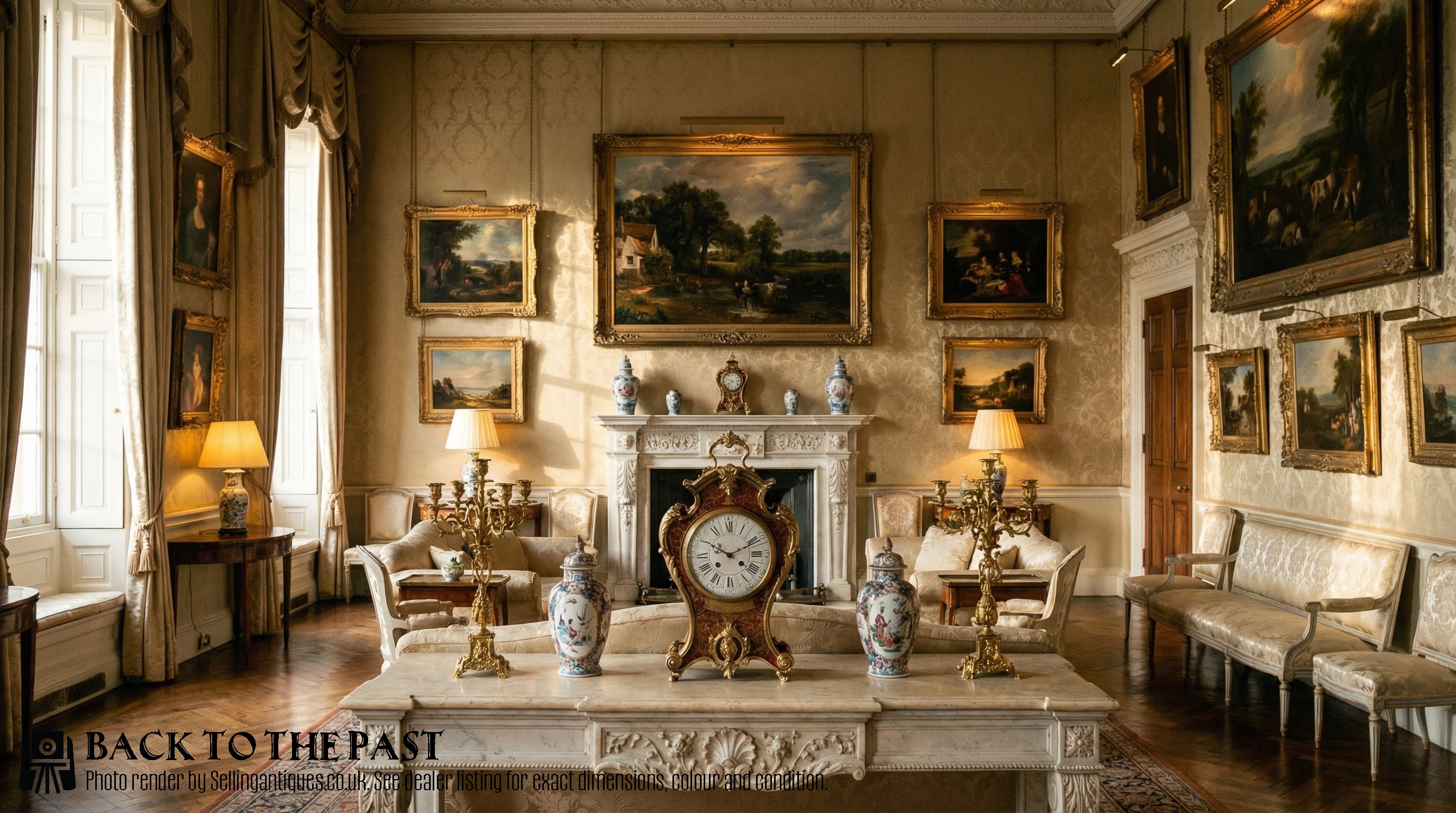
A french boulle mantel clock brings dramatic tortoiseshell and brass marquetry into a room, combining precise timekeeping with opulent decorative arts from past centuries.
French Boulle Mantel Clock
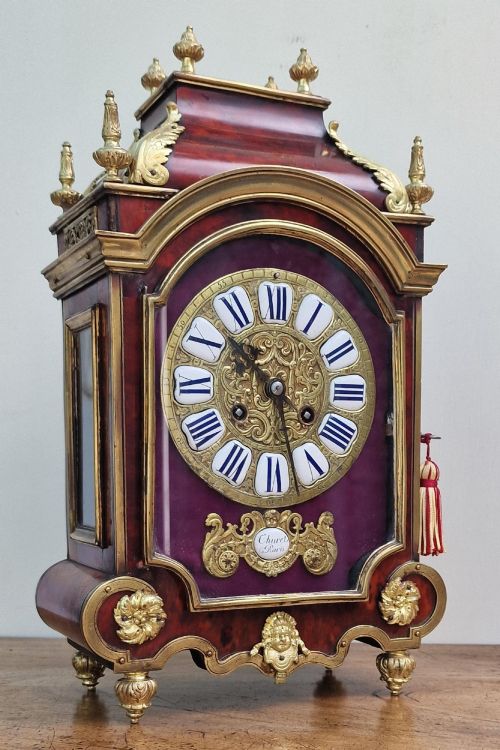
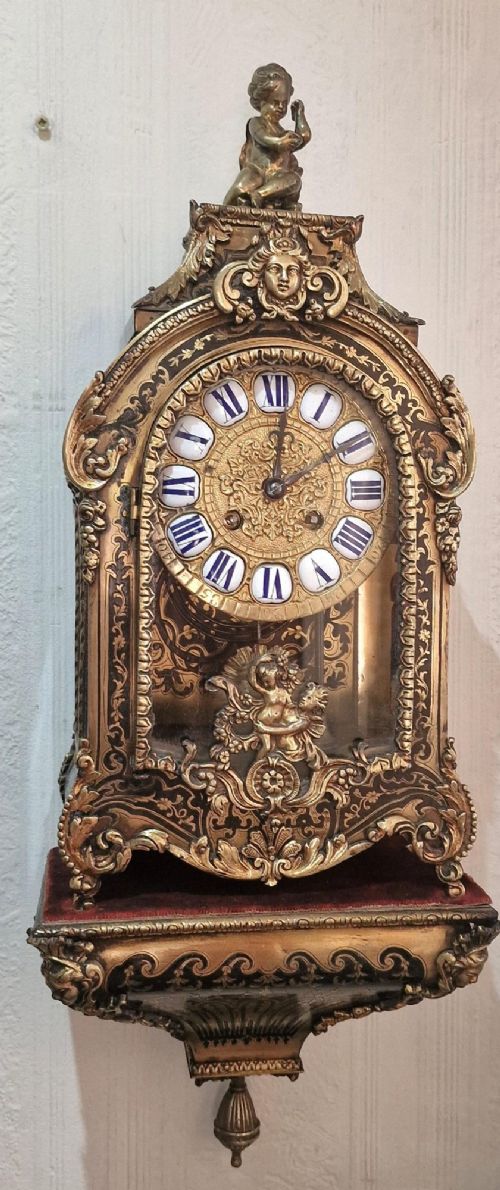
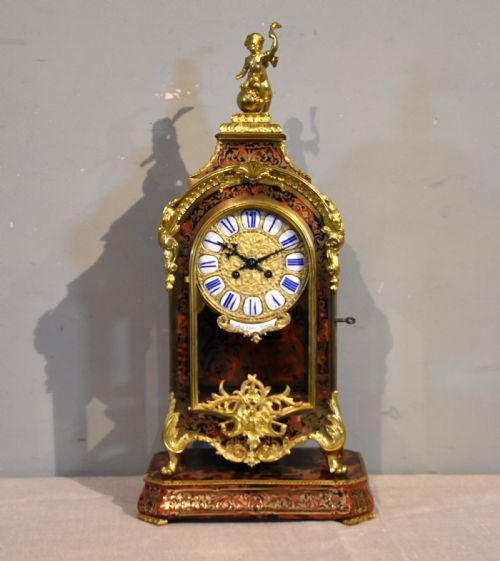
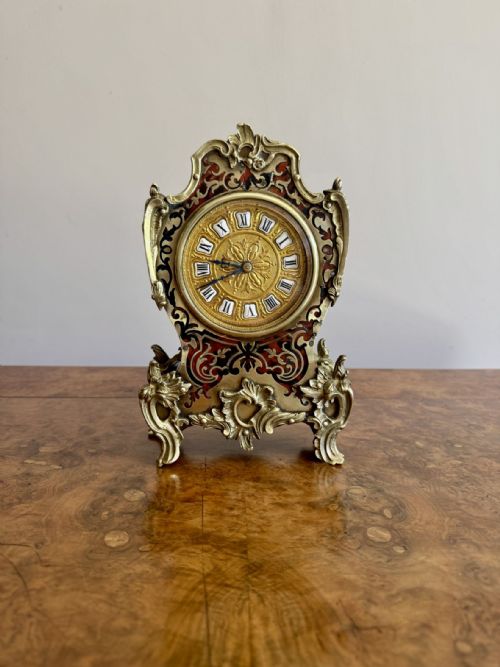
A french boulle mantel clock embodies the ornate aesthetic of periods ranging from the nineteenth century into the Victorian era, frequently adopting Louis XIV and Louis XV revival styles. These timepieces appear as freestanding mantel designs, waisted variants, or more substantial bracket clocks accompanied by matching wall supports and pedestals.
Makers and workshops across Paris produced these pieces utilising distinctive tortoiseshell veneers alongside contrasting brass inlays. Buyers meet examples featuring traditional dial configurations, mechanical movements, and occasionally auxiliary indicators such as thermometers housed within elaborate architectural cases.
How they were made
Craftsmen shaped these timepieces by adhering delicate tortoiseshell and cut brass marquetry, known as Boulle work, onto wooden carcases of ebonised or stained wood. Artisans then cast and chased ormolu and gilt bronze mounts to accentuate the structural corners, feet, and bezels of the clock case.
The dial faces integrated enamel cartouches or chapter rings to display the hours, driven by mechanical eight-day or fusee movements supplied by notable nineteenth-century French clockmakers. Glass panels protected the dial and exposed the pendulum swing within the richly decorated housing.
French Boulle Mantel Clock Retail Price Guide 2026
Typical asking prices for french boulle mantel clock among the pieces listed under this phrase on Sellingantiques today, from the lower quarter to the upper quarter. They describe what is for sale here now, not the wider market.
Some nineteenth-century makers integrated working thermometers directly into the ornate clock fronts to monitor parlour temperatures alongside the hours.
What varies in quality
The standard of a french boulle mantel clock rests upon the precision of the brass and tortoiseshell marquetry, where finer examples display intricate, tightly fitted metal cutting without visible gaps. The crispness and depth of the cast ormolu mounts further separate standard production from exceptional pieces.
Movement sophistication also dictates the tier of the clock, distinguishing basic time-only layouts from quarter-striking mechanisms and signed movements by renowned Parisian makers. The integration of matching original brackets or pedestals elevates the completeness and visual impact of the ensemble.
Thuret·Samuel Marti·A.D. Mougin·Payne London·Vincenti·Japy Frères·Charles Hour·Louis Japy Fils
The French Boulle Mantel Clock Glossary
- Boulle
- A form of marquetry consisting of tortoiseshell and brass inlay developed by André-Charles Boulle during the reign of Louis XIV. This technique creates a rich interplay of dark amber and polished metallic contrast across the clock case.
- Ormolu
- Gilded bronze used extensively for decorative mounts and feet on furniture and clocks. The process involves applying a mercury and gold amalgam to cast bronze before heating.
- Marquetry
- Decorative patterns formed by fitting together thin veneers of wood, metal, and shell onto a carcase. It requires immense skill to align the contrasting materials seamlessly.
- Fusee
- A conical pulley used within clock movements to equalize the declining power of a mainspring as it unwinds. This mechanism helps maintain accurate timekeeping over the duration of the power reserve.
- Cartouche
- A small enamelled plaque bearing a numeral, used individually to form the chapters on a clock dial. They are typical of nineteenth-century French horology.
French Boulle Mantel Clock: Frequently Asked Questions
How do I wind my french boulle mantel clock?
Use the appropriate winding key to turn the arbors located on the enamel dial face until gentle resistance indicates the mainspring is fully tensioned. Take care not to over-wind the movement.
Ensure you turn the key in the correct direction specified for the specific strike or time train. Regular, careful winding preserves the internal mechanism.
Where should I place a bracket clock?
Mount the accompanying wooden bracket securely to a solid wall stud if the clock is designed to hang, ensuring it bears the substantial weight of the piece safely. Alternatively, rest the bracket and clock upon a sturdy pier table or mantelpiece.
Keep the clock away from direct sunlight, heating vents, and damp areas to protect the delicate tortoiseshell veneer and gilded bronze mounts.
How do I set the correct time?
Move the minute hand forward slowly to the correct time, allowing the clock to complete any striking sequences on the hour and half-hour. Avoid moving the hands backward past striking points to prevent jamming the rack and snail mechanism.
Allow the pendulum to settle into an even beat after adjusting the hands to ensure steady operation.
What periods do these clocks come from?
Most pieces available originate from the nineteenth century, spanning Victorian decades, Napoleon III periods, and the revival styles of Louis XIV and Louis XV. Nineteenth-century interpretations frequently recreate earlier Baroque and Rococo aesthetics.
Craftsmen during the 1860s to 1900s produced the vast majority of these decorative mantel and bracket clock forms.