

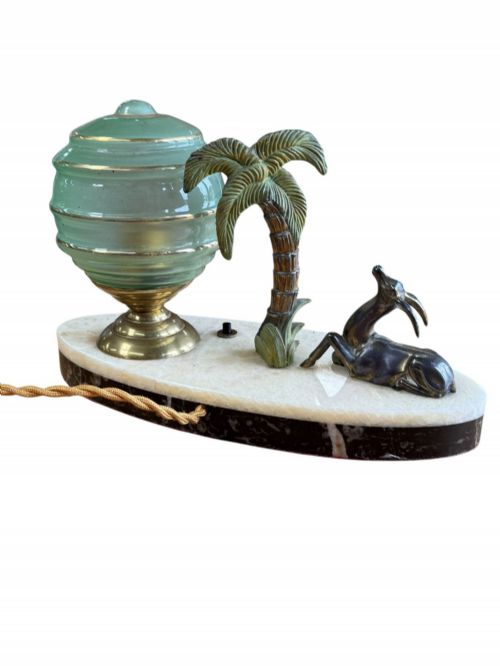


French Art Deco Shade
A french art deco shade brings geometric elegance and soft illumination to a room, defined by period glass and metalwork.
French Art Deco Shade
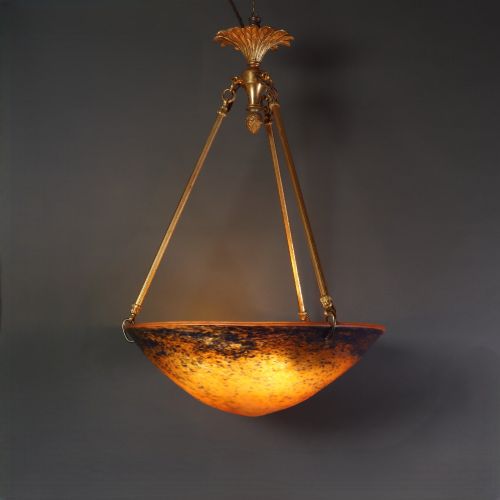
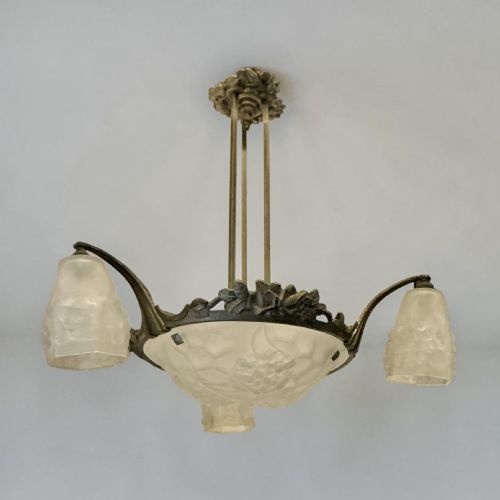
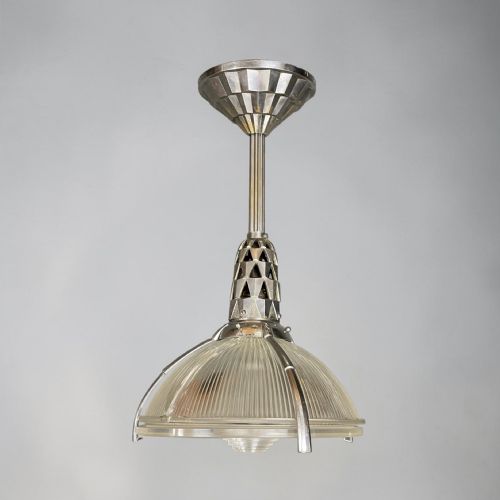
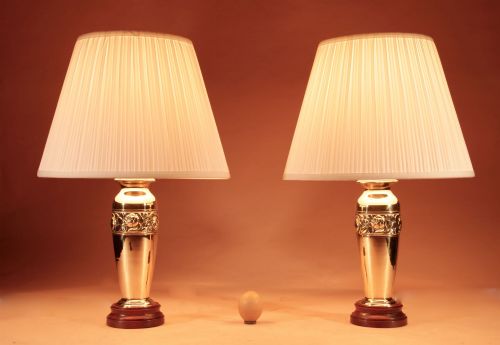
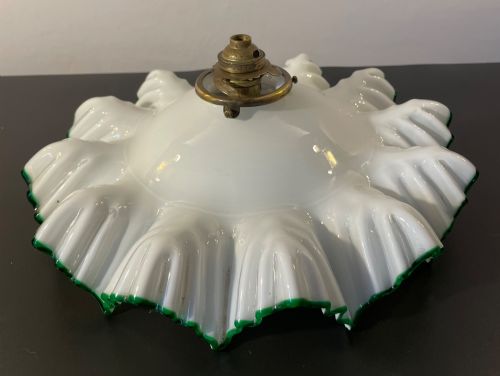
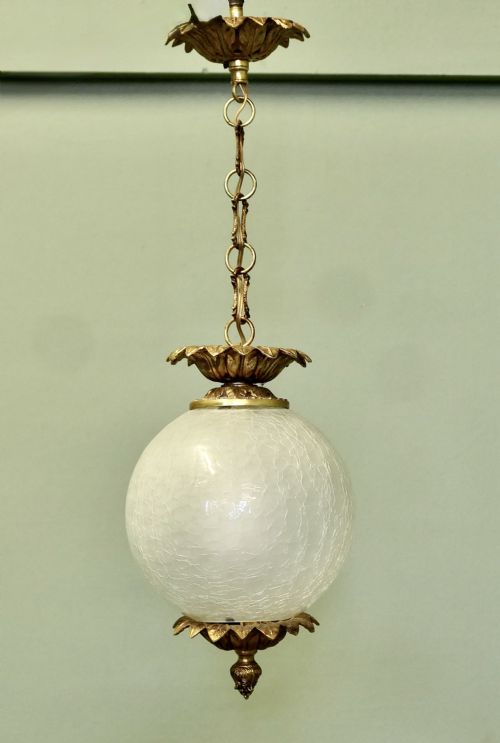
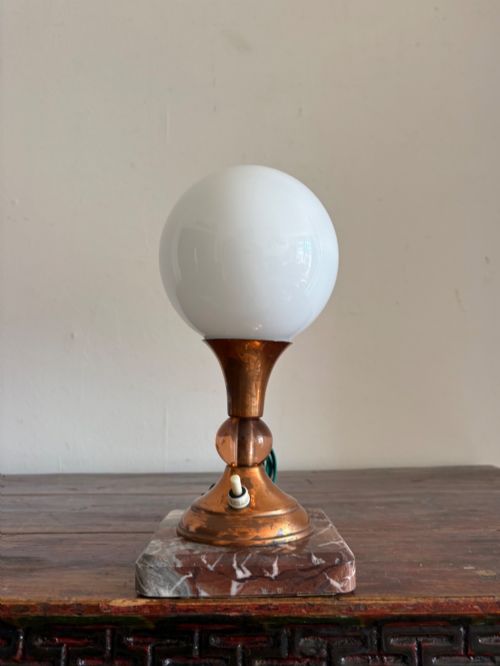
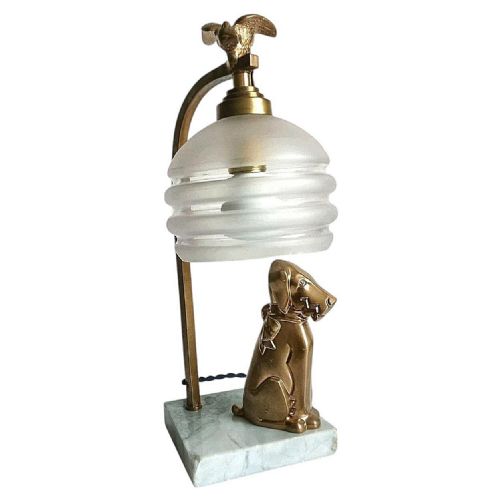
When you search for a french art deco shade, you encounter decorative glass and fabric coverings designed for interior lighting during the early twentieth century. These objects include moulded glass plafonniers, hanging pendant lights, and replacement shades paired with table lamps or wall sconces.
The selections on this page span the 1920s and 1930s, alongside examples from the nineteenth century and mid-century periods. Forms range from simple conical pendants and glass globes to elaborate moulded dishes and panelled dome shades intended for ceiling and wall mounting.
Most items originate from French makers and workshops working within the art deco style, though pieces also incorporate french country, neoclassical, and art nouveau design elements. Buyers typically find these items fitted to brass, wrought iron, copper, or marble mounting structures.
How they were made
Glassmakers utilised pressing, moulding, and acid-etching techniques to create frosted, opaline, or coloured glass bodies that diffused light evenly. Workshops employed heavy metal mounts in brass, bronze, copper, nickel, or wrought iron to support the substantial glass shades.
Combinations of marble bases, ormolu, and patinated metals provided structural stability and visual contrast for table lamps and monumental light fixtures. Fabric and beaded elements also appeared on specific reading lamps and period shades.
Signature techniques involved acid-etched signatures on glass and complex metal forgery for wrought iron frames, executed by specialised artisans working in French glasshouses.
The inventory includes table lamps, ceiling lighting, pendant lights, wall lights, lampshades, and chandeliers.
What varies in quality
Quality in a french art deco shade rests upon the depth and clarity of the glass moulding, the crispness of the acid-etched surface details, and the weight of the material. Thicker opaline and frosted glass bodies demonstrate superior manufacture compared to thinner, uniform alternatives.
The refinement of the supporting metalwork distinguishes standard production from exceptional pieces, particularly where hand-forged wrought iron or cast ormolu mounts are integrated with the glass. Maker signatures add distinction, indicating production by notable French glassworks and ironworkers.
Émile-Jacques Ruhlmann·Daum·Muller Bros·Degue·René Lalique·Jean Gauthier·Emile Galle
The French Art Deco Shade Glossary
- Plafonnier
- A ceiling light fixture mounted flush or semi-flush against the ceiling, typically featuring a large moulded glass bowl held by metal clips or a frame.
- Opaline glass
- A milky, semi-translucent glass that diffuses light softly, widely used in French lighting during the period.
- Ormolu
- Gilded bronze or brass mounts used to decorate the bases and fittings of decorative lamps and shades.
- Frosted glass
- Glass treated by acid-etching or sandblasting to create a matte, non-reflective surface that softens harsh bulb illumination.
French Art Deco Shade: Frequently Asked Questions
How do I mount a glass ceiling shade safely?
Glass ceiling shades typically secure into metal galleries or use screw-threaded claws attached to a suspension rod. Ensure the fitter matches the weight and diameter of the shade.
Professional electrical installation is recommended for vintage ceiling fixtures to support the combined weight of glass and metal components safely.
Are these shades compatible with modern light bulbs?
Many vintage shades accommodate modern LED bulbs provided the wattage and physical dimensions match the interior clearance of the glass. Standard screw or bayonet fittings apply depending on the specific lamp holder.
Consult the internal space of smaller dome or conical shades to prevent heat retention and ensure the bulb remains hidden.
How should I clean antique frosted glass?
Clean frosted and opaline glass gently using warm water and a mild detergent with a soft cloth. Avoid abrasive scouring pads that can damage acid-etched surfaces.
Dry the glass thoroughly with a lint-free cloth to prevent water spots on etched or textured decorative areas.
Can I use a table lamp shade on a pendant light?
Table lamp shades and pendant shades have distinct fitter sizes and hole diameters designed specifically for upright or hanging mounts. Mixing them often leads to unstable fitting.
Verify the gallery or fitter opening dimensions before attempting to transfer a shade between different lighting bases.