



French Arched Floor Mirror
A french arched floor mirror brings height and reflected light to a room, drawing the eye along its curved apex.
French Arched Floor Mirror
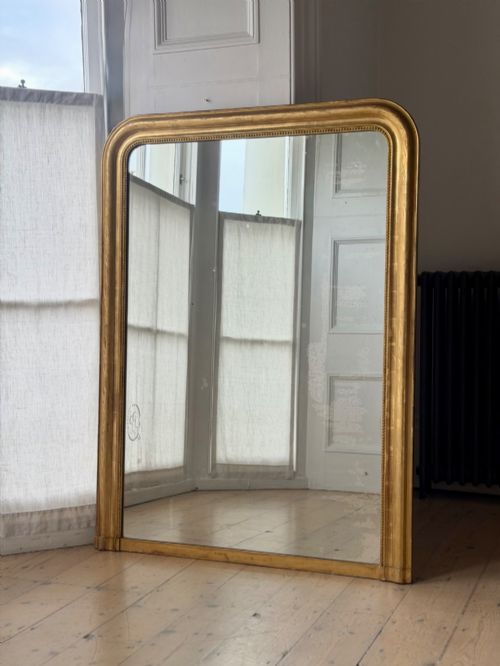
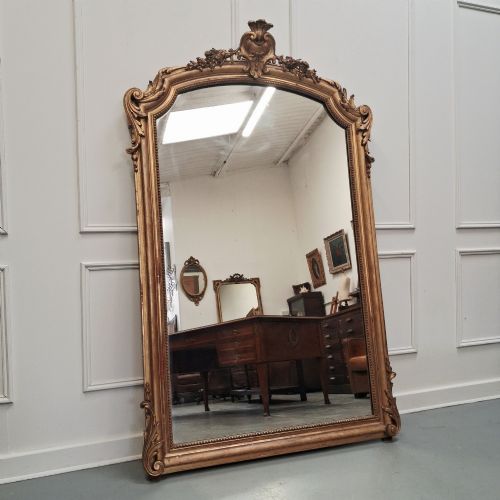
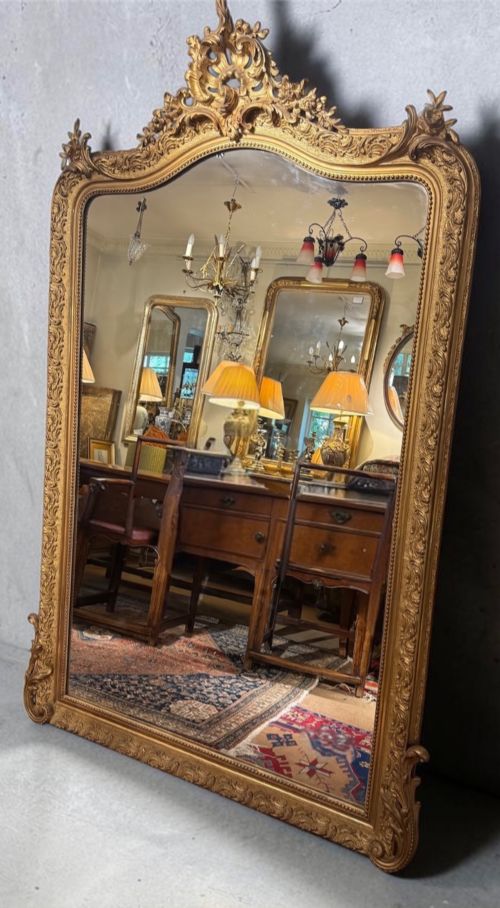
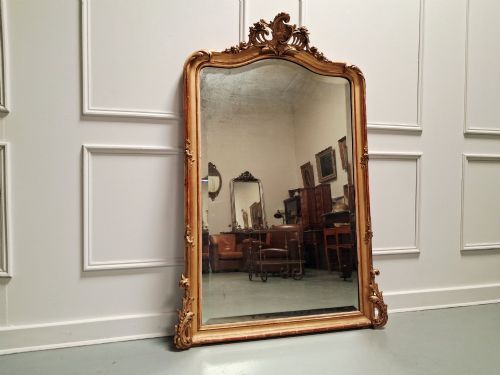
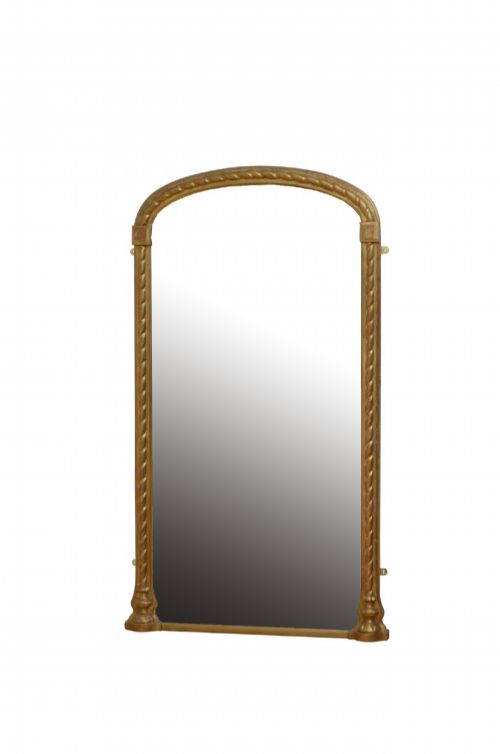
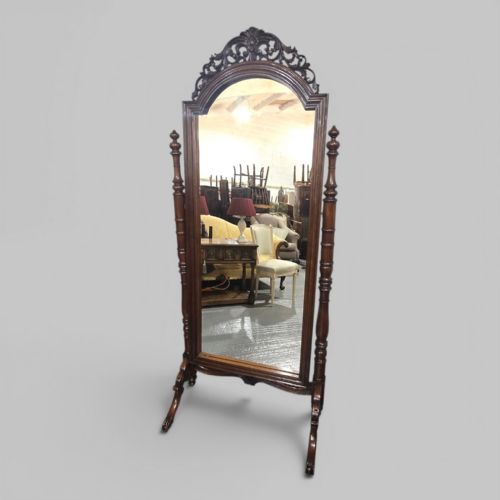
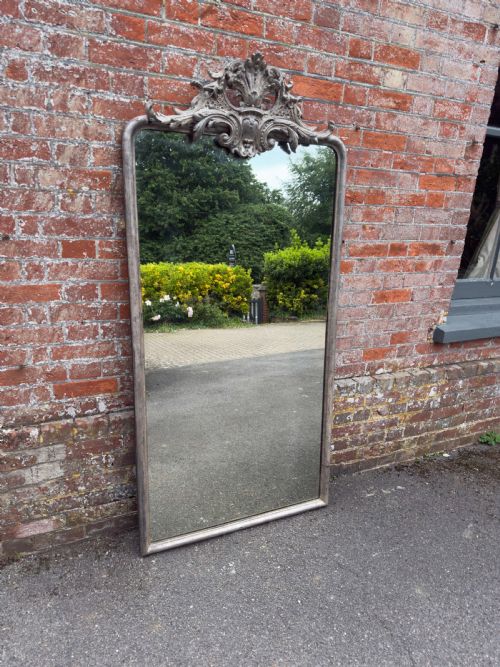
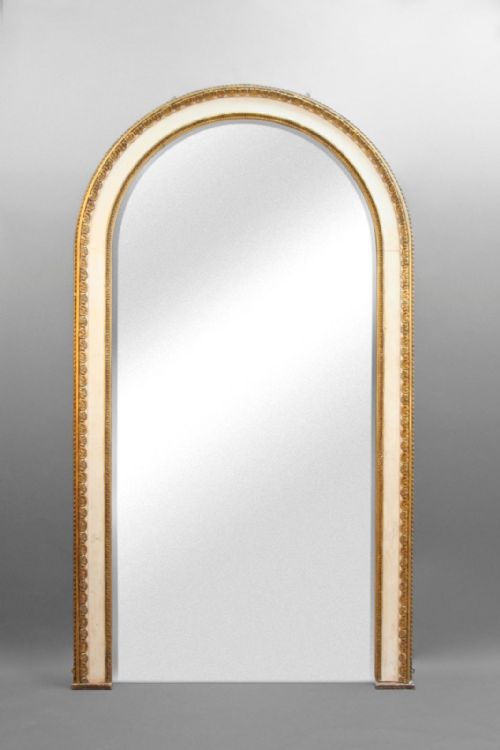
A french arched floor mirror combines a generous vertical format with a curved top, designed to stand directly on the floor or lean against a wall. Examples on this page span the nineteenth century and early twentieth century, drawing on styles such as Louis Philippe, Rococo, and French Chateau.
The form functions as a pier glass or leaner mirror, offering a full-length reflection while visually expanding interior spaces. Surviving pieces frequently incorporate substantial timber frames finished with painted surfaces, gold leaf, or silver leaf.
How they were made
Frames rely on carved wood and moulded gesso built up over a wooden base to create deep relief ornamentation and structural strength. Artisans applied thin layers of gold leaf or silver leaf, or finished the timber with paint.
Mirror glass is set within the shaped wooden rebate, often accompanied by original backing boards and iron fixings characteristic of nineteenth-century workshop practices.
Several mirrors retain brass articulated candle holders, ready for evening illumination.
What varies in quality
The depth and definition of the carved wood and gesso ornamentation distinguish finer frames from simpler versions. Crisp detailing along the arched top and corners demonstrates superior hand-carving skill.
The condition and retention of the original gilt or silver leaf finish, alongside the depth of the mirror plate, determine the visual impact of the piece.
The French Arched Floor Mirror Glossary
- Gesso
- A plaster-like mixture applied to wood frames to provide a smooth surface for gilding or painting. It is built up in layers before being carved or moulded.
- Giltwood
- Timber coated with gold leaf or metal leaf applied over a prepared base. This finish reflects natural light within a room.
- Pier mirror
- A tall mirror traditionally hung on the narrow section of wall between two windows. These pieces often sit above console tables or stand upon the floor.
- Louis Philippe
- A mid-nineteenth-century French style characterised by restrained classical proportions and gentle arched tops. The aesthetic favours understated elegance over heavy ornamentation.
- Overmantel mirror
- A large mirror designed to sit above a fireplace mantel. Many examples share the grand proportions and arched profiles found in floor-standing mirrors.
French Arched Floor Mirror: Frequently Asked Questions
How do I secure a heavy floor mirror?
Large mirrors resting against walls require proper anchoring to prevent tipping, especially in rooms with heavy footfall.
Discreet brackets attached to the wall behind the frame upper section provide stability while maintaining the clean appearance of the piece.
Where should I place an arched mirror?
Placing the glass opposite a window maximises natural light distribution and creates an illusion of extended depth in smaller rooms.
Entryways and reception rooms benefit particularly from the vertical emphasis provided by the curved apex.
How do I clean antique mirror glass?
Gentle cleaning requires a soft cloth and mild glass cleaner applied sparingly to avoid seeping behind the frame edges.
Moisture must be kept away from the timber joints and the silvered backing to preserve the historic materials.
What defines the Louis Philippe style?
Louis Philippe mirrors feature simplified classical lines combined with a graceful rounded arch at the top. The frames rely on subtle moulding rather than extravagant carved decoration.
This restraint allows the form to integrate smoothly into both traditional and contemporary interiors.