




Vintage Leaning Mirror
These vintage leaning mirror pieces bring height and reflected light to a room without the need for wall fixings.
Vintage Leaning Mirror
A vintage leaning mirror provides scale and depth in a room by resting directly against a wall rather than hanging from brackets. The selection available on this page centres primarily on nineteenth century French examples alongside English country alternatives.
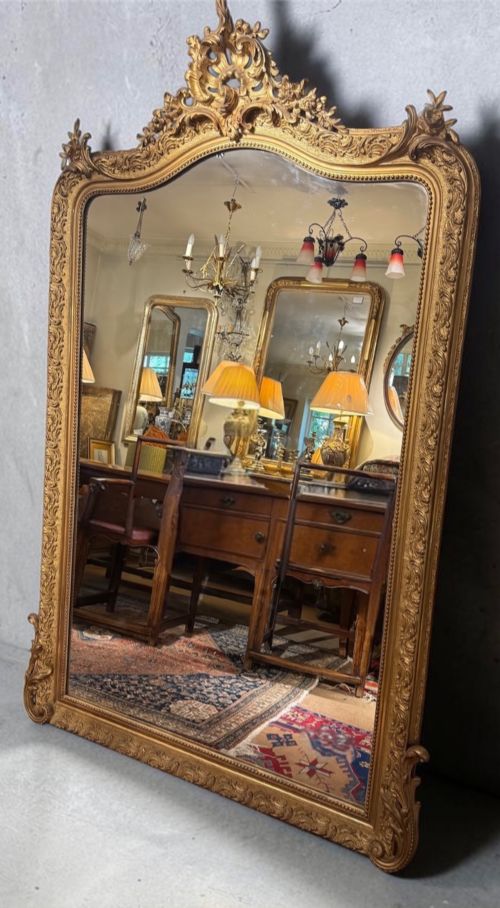
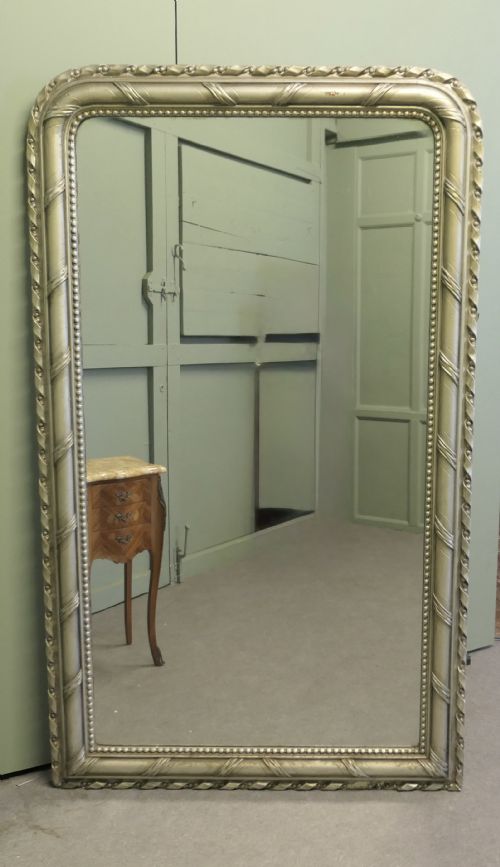
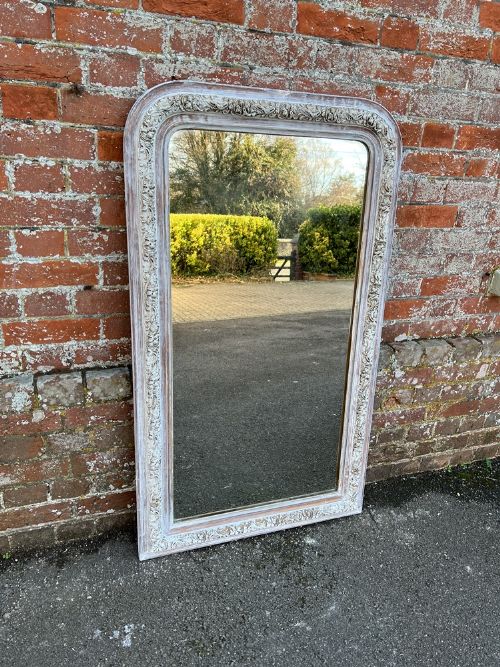
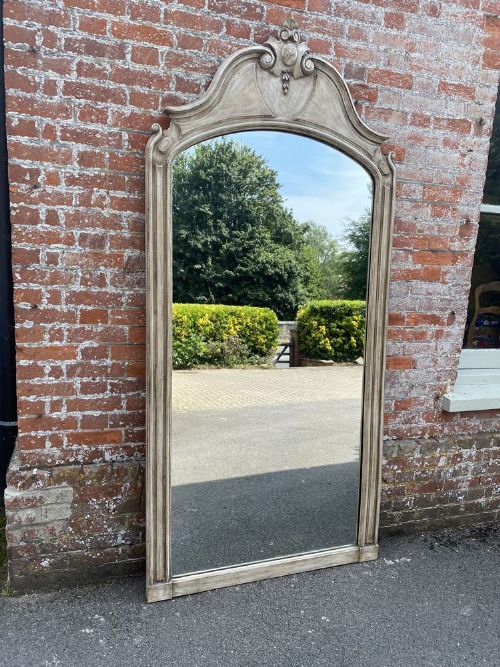
The assortment includes very large formats, tall Louis Philippe designs, and arched top shapes. These tall plates serve to bounce daylight across a floor space and alter the proportions of a interior.
Most pieces hail from nineteenth century France, showing regional variations from provincial workshops to grander chateau aesthetics. English painted alternatives also appear among the selections on offer.
Materials and construction
Carpenters formed the structural frames from carved wood, often applying plaster and gesso to build up decorative mouldings and shaped top profiles. Artisans then finished these wooden carcasses with layers of paint, original giltwood, or silver leaf.
Glass plates of substantial size were set within these heavy frames to withstand the pressure of leaning against a vertical surface. The combination of dense timber and reflective glass produces a heavy object requiring stable floor placement.
English country painted examples appear alongside grand French chateau wall mirrors within the current selection.
Judging quality in vintage leaning mirror pieces
Quality rests in the harmony of the timber carving and the integrity of the original surface finish, whether giltwood or layered paint. Earlier nineteenth century pieces display crisp hand-carved detail in the wood and gesso ornament that machine-moulded later items lack.
The depth and clarity of the glass plate also distinguish superior examples. Retaining original silvering and unblemished mercury glass adds distinct character compared to replaced modern glass inserts.
The Vintage Leaning Mirror Glossary
- Giltwood
- Wood coated with gold leaf or gold paint to create a luminous metallic surface. This finish catches candlelight and daylight effectively in formal reception rooms.
- Gesso
- A plaster mixture applied to wood frames to create a smooth base for gilding or painting. It allows intricate low-relief decorative motifs to be moulded onto the timber.
- Louis Philippe
- A mid-nineteenth century French style defined by understated elegance and gentle classical restraint. Frames from this period often feature softened top corners and minimal ornamentation.
- Silver Leaf
- Thin sheets of hammered silver applied to a prepared surface to achieve a bright metallic sheen. It tarnishes gracefully over time to develop a soft grey patina.
- Rococo Revival
- A nineteenth century decorative style borrowing the asymmetrical curves and scrollwork of the eighteenth century. Pieces in this idiom feature elaborate naturalistic plant motifs.
Vintage Leaning Mirror: Frequently Asked Questions
How do I secure a leaning mirror safely?
These tall frames rely on gravity and their own substantial weight to stay upright against a vertical wall. Most pieces include discreet anchor brackets at the top to prevent accidental tipping.
Position the base on a stable floor surface away from heavy foot traffic. Ensuring the floor is level prevents undue strain on the wooden frame joints.
How do I clean an antique glass plate?
Use a soft microfiber cloth and a mild vinegar-based solution sprayed onto the cloth rather than directly onto the glass. This prevents moisture from seeping behind the silvering layer.
Avoid harsh chemical cleaners that can damage fragile nineteenth century gesso or giltwood borders surrounding the glass.
Can these mirrors be hung on a wall?
The immense height and weight of these large frames mean they are principally designed to stand on the floor and lean. Attempting to hang them requires heavy-duty wall fixings and professional installation.
Resting them on the floor allows the base to bear the load while the top simply rests against the surface.
What defines a Louis Philippe frame?
Louis Philippe mirrors date from the mid-nineteenth century and are recognised by their simple, clean lines and gentle arched or rounded top corners. They offer a restrained alternative to heavily carved rococo designs.
This aesthetic suits both contemporary interiors and traditional settings due to its understated proportions.