



French Animalier Bronze Greyhound
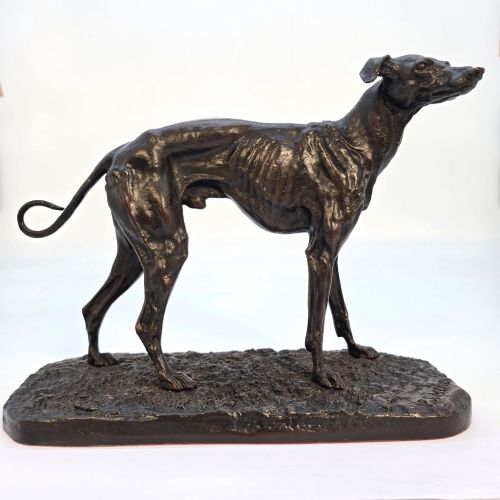
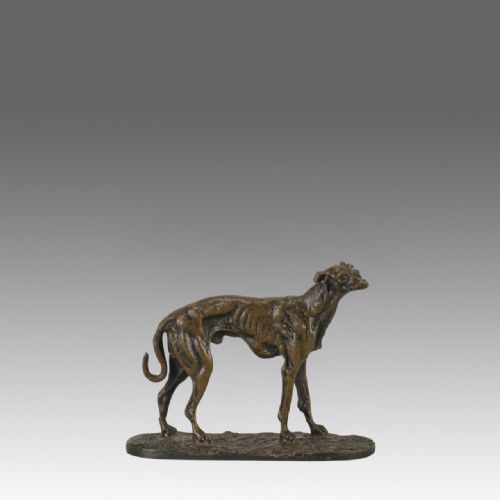
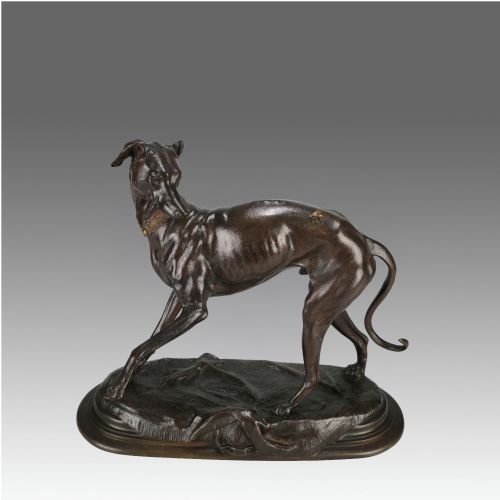
These French animalier bronze greyhound sculptures capture the muscular grace of the hound through meticulous metalwork that collectors prize for its lifelike detail.
French Animalier Bronze Greyhound
When you search for french animalier bronze greyhound, you are looking at nineteenth-century and early twentieth-century metal sculptures depicting sighthounds and hounds. These pieces emerge primarily from the French animalier school, spanning the Victorian era through the Art Deco period.
The objects appear as both standalone decorative sculptures and figural paperweights, often mounted on bases of marble or onyx. You will frequently encounter signed works by prominent animalier sculptors alongside unsigned period interpretations.
The forms range from seated and recumbent greyhounds to dynamic studies involving auxiliary elements like a fly. Each iteration demonstrates a keen observation of canine anatomy characteristic of continental foundry production.
How they were made
These sculptures are produced through the lost-wax casting method in bronze, resulting in dense metallic figures with substantial weight. Foundries apply chemical patination to the metal surface to achieve varied tones ranging from rich dark brown to warm golden highlights.
French Animalier Bronze Greyhound Retail Price Guide 2026
Typical asking prices for french animalier bronze greyhound among the pieces listed under this phrase on Sellingantiques today, from the lower quarter to the upper quarter. They describe what is for sale here now, not the wider market.
Listings feature bronzes set upon marble and onyx bases, spanning the nineteenth century through the Art Deco era of nineteen-thirty.
What varies in quality
The distinction between tiers of work rests in the crispness of the chasing and the subtlety of the surface patina. Superior casts retain fine muscular definition and fur texture that lesser iterations lose during the finishing process.
The quality of the base material also differentiates the pieces, with dense, finely veined marble or onyx mounts signalling higher production standards. Signed works by documented founders command greater attention due to the precision of their initial models.
P. J. Mène·Alfred Dubucand·Alfred Barye·Joseph Francois Victor Chemin·Christophe Fratin
The French Animalier Bronze Greyhound Glossary
- Animalier
- A nineteenth-century artistic movement focused on the realistic depiction of animals, particularly in sculpture. Practitioners studied live subjects in menageries to ensure anatomical accuracy.
- Patina
- The chemical or natural coloration on the surface of bronze resulting from age or applied treatments. This finish protects the metal and enhances visual depth.
- Lost-wax casting
- A traditional metalworking process where a molten metal is poured into a mould created by a wax model. This technique allows for intricate detail in bronze sculpture.
- Sighthound
- A type of dog that hunts by sight and speed, serving as the specific anatomical subject for these canine bronzes. The form is characterised by a slender body and deep chest.
- Base mount
- The stone plinth, often marble or onyx, upon which the bronze sculpture is secured. It adds physical stability and visual contrast to the metalwork.
French Animalier Bronze Greyhound: Frequently Asked Questions
How do I identify a period cast?
Period casts exhibit the characteristic weight, tool marks, and patination consistent with nineteenth-century foundry practices. Examining the underside often reveals the assembly methods typical of the era.
Signatures or foundry marks embedded in the bronze provide further chronological context, though many quality pieces remain unsigned.
What is the difference between marble and onyx bases?
Marble bases present a crystalline stone structure with varied veining, whereas onyx offers a translucent, layered appearance with banded colours. Both materials were utilised during the nineteenth and early twentieth centuries to mount heavy bronzes.
The choice of stone often aligns with the prevailing aesthetic of the period, from Victorian solemnity to Art Deco geometry.
Where should I display a bronze hound sculpture?
These sculptures require a stable, level surface capable of supporting considerable weight due to the dense bronze and stone construction. Placement away from direct heat sources helps preserve the stability of the patinated surface.
Their compact scale suits desks, mantelpieces, or dedicated display cabinets where the details can be viewed closely.
Are all greyhound bronzes signed by the artist?
Not all pieces bear a signature, as many workshop productions and smaller decorative figures were issued unsigned. Unsigned works can still display exceptional casting quality and fine patination.
Signature placement typically occurs directly on the bronze base near the feet of the hound.