


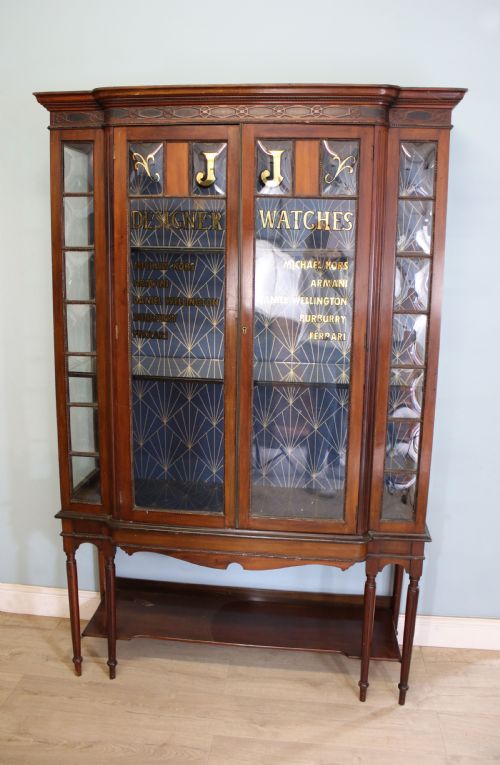
Freestanding Shop Cabinet
These freestanding shop cabinets are trade fixtures built to display merchandise, offering collectors a practical way to showcase objects at home.
Freestanding Shop Cabinet
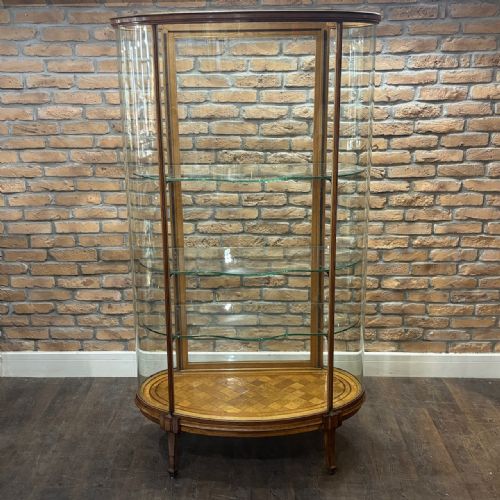
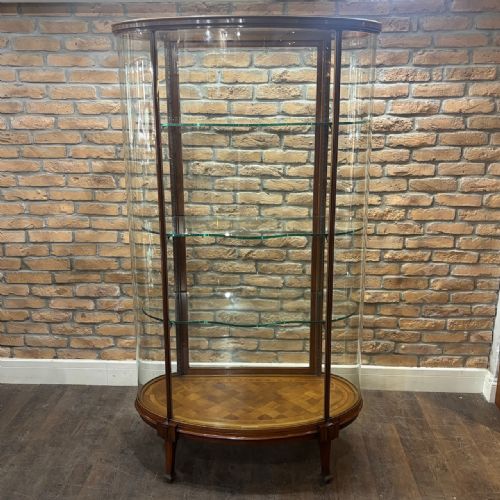
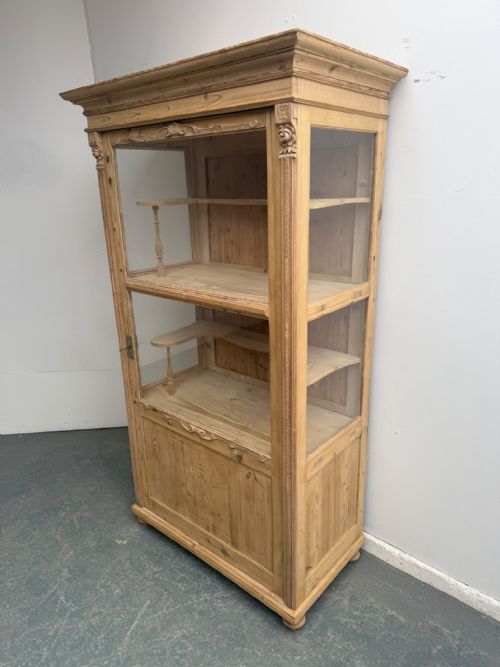
A freestanding shop cabinet is a commercial display piece designed to stand away from walls, giving all-round visibility to its contents. When searching for a freestanding shop cabinet, buyers encounter tall towers, shop counters, and glazed vitrines originating from the Victorian, Edwardian, and Art Deco periods.
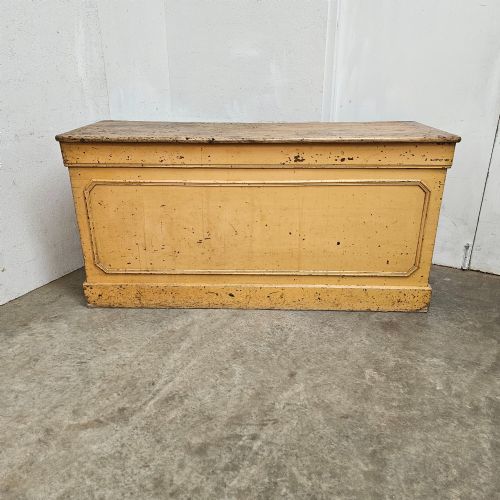
The selection ranges from large oak and mahogany uprights made by makers such as F. Sage & Co to French painted counters and steel-framed display cases. These pieces derive directly from nineteenth and early twentieth-century retail environments, repurposed now for domestic display.
Most examples rely on generous glass panels supported by timber frames in mahogany, oak, pine, and satinwood. Buyers frequently meet Edwardian and Victorian forms that balance commercial durability with period decorative detail.
How They Were Made
Construction centres on robust timber frames in mahogany, oak, and pine, designed to bear the heavy weight of large glass panes. Workshops utilised brass hardware and occasionally steel alongside leather accents to reinforce the structural integrity required for daily retail use.
Surfaces received various finishes, from original paint on French counters to ebonised treatments and polished mahogany or satinwood veneers. Joinery prioritised maximum visibility, joining slender wooden muntins securely around expansive glazed viewing areas.
Some French counters arrive with their original trade paint still clinging to the timber, bearing silent witness to decades of brisk Victorian commerce.
What Varies in Quality
Quality rests upon the structural integrity of the timber framing and the originality of the glass panels. Pieces retaining their original hardware, distinct period finishes, and maker attribution stand apart from heavily altered examples.
The refinement of the timber choice, such as figured mahogany or select oak, alongside the sophistication of the joinery distinguishes standard utility cases from finer retail furniture.
F. Sage & Co
The Freestanding Shop Cabinet Glossary
- Vitrine
- A glass-fronted display cabinet used primarily for exhibiting precious objects or curiosities. The term frequently applies to finer antique and French provincial display pieces.
- Shop counter
- A low retail fixture incorporating storage or display space accessible from behind. These often feature original paint or timber panelling from the nineteenth century.
- Ebonised
- Wood finished to resemble ebony through a staining and polishing process. This dark surface treatment appears on twentieth-century tower cabinets.
- Glazed
- Fitted with glass panes to enclose and protect the contents. This technique defines the primary function of retail display furniture.
Freestanding Shop Cabinet: Frequently Asked Questions
What is a freestanding shop cabinet?
A freestanding shop cabinet is a trade display case built to stand independently without wall support. These units use glass panels and timber frames to showcase merchandise from all sides.
Originally designed for nineteenth and twentieth-century retail spaces, they now serve as prominent display furniture in domestic settings for collections and objects.
How were shop cabinets used originally?
Merchants utilised these cabinets to display luxury goods, jewellery, and delicate wares securely while keeping them entirely visible to customers. Tall towers and glazed counters protected stock from dust and handling.
Shop assistants could access items easily through specialised doors while shoppers viewed the merchandise through large glass viewing areas.
Which periods do these cabinets come from?
The available pieces span the nineteenth and twentieth centuries, encompassing Victorian, Edwardian, and Art Deco eras. Each period brings distinct material preferences and stylistic details.
Victorian and Edwardian versions predominantly feature mahogany, oak, and pine, while later 1920s and 1930s examples introduce steel, leather, and ebonised finishes.
Where should I place a shop cabinet at home?
Because these cabinets are freestanding and glazed on multiple sides, they perform best in well-lit rooms where light can pass through the display glass. They suit living spaces, hallways, or studies.
Placing them away from walls allows full appreciation of the timber framing and provides unobstructed views of the interior shelves.