


Retail Glass Display Case
A retail glass display case brings commercial heritage directly into modern rooms, offering clear visibility and structured storage for collections.
Retail Glass Display Case
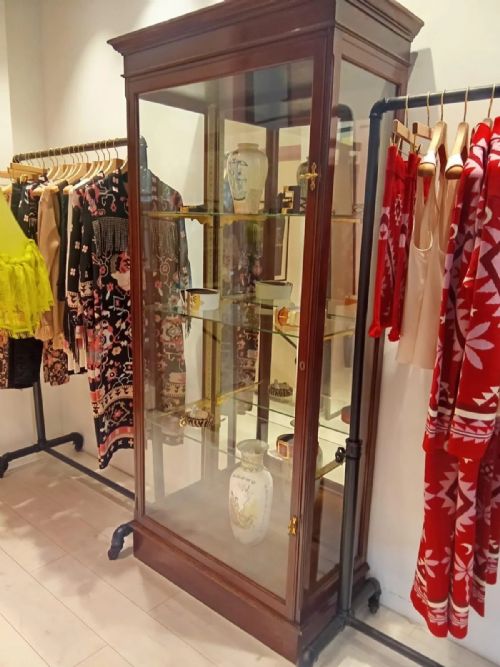
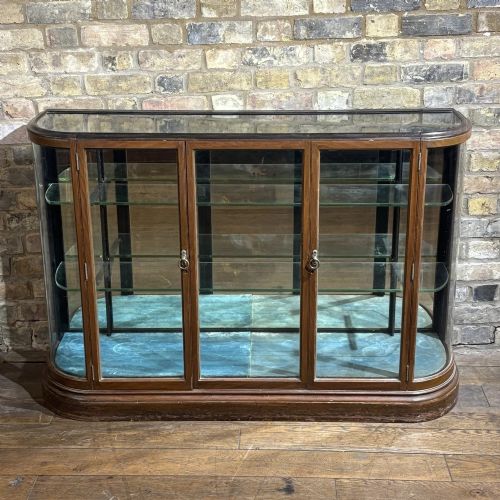
A retail glass display case is designed to showcase merchandise or private collections securely while maintaining maximum visibility from multiple angles. Buyers searching this phrase encounter substantial freestanding towers, long shop counters, and compact tabletops suited for intimate interiors.
The pieces originating on this page span the late nineteenth century through to the 1930s, reflecting periods such as the Victorian era, the Edwardian period, and Art Deco design. Commercial workshops and pharmacies originally utilised these fixtures to present items ranging from chocolates to jewellery to the public.
Mahogany and oak form the structural backbone of these cabinets, frequently paired with extensive glass panels, brass hardware, and mirrored interiors. Shoppers are most likely to meet Edwardian and 1920s examples constructed for commercial environments, often retaining original maker plaques or specialised shelving.
Materials and Construction
Makers built the primary frames of these cabinets using dense timbers like mahogany, oak, and occasionally ebonised wood or aluminium frames in later Art Deco iterations. Glazing provides the dominant surface area, allowing light to flood the interior shelves.
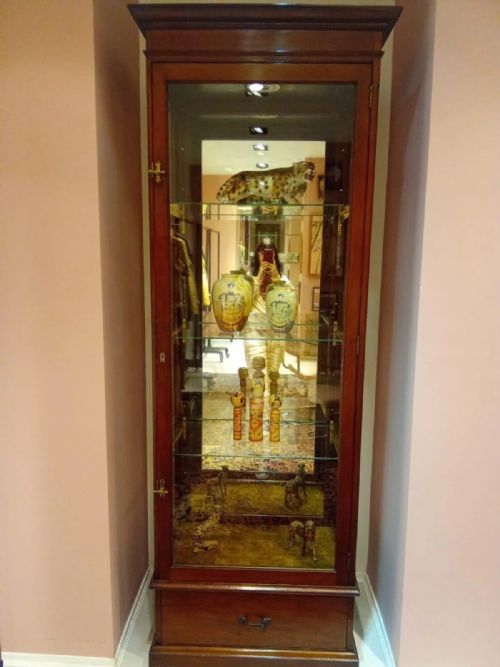
Internal elements frequently incorporate adjustable glass shelves, mirrored backs to enhance perceived depth, and velvet linings to cushion delicate specimens. Brass hardware, locks, and handles secure the access doors while adding metallic contrast to the timber frames.
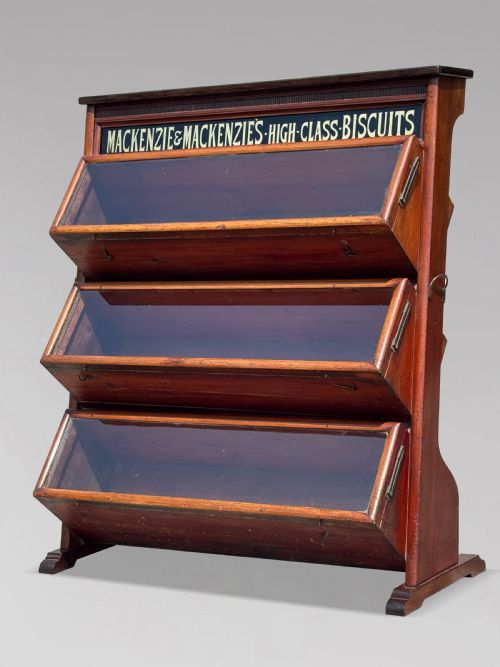
Several cabinets retain original chocolate and watch branding from early twentieth-century high street shops.
Grading Quality
Quality rests on the integrity of the original timber framing, the clarity and proportion of the glass panels, and the survival of maker signatures. Cabinets bearing stamps from recognised commercial furnishers command greater interest than anonymous workshop productions.
The sophistication of the internal engineering, such as adjustable glass shelving systems, smoothly operating sliding or hinged doors, and intact mirrored interiors, separates utilitarian utility from high-end retail furniture.
F. Sage & Co·John Stow Ltd·Saml. Elliott & Sons
The Retail Glass Display Case Glossary
- Bijouterie table
- A glass-topped display table originally used for small valuable items like jewellery and watches. These tables lift open to provide horizontal surface viewing.
- Countertop display
- A smaller cabinet scaled to sit on top of a retail sales counter. They place merchandise at eye level for customers completing transactions.
- Bow end
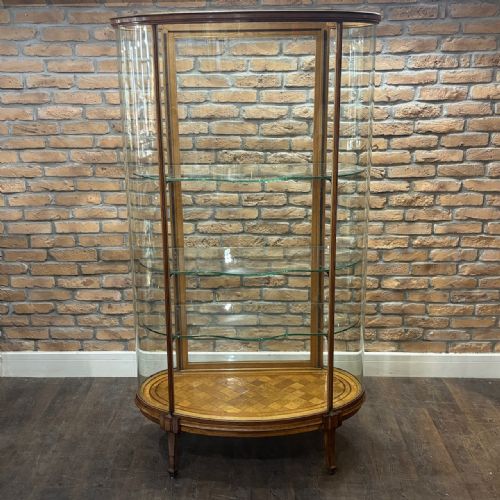
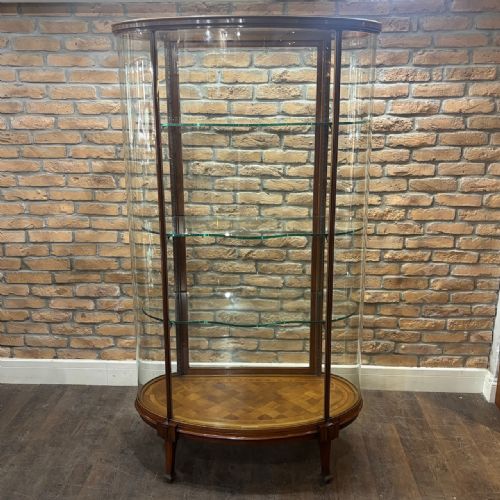
- A cabinet featuring a rounded or curved glass front panel. This technique softens linear silhouettes and improves peripheral visibility.
- Ebonised
- Wood treated with a chemical finish or stain to imitate ebony. This dark, formal surface appears frequently on pieces from the late nineteenth and early twentieth centuries.
Retail Glass Display Case: Frequently Asked Questions
What were retail display cases used for?
These cases served as the primary method for merchants to present goods safely to customers while preventing handling. Confectioners, chemists, and jewellers utilised them to organise and highlight stock.
Over time, these commercial fittings transitioned into domestic environments where collectors employ them to display private possessions securely.
How do I date a display case?
Dating relies on observing structural characteristics, timber choices, and hardware styles associated with specific periods. Victorian and Edwardian examples often feature heavy mahogany frames and brass locks, whereas 1930s pieces might introduce aluminium framing or Art Deco geometry.
Maker plaques and branded advertising panels provide definitive chronological markers when present.
Can I adjust the internal shelving?
Many period cabinets incorporate adjustable glass shelving systems supported by metal rack strips inside the wooden frame. This allows owners to reconfigure the interior vertical space to accommodate objects of varying heights.
Fixed wooden or glass supports also appear on certain countertop models and specialised single-tier counters.
How do I care for antique glass and wood?
Maintenance involves dusting timber frames with a soft cloth and cleaning glass panels using standard non-abrasive glass cleaners. Avoid placing untreated wood surfaces in direct sunlight or areas of high humidity to prevent warping.
Period brass hardware benefits from gentle cleaning without aggressive metal polishes that strip historic patination.