
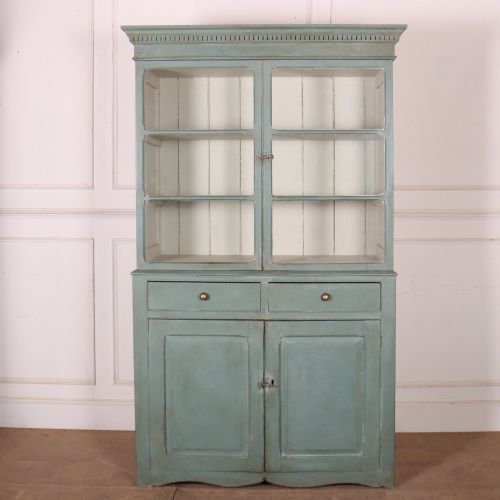
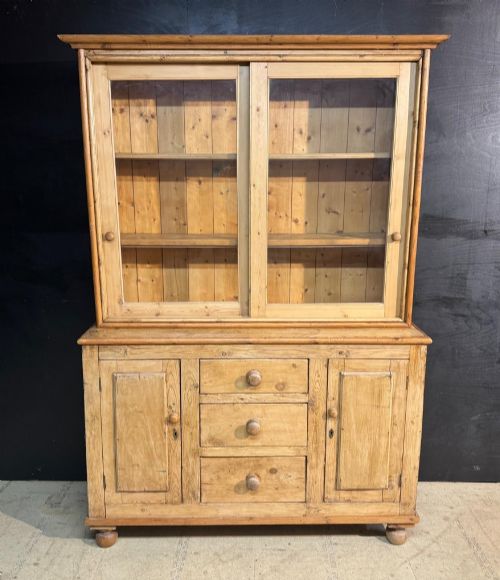
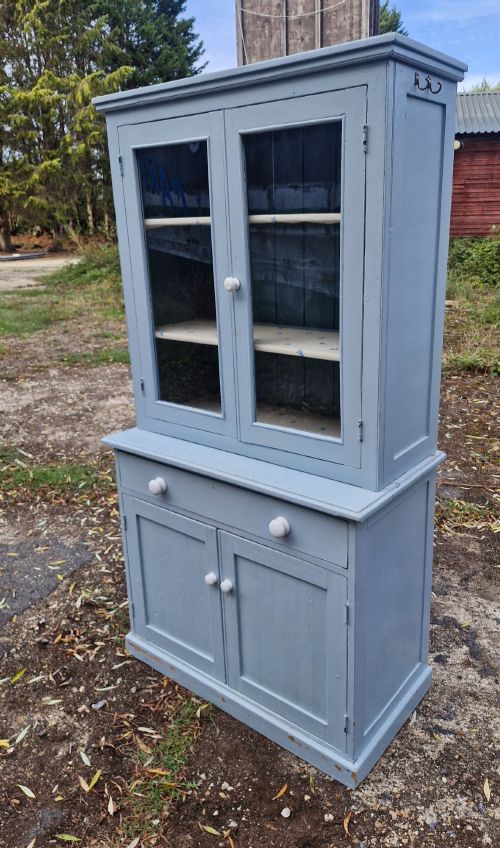
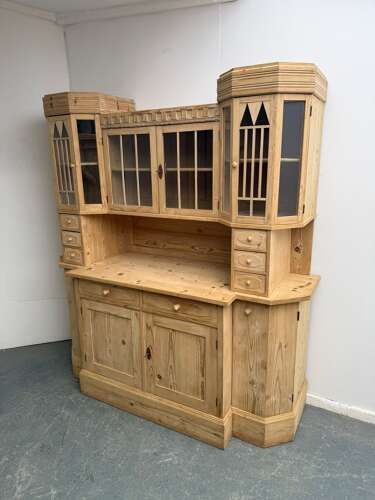
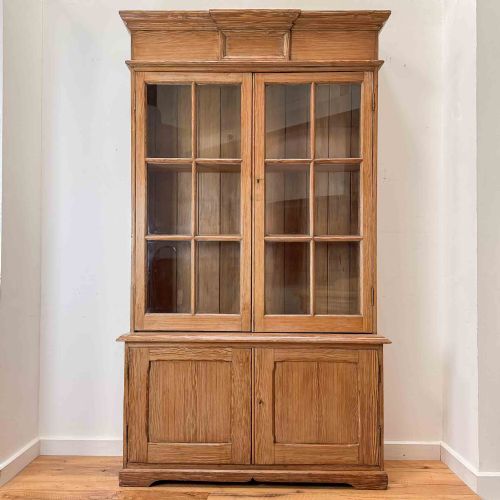


Freestanding Pine Kitchen Dresser
A freestanding pine kitchen dresser brings honest utility and warmth to a room, offering generous storage for daily provisions and display space for crockery.
Freestanding Pine Kitchen Dresser
A freestanding pine kitchen dresser is a utilitarian storage unit designed for domestic service, most frequently encountered in regional styles such as English and Scottish country furniture. These pieces span from the eighteenth century through the twentieth century, encompassing Georgian, Victorian, and Arts and Crafts vernacular traditions.
The form typically divides into a lower base section, comprising cupboards or drawers, and an upper plate rack or glazed cabinet. Buyers searching for a freestanding pine kitchen dresser will find examples ranging from small breakfast room cupboards to large breakfront configurations and substantial housekeeper cupboards.
Originating in domestic sculleries, farmhouses, and country houses, these dressers prioritised practical utility over ornamental display. Their survival in pine, pitch pine, and painted finishes reflects a robust domestic history where furniture was built to serve working kitchens.
Materials and construction
Makers relied primarily on native pine and pitch pine for carcases and shelving, chosen for availability, resilience, and ease of working. Iron and brass hardware, including hinges and handles, secured doors and drawers while enduring constant domestic use.
Surfaces frequently exhibit historical painted finishes, ranging from original paint schemes to stripped timber prepared for wax or modern paint. Glazed doors incorporate glass panes to protect tableware, while open pot board bases provide sturdy platforms for heavy earthenware.
The documented forms span open pot board dressers, glazed kitchen cabinets, breakfront sideboards, and tall housekeeper cupboards.
Factors of quality and survival
Quality rests in the integrity of the original construction and the survival of untouched surfaces, such as early painted finishes or natural wax patination. Pieces that retain their original two-part configuration, backboards, and hardware demonstrate greater fidelity to their period of origin.
Proportion and scale distinguish finer vernacular pieces from standard utilitarian cupboards, with well-balanced cornices and harmonious drawer arrangements indicating thoughtful provincial craftsmanship.
The Freestanding Pine Kitchen Dresser Glossary
- Pot board
- An open lower shelf fitted beneath a dresser base, traditionally used for storing heavy pots and pans. This feature is particularly characteristic of eighteenth-century country furniture.
- Housekeeper's cupboard
- A large, enclosed storage cabinet designed for linens, dry goods, and provisions in large country houses. These tall cupboards often feature multiple panelled doors.
- Breakfront
- A cabinet design where the central section projects forward from the flanking wings. This architectural arrangement adds visual depth to larger kitchen dressers.
- Pitch pine
- A dense, resinous softwood variant prized for its strength and prominent grain pattern. It was frequently utilised in nineteenth-century cabinetry for enhanced durability.
Freestanding Pine Kitchen Dresser: Frequently Asked Questions
How do I care for a pine dresser?
Maintain the timber by applying a traditional beeswax polish sparingly to nourish the dry surface. Avoid placing the cabinet near direct heat sources to prevent the pine from warping.
Keep the interior clean with a soft, dry cloth and ensure adequate ventilation in the room to protect historic painted or waxed finishes.
How do I date an old pine dresser?
Examine the construction methods, tool marks on the timber, and the style of the hardware and mouldings. Eighteenth-century pieces often show hand-planed surfaces and pegged joints, whereas Victorian examples utilise machine-sawn timber and different fastening techniques.
Paint layers and overall proportions also provide clues, with earlier country pieces showing simpler, more functional lines compared to later nineteenth-century revival styles.
Can I paint an antique pine cabinet?
Many historical pine dressers were painted during their working lives, and subsequent layers often form part of their documented history. Applying a new coat of paint is a traditional method for refreshing domestic furniture.
Consider whether the piece retains a significant original paint surface before making alterations, as preserved historic finishes contribute to the character of early pieces.