
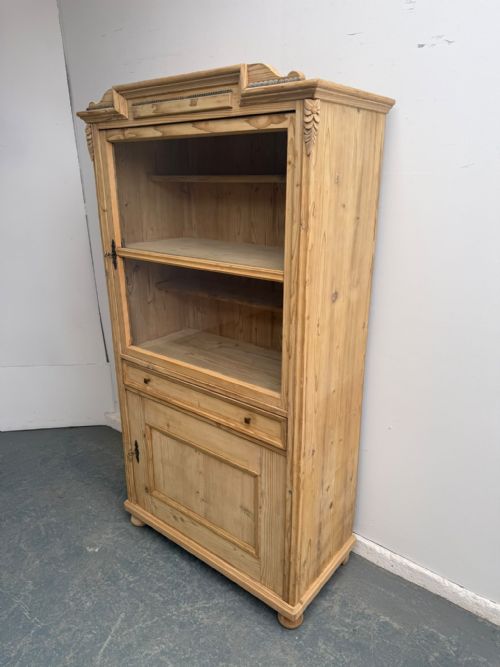
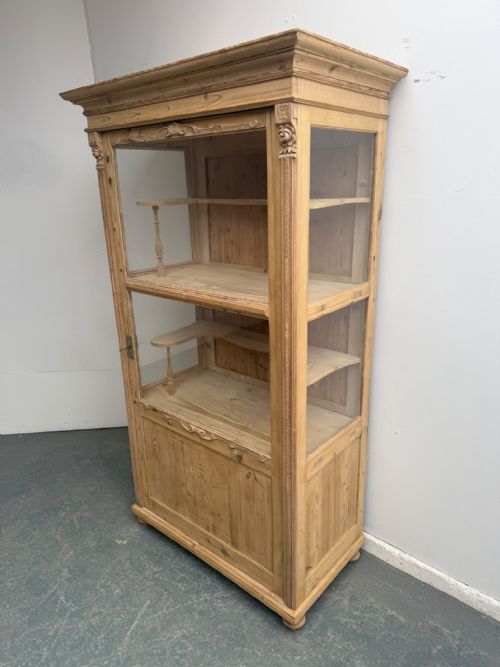
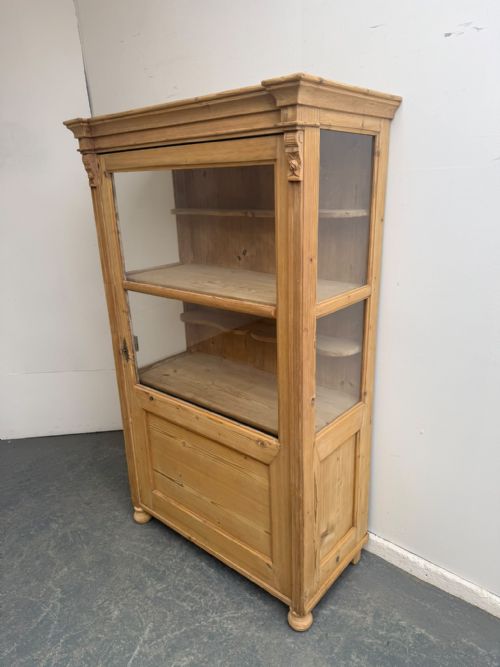


Freestanding Pine Display Cabinet
A freestanding pine display cabinet brings utility and warmth to a room, offering glazed storage for china and books in sturdy timber.
Freestanding Pine Display Cabinet
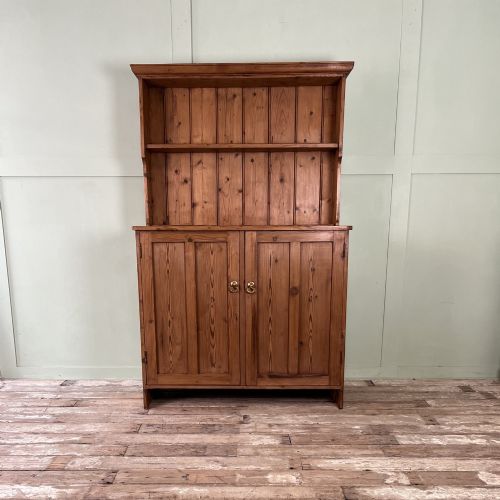
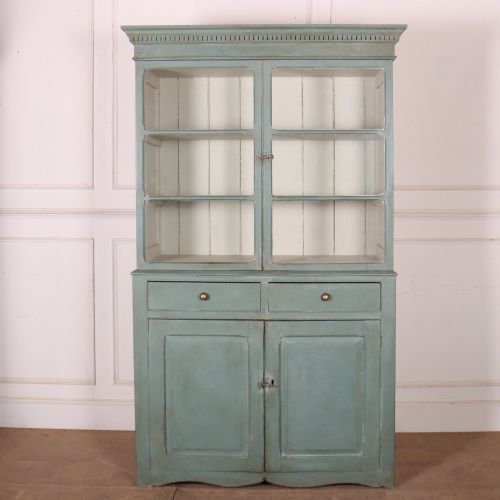
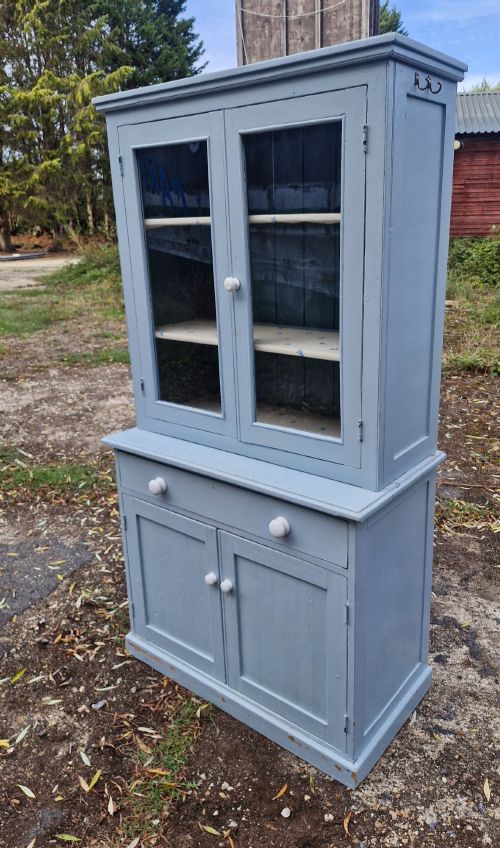
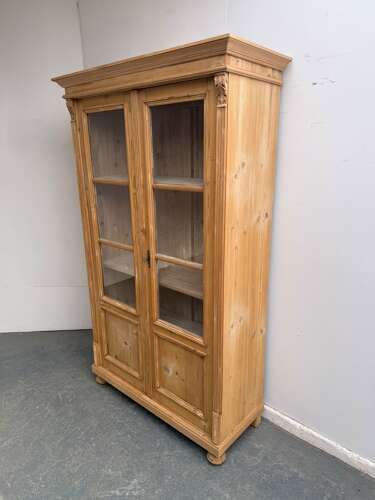
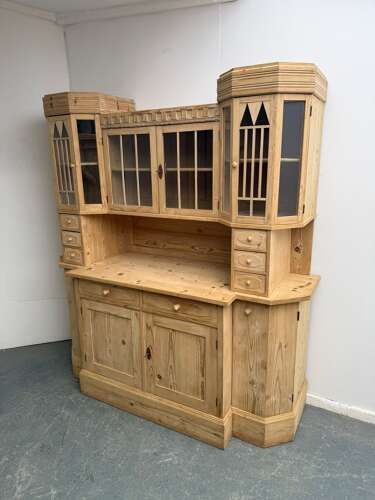
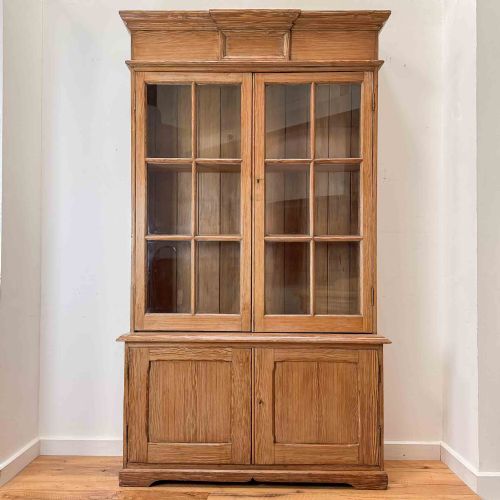
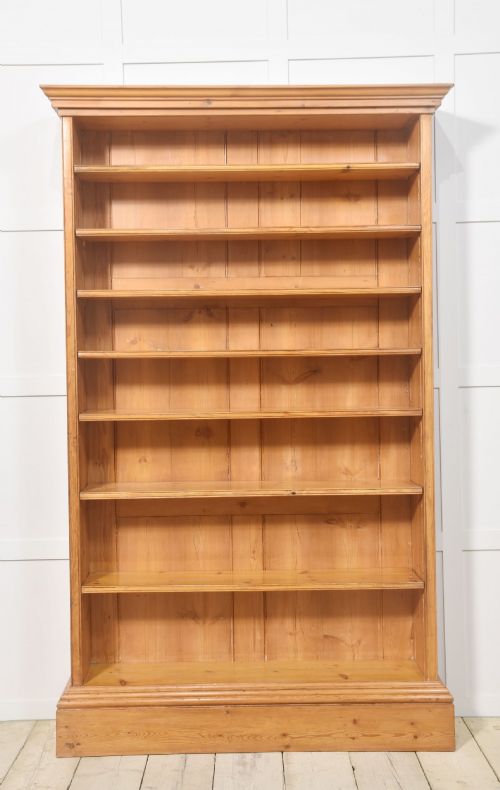
A freestanding pine display cabinet takes various forms across the nineteenth and twentieth centuries, ranging from tall glazed bookcases to two-part kitchen dressers and shop counters. Buyers seeking a freestanding pine display cabinet encounter pieces originating from English, Scottish, and French country traditions, alongside specific Victorian iterations and Arts and Crafts examples.
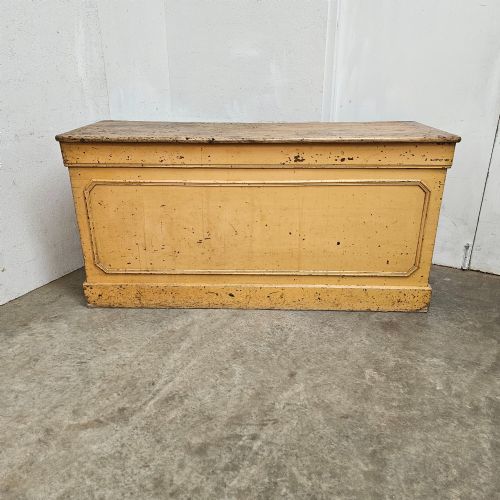
The construction typically involves timber carcasses fitted with glass doors, open shelving, or wire mesh panels for visibility. Many examples reflect domestic kitchen and pantry storage, while others derive from retail environments such as old shop counters.
How they were made
Makers utilised solid pine and pitch pine for the primary framework, combining sturdy timber construction with glazed panels to protect contents while keeping them visible. Iron and brass fittings provide structural reinforcement and functional hardware for doors and drawers.
Surfaces frequently show historical treatments including original paint, wax finishes, or bare timber prepared for painting. Architectural elements and sectional knockdown designs appear in larger two-part bookcases and dressers built for domestic utility.
One vintage cupboard carries later sign-writing for Hovis Bread, whispering of an earlier life outside the domestic parlour.
What varies in quality
The distinction between standard utility items and finer pieces lies in the proportion of the architectural detailing and the integrity of the original timber. Better examples display careful joinery in their breakfront profiles and two-part carcasses.
Surface patination plays a substantial role, distinguishing pieces retaining original paint layers from those stripped down or repeatedly re-waxed over generations.
The Freestanding Pine Display Cabinet Glossary
- Pitch pine
- A resinous softwood known for its durability and prominent grain pattern. It was frequently utilised for robust nineteenth-century furniture.
- Breakfront
- A cabinet design where the central section projects forward from the flanking wings. This architectural arrangement adds depth and visual weight to larger bookcases and dressers.
- Glazed
- Fitted with glass panels within the doors to enclose and display the contents. This allows visibility while protecting books or ceramics from dust.
- Knockdown
- Furniture constructed to be easily dismantled into separate sections for transport and installation. This method was practical for large nineteenth-century wardrobes and bookcases.
Freestanding Pine Display Cabinet: Frequently Asked Questions
What periods do these cabinets come from?
The available pieces span the nineteenth century into the twentieth century, encompassing Victorian productions alongside later 1910, 1920, and 1930 examples.
Design influences range from formal Victorian styles to regional Scottish, English, and French country aesthetics.
How were these cabinets originally used?
These pieces served practical storage roles in domestic kitchens, pantries, and parlours, holding crockery, provisions, and books.
Some iterations originated in commercial settings, functioning as shop counters or architectural display fixtures.
Are the finishes original?
Surfaces vary significantly, with some items retaining their original paint layers or historical sign-writing.
Other pieces present waxed pine or bare timber surfaces prepared for custom painting or waxing.
What materials are used in construction?
Pine and pitch pine form the primary timber framework, often paired with glass panes for display doors.
Hardware components incorporate brass and iron for hinges, handles, and structural stability.