
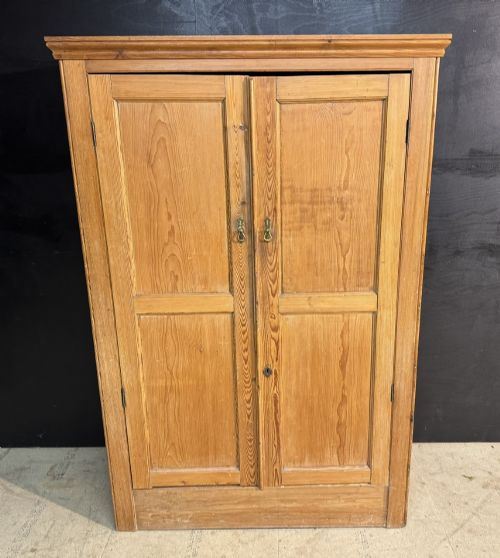
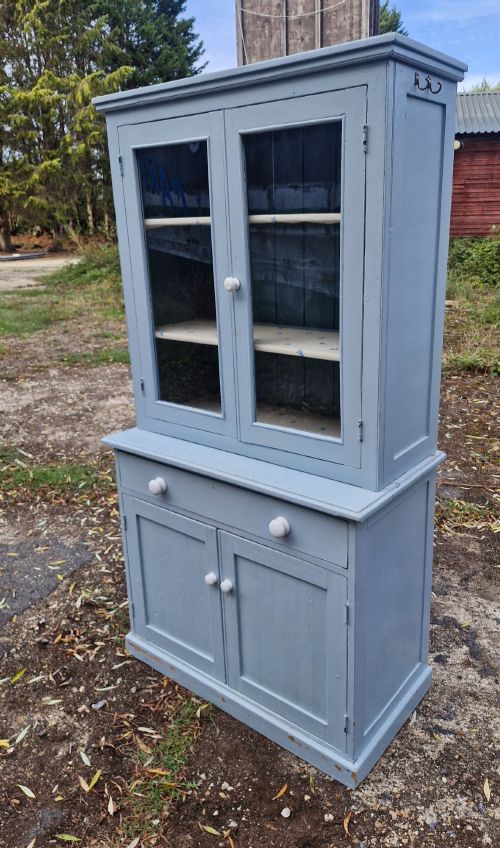
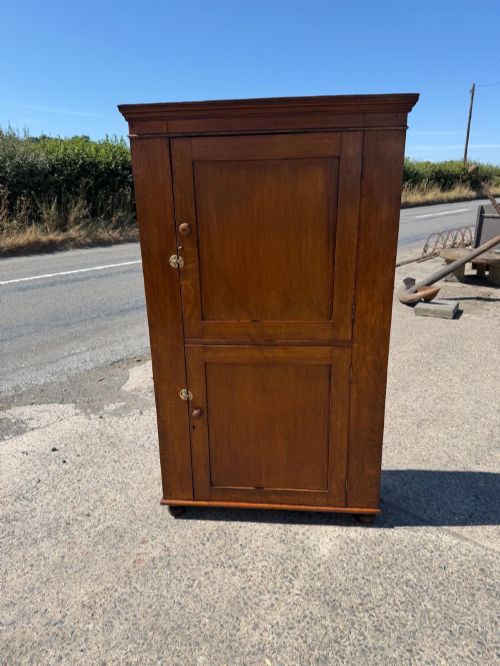
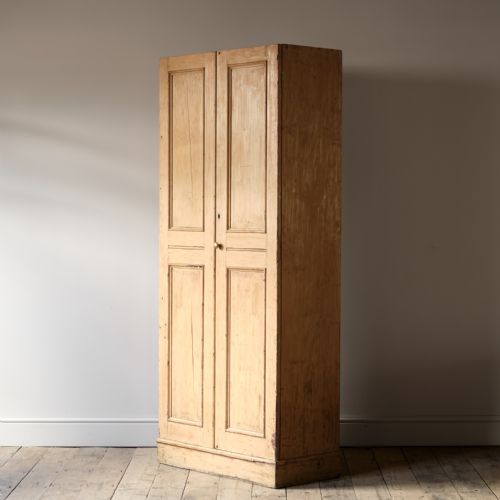
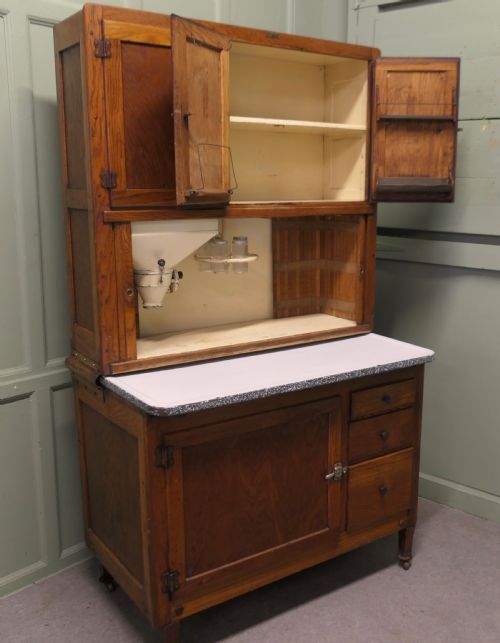
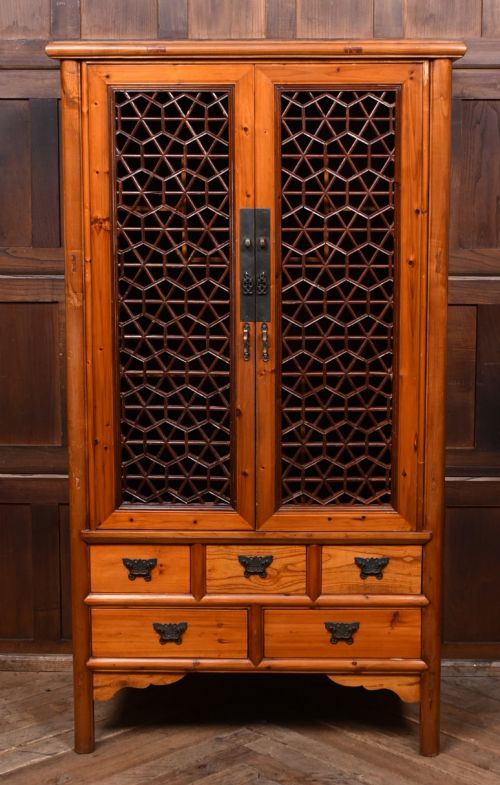

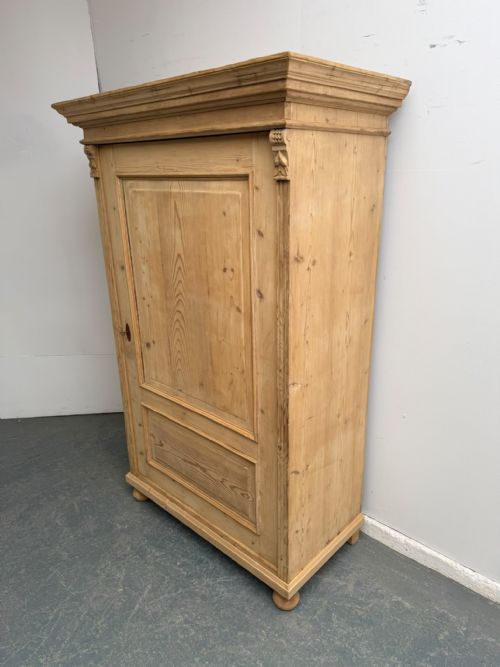
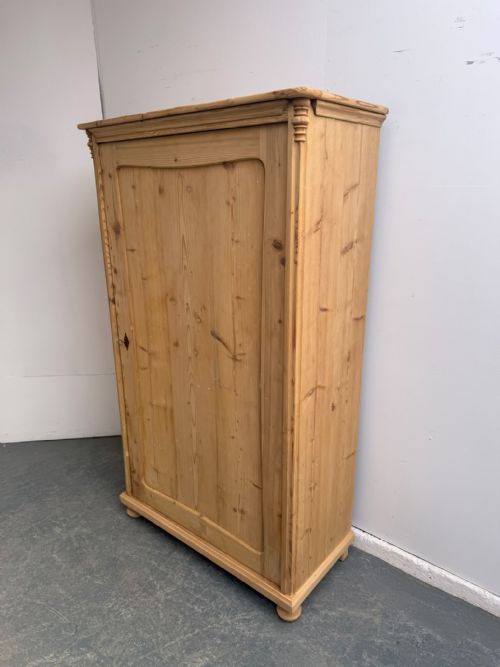
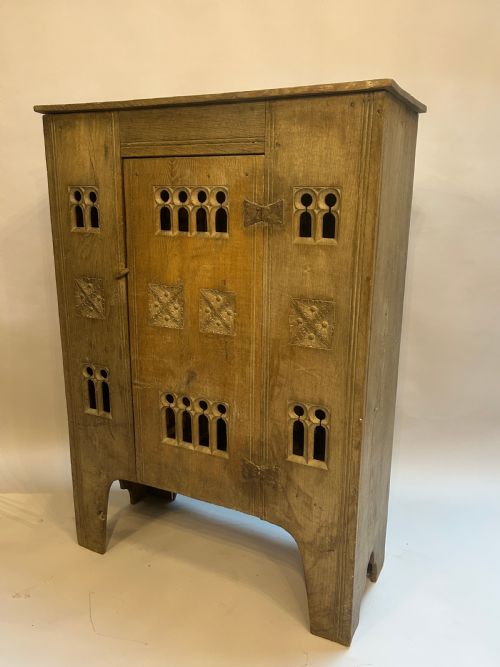
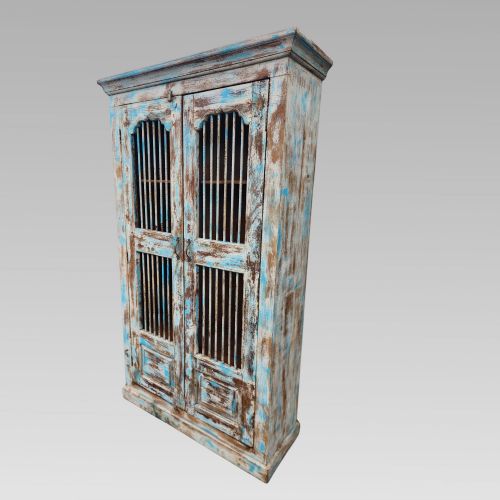


Freestanding Pantry Cabinet
A freestanding pantry cabinet brings honest, utilitarian storage into a room, offering deep shelves and stout timber construction built for daily provisions.
Freestanding Pantry Cabinet
When searching for a freestanding pantry cabinet, you encounter sturdy storage designed to hold food, linen, and household provisions across multiple centuries. These pieces encompass larder cupboards, housekeeper's cupboards, and kitchen dressers originating from diverse domestic spaces.
The most common examples on this page are constructed from pine, often retaining original paint finishes or prepared for waxing. They range from single-door vented designs to large multi-door structures dating from the Georgian and Victorian eras up to the mid-twentieth century.
Geographic origins stretch from English and European country workshops to American and Asian makers. Form follows utility, resulting in pieces with generous internal shelving, deep carcases, and functional panel doors.
What Varies in Quality
Quality rests upon the integrity of the timber selection and the retention of original structural elements such as backboards, feet, and internal shelving. Cabinets displaying untouched original paint or surface finishes hold greater character than those stripped down repeatedly over generations.
Proportion and scale dictate the visual success of each piece, with well-balanced cornices, tight door joints, and harmonious hardware separating utilitarian workshop output from finer country house examples.
Pine is the most frequently recorded primary material across these listings, spanning Georgian, Victorian, and Edwardian country forms.
Hudson Bros
The Freestanding Pantry Cabinet Glossary
- Larder cupboard
- A tall storage piece designed specifically for food preservation and provisions, often featuring ventilated panels to circulate air around perishable goods.
- Housekeeper's cupboard
- A large storage cabinet traditionally used for housing household linen, china, and dry goods under the care of a senior domestic servant.
- Fielded panel
- A wooden panel with bevelled edges set into a frame, designed to allow the timber to expand and contract safely with changes in room humidity.
- Bun feet
- Rounded, slightly flattened wooden feet that lift the heavy carcase of a cupboard clear of damp stone or wooden floors.
- Breakfront
- A cabinet design where the central section projects forward from the flanking wings, adding architectural depth to larger kitchen furniture.
Freestanding Pantry Cabinet: Frequently Asked Questions
How were freestanding pantry cabinets used originally?
These cabinets served as the primary storage units in domestic kitchens and larders before fitted cabinetry became standard. They held flour, cheeses, cured meats, and crockery away from pests and damp.
The deep shelves and ventilated doors kept perishables cool and organised in large country houses, farmhouses, and school sculleries alike.
How do I tell an 18th-century cabinet from a Victorian one?
Earlier pieces from the eighteenth century often feature hand-planed timbers, pegged joints, and simpler, heavier proportions built by regional carpenters. Victorian examples tend to introduce standardised machine-cut elements, applied mouldings, and distinct hardware like brass or iron latches.
Examining the backboards, nail types, and tool marks inside the carcase helps reveal the approximate period of manufacture.
Can I use an antique larder cupboard in a modern kitchen?
These cabinets provide exceptional freestanding storage capacity that suits contemporary kitchens lacking built-in pantries. Their deep shelves accommodate dry goods, small appliances, and tableware with ease.
Placing them against a kitchen or dining room wall adds traditional warmth and practical vertical storage without requiring permanent structural changes.
What is the difference between a food cupboard and a housekeepers cupboard?
Food cupboards traditionally incorporated mesh or pierced wooden ventilation panels to allow air circulation around perishable provisions. Housekeeper's cupboards were generally larger, multi-door storage units intended for household textiles, linens, and dry stores.
Both types share a utilitarian heritage, but their internal configurations reflect distinct domestic chores.