



Freestanding Library Table
A freestanding library table brings central presence to a room, offering finished surfaces on all sides for working or displaying books.
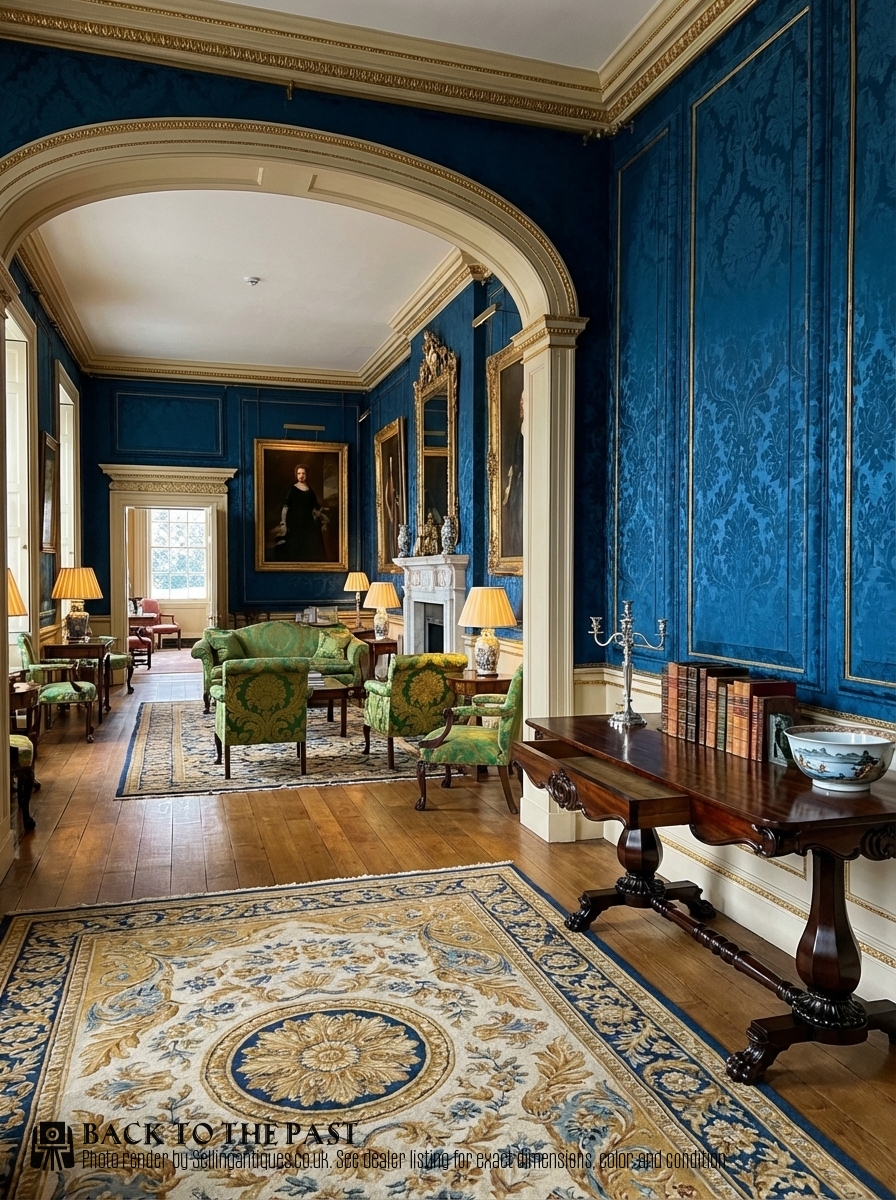
Freestanding Library Table
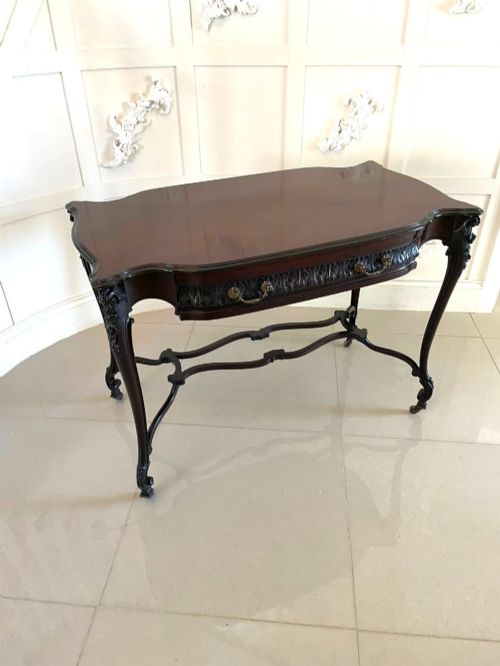
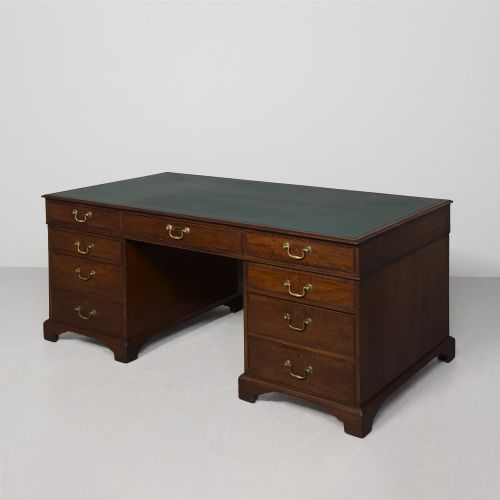
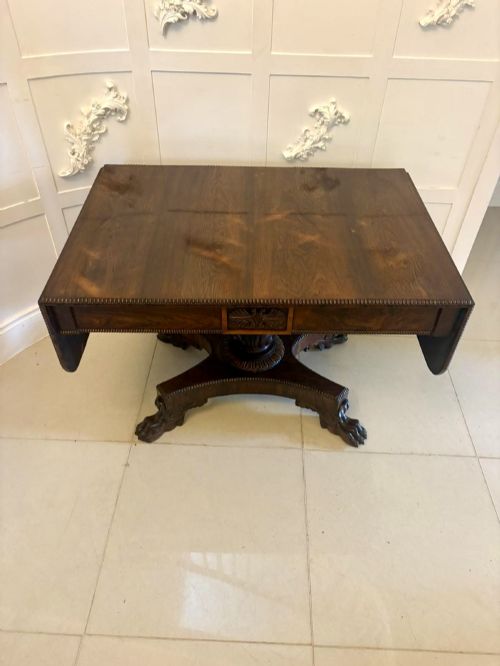
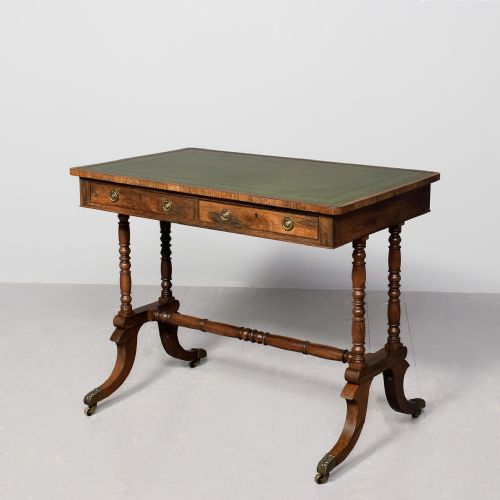
A freestanding library table is a substantial piece designed to sit away from walls, finished with polished timber on every face so it functions from any angle. When searching this phrase, a buyer meets examples spanning the Georgian, Regency, William IV, and Victorian periods, alongside Edwardian variations. Mahogany, rosewood, and burr walnut dominate the selection, frequently taking the form of centre tables, writing tables, or sofa tables.
The versions most commonly encountered on this page date from the nineteenth century, built by makers working in Regency, Victorian, or William IV styles. These range from figured mahogany writing desks to inlaid rosewood sofa tables and carved oak centre tables. Each piece serves as a central room anchor, combining writing surfaces with substantial scale and timber grain.
How they were made
Cabinetmakers constructed these tables using dense hardwoods such as mahogany, rosewood, and burr walnut, often framing them with oak or incorporating satinwood and partridge wood for contrast. Tops frequently featured inset leather writing surfaces, while mounts of brass or ormolu added structural and decorative detail. Carved elements appeared on pedestals and legs, displaying the manual skill of period joiners.
Veneers were expertly laid over sturdy timber carcases to showcase figured grain patterns, particularly on burr walnut and mahogany surfaces. Joinery relied on traditional methods to ensure stability across wide, weight-bearing tops intended for books and writing materials. Surface finishes were built up through repeated polishing to highlight the natural depth and colour of the wood.
Freestanding Library Table Retail Price Guide 2026
Typical asking prices for freestanding library table among the pieces listed under this phrase on Sellingantiques today, from the lower quarter to the upper quarter. They describe what is for sale here now, not the wider market.
What varies in quality
The selection of timber grain sets apart the finest examples, with highly figured mahogany, richly patterned burr walnut, and select rosewood commanding attention. Expert carving on pedestals and legs distinguishes superior workshop output from simpler, plain-form production. Finer pieces also display thoughtful secondary timbers, precise marquetry inlay in satinwood, and integrated brass or ormolu mounts.
Construction integrity and proportion also separate standard regional pieces from high-status commissions. A well-balanced frame with original leather inserts and harmonious proportions demonstrates the maker's mastery. The crispness of carved details and the depth of the polished finish indicate whether a table received the highest tier of craftsmanship during its period.
Gillows
The Freestanding Library Table Glossary
- Freestanding library table
- A large table finished on all four sides so it can sit in the middle of a room rather than against a wall. These pieces were historically used for reading and sorting papers.
- Centre table
- A decorative table designed to stand in the middle of a room, often utilised for displaying objects or serving as a focal point. They share many characteristics with library tables.
- Sofa table
- A rectangular table traditionally placed against the back of a sofa, featuring drop leaves and often mounted on twin pedestals or trestle ends. They function well as small writing desks.
- Burr walnut
- A prized timber veneer taken from the knotted growths of walnut trees, noted for its swirling, highly decorative grain patterns. It appears frequently on Victorian pieces.
- Ormolu
- Gilded bronze mounts applied to furniture for decorative enrichment, common on finer nineteenth-century pieces influenced by continental styles.
Freestanding Library Table: Frequently Asked Questions
Where should I place a freestanding library table?
These tables are designed to sit in the middle of a room rather than pushed against a wall. Because they are finished on all sides, they create a natural focal point.
Position one in the centre of a study, library, or large drawing room where people can walk around it and use the surface from any angle.
How do I care for the leather top?
Many library and writing tables feature inset leather surfaces that require gentle maintenance. Keep them away from direct sunlight to prevent the leather from drying out or fading.
Clean the surface with a dry, soft cloth and occasionally treat the leather with appropriate conservation creams recommended for antiques.
Can these tables be used as desks?
Most of these pieces were built specifically for reading, writing, and handling correspondence. Many feature drawers integrated into the frieze for storing paper and pens.
Their generous dimensions and finished backs make them highly practical for daily work while maintaining a formal aesthetic.
How do I identify a Regency library table?
Regency pieces typically date from the early nineteenth century and feature clean architectural lines inspired by classical antiquity. Look for dark timbers like mahogany and rosewood, often accented with brass inlay.
Pedestal bases with splayed legs and brass paw feet are also characteristic of this distinct design period.