
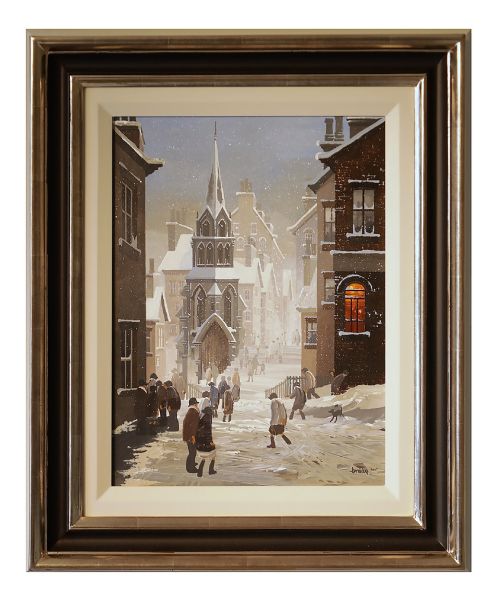

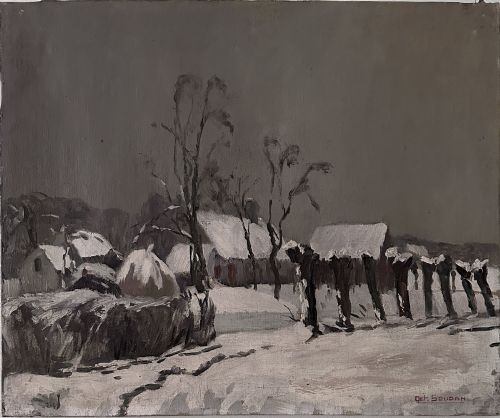
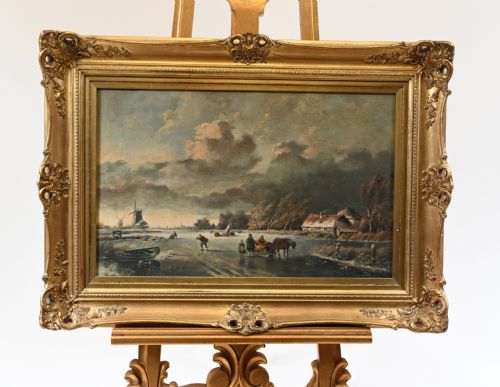


Framed Winter Scene Artwork
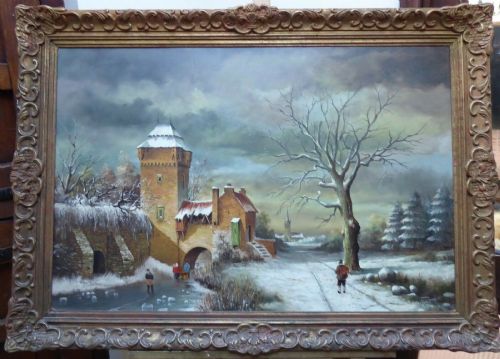
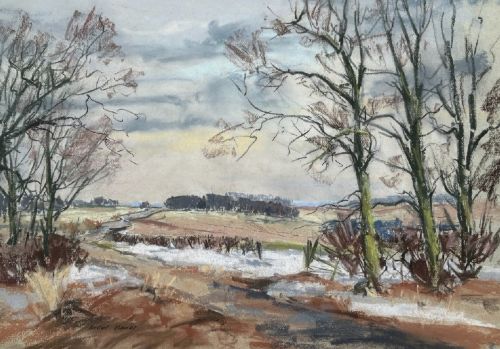
Framed winter scene artwork brings cold seasons indoors through oil paint, watercolour and pastel on canvas and paper.
Framed Winter Scene Artwork
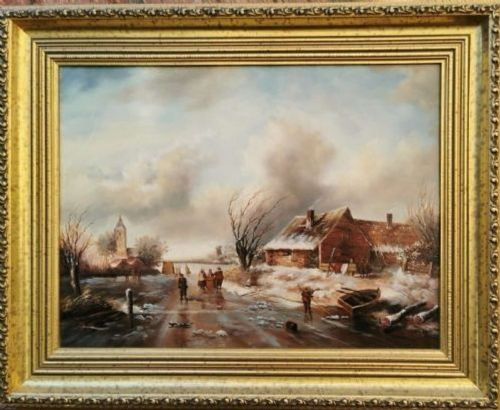
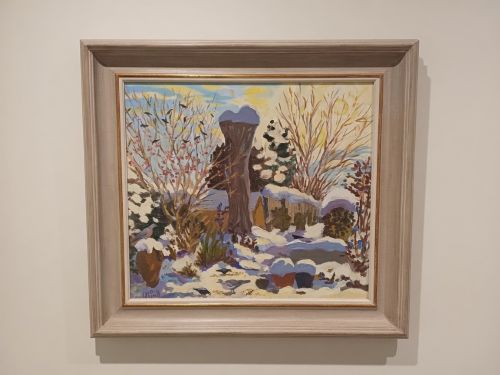
A framed winter scene artwork captures cold weather, snowbound villages and frozen landscapes through historical paintings and watercolours. Collectors seeking framed winter scene artwork will encounter nineteenth-century coaching scenes, Dutch landscapes and twentieth-century pastoral views.
The selections span from the Victorian period through Edwardian watercolours to mid-century modern interpretations. Canvases and paper works arrive complete with their period frames, depicting figures skating, gathering fuel and navigating snowy tracks.
Materials and construction
Artists painted these winter scenes using oil paint on canvas or board, alongside watercolour and gouache on paper. Canvases provide heavier texture for deep snow and clouded skies, while watercolours rely on paper supports for crisp washes.
Gilt wood frames enclose the artworks, protecting the painted surface and paper edges while defining the visual boundary of each snowy composition.
Several Victorian stagecoaches run the permanent risk of remaining indefinitely stuck in nineteenth-century snowstorms.
Judging the standard
Quality rests in the handling of light across snow and the precision of brushwork in difficult weather conditions. Stronger examples capture the specific chill and atmosphere of a frozen landscape rather than relying on formulaic snow effects.
The integration between the painting and its period frame alters the overall cohesion of the piece. Well-preserved surfaces retain their original pigment depth without excessive restoration or darkening.
Lucy Pratt·Brian Shields Braaq·T Bergman·A McDonald·Gaston Cornil·Ernest Uden·John Smith Atherton·Herbert Royle·John Charles Maggs·W Tatton Winter·Sydney Kendrick·Pieter Cornelis Steenhouwer·George Graham·Ernest Higgins Rigg·John Ritchie·John Richard Worsdale·Louis Smets·Anthonij Anton Mauve·George Augustus Williams·Eveline Lance·Matthew Hale·William Cave Day·Fred Lawson
The Framed Winter Scene Artwork Glossary
- Canvas
- A heavy woven fabric stretched across a wooden frame to serve as a support for oil paint. It provides a textured ground that holds thick applications of pigment.
- Watercolour
- A paint consisting of pigment suspended in a water-based solution applied to paper. It creates translucent layers suitable for capturing pale winter light.
- Gouache
- An opaque water-based paint often combined with watercolour on paper to add solid highlights of snow.
- Pastel
- A medium of powdered pigment bound into sticks for drawing on paper. It produces soft colour transitions found in twilight winter scenes.
- Dutch School
- A historical designation for painters working in the tradition of Netherlands landscape art. These works frequently depict frozen canals and skaters.
Framed Winter Scene Artwork: Frequently Asked Questions
What periods do these artworks cover?
The inventory spans from the nineteenth century through the Edwardian era into the mid-twentieth century.
Works range from Victorian coaching depictions to 1960s modern British landscapes.
Are the frames included?
Every listed piece arrives within a frame, frequently constructed of wood with gilt finishes.
These surrounds match the historical period of the painting or drawing within.
What mediums were used?
Artists utilised oil paint on canvas and board alongside watercolour, gouache and pastel on paper.
Canvas works offer thick impasto textures while paper pieces show delicate washes.
Where do these scenes originate?
The geographical sources include British, Dutch, French and Canadian winter landscapes.
Subjects encompass rural pastures, city streets and frozen lakes.