




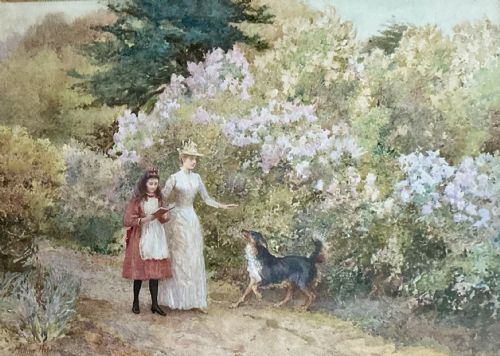


Framed Victorian Genre Print
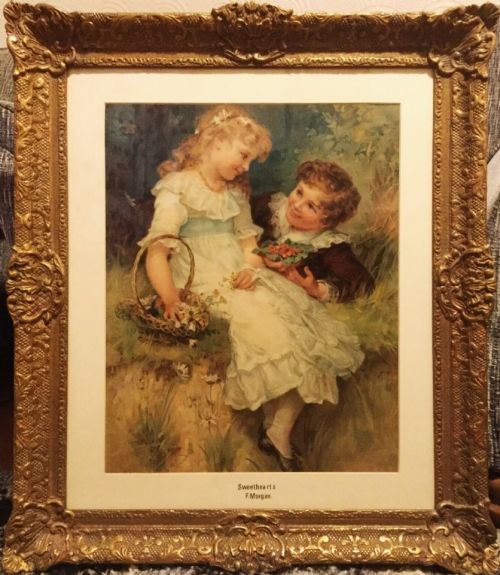
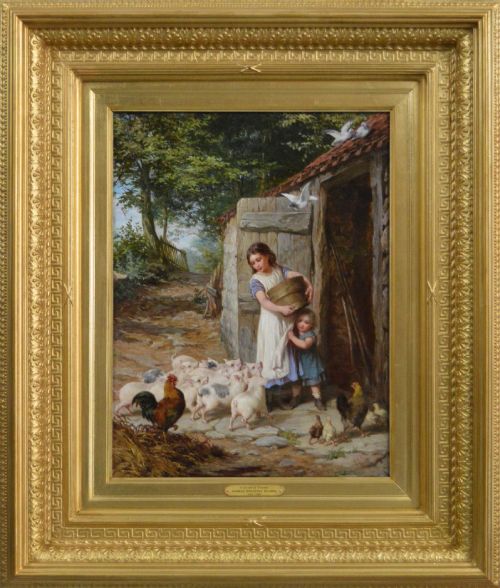
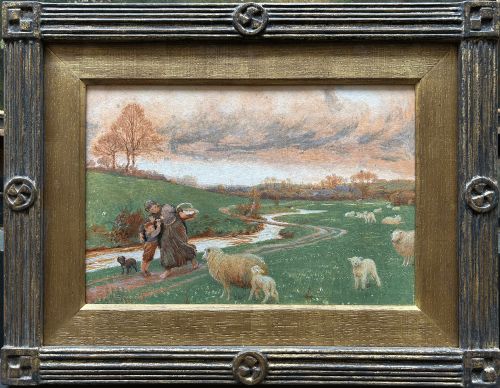
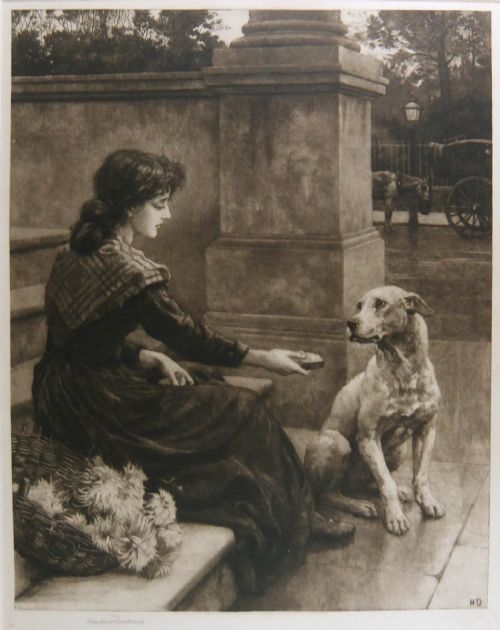
These framed victorian genre print pieces capture domestic narratives and sentimental scenes, offering a direct window into nineteenth-century domestic life.
Framed Victorian Genre Print
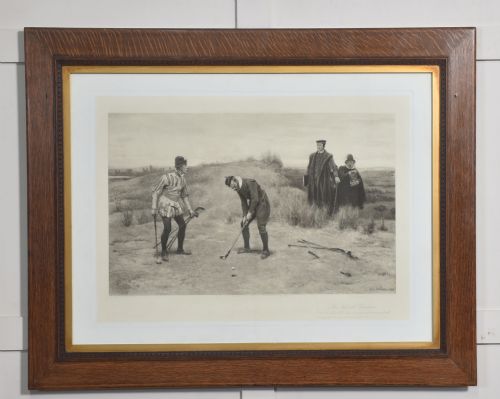
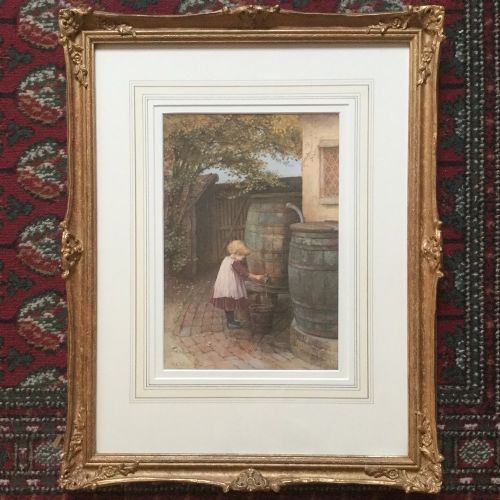
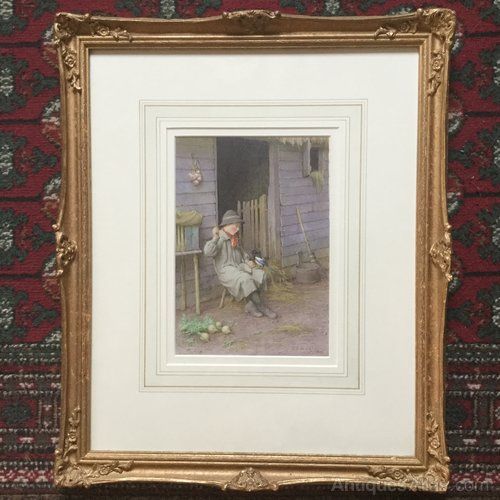
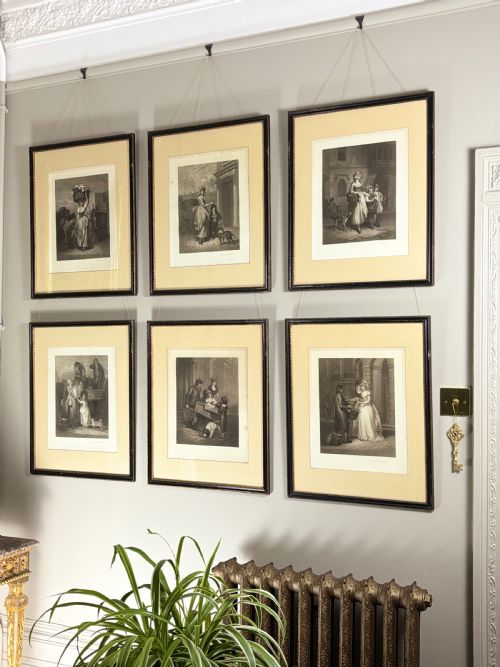
A framed victorian genre print brings domestic scenes, childhood moments, and animal interactions onto the wall within period framing. The selection spans standard lithographs, mezzotints, and chromolithographs alongside original oil paintings and chrystoleums.
Most examples date from the nineteenth century, reflecting the Victorian appetite for narrative art that told a sentimental story. Makers and artists range from well-known academic painters whose works were reproduced to traditional folk artists and commercial publishers.
How they were made
Paper prints were produced through lithography, mezzotint, or chromolithography, transferring detailed illustrative work onto paper sheets. These works were then mounted behind glass and set into wooden frames finished with gesso and gold leaf or giltwood.
Oil paintings and chrystoleums utilise canvas or convex glass layers treated with paint and varnish. Carved wooden frames provide the primary housing for these diverse visual formats.
Six Persian kittens hosting a tea party capture the peak of Victorian animal whimsy.
What varies in quality
Quality rests in the crispness of the original impression and the fidelity of the secondary medium to the artist's intended palette. Hand-coloured details and rich multi-pass chromolithography distinguish superior pictorial depth from flat, mass-produced output.
The enclosure matters equally, as period giltwood and gesso frames retain higher distinction than later replacements. The interaction between the mounting glass and the paper or painted surface determines long-term preservation.
Frederick Morgans·George Augustus Holmes·Herbert Dicksee·Charles Edward Wilson·Thomas G Appleton·Charles Burton Barber·Edward Stodart·Arthur Hopkins·Agnes Augusta Tallboys·Jules Le Roy·Schweninger
The Framed Victorian Genre Print Glossary
- Genre art
- Depicting scenes from everyday life, ordinary people, and domestic animals rather than grand historical or mythological subjects. This category forms the core of nineteenth-century narrative publishing.
- Chrystoleum
- A photograph or print applied to the inside of concave glass, hand-painted from behind, and finished with additional layers of oil paint. This technique produced a luminous, porcelain-like depth popular in the Victorian period.
- Mezzotint
- A printmaking process of the intaglio family where the plate is roughened uniformly to hold ink, then scraped to produce tones and highlights. It allows for subtle graduations of light and shade.
- Chromolithography
- A planographic colour printing technique using multiple limestone stones, one for each ink colour. It achieved vivid, multi-hued reproductions of oil paintings for the domestic market.
- Oleograph
- A mechanical colour print on canvas textured to simulate an oil painting's brushstrokes. These pieces brought affordable colour art into nineteenth-century homes.
Framed Victorian Genre Print: Frequently Asked Questions
What is a genre print?
A genre print depicts scenes of everyday life, focusing on ordinary people, children, and animals in domestic settings. These works were designed to tell a relatable visual story.
Publishers and artists reproduced these popular narratives widely for nineteenth-century households.
Are these prints original works?
The selection includes both original oil paintings and mass-produced reproductive prints such as lithographs and mezzotints. Each listing specifies the exact medium used to create the surface.
Print editions often bear the names of the original painters alongside the printmaker or publisher.
How should I hang and care for them?
Keep these framed works away from direct sunlight to prevent the fading of paper, ink, and watercolours. Stable room temperatures protect both the paper and the fragile gesso on older frames.
Dust wooden frames gently with a dry cloth and avoid liquid cleaners on gilt surfaces.