




Framed Stone Bridge Artwork
These framed stone bridge artwork pieces capture historic river crossings in delicate watercolour and robust oil, bringing enduring landscape character straight to your walls.
Framed Stone Bridge Artwork
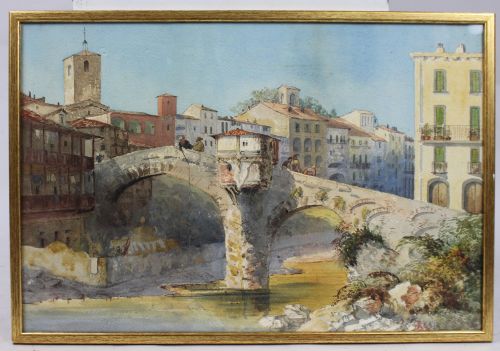
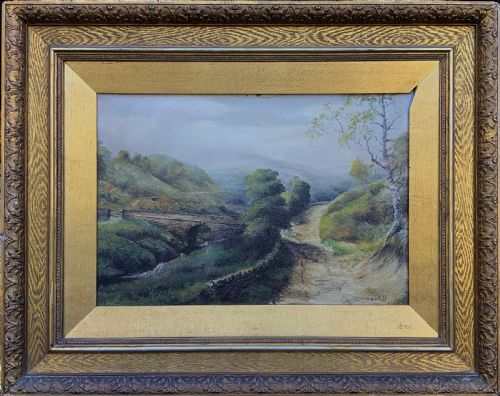
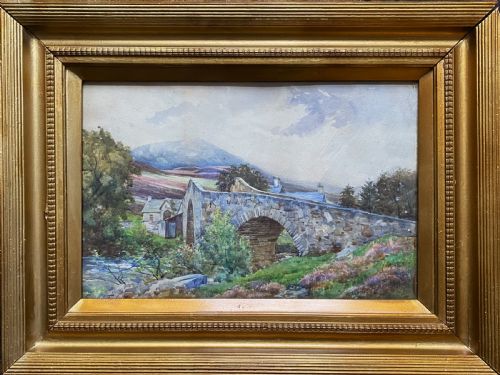
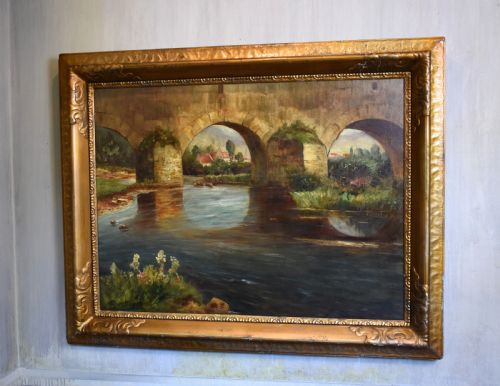
When you search for framed stone bridge artwork, you encounter nineteenth-century watercolours and oils depicting pastoral spans across British and European rivers. These works range from Victorian romantic scenes to early twentieth-century British school landscapes, capturing rustic masonry arches set among mountains and rural valleys.
The selections available here lean heavily towards nineteenth-century watercolours and oils on canvas or wood panel, often signed by period artists. You will find subjects stretching from North Wales and Yorkshire to Italianate views, framed ready for hanging.
Each piece records a specific topography, from Scottish Highland settings to North Italian rivers, preserving historical crossings as artists observed them over the decades. The physical framing completes the presentation, enclosing paper and canvas works behind protective glazing or within moulded timber.
Materials and construction
Artists relied upon watercolour paint applied to paper or oil paint laid onto canvas, wood panels, or paper supports. These traditional mediums were handled with varied brushwork, building up atmospheric skies and textured masonry.
Watercolour works typically sit beneath protective glass within wooden frames, whilst oil paintings utilise stretched canvas or sturdy panels, frequently enhanced with gilt details. The framing materials complement the period character of each painted view.
Listings span from the Victorian era through the 1930s, featuring watercolours, oils on canvas, and wood panels by named British and European artists.
Assessing quality in these paintings
Quality rests upon the artist's handling of light, perspective, and the structural detail of the stone archway itself. Superior examples demonstrate a confident command of medium, whether rendering the translucent wash of a watercolour or the rich pigment of an oil on canvas.
The fidelity of the landscape composition and the strength of the artist's signature or attribution elevate certain pieces above anonymous works. Preservation of the original paper, panel, or canvas and the suitability of the frame also mark out the finer examples.
Florence Adelina Hess·J Barclay·Percy Lancaster·Thomas Lound·Noel Harry Leaver·Franz Reder-Broili·Fred Stead·Fred Lawson
The Framed Stone Bridge Artwork Glossary
- Watercolour
- A paint consisting of pigment suspended in a water-based solution, traditionally applied to paper to achieve translucent washes of colour.
- Oil on Canvas
- A painting technique where oil-based pigments are applied to a woven fabric stretched across a wooden support.
- British School
- A term used to classify artists trained or working within Britain, sharing stylistic influences across specific periods.
- Panel
- A flat piece of wood used as a rigid support for oil paintings, common in nineteenth-century and earlier works.
Framed Stone Bridge Artwork: Frequently Asked Questions
How do I date these paintings?
Dating relies upon artist signatures, exhibition labels, and stylistic markers characteristic of Victorian or early twentieth-century British art. Frame construction and the type of paper or canvas support also offer clues to the period.
Examining the backboards and any handwritten inscriptions often reveals dates or locations recorded by the artist at the time of creation.
Where should I hang these artworks?
These framed pieces suit domestic living spaces, studies, or hallways where natural light enhances the painted details without causing fading. Keep them away from direct sunlight and damp environments to protect the paper or canvas.
Ensure sturdy wall fixings are used, particularly for heavier oil paintings on canvas or wood panels housed in substantial wooden frames.
Are these works signed by the artists?
Many of the listed pieces feature artist signatures, initials, or contemporary attributions written on the front or verso. Signed works often link directly to recorded painters from the nineteenth and early twentieth centuries.
Unsigned pieces are typically attributed to period schools, such as the nineteenth-century British school, based on technique and subject matter.
What framing comes with the artwork?
The pieces arrive in period-appropriate wooden frames, some incorporating gilt mouldings that match the era of the painting. These frames protect the edges of the canvas or paper and complete the visual presentation.
Checking individual listings will show whether a watercolour is glazed under glass or an oil painting is presented in an open wooden frame.