
Framed Still Life Painting
When you search for framed still life painting, you encounter centuries of observation captured in oils, watercolours and gouache.
Framed Still Life Painting
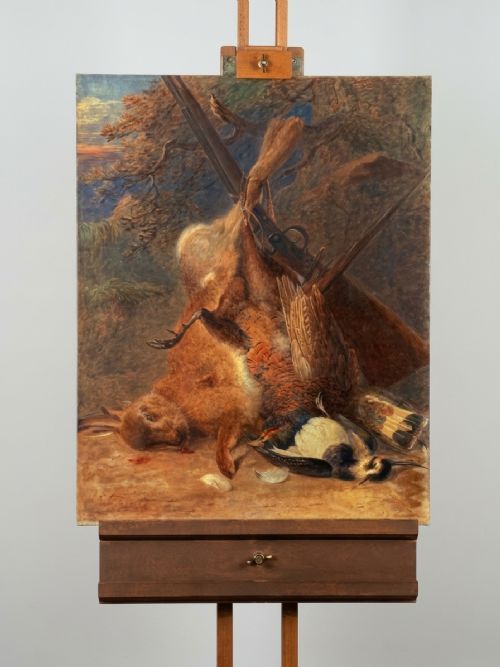
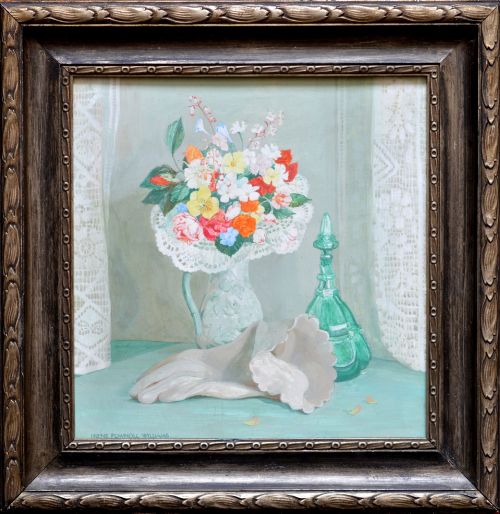
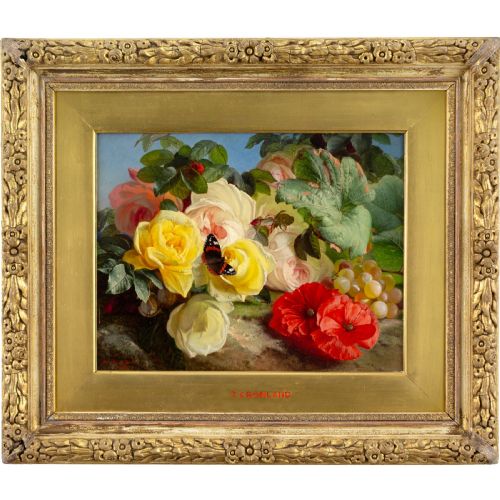
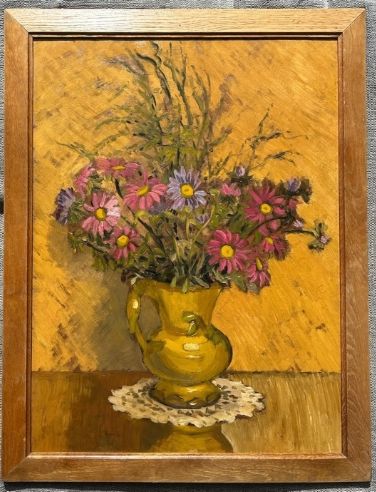
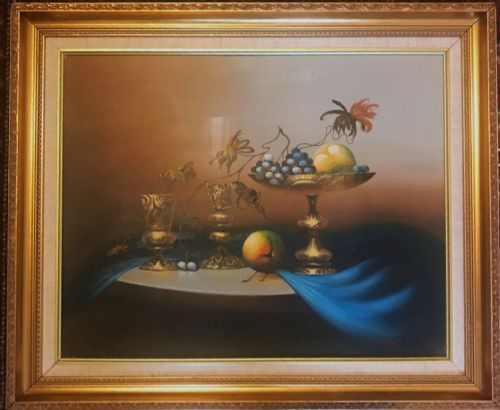
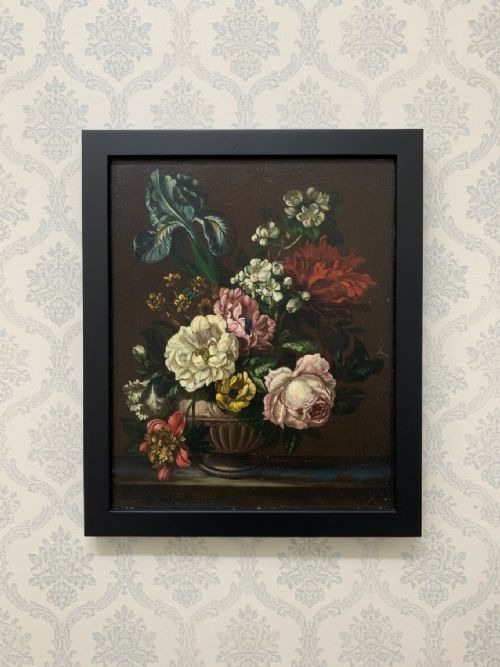
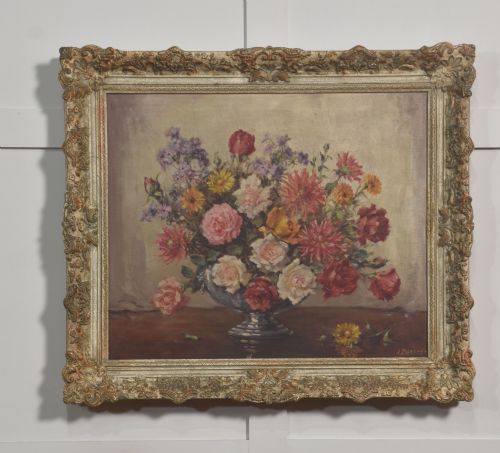
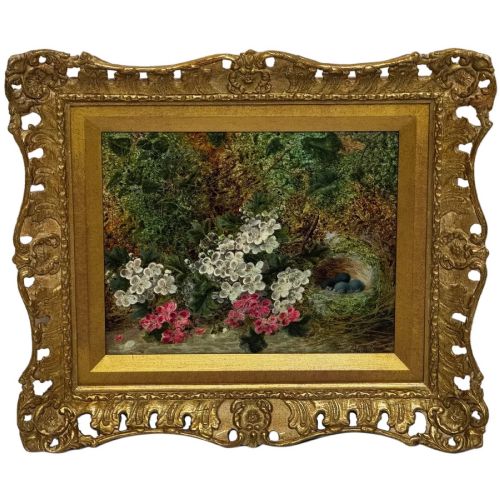
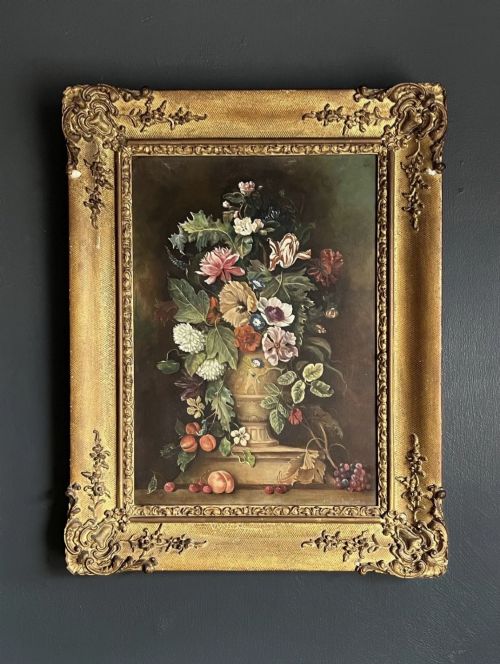
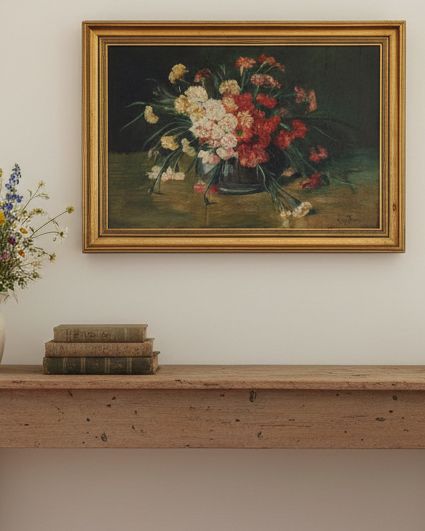
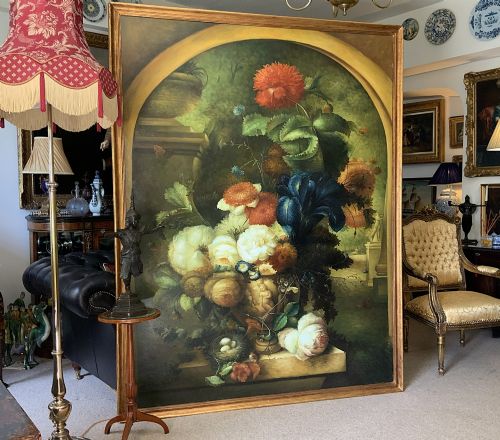
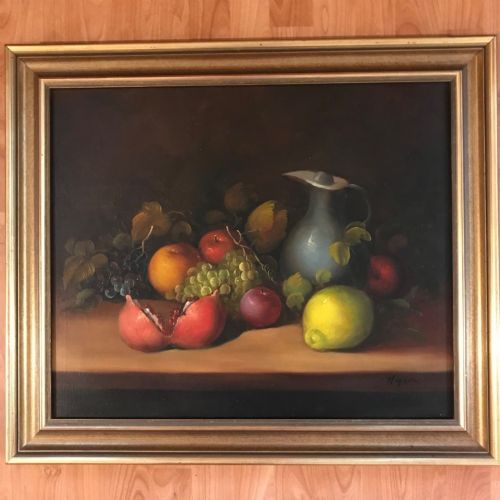
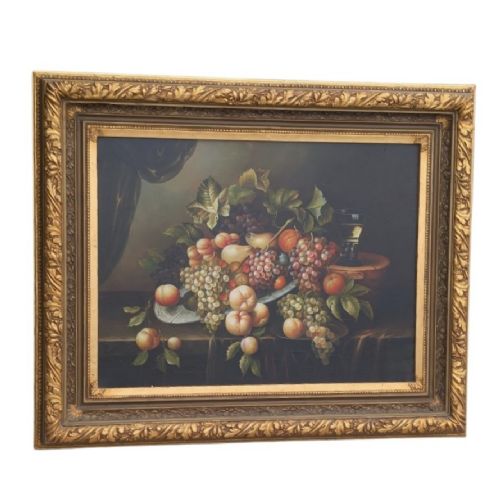
A framed still life painting captures inanimate objects such as fruit, flowers, game and vessels arranged on a surface.
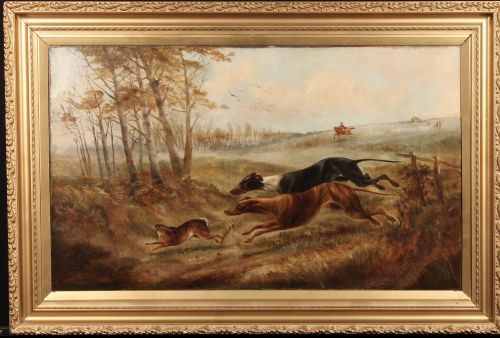
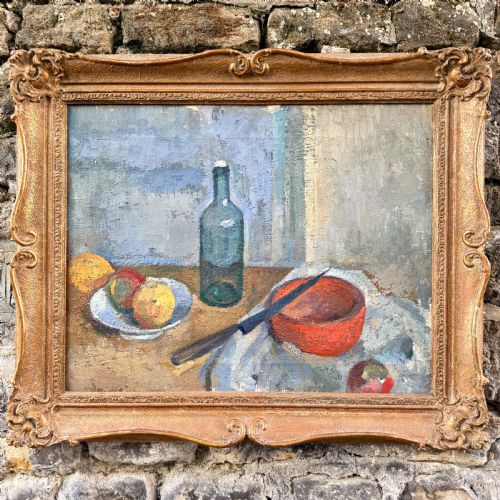
The versions met most frequently on this page range from nineteenth-century Victorian oil paintings to mid-century canvas studies.
Compositions draw upon historical traditions, including Dutch Golden Age floral arrangements and Flemish Baroque displays.
Materials and Technique
Artists painted primarily in oils on canvas, wood panels or boards, building up layers of pigment to achieve depth in fruit and foliage.
Watercolour and gouache on paper also appear, often protected beneath glass within period frames.
Many works retain their original wood and gilt gesso frames, sometimes finished with gold leaf.
Materials recorded across the archive include canvas, wood panels, gilt frames and glass.
Assessing Quality
Quality rests upon the artist's handling of light, shadow and texture, distinguishing a master's observation of peach skin or delicate petals from a stiff study.
The integrity of the physical support matters greatly, as does the harmony between the painting and its period frame.
Oliver Clare·Edward Ladell·Emma Fordyce MacRae·Gaspar Peeter Verbruggen·Konstantin Stoitzner·Michelangelo Meucci
The Framed Still Life Painting Glossary
- Gilt gesso
- A plaster-like material applied to wood frames and covered in gold leaf. It provides a decorative surface that catches the light around the canvas.
- Trumeau
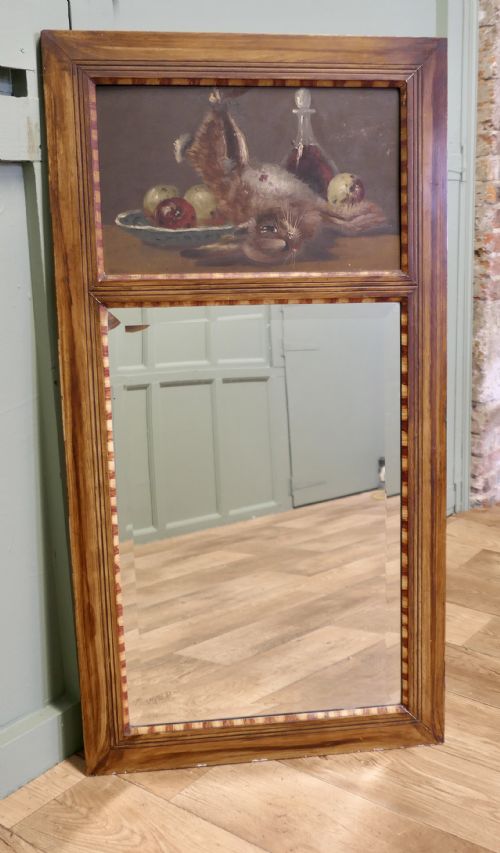
- A decorative wall mirror combined with a painted panel above the glass. It originates from eighteenth-century French interior design.
- Trompe l'oeil
- An optical illusion technique designed to trick the eye into perceiving painted objects as three-dimensional reality. Artists apply this to hanging game and songbirds.
- Oleograph
- A mechanical colour print on canvas that simulates an oil painting. This reproduction method became popular in the nineteenth century.
Framed Still Life Painting: Frequently Asked Questions
How do I date a framed still life painting?
Dating relies on stylistic clues, the type of canvas or wood panel used, and the construction methods of the frame. Pigments and stretcher frames also offer clear indications of age.
Signatures and inscriptions on the reverse often point to specific decades, moving from nineteenth-century realism to mid-century impressionism.
Where should I hang a still life painting?
These works suit dining rooms, kitchens and hallways where natural light complements the rich tones of fruit and floral arrangements.
Avoid placing them in direct sunlight or damp areas to protect the canvas, oil paint and gilt frames.
What is the difference between Dutch style and Victorian still life?
Dutch style works often feature dark backgrounds with overflowing arrangements of flowers and insects, echoing seventeenth-century traditions. Victorian pieces tend towards tighter botanical accuracy and bright tabletop fruit.
Victorian compositions frequently incorporate bird's nests and baskets, focusing on tactile textures.
Are watercolours framed differently from oil paintings?
Watercolours and gouache works require glass protection to shield the paper from dust and moisture. They are typically mounted with card framing beneath the glass.
Oil paintings on canvas or board remain unglazed so the textured brushwork stays visible.