




Framed Silk Tapestry
A framed silk tapestry brings historic textile art onto the wall, offering intricate needlework preserved beneath glass.
Framed Silk Tapestry
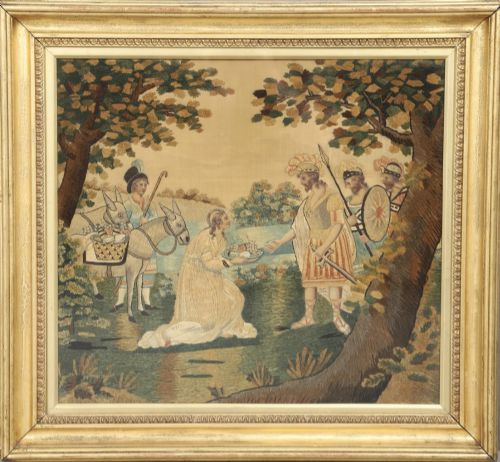
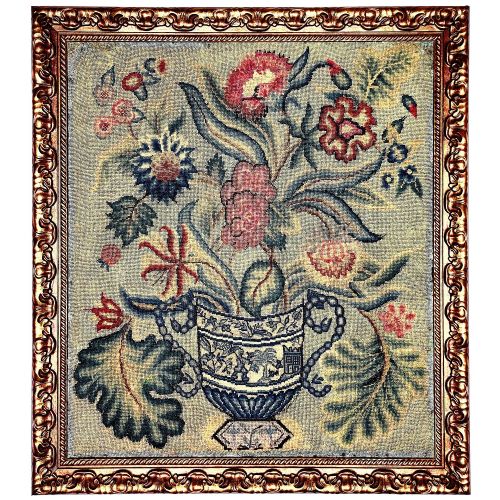
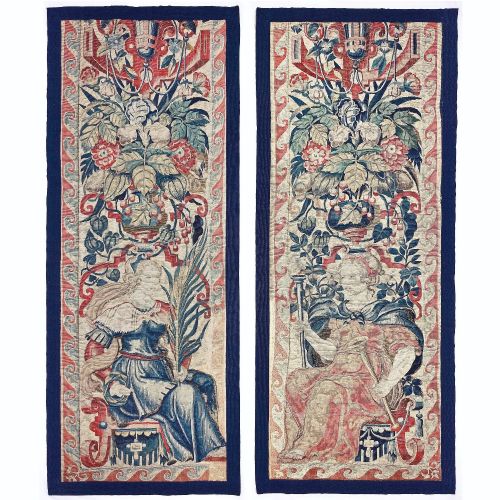
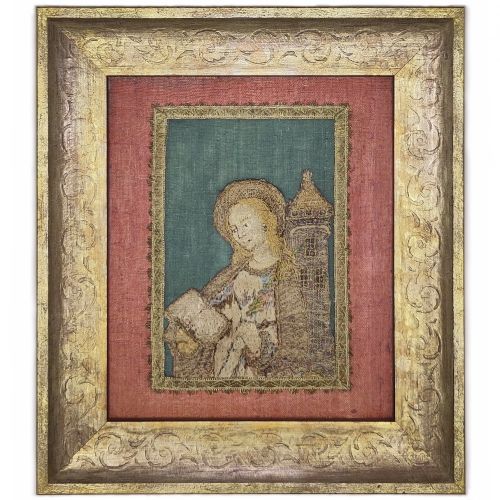
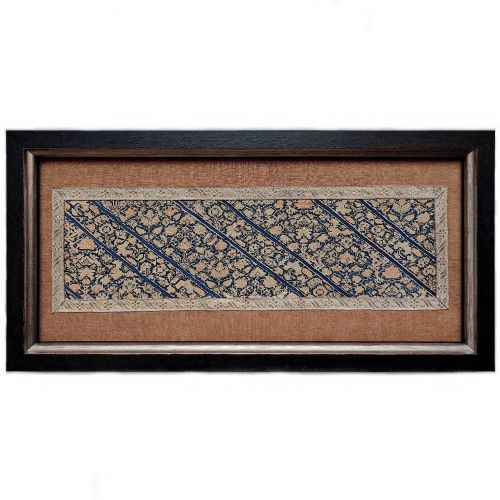
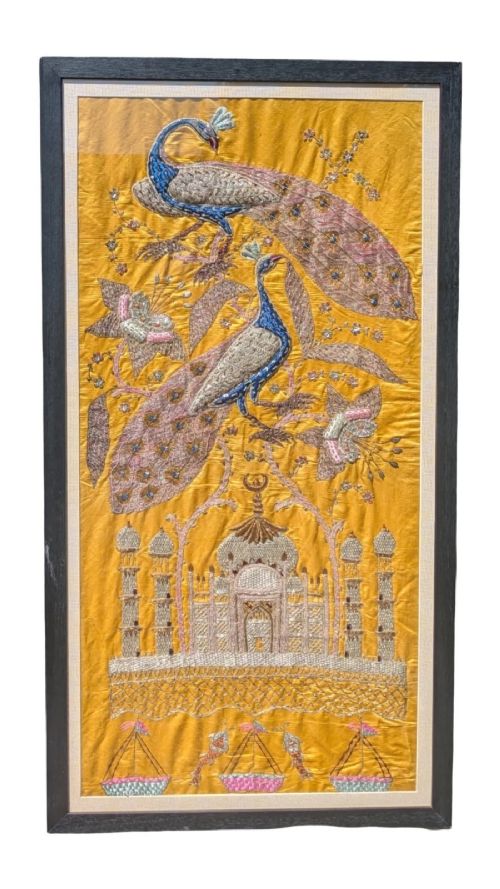
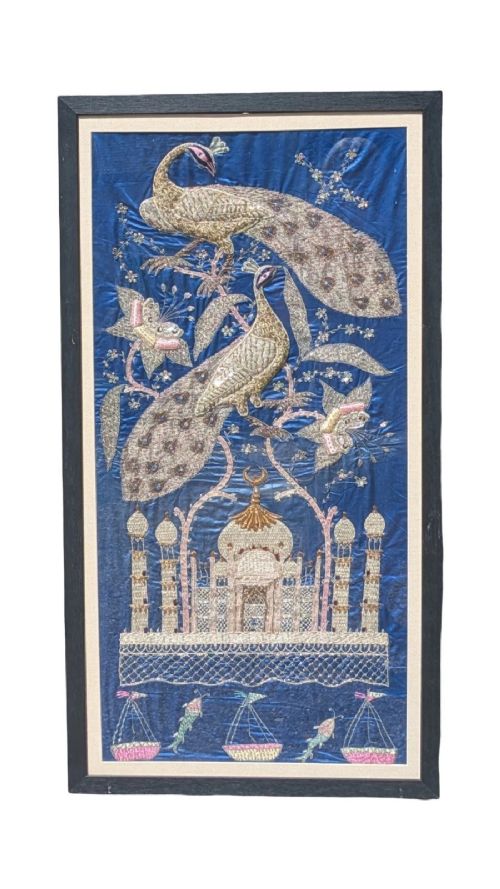
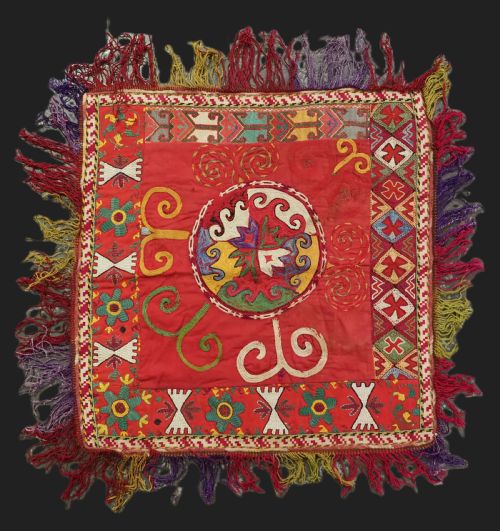
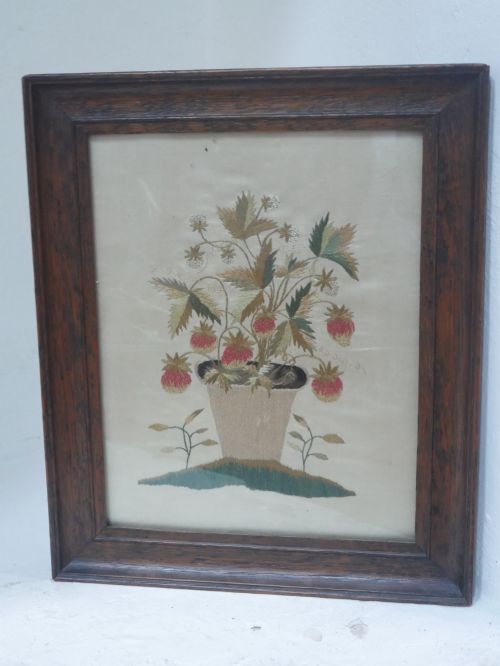
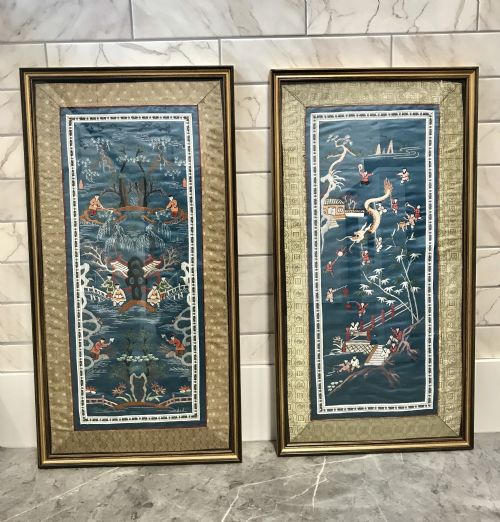
When you search for framed silk tapestry, you encounter a diverse group of textile works spanning several centuries. These pieces encompass English needlework pictures, Chinese embroidered panels, European samplers, and Asian wall hangings.
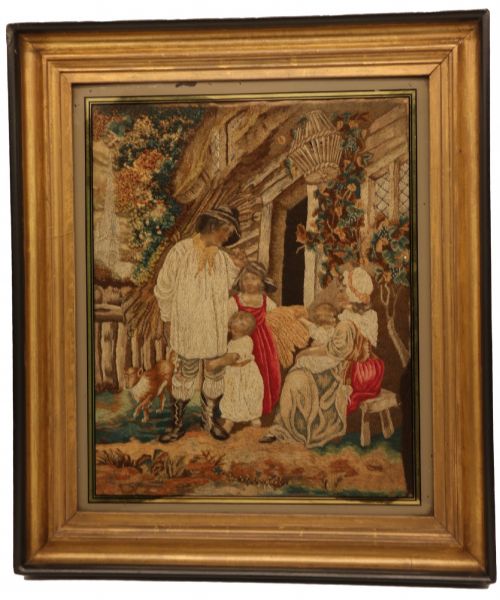
The most common examples on this page date from the nineteenth century, often presenting botanical scenes, figures, or maps stitched by hand. Earlier works from the seventeenth and eighteenth centuries appear alongside later Indian and Japanese decorative panels.
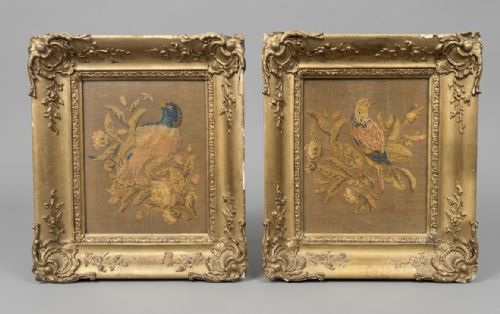
Makers utilised various textiles including linen and wool alongside silk, housing the resulting embroidery within wooden, giltwood, or verre églomisé frames. Object types range from simple samplers to complex pictorial scenes depicting horses, birds, and architectural landmarks.
How they were made
Artisans worked silk, metallic thread, and wool yarns onto grounds of linen or silk fabric using specialised needlework techniques. Long stitch, crewel work, and stumpwork allowed makers to build raised, textured surfaces that rendered figures, flora, and fauna with distinct depth.
Protective framing completed the construction, placing the delicate textiles behind glass within timber mouldings, octagonal gilt frames, or specialised verre églomisé glass panels to shield the fibres from dust and atmospheric damage.
Framed Silk Tapestry Retail Price Guide 2026
Typical asking prices for framed silk tapestry among the pieces listed under this phrase on Sellingantiques today, from the lower quarter to the upper quarter. They describe what is for sale here now, not the wider market.
Jane Wettmore stitched a map sampler in 1847, presumably hoping her geography teacher appreciated the threadwork coastline.
What varies in quality
The precision and complexity of the needlework dictate the calibre of each piece, distinguishing simple schoolroom samplers from masterwork pictorial embroideries. Finer examples display meticulous stitch tension and subtle colour blending that create painterly effects with thread.
The preservation of the silk fibres and the original housing influence overall merit. Intact metallic threads, minimal fading of the dyed silks, and period-appropriate frames such as original giltwood or verre églomisé surrounds elevate the standing of the textile art.
The Framed Silk Tapestry Glossary
- Sampler
- A piece of needlework produced as a demonstration or test of skill, often featuring alphabets, numerals, and decorative motifs stitched by young makers.
- Stumpwork
- A raised embroidery style popular in the seventeenth century where figures and objects are built over wooden moulds or padded cores to achieve three-dimensional relief.
- Verre Églomisé
- A process of applying design and gilding to the reverse side of glass, frequently seen in decorative framing from the Georgian and Regency periods.
- Crewel Work
- Embroidery executed using wool yarn on a heavy linen or cotton ground, traditionally utilised for rich floral and botanical hangings.
- Long Stitch
- An embroidery technique employing long, parallel stitches that lie close together to fill areas of colour smoothly within pictorial panels.
Framed Silk Tapestry: Frequently Asked Questions
How should I hang a silk tapestry?
Keep textile artworks away from direct sunlight to prevent the silk threads and dyed grounds from fading over time. Position them in rooms with stable humidity levels to protect the historic fibres and wooden frames.
Ensure the hanging wire and wall fixings securely support the weight of the framed piece, especially for larger nineteenth-century Asian wall hangings or heavy giltwood assemblies.
What is the difference between a sampler and a pictorial panel?
Samplers primarily record alphabets, numerals, and geometric or floral practice motifs, often including the maker's name and age. They served as educational exercises in needle technique.
Pictorial panels depict specific scenes, such as landscapes, figures, or historical events, using varied stitches to create a complete visual artwork for display.
Are Chinese embroidered panels different from English needlework?
Chinese panels typically employ fine hand-sewn silk figures, dragons, and floral motifs on silk grounds, reflecting Eastern aesthetic traditions and techniques. They often date towards the turn of the twentieth century.
English examples lean towards domestic samplers, topographical maps, or European pastoral scenes executed in wool and silk on linen, following Western stylistic periods from Georgian to Victorian times.