






Framed Silk Needlepoint Picture
A framed silk needlepoint picture brings centuries of meticulous hand stitching and historic domestic artistry straight to the wall.
Framed Silk Needlepoint Picture
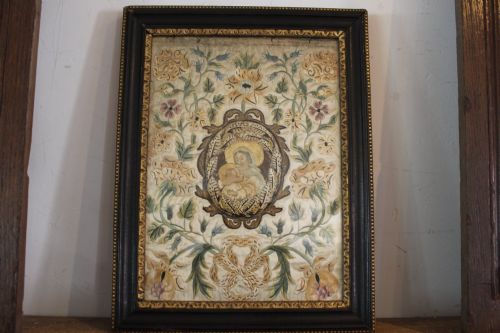
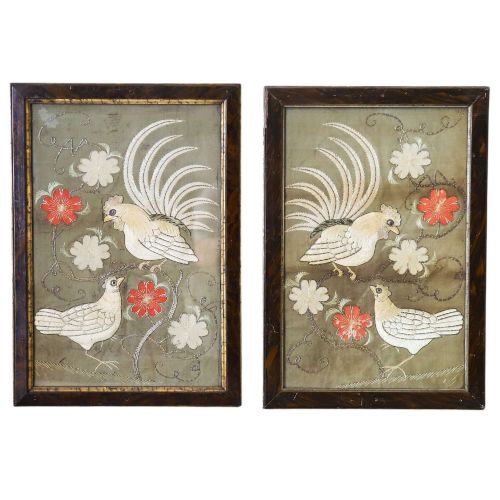
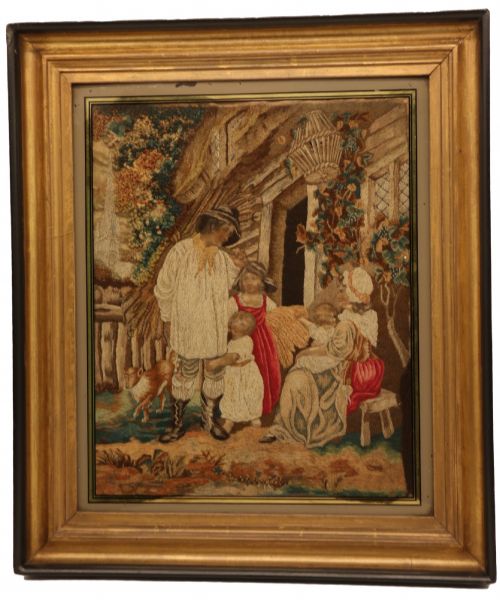
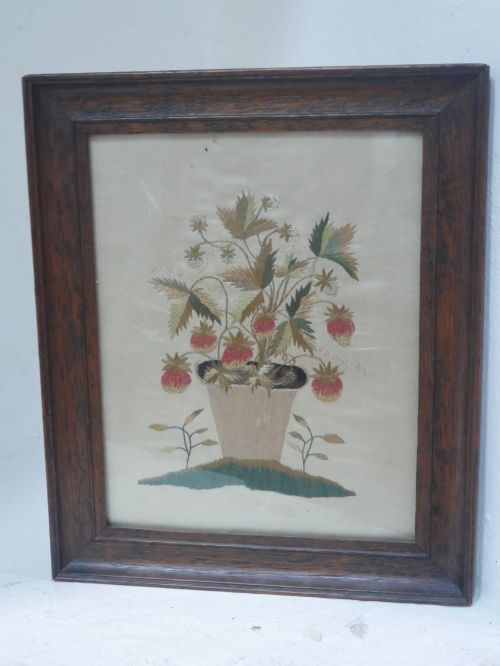
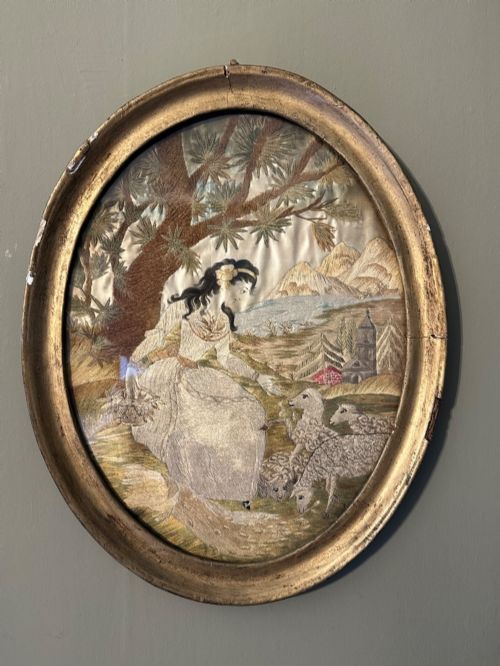
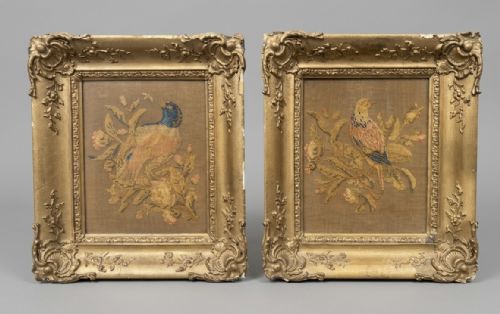
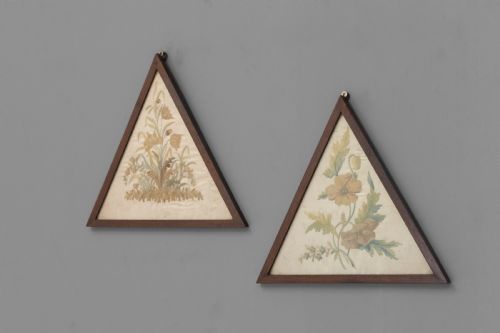
A framed silk needlepoint picture brings together historic textile art, wall art and needlework pictures created across the seventeenth, eighteenth and nineteenth centuries. These works include pastoral farming scenes, horse racing tracks, botanical studies and literary narratives housed behind protective glass.
Buyers meet examples ranging from early Stuart and Georgian needlework panels to Regency silk pictures and Victorian floral or animal subjects. Many retain their period surrounds, including giltwood, gold leaf or verre églomisé frames.
The selection encompasses English, French, Italian and Chinese pieces, spanning detailed samplers, crewel work and stumpwork embroidery depicting figures, birds and garden scenes.
Materials and construction
These works rely on fine silk thread, wool and silk floss stitched onto a ground of linen or silk fabric. Many examples incorporate hand-painted details on silk to render faces, backgrounds or sky elements alongside the needlework.
Mounting typically involves stretched fabric secured within timber frames, often accented with giltwood, faux tortoiseshell or specialised verre églomisé glass panels that protect the fragile textiles from dust and light.
Listings feature needlework and silk pictures spanning the seventeenth, eighteenth, and nineteenth centuries, utilising silk, wool, and linen framed in giltwood and glass.
Assessing the execution
The survival of the original period frame, whether giltwood or verre églomisé glass, preserves the integrity of the object. Pieces that maintain their structural stability without heavy fabric degradation or fading demonstrate superior preservation.
The Framed Silk Needlepoint Picture Glossary
- Stumpwork
- A raised embroidery style popular in the seventeenth century that utilises padded elements, wire and wood shapes to create three-dimensional figures and motifs. This technique often depicts historical or biblical scenes with remarkable relief.
- Verre Eglomise
- A process of applying gold or silver leaf to glass along with cold painting and etching, frequently used for decorative borders on historical frames. It adds a dark, reflective border that frames the textile artwork.
- Crewel Work
- Embroidery executed using wool yarn on a heavy linen or cotton twill fabric, commonly seen in early pieces. This technique produces rich, textured surface patterns.
- Sampler
- A piece of needlework produced by a maker to demonstrate proficiency in various stitches and alphabets, sometimes including dates or signatures. These serve as historical records of textile education.
- Silk Floss
- Unspun silk fibres used to achieve a smooth, glossy surface texture in needlepoint and embroidery pictures. It reflects light differently than standard twisted thread.
Framed Silk Needlepoint Picture: Frequently Asked Questions
How do I hang a silk needlework picture safely?
Keep the piece away from direct sunlight and damp environments to protect the fragile silk threads and historic fabric grounds. Use professional hanging hardware suited to the weight of the timber and glass frame.
Ensure the frame hangs flat against a stable interior wall where temperature fluctuations remain minimal. Professional framing with UV-filtering glass provides an extra layer of conservation for older textiles.
What is the difference between needlepoint and embroidery?
Needlepoint is worked over a stiff open-weave canvas grid, covering the entire foundation ground with stitches like tent stitch. Embroidery encompasses a broader category of stitching applied to a fully woven fabric ground like linen or silk.
Both techniques appear across historic wall art, but needlepoint provides a denser, more rigid surface while embroidery allows for varied, free-flowing thread paths.
How can I tell a Georgian silk picture from a Victorian one?
Georgian silk pictures frequently feature pastoral scenes, classical figures, or detailed cartography and silk floss samplers with muted, natural dye palettes. Victorian examples often lean towards botanical studies, woolwork portraits, or heavily styled decorative panels.
Examining the framing materials, backing boards, and stitching density helps confirm the era of production alongside stylistic clues in the clothing and subjects depicted.
Are these textile pictures cleaned or restored?
Most historic needlework pieces are preserved in their original state with minimal intervention to maintain historical fabric integrity. Professional conservation occasionally secures loose threads or stabilizes degraded linen grounds behind glass.
Aggressive cleaning is avoided to prevent the loss of fragile silk fibres and historic hand-painted details. Minor signs of age on the fabric confirm the genuine antiquity of the piece.