

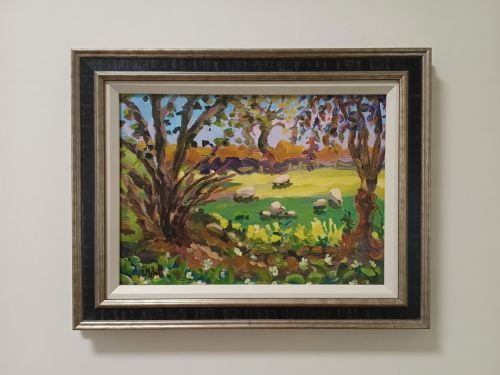
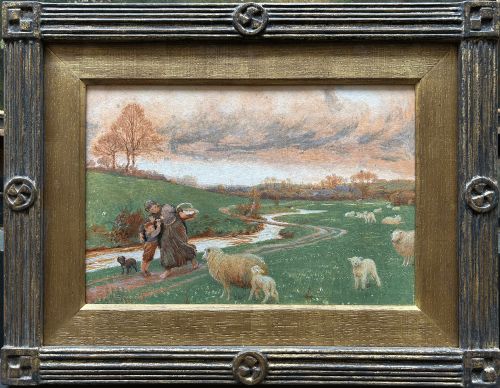
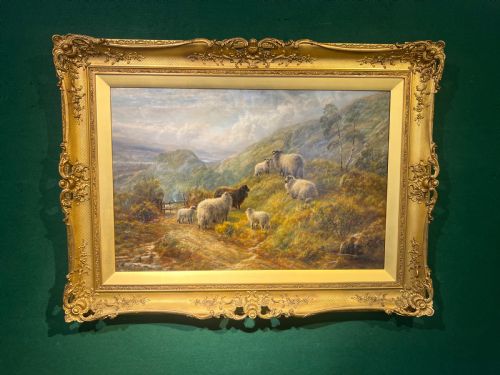
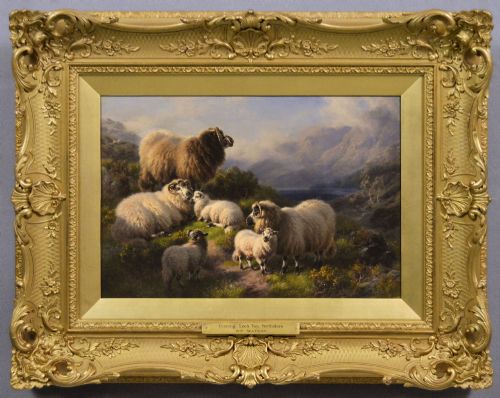
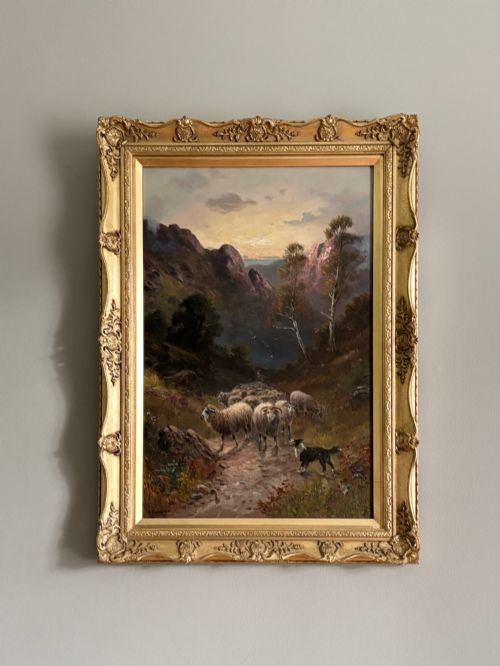
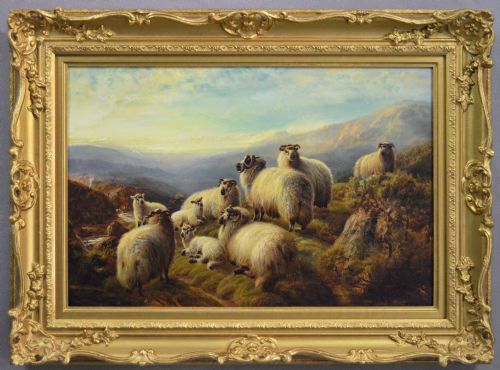
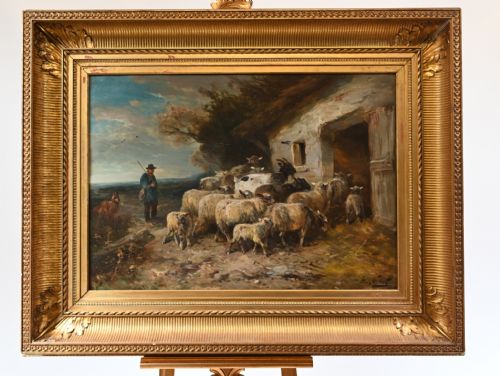
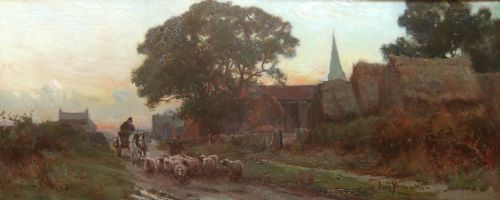


Framed Sheep Oil Painting
A framed sheep oil painting captures quiet pastoral scenes, offering traditional rural charm and painterly texture for country houses.
Framed Sheep Oil Painting
A framed sheep oil painting portrays rural landscapes, flocks, and farming life, drawing on 19th Century Romanticism, Victorian Pastoral, and British Impressionism. Buyers seeking a framed sheep oil painting encounter works created by British, Belgian, and Dutch artists working from the mid-nineteenth century through the early twentieth century. The compositions range from expansive Scottish highland views to intimate countryside lanes featuring shepherds, sheep dogs, and grazing flocks.
Most examples found in these listings date from the Victorian era and the decades immediately following, utilising canvas as the primary support. These works reflect the period's deep appreciation for agricultural life, rural scenery, and animal portraiture. The surviving paintings capture changing seasons, from autumn farming landscapes to winter snow scenes in the glens.
Materials and technique
Artists applied oil paint onto stretched canvas, building up rich textures to render woolly fleeces, skies, and terrain. The physical support typically consists of woven canvas fixed to a wooden stretcher frame, which holds the painted surface taut.
Many canvases retain their period frames constructed from wood, gesso, and giltwood. These surrounds often feature decorative mouldings that complement the pastoral subject matter contained within.
Several canvases squeeze resilient highland sheep into deep snowdrifts.
Judging quality
Quality rests upon the artist's ability to render animal anatomy convincingly and capture atmospheric light across a landscape. Stronger pieces display confident brushwork in the depiction of sheep fleeces and natural terrain rather than stiff or formulaic rendering.
The integrity and decorative contribution of the surrounding frame also influence the overall character of the piece. Surviving period giltwood and gesso frames that retain their original finish enhance the visual weight and historical context of the oil painting.
Eugène Verboeckhoven·Thomas Sidney Cooper·Robert Watson·Owen Bowen·William Sydney Cooper·Franz van Severdonck
The Framed Sheep Oil Painting Glossary
- Oil on Canvas
- A traditional painting medium where pigments suspended in drying oils are applied to a woven fabric support. This combination allows for deep colour saturation and varied surface textures.
- Giltwood
- Wood carved and coated with a thin layer of gold leaf or metallic powder. This material is frequently found on period frames enclosing nineteenth-century canvases.
- Gesso
- A plaster-like mixture applied to wooden frames as a base for moulding and gilding. It provides a smooth surface for intricate decorative details.
- Pastoral
- An artistic genre depicting rural life, shepherds, and domesticated animals in idealized or natural settings. Such works emphasise a peaceful connection to the countryside.
Framed Sheep Oil Painting: Frequently Asked Questions
How do I date a framed sheep oil painting?
Dating relies on stylistic clues, artist signatures, and the construction methods of the canvas stretcher and frame. Nineteenth-century works often exhibit traditional romantic or pastoral compositions, while stretcher wedges and canvas stamps provide additional chronological markers.
Examining the ageing of the oil paint and the composition of the gesso frame helps narrow down the decade of production. Comparative study of known artists working within the British and European schools offers further precision.
Where should I hang these oil paintings?
These pastoral works suit traditional living rooms, studies, and hallways where their rural subject matter creates a calm focal point. Placing them away from direct sunlight and damp environments preserves the oil paint and giltwood frame.
Adequate wall space allows the original frame to define the perimeter of the landscape without visual crowding. Pairing them with period interior furnishings enhances their historical character.
What subjects accompany sheep in these scenes?
Sheep frequently appear alongside shepherds, sheep dogs, cattle, and farmsteads within wider rural and highland landscapes. Artists often placed them in settings such as country lanes, moorlands, or snowy valleys.
These complementary elements help establish the narrative and geographical context of the painting, whether set in Yorkshire, Wales, or Scotland.
Are these paintings signed by the artists?
Many works bear the original signature or monogram of the painter, often located discreetly in a lower corner of the canvas. Some pieces remain attributed to a specific school or follower when a direct signature is absent.
Documentation or exhibition labels attached to the reverse of the stretcher can also confirm the creator and provenance.