
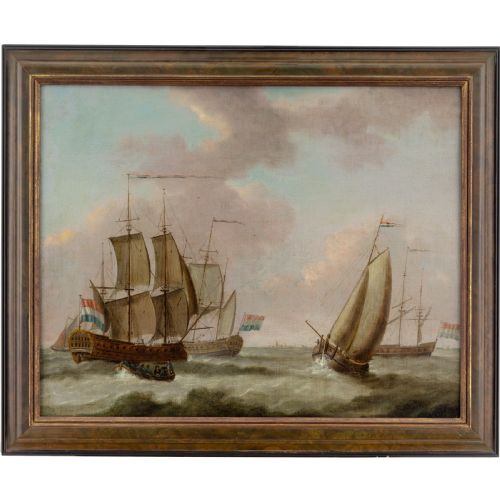
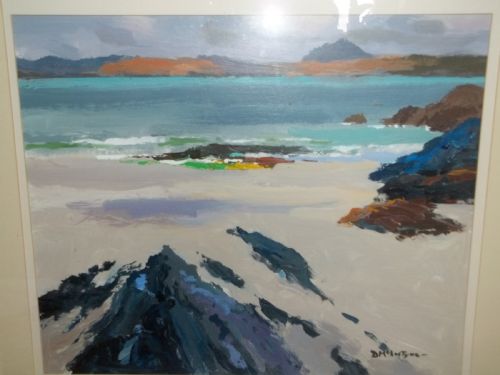
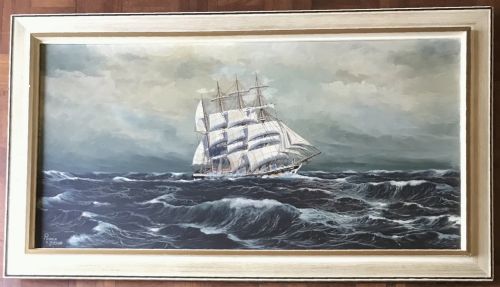



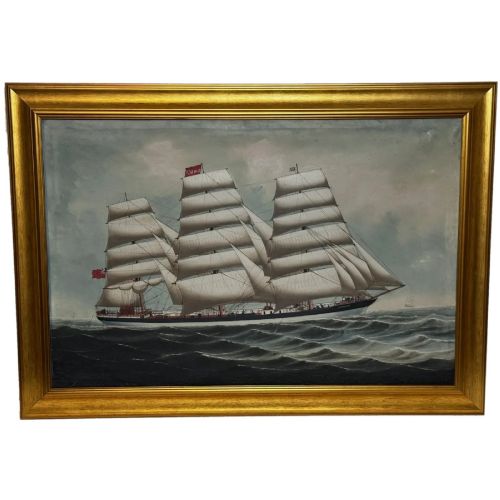
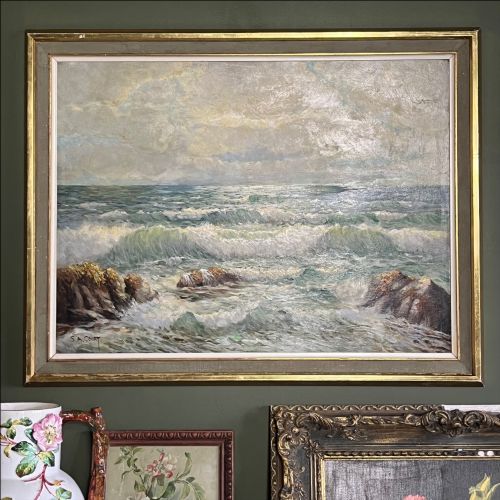


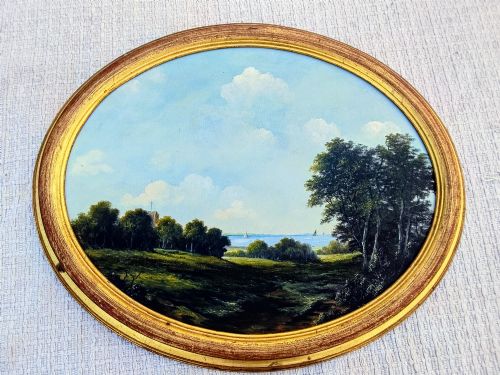

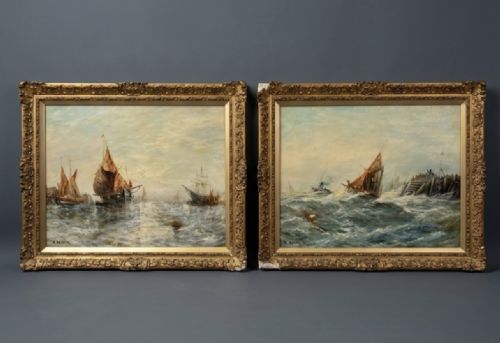

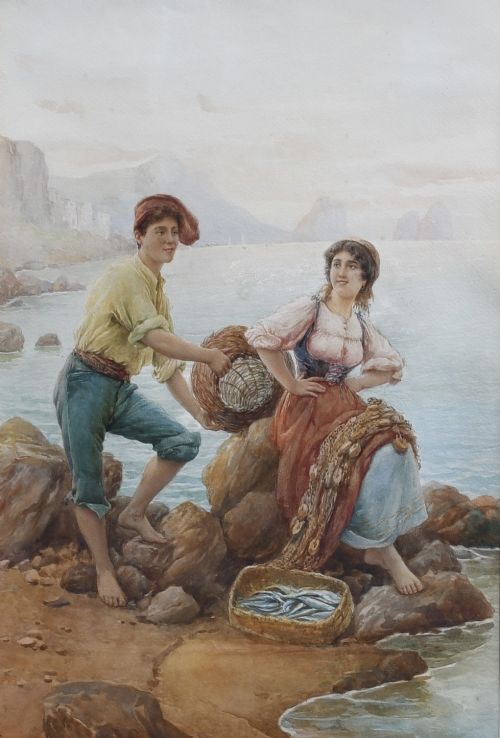
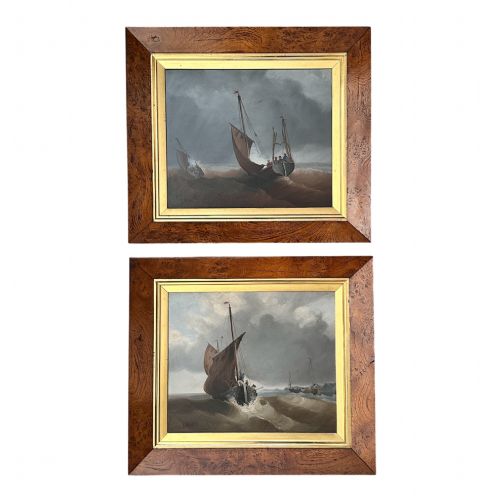
Framed Sea Landscape Painting
A framed sea landscape painting captures the shifting moods of the coast, from tranquil harbours to dramatic shipwrecks.
Framed Sea Landscape Painting
A framed sea landscape painting encompasses coastal views, maritime scenes, and beach settings executed in oil or watercolour.
The versions most commonly met on this page date from the nineteenth and early twentieth centuries, reflecting Victorian and Edwardian tastes.
Works range from intimate watercolours of fishing boats in Cornish harbours to large oil paintings of stormy channels and coastal cliffs.
Materials and Technique
Artists worked primarily with oil paint on canvas or board, and watercolour on paper, capturing light en plein air or finishing works in the studio.
Canvases and boards were often housed in contemporary gilt wood frames featuring decorative moulding, preserved behind glass where works were executed on paper.
Listings feature oil on canvas, watercolour, and oil on board across the nineteenth and twentieth centuries.
Quality and Execution
Quality rests in the handling of light, atmosphere, and movement, distinguishing dynamic depictions of choppy seas from static representations.
The strength of the composition, the fidelity of maritime details such as rigging and hull forms, and the integrity of the original framing elevate the standing of a piece.
James Orrock·Reginald Arthur Borstel·Sidney A Court·John E Aitken·William Banks Fortescue·Bonaventura Peeters·Bernard Benedict Hemy·Erich Mercker·Carlo Ferranti·John Moore of Ipswich·William Henry Williamson·George Stanfield Walters·F A Roylance·Raymond Moritz·Jean Baptiste Olive·William Lee Hankey·William Tuck·John McDougal·Roger de la Corbiere·Claude Thomas Stanfield Moore·Frederick Stuart Richardson·Thomas Rose Miles·Thomas Bush Hardy·Ebeneezer Colls·James Torrington Bell
The Framed Sea Landscape Painting Glossary
- En plein air
- Painting outdoors to capture direct observations of natural light and weather. This method allowed artists to record fleeting coastal conditions quickly.
- Marine art
- Painting that focuses primarily on ships, shipping, and the sea. Such works often depict specific historical vessels or dramatic maritime weather.
- Gilt wood
- Wood coated with a thin layer of gold leaf or gilt paint. Frames finished in this manner were designed to complement the tones of the artwork within.
- Watercolour
- Paint consisting of pigment suspended in a water-based solution, typically applied to paper. This medium produces translucent washes suited to luminous skies and sea spray.
Framed Sea Landscape Painting: Frequently Asked Questions
How do I hang a heavy framed oil painting?
Heavy oil paintings require sturdy fixings screwed directly into wall studs or masonry to support the combined weight of the canvas and wooden frame safely.
Using picture wire rated well above the weight of the piece ensures stability over time.
Should watercolours be kept out of direct sunlight?
Watercolour pigments on paper are sensitive to ultraviolet light and can fade significantly when exposed to bright sunshine for extended periods.
Placing these works on interior walls away from direct windows preserves their original tones.
How do I identify a Victorian maritime painting?
Victorian maritime works often feature characteristic sailing vessels, dramatic coastal weather, and traditional fishing communities recorded with realistic detail.
Signatures, framing styles, and stretcher construction provide additional clues regarding the period of execution.
How do I clean an antique gilt frame?
Antique gilt wood frames accumulate dust in their detailed mouldings, which is best removed gently using a very soft, dry brush.
Moisture and chemical cleaners should be avoided entirely to prevent damage to the delicate gold leaf surface.