

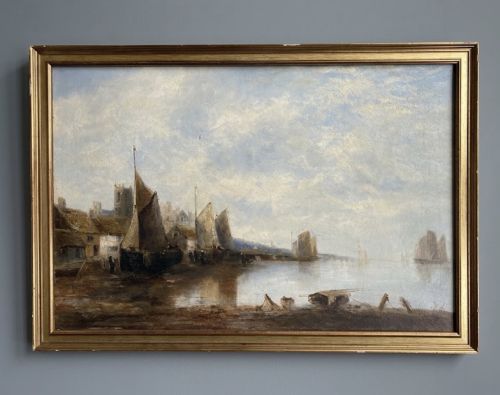
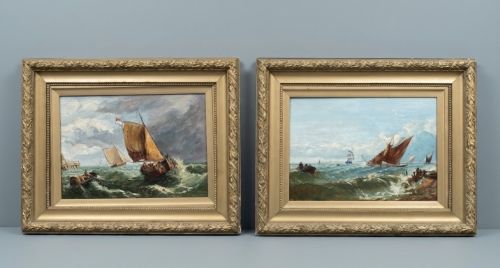
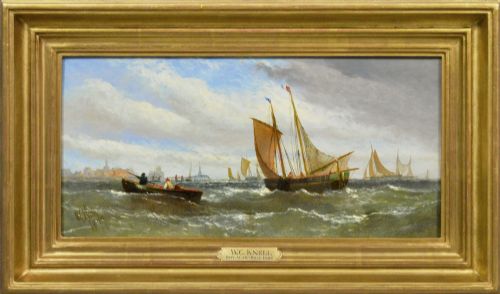
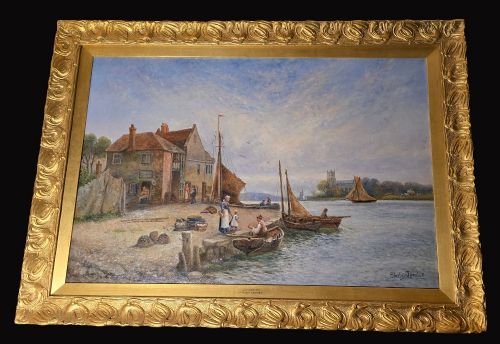
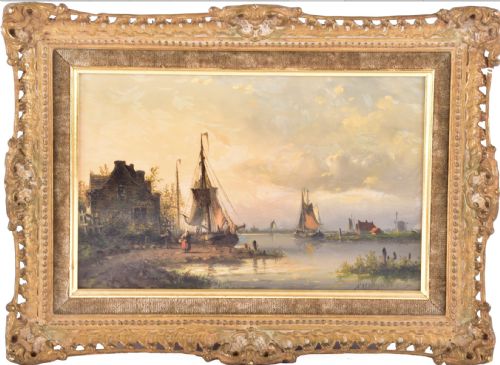

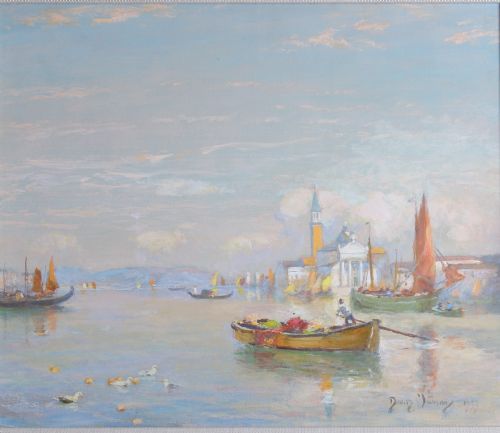
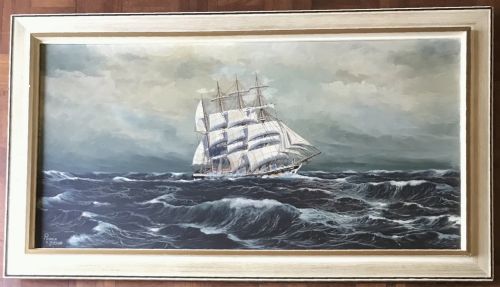
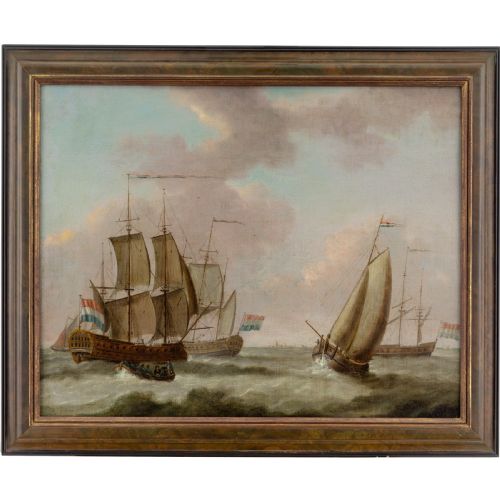


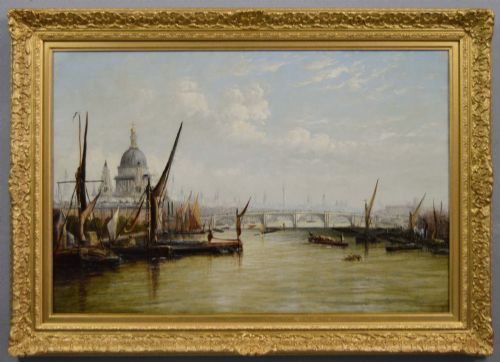
Framed Sailing Painting
A framed sailing painting brings the movement of open water and historic vessels directly onto the wall.
Framed Sailing Painting
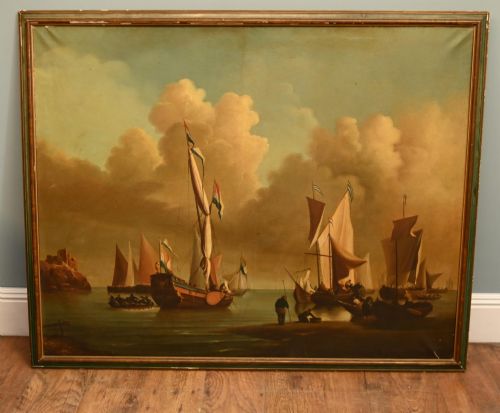
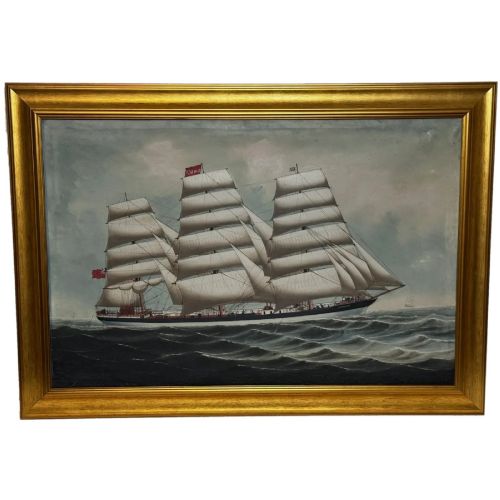
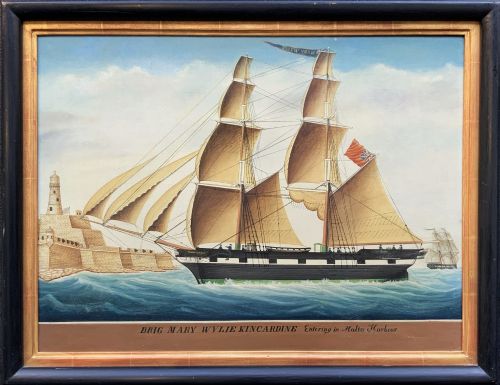
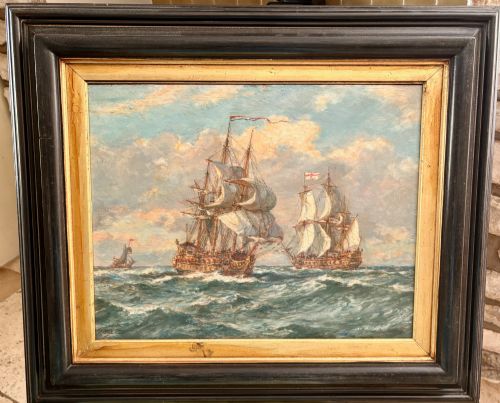
A framed sailing painting captures vessels upon the water, ranging from merchant barques and warships to coastal fishing boats. When searching for a framed sailing painting, collectors encounter works executed across the nineteenth and twentieth centuries.
The selections span traditional oil on canvas, oil on board, and delicate watercolours housed in period mounts. Many pieces record specific vessels and locations, from British harbours to Dutch waters.
Victorian maritime scenes and Edwardian watercolours dominate the selection, alongside mid-century interpretations of coastal life. Buyers find both expansive canvases and intimate framed shadow box dioramas.
How they were made
Artists built these maritime works using oil paint applied to canvas or wood panel, or watercolour pigments on paper. Canvas supports frequently received a prepared ground before brushwork captured the motion of waves and rigging.
Watercolour pieces required controlled washes of pigment on paper, often finished with gum arabic for depth. Finished works were secured within wooden frames, many retaining their original gilt wood ornamentation and glass protection.
Framed Sailing Painting Retail Price Guide 2026
Typical asking prices for framed sailing painting among the pieces listed under this phrase on Sellingantiques today, from the lower quarter to the upper quarter. They describe what is for sale here now, not the wider market.
Framed materials incorporate traditional wood and gilt finishes alongside shadow box enclosures and glass-fronted watercolours.
What varies in quality
The fidelity of maritime detail distinguishes accomplished marine art from standard topographical records. Mastery is evident in the precise rendering of rigging, hull construction, and the interaction of wind upon canvas sails.
Atmospheric command sets superior works apart, particularly in the treatment of shifting light across heavy seas or calm harbour water. The harmony between the painted surface and its period wooden frame completes the standard of execution.
Nicolaas Martinus Wijdoogen·James Hardy·Francis Moltino·John Wilson Carmichael·Abraham Hulk I·Charles William Adderton·Charles Napier Hemy·Thomas Bush Hardy
The Framed Sailing Painting Glossary
- Barque
- A sailing vessel with three or more masts, where the foremast and mainmast are square-rigged and the mizzenmast is fore-and-aft rigged. These large ships appear frequently in nineteenth-century maritime art.
- Gilt wood
- Wood coated with a thin layer of gold leaf or metallic gilt finish. Such frames provide traditional decorative borders for period oil paintings and watercolours.
- Shadow box diorama
- A three-dimensional display enclosed within a deep frame, often featuring a handmade model boat positioned against a painted maritime backdrop. These pieces combine sculpture with traditional wall art.
- Impasto
- Paint applied thickly to a canvas, standing visibly above the surface. This technique allows artists to render the heavy texture of churning waves and white crests.
Framed Sailing Painting: Frequently Asked Questions
How do I date a maritime painting?
Dating relies upon the rigging style of the depicted vessels, artist signatures, and the construction methods of the frame. Clothing styles of any figures on deck also offer chronological clues.
Material evidence such as canvas types and backing boards helps narrow the decade of production alongside recorded exhibition dates.
What is the difference between oils and watercolours here?
Oil paintings utilise pigment bound in drying oil applied to canvas or panel, offering rich colour depth and textured brushwork. Watercolours employ water-soluble pigments on paper, presenting a lighter translucent quality.
Watercolour paintings require protective glass framing, whereas most oil paintings on canvas remain open to the room.
How should I hang a framed sailing painting?
Mount the artwork at eye level on a structurally sound wall away from direct sunlight and excessive moisture. Heavy gilt frames require robust wall fixings suited to the weight of the wood and canvas.
Ensure the hanging location maintains a stable room temperature to protect both the painting support and the historic frame.
Are shadow box dioramas fragile?
Shadow box dioramas contain delicate three-dimensional model elements housed behind protective glass. Care must be taken during placement to avoid physical shocks that could dislodge internal components.
These pieces benefit from stable indoor environments where temperature fluctuations will not affect the enclosed wooden models.