
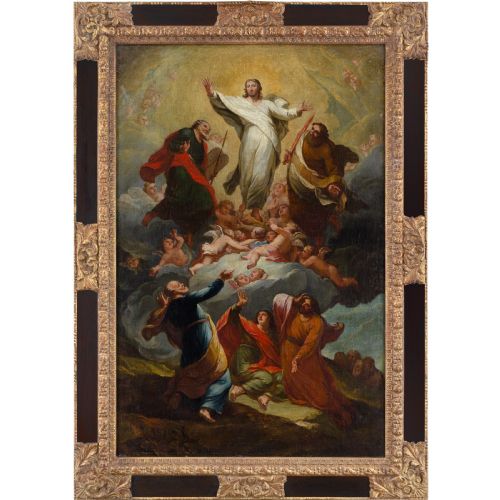
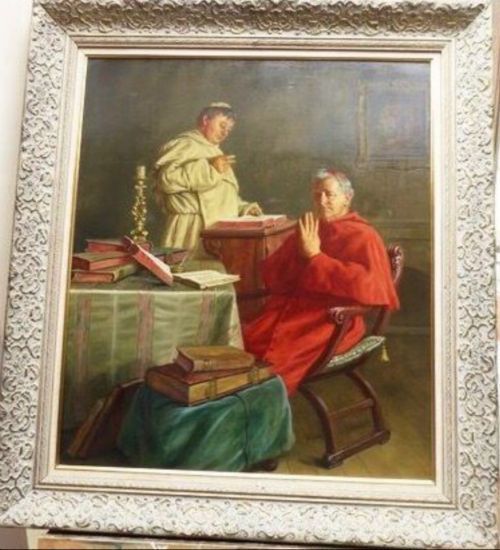
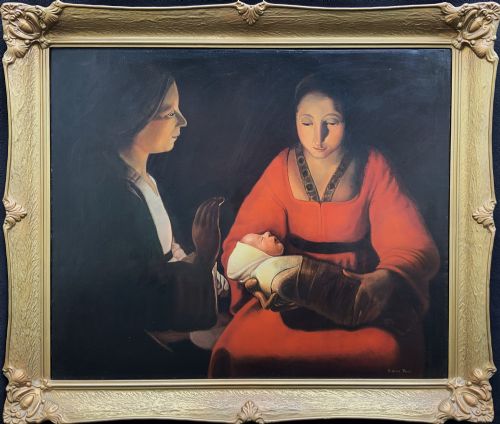

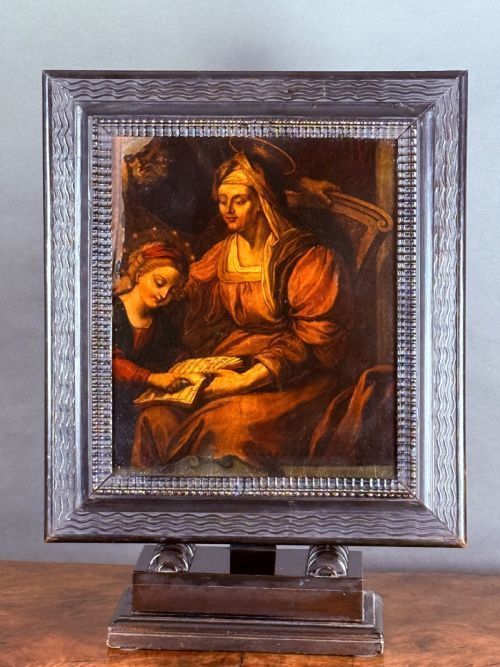
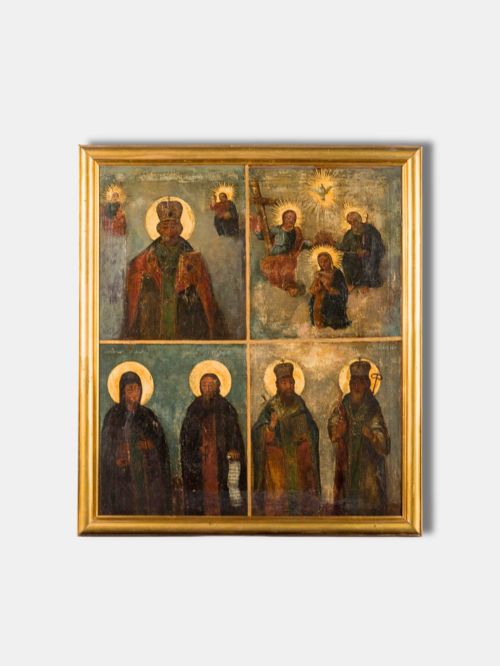
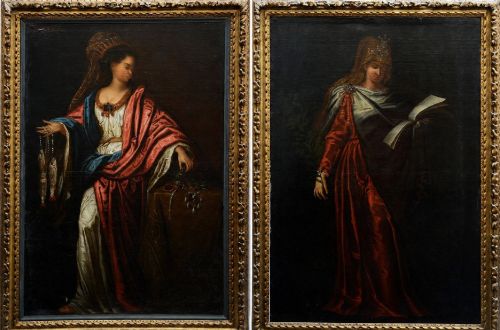
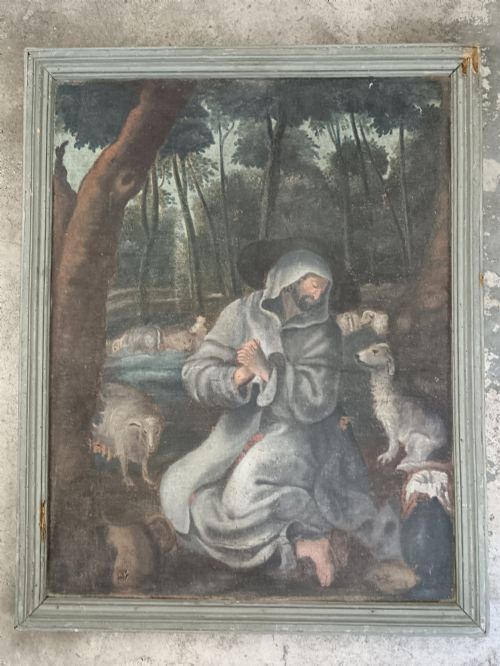
Framed Religious Painting
When you search for a framed religious painting, you enter a quiet world of devotion, portraiture and sacred narrative preserved in wood, oil and gold leaf.
Framed Religious Painting
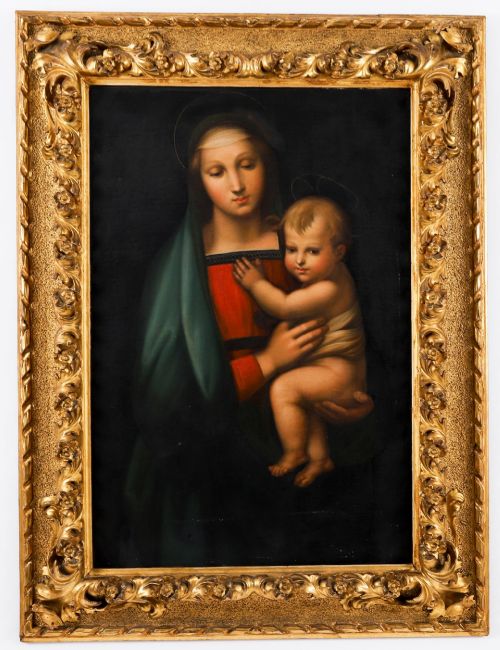
A framed religious painting brings centuries of sacred imagery, from intimate domestic icons to grand altarpiece studies, into a domestic interior.
The versions most often met on this page span the sixteenth to the nineteenth centuries, encompassing European schools, Italian Renaissance compositions and Baroque portraiture.
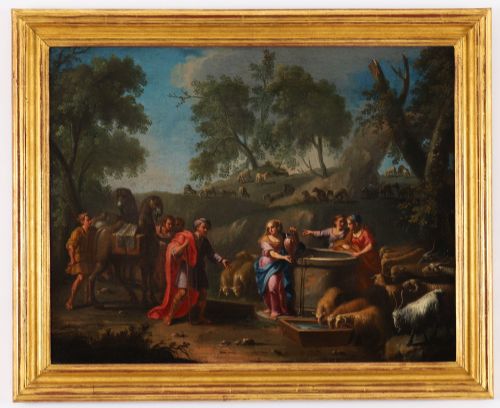
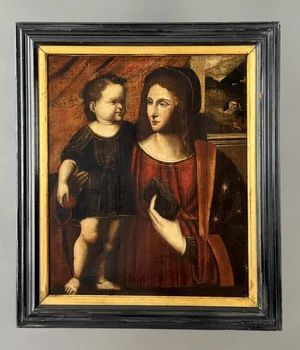
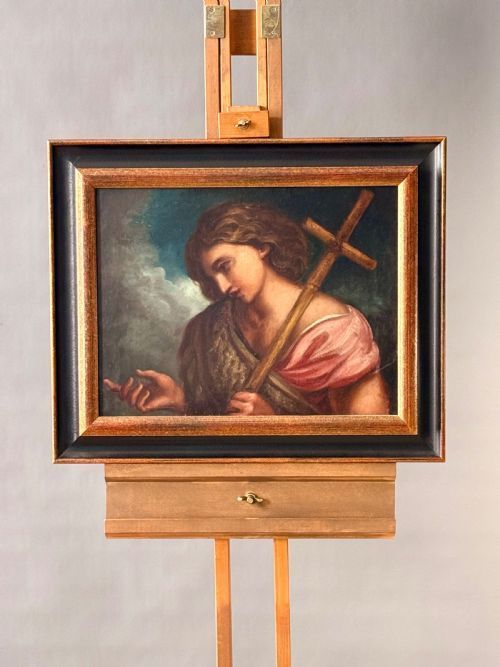
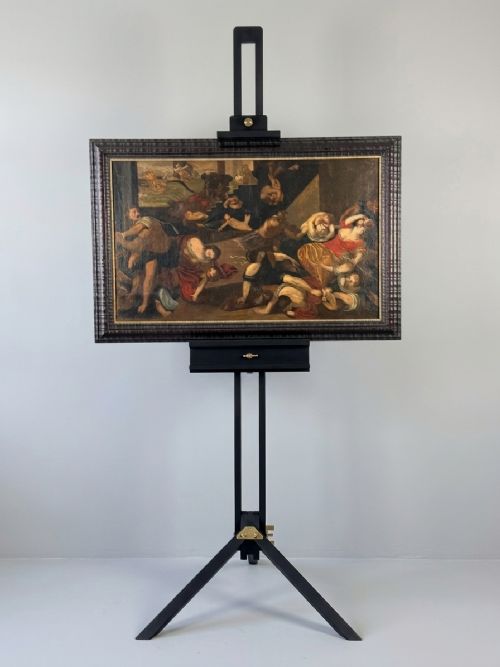
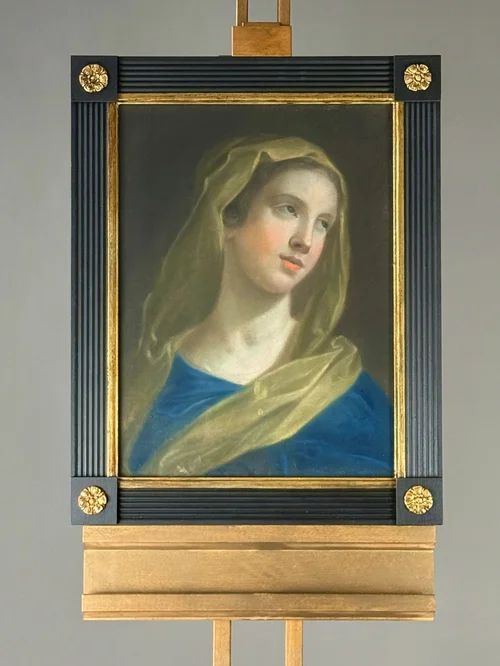
These works typically depict figures such as the Madonna and Child, saints and biblical narratives executed in oil on canvas, tempera or reverse glass.
How they were made
Painters built their compositions using oil paint and gold leaf upon wooden panels, stretched canvas or paper, often working within established European traditions and regional schools.
Many works incorporate specialised techniques such as reverse glass painting, mezzotint or tempera, reflecting the diverse methods of past centuries.
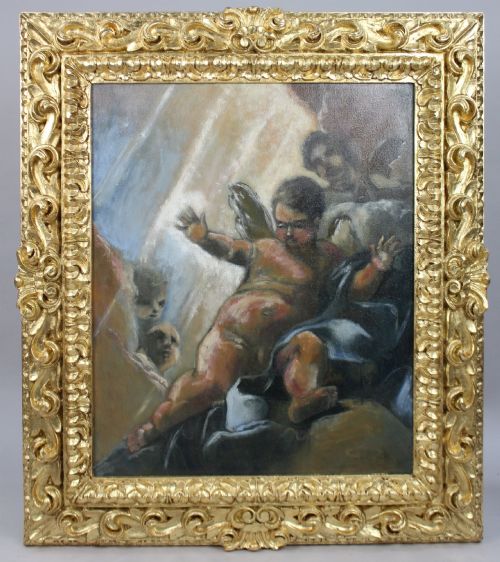
The surrounds themselves form an integral part of the piece, frequently set into carved giltwood frames designed to complement the devotional subject matter.
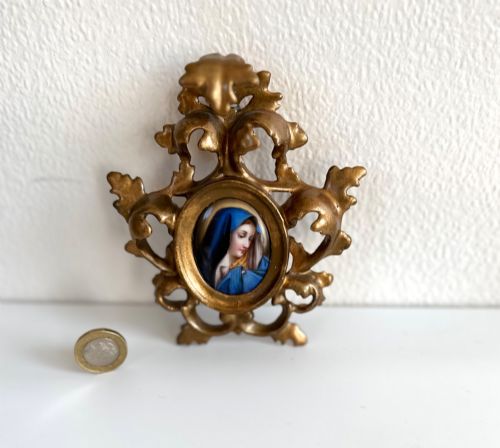
The listings here span six centuries of religious art, featuring materials from oil on canvas to Limoges enamel plaques.
What varies in quality
Quality rests upon the execution of the brushwork, the depth of the figurative draughtsmanship and the fidelity of the composition to its period style.
The relationship between the canvas and its original or period frame determines how successfully the piece preserves its historical integrity.
Works attributed to recognised circles and workshops carry a greater degree of painterly nuance compared to provincial copies of the same era.
Georges de La Tour·Sebastiaan Vrancx·Benedetto Lutti·Bernardino Luini·Miguel Barroso·Edgard Maxence·Benvenuto Tisi·Francesco Solimena·Costantino Frixione·Correggio·Juan Ruiz Soriano·Gaspar de Figueroa
The Framed Religious Painting Glossary
- Baroque
- A style of European art spanning the seventeenth and eighteenth centuries characterised by drama, deep shadow and emotional intensity. This aesthetic appears frequently in Spanish and Italian devotional works.
- Reverse glass painting
- A technique where the artist paints directly on the reverse side of a glass panel, viewed from the front to reveal a glossy finish. This method requires the composition to be built in reverse order.
- Tempera
- A permanent, fast-drying painting medium consisting of coloured pigment mixed with a water-binder agent, often egg yolk. It provides a flat, matte surface frequently seen in early icons.
- Giltwood
- Wood that has been coated with a thin layer of gold leaf or powder. These decorative surrounds often feature carved ornamentation suited to ecclesiastical settings.
- Pentimento
- A visible trace of earlier painting beneath a layer of paint, showing where the artist changed their mind. This alteration confirms the hand of an artist working directly on the canvas.
Framed Religious Painting: Frequently Asked Questions
What is a reverse glass painting?
A reverse glass painting is created by applying pigments directly onto the back of a glass sheet so the image is viewed through the front. This technique produces a distinct, reflective surface.
Artists working in the seventeenth and eighteenth centuries utilised this method for devotional pieces intended for domestic shrines.
How do I identify a Renaissance style piece?
Renaissance style pieces are characterised by balanced compositions, naturalistic human proportions and soft sfumato shading. They frequently portray the Madonna and Child or classical biblical narratives.
These works draw inspiration from sixteenth-century masters and often reside within carved giltwood frames.
What does circle of an artist mean?
The term circle denotes an artist working in the studio or under the direct influence of a master painter. Their technique closely mirrors the style of the primary figure.
Such attribution connects the work to a specific workshop tradition without claiming direct authorship.
How should I care for an antique oil painting?
Antique oil paintings require stable room temperatures away from direct sunlight and excessive moisture. The canvas and wood need to remain free from household cleaning products.
Gentle dusting with a soft, dry brush is sufficient to maintain the surface of the paint and its frame.