


18th Century Sacred Artwork
These pieces of 18th century sacred artwork bring centuries of devotional devotion and masterly religious painting directly into your room.
18th Century Sacred Artwork
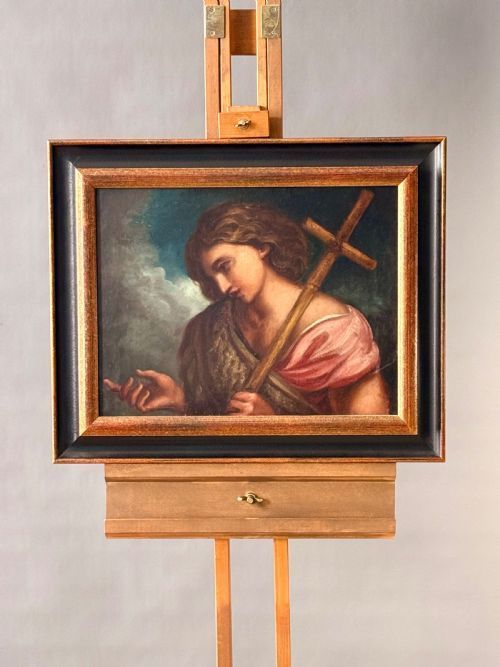
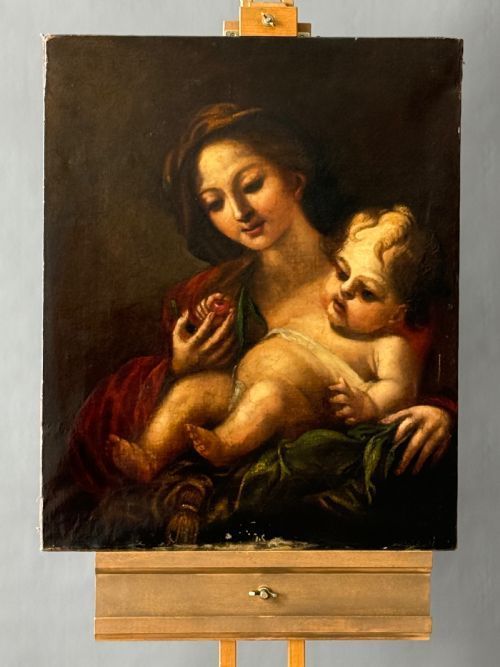
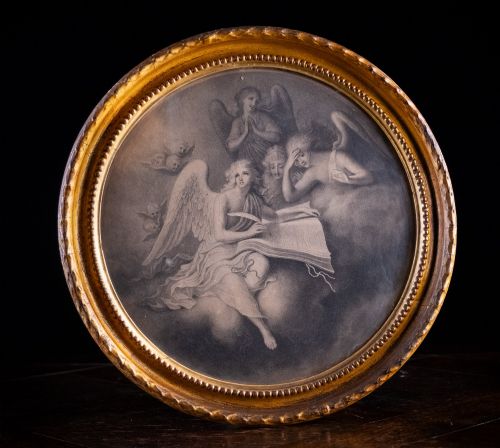
When you search for 18th century sacred artwork, you encounter devotional imagery created to inspire religious contemplation across European Catholic centres. These pieces take the form of oil paintings on canvas, oil on panel, and delicate paper engravings depicting sacred figures, biblical narratives, and hagiographic scenes. Italian and Spanish workshops dominate the selection, channelling Baroque drama and Neoclassical restraint into each canvas.
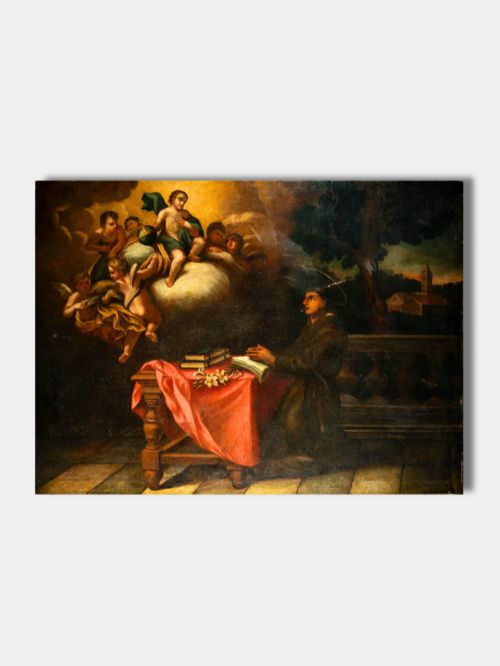
The most frequent items you meet on this page are oil paintings representing holy figures such as the Madonna and Child, the Holy Family, and various saints. You also find monumental canvases capturing visions of saints and detailed panel works executed within distinct regional schools. These works carry the heavy atmosphere of European ecclesiastical interiors straight into domestic spaces.
Materials and Techniques
Makers built these pieces using oil paint applied to stretched canvas or prepared wooden panels, occasionally incorporating giltwood frames to enhance the visual weight of the scene. Artists layered rich oil pigments to achieve deep shadows and luminous highlights, a technique essential for portraying divine light and spiritual intensity. Engravings on paper utilised fine lines and delicate hatching to translate complex theological compositions into reproducible prints.
Workshops relied on traditional Old Master methods, passing compositions down through circles of followers and established masters. Canvases received multiple coats of ground before artists applied oil paint, ensuring long-term stability for pigments depicting holy subjects. Gilt and wood frames were hand-carved and gilded to complement the devotional function of the central artwork.
Judgments of Quality
Materials also separate standard devotional pieces from exceptional works, particularly the finesse of the carving on accompanying giltwood frames and the quality of the prepared canvas. Art historical significance, such as a documented connection to a recognised regional school or follower of a master like Raffaello Sanzio da Urbino, elevates a piece within the category.
Francesco Solimena Workshop·Juan Ruiz Soriano Circle·Antonio Tempesta Follower·Orsola Maddalena Caccia Follower
The 18th Century Sacred Artwork Glossary
- Oil on Canvas
- A painting medium where pigments suspended in drying oils are applied to a woven fabric support. This method allowed artists to achieve rich colour depths and subtle tonal gradations.
- Giltwood
- Wood that has been treated with a thin layer of gold leaf or gold paint. Frames utilising this technique frequently enclose sacred paintings to create a sense of reverence.
- Baroque
- An artistic style characterised by exaggerated motion and clear detail used to produce drama, tension, and grandeur. It strongly influences the emotional intensity found in these religious paintings.
- Neoclassical
- A Western cultural movement drawing inspiration from the art and culture of classical antiquity. In sacred art, this translates to balanced compositions and restrained emotional expression.
- Old Master
- A term for a European painter of skill who worked before about eighteen hundred. Works by followers or circles of these masters often form the core of religious art collections.
18th Century Sacred Artwork: Frequently Asked Questions
What subjects appear most often in 18th century sacred artwork?
The subjects centre firmly on Christian narrative and devotion, featuring the Madonna and Child, the Holy Family, and weeping angels. Biblical scenes such as the conversion of saint Paul and visions of various saints also recur frequently across the available paintings.
These themes reflect the Counter-Reformation emphasis on emotional connection and accessible theological narrative. Artists utilised these familiar figures to prompt direct spiritual reflection from the viewer.
How do I identify an 18th century Italian oil painting?
Identification relies on observing stylistic markers such as dramatic lighting, theatrical gestures, and rich pigment application characteristic of Italian Baroque and Neoclassical traditions. The handling of the oil medium on canvas or wood panel often points toward regional academies and established painting schools active during that period.
Examining the canvas preparation and the framing materials can also offer clues regarding geographic origin and date. Workshop traditions meant that compositions were frequently repeated or adapted by followers of major artists.
Where were these religious paintings originally displayed?
These works primarily hung within private chapels, domestic prayer rooms, and larger ecclesiastical buildings across Catholic Europe. They functioned as focal points for personal and communal devotion, guiding the prayers of the inhabitants.
Over subsequent centuries, many migrated from church settings and private collections into the broader art market. Their transition into domestic interiors places traditional devotional objects into modern living spaces.
How should I care for an antique oil painting on canvas?
Antique oil paintings require stable environmental conditions away from direct sunlight, excessive heat, and rapid humidity fluctuations. Maintaining consistent room conditions prevents the canvas from slackening and stops the oil paint layer from cracking.
Dusting should be done very gently with a soft, dry brush, avoiding any chemical cleaners or moisture on the paint surface. Professional conservators should handle any structural repairs, cleaning, or varnish removal.