


Framed Religious Canvas
A framed religious canvas brings centuries of European devotional painting into a domestic interior, spanning Baroque martyrdoms and Renaissance Madonna studies.
Framed Religious Canvas
When you search for a framed religious canvas, you encounter centuries of European devotional painting, ranging from 16th-century Italian Renaissance compositions to 19th-century interpretations of Biblical narratives. The pieces available traverse diverse regional workshops, including Venetian, Spanish, and French schools, alongside later followers of masters such as Raphael and Correggio.
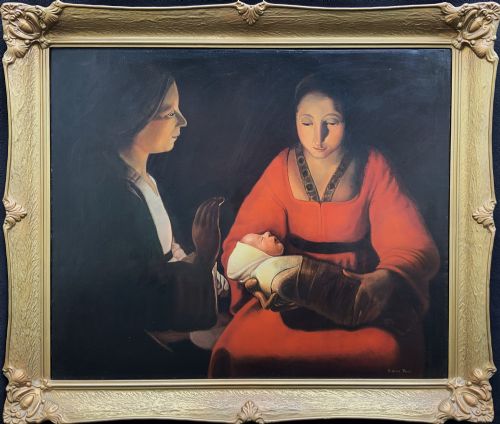
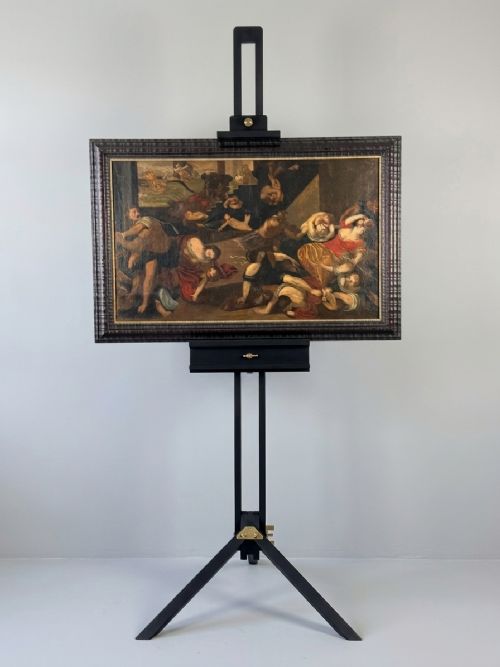
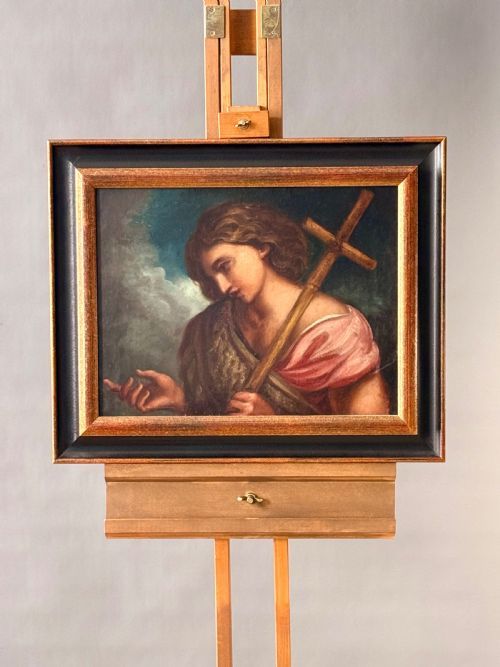
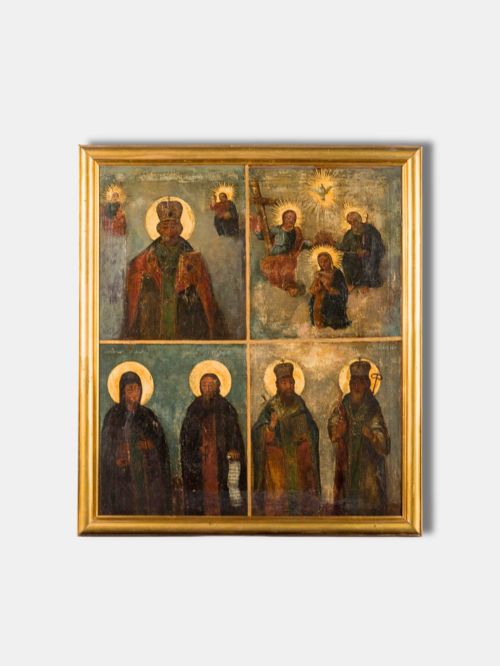
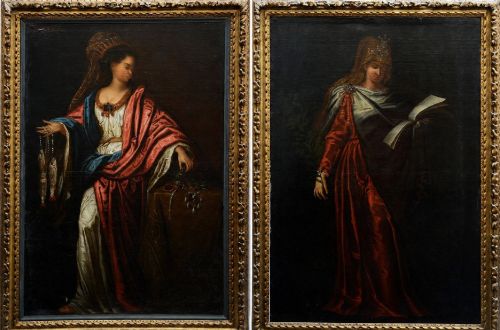
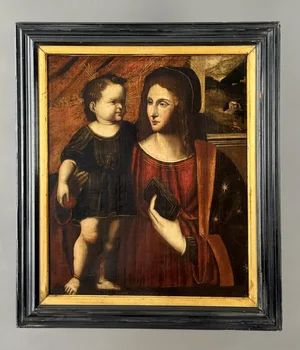
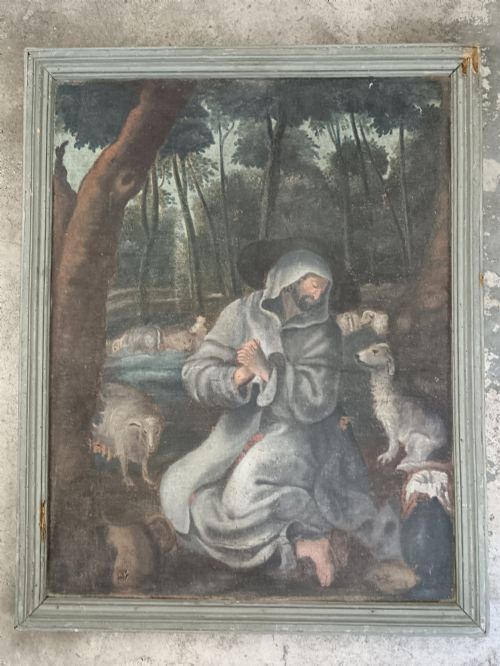
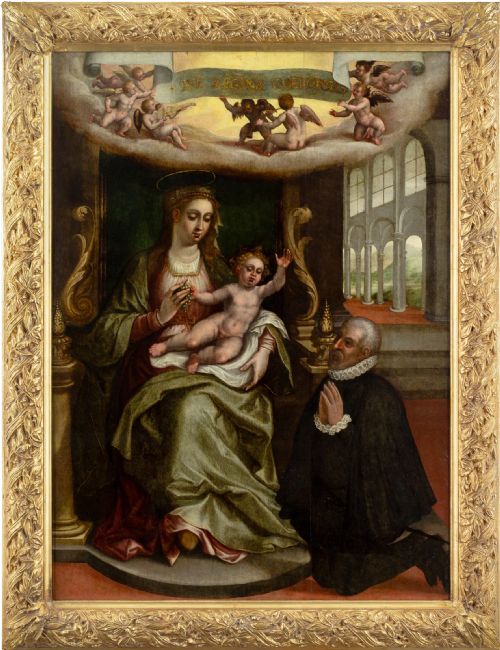
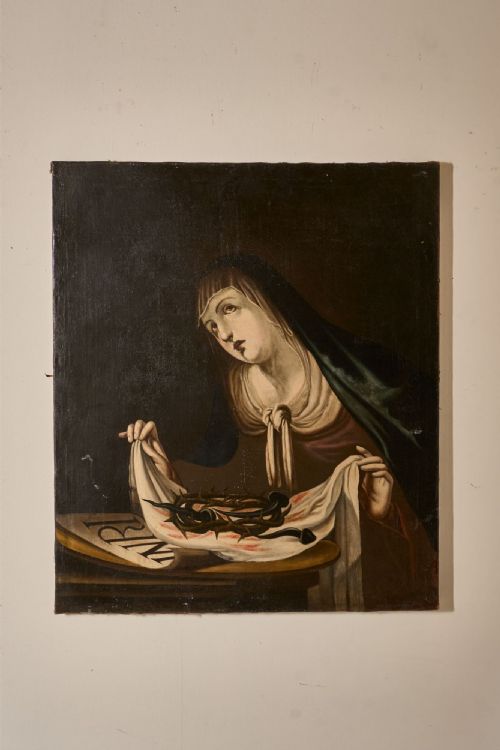
The subjects on this page centre heavily on sacred iconography, depicting figures such as the Virgin and Child, Mary Magdalene, and various saints including Saint Francis and Saint John the Baptist. Narrative scenes like the Massacre of the Innocents and the Holy Family appear frequently alongside contemplative devotional portraits.
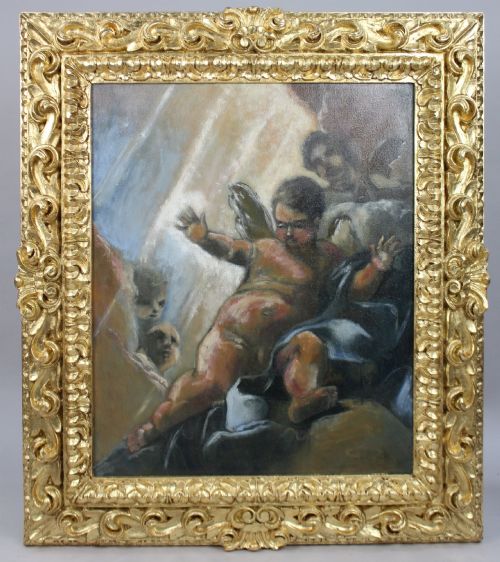
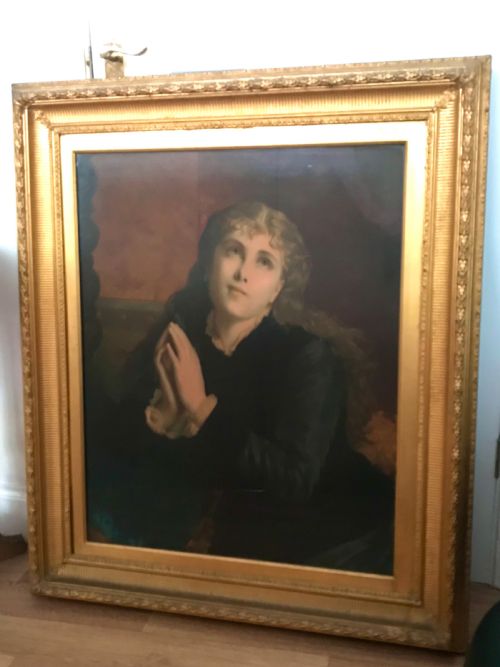
Most examples present oil on canvas housed within period frames, typically executed in carved giltwood or simpler wooden mouldings that complement the devotional subject matter. Scale varies significantly, from intimate domestic altarpieces to large gallery-sized narrative works produced by European schools.
Quality Variations
Quality in these works rests upon the fluidity of the brushwork and the anatomical confidence displayed in figurative elements, separating master or studio output from later decorative copies. Pieces originating directly from regional European schools or circles of known artists exhibit superior handling of light, shadow, and drapery.
The integrity of the canvas and the preservation of the original paint layer dictate the overall standard of survival, alongside the originality and period harmony of the accompanying giltwood frame. Superior examples retain their initial luminosity and depth, whereas lesser works suffer from heavy overpainting or structural canvas degradation.
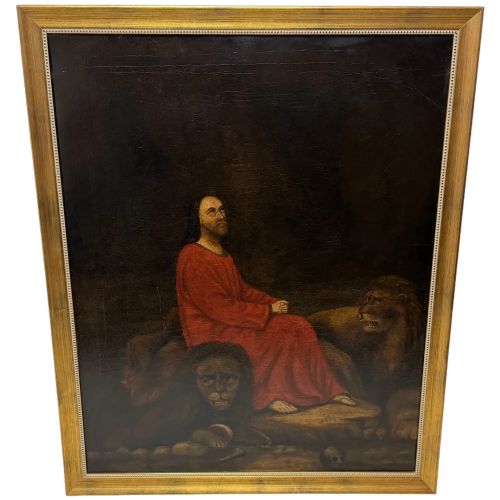
St Francis shares space here with nervous lions and lute-playing angels.
Georges de La Tour·Bernardino Luini·Francesco Solimena·Costantino Frixione·Gian Lorenzo Bertolotto
The Framed Religious Canvas Glossary
- Pentimento
- A visible trace of earlier painting beneath the layers of paint, showing where the artist changed their mind during composition. This occurrence often authenticates an older canvas by revealing the organic working process of the painter.
- Giltwood
- Wood that has been coated with thin sheets of gold leaf or gold dust over a prepared ground layer. It provides the ornate, reflective borders typical of frames housing sacred art.
- Tempera
- A permanent, fast-drying painting medium consisting of coloured pigment mixed with a water-soluble binder entity, usually egg yolk. It frequently precedes the widespread adoption of oil paint in icon painting.
- Oleograph
- A mechanical colour lithograph produced to imitate an oil painting, often finished with a textured varnish applied over canvas. These emerged as popular reproductions during the Victorian era.
- Devotional art
- Artwork created specifically to assist with prayer, meditation, or religious observance within domestic or ecclesiastical spaces. Such pieces focus the mind on theological narratives and saintly exemplars.
Framed Religious Canvas: Frequently Asked Questions
What periods do these paintings cover?
The inventory spans from the 16th century through the Baroque era and into the 19th and early 20th centuries. Works reflect distinct regional aesthetics across these centuries, including Italian Renaissance and Spanish Baroque traditions.
Later pieces often emulate the earlier styles, demonstrating the enduring influence of classical religious iconography on subsequent generations of artists and workshops.
How were these religious canvases used originally?
Many of these works served as private devotional objects for prayer and contemplation within domestic shrines or chapels. Larger narrative pieces functioned as altarpieces or instructional imagery within religious institutions.
Over time, many transitioned into secular collections, prized for their artistic merit and historical connection to European painting schools.
How do I identify a school or follower piece?
Attributions to a school or follower indicate that an artist worked in the style, workshop, or immediate circle of a master without being the master themselves. These designations reflect the collaborative nature of historic European art production.
Signatures are uncommon on such works, so attributions rely on stylistic analysis, handling of pigment, and compositional comparison to documented pieces.
How should I live with an antique religious canvas?
Position the canvas away from direct sunlight and steady heat sources to protect the oil paint and underlying canvas from drying out or cracking. Stable indoor humidity helps preserve both the textile support and any carved giltwood framing.
Lighting the painting with dedicated picture lights enhances the rich tones of the pigments and the reflective quality of the gold leaf.