
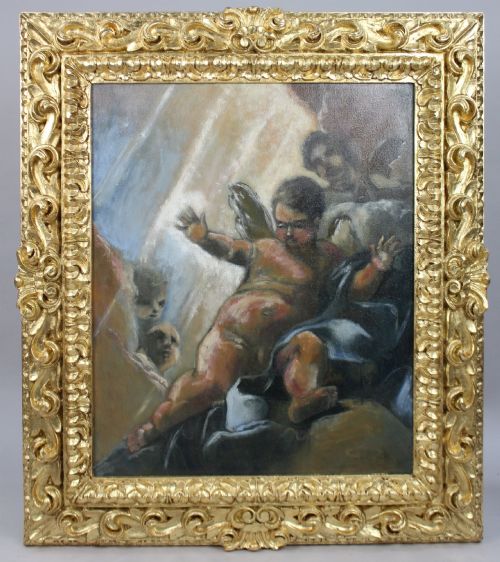
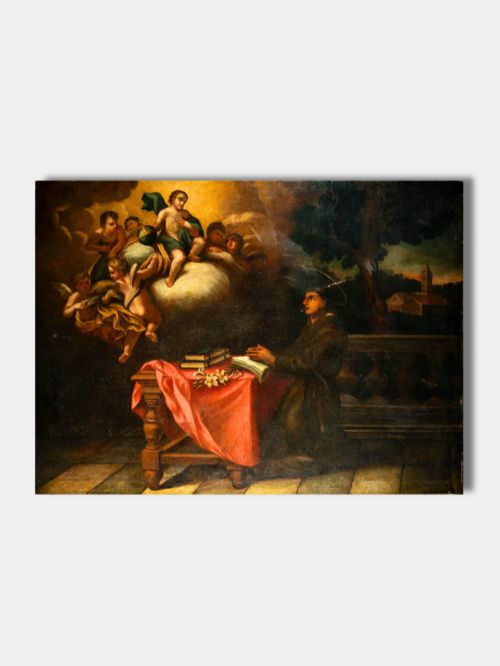


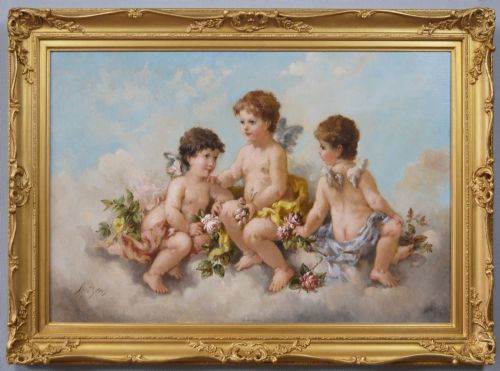


Cherub Oil Painting
A cherub oil painting brings divine playfulness and rich historical character into a room through classical imagery.
Cherub Oil Painting
A cherub oil painting depicts winged infants, putti or celestial figures rendered directly onto canvas using traditional pigment methods. These works appear frequently in 18th century and 19th century formats, often reflecting Italian Baroque or French Rococo sensibilities.
Buyers encounter subjects ranging from mythological scenes with Cupid to religious compositions featuring angels and saints alongside children. Many examples arrive set within elaborate giltwood frames or carved wooden surrounds that match the period of the artwork.
The selection includes monumental canvases, intimate pairs and decorative wall art produced by various European schools. These pieces serve primarily as focal points for traditional interiors and fine art collections.
Assessing quality and execution
The sophistication of brushwork and anatomical proportion separates accomplished studio output from simpler decorative pieces. Superior works display confident handling of light, shadow and facial expression in the figures.
The integrity of the canvas and the preservation of the original giltwood frame heavily influence the standing of an artwork. Period frames that match the age and origin of the painting add considerable cohesion to the piece.
Listings feature canvases spanning from the seventeenth century through to the twentieth century, utilising oil paint, wood and gold leaf.
Jean Baptiste Isabey·Charles Augustus Henry Lutyens·Orsola Maddalena Caccia·Domenico Zampieri·Montague Jackson
The Cherub Oil Painting Glossary
- Putti
- Plural of putto, representing a chubby male child, often winged, found in classical and religious art. These figures populate many classical compositions.
- Grisaille
- A painting executed entirely in shades of grey or monochromatic neutral colours. This technique often mimics the appearance of relief sculpture.
- Giltwood
- Wood that has been covered with a thin layer of gold leaf or gold paint. This finish appears frequently on period picture frames.
- Canvas
- A heavy woven fabric used as a surface for oil painting. It is typically stretched tightly over a wooden frame before work begins.
- Baroque
- An ornate artistic style prevalent from the seventeenth to mid-eighteenth century. It is characterised by dramatic movement and deep colour.
Cherub Oil Painting: Frequently Asked Questions
How do I date an old cherub painting?
Dating relies on examining the canvas preparation, stretcher construction, pigment ageing and the style of the frame. Stylistic cues often point to specific periods like the eighteenth or nineteenth century.
Comparative analysis with documented works by known schools or followers provides further chronological context.
What is the difference between cherubs and putti?
Cherubs derive from biblical descriptions of celestial beings, while putti originate from classical mythology as secular spirits of love. In art history, the terms frequently overlap.
Renaissance and Baroque painters often used both figures interchangeably to represent divine or earthly innocence.
How should I care for an antique oil canvas?
Keep paintings away from direct sunlight, high humidity and sudden temperature fluctuations to protect the oil pigments and canvas. Dust the surface gently with a soft, dry brush.
Avoid applying water or cleaning solutions directly to the paint layer without professional conservation advice.
Are these paintings usually signed by the artist?
Many period oil paintings remain unsigned, particularly those originating from regional European schools or produced as decorative workshop pieces. Signed works by documented artists are less common.
Attributions often depend on stylistic comparison rather than visible signatures.