

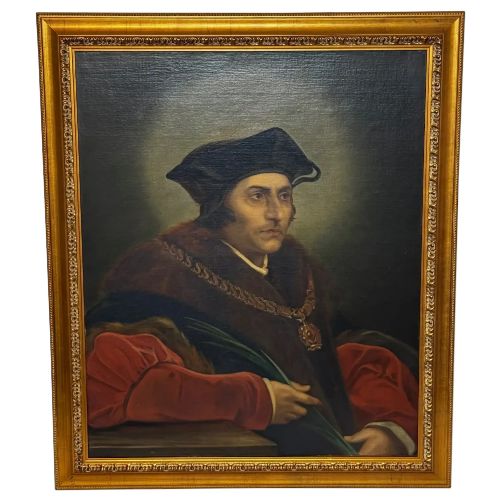
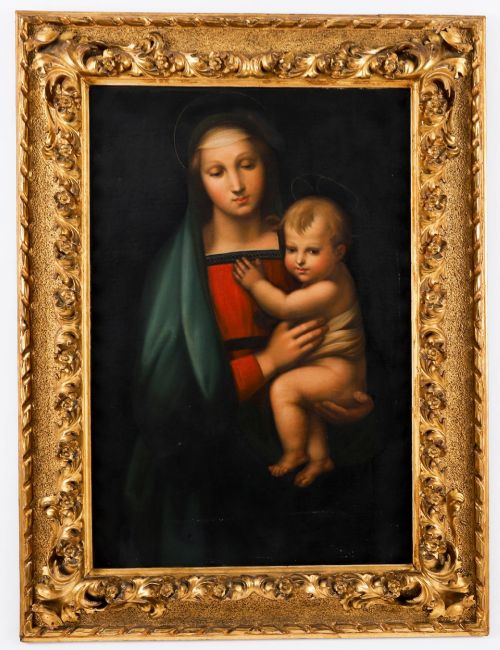
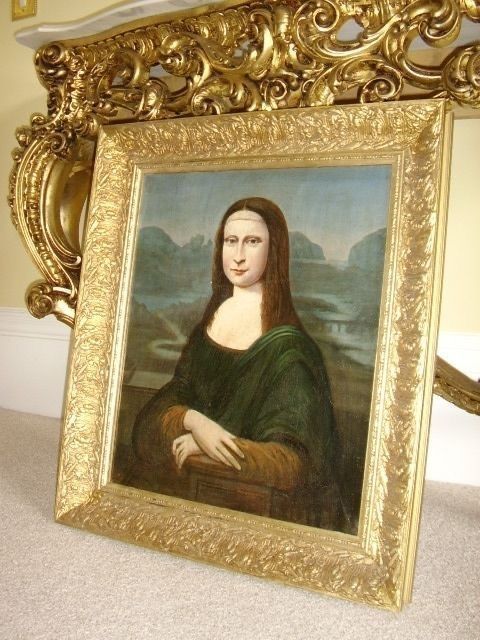
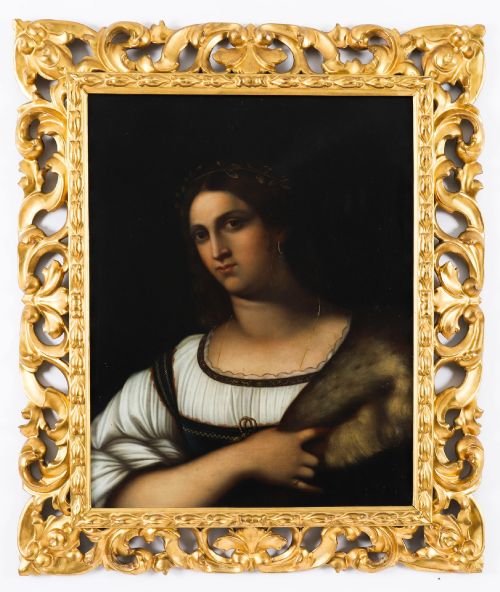


Renaissance Style Framed Canvas
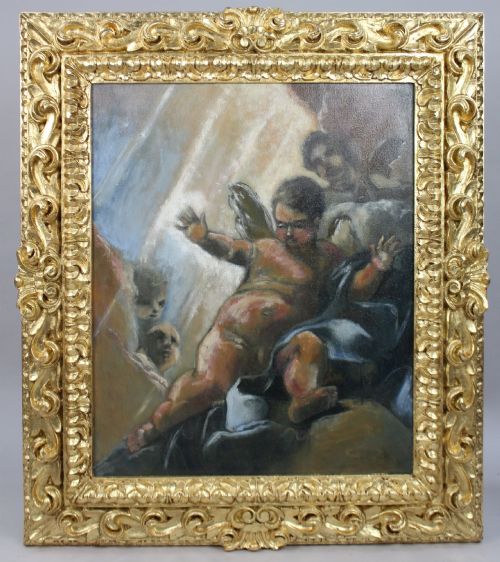
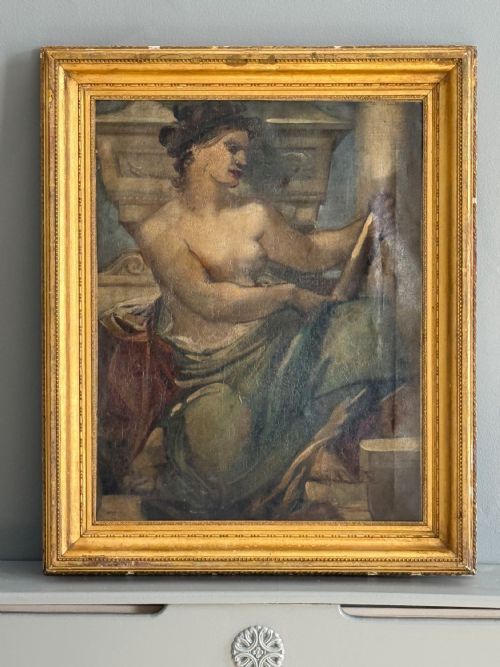
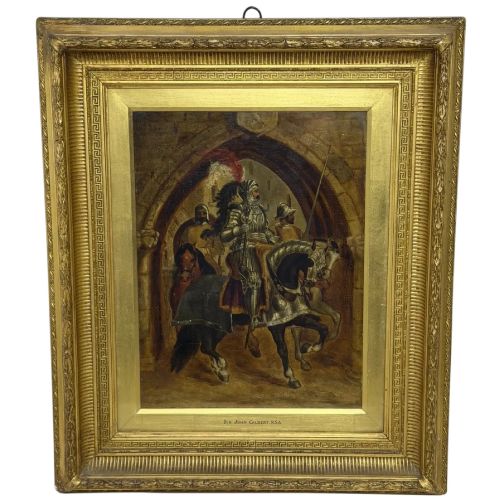
A renaissance style framed canvas brings grand portraiture and religious devotion into a room through rich oil painting and carved giltwood.
Renaissance Style Framed Canvas
A renaissance style framed canvas captures the artistic traditions of the fifteenth and sixteenth centuries, expressed primarily through oil on canvas and set within ornate timber housings. These works frequently draw inspiration from masters such as Raphael, Leonardo da Vinci, and Titian, offering scaled echoes of compositions housed in major European galleries.
The pieces appearing on this page span several centuries of production, ranging from sixteenth-century works and seventeenth-century followers to eighteenth-century copies, nineteenth-century revivals, and mid-twentieth-century interpretations. Buyers encounter depictions of the Madonna and child, historical genre scenes, and solemn portraits of noble figures.
Religious iconography and stately portraits dominate the selections, reflecting the enduring appeal of Italian and Northern European schools. The canvas support carries layers of oil paint that emulate the depth, shadow, and luminosity characteristic of the historical periods cited in the listings.
How they were made
Makers constructed these works using oil paint applied to woven canvas stretched over wooden frames, building up pigment through layered glazes to achieve tonal depth. This traditional technique allowed artists to render soft flesh tones, rich garments, and complex architectural backgrounds with considerable nuance.
The surrounds play an integral role in the presentation, utilising carved giltwood and gold leaf applied to wood bases. Craftsmen shaped these surrounds with elaborate mouldings and floral or geometric motifs to complement the pictorial weight of the central canvas.
Renaissance Style Framed Canvas Retail Price Guide 2026
Typical asking prices for renaissance style framed canvas among the pieces listed under this phrase on Sellingantiques today, from the lower quarter to the upper quarter. They describe what is for sale here now, not the wider market.
Several canvases depict saints looking remarkably stern while accompanied by small animals and spices.
What varies in quality
The fidelity of the brushwork and the expressive handling of light and shadow dictate the visual strength of each composition. Finer examples display confident draughtsmanship and subtle transitions in the oil paint that capture the gravitas of the original sources.
The execution of the surrounding housing also sets pieces apart, particularly the depth of the wood carving and the warmth of the gilt surface. Hand-carved giltwood with integrated gilding offers a substantial counterpart to the painted canvas, whereas simpler timber frames alter the overall presence.
Alfred Holst Tourrier·Sir John Gilbert RA·Hans Holbein
The Renaissance Style Framed Canvas Glossary
- Oil on Canvas
- A painting medium where pigments suspended in drying oils are applied to a woven fabric support. This technique permits extensive blending and rich luminosity.
- Giltwood
- Timber that has been coated with a thin layer of gold leaf or metallic powder. It provides a reflective, ornate border suited to historical portraiture.
- Renaissance Revival
- An artistic movement from the nineteenth century that consciously emulated the forms, themes, and techniques of the fifteenth and sixteenth centuries. Works in this style borrow heavily from Italian and Northern masters.
- Circle of
- A designation indicating that an artist worked in the studio or under the direct influence of a master. It denotes period proximity without asserting direct authorship.
Renaissance Style Framed Canvas: Frequently Asked Questions
What is a renaissance style framed canvas?
It is an oil painting on canvas that imitates the subjects, compositions, and techniques of fifteenth- and sixteenth-century European art, housed in a decorative surround.
These pieces range from period copies to later revivals, depicting religious subjects, historical figures, and formal portraits.
How do I date an oil painting on canvas?
Dating relies on examining the canvas weave, the stretcher construction, the preparation layers beneath the paint, and the style of the giltwood surround.
Inscriptions, stamps on the reverse, and the chemical composition of the oil pigments also offer clues to the period of creation.
Where should I hang these artworks?
These works suit traditional reception rooms, libraries, or hallway spaces where their dramatic scale and dark, rich palettes can anchor the interior.
They require protection from direct sunlight and excessive humidity to preserve the oil paint and the delicate gold leaf on the frame.
What does after a master mean?
This phrase indicates that the artist painted a deliberate copy or interpretation of a known work by a prominent historical painter.
Such paintings were often created as study pieces or to satisfy collector demand for inaccessible gallery masterpieces.