


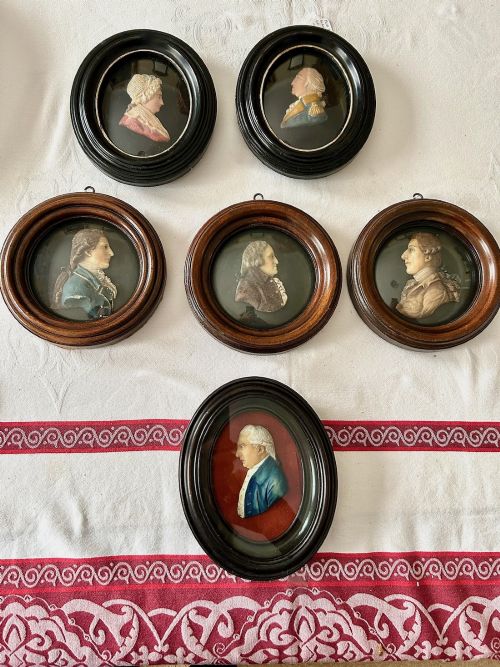
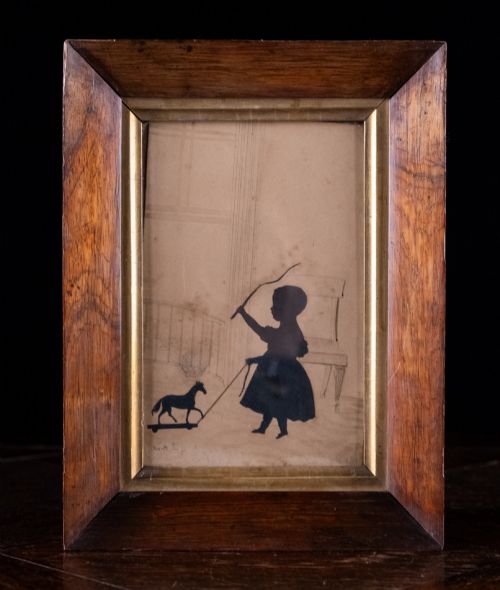
Framed Profile Portrait
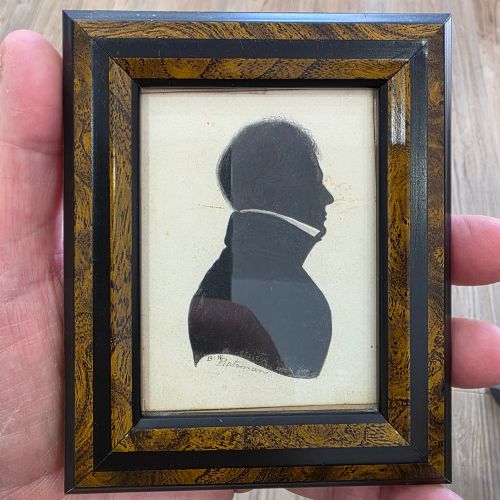
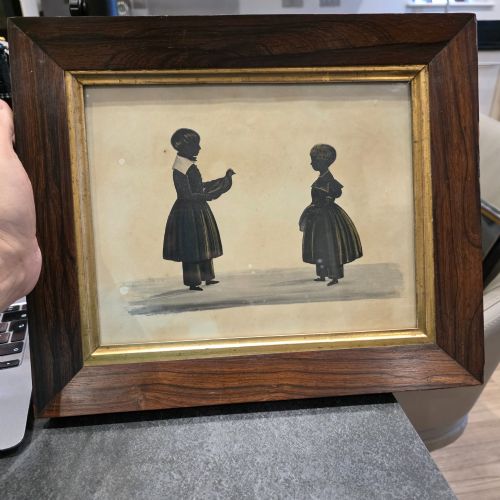
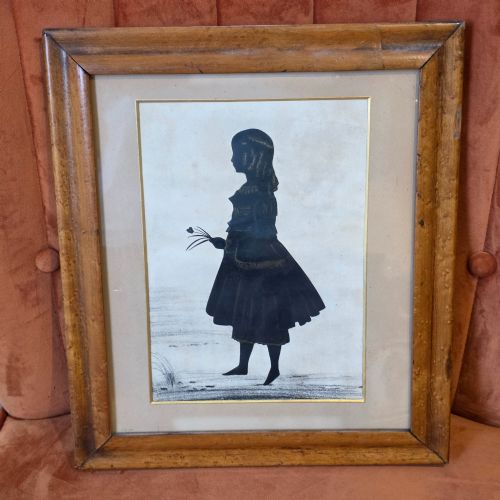
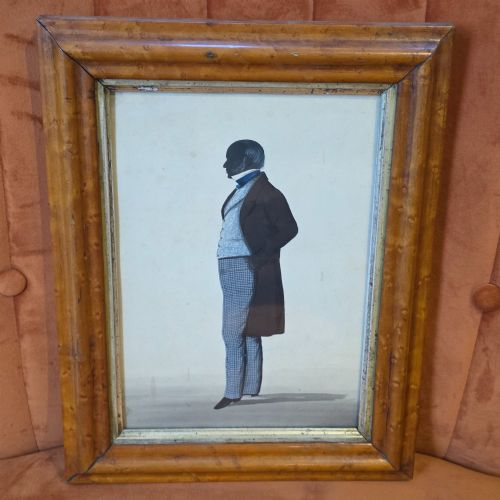
A framed profile portrait offers a direct encounter with a past face, captured through cut paper, silhouette, or pigment within period glass and wood.
Framed Profile Portrait
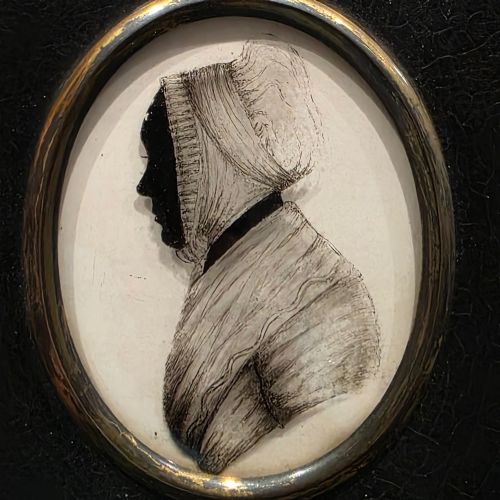
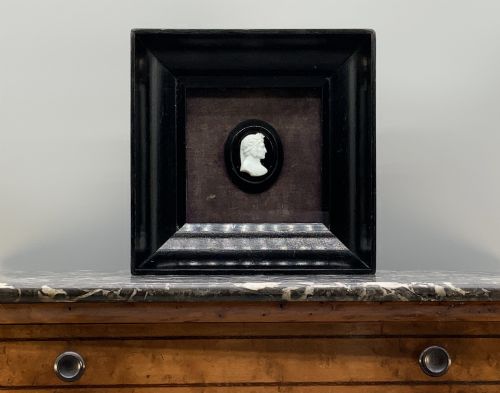
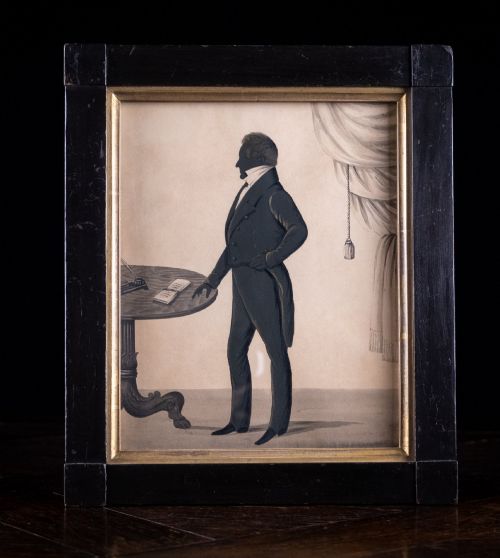
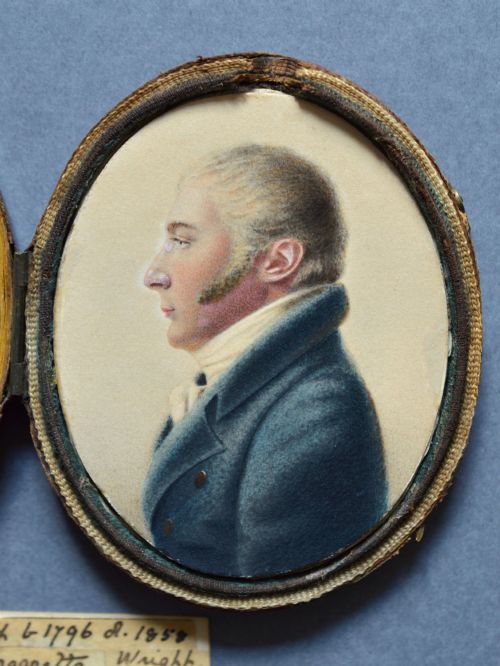
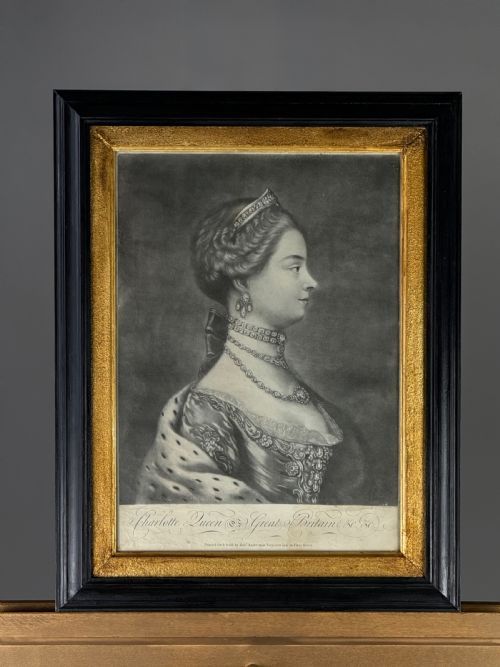
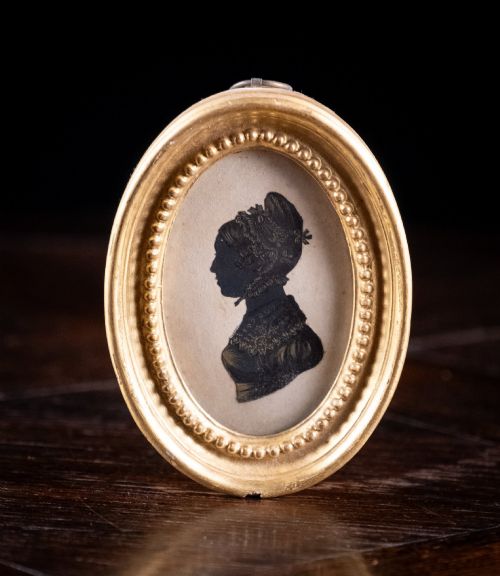
A framed profile portrait brings together silhouettes, painted miniatures, wax reliefs, and engravings from the eighteenth and nineteenth centuries. You are most likely to meet cut-paper silhouettes, often heightened with bronze or watercolour, housed in deep wooden or gilt frames.
The materials range from ink on paper and reverse-painted glass to carved ivory and wax. These works bridge the gap between intimate domestic tokens and grand tour mementoes, spanning Georgian elegance and Victorian sentiment.
Many examples capture the likenesses of gentlemen, ladies, and children with sharp precision. They appear singly or in pairs, preserving the distinct dress and hairstyle of their era within modest domestic formats.
Materials and technique
Framing involved moulded wood, papier-mâché, and gilt brass surrounds protected by convex or flat glass. Wax and ivory reliefs required careful moulding and carving, mounted against dark backdrops to accentuate the profile.
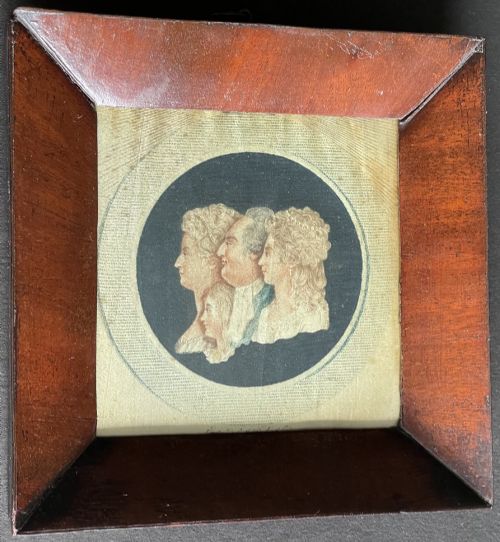
Engravers and printers utilised copper plates for mezzotints on paper or silk, sometimes adding hand-colouring. Each technique demanded steady hands and a keen eye for shadow and proportion.
Listings feature paper, glass, wood, brass, gold leaf, watercolour, and giltwood across the eighteenth, nineteenth, and twentieth centuries.
Distinctions in quality
The integrity of the mounting matters greatly, with original convex glass and period gilt brass bezels enhancing the piece. Finer works display accomplished hand-painting and distinct provenance that anchor the subject in history.
Bateman·Frith·James Sharpes·George Atkinson·Thomas John Horsley·James McCardell·Jeremiah Meyer·James Gillespie·Augustin Edouart·Hubard Gallery·John Miers·William Albert Clarke·Frédéric Chopin·Florence Small·Richard Purcell·Mainfroy·Bertram Priestman
The Framed Profile Portrait Glossary
- Silhouette
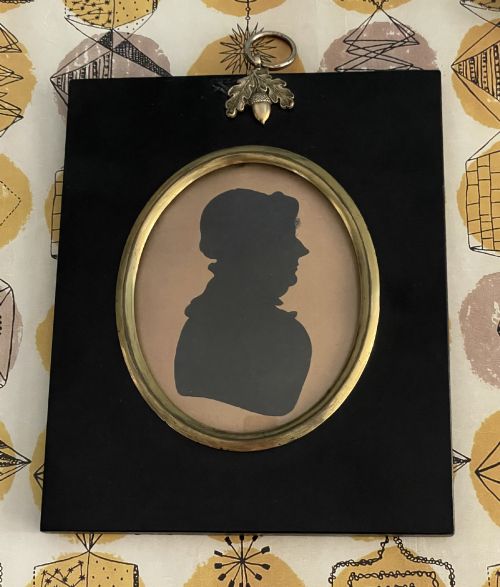
- A likeness depicted in profile, usually filled in with a solid dark colour. This form gained immense popularity during the eighteenth and nineteenth centuries as an affordable alternative to painted miniatures.
- Reverse painted glass
- An image painted on the underside of a glass panel so that the finished work is viewed through the clean glass. This technique protects the pigment and produces a glossy finish.
- Grand Tour
- A traditional trip of Europe undertaken by upper-class young men of means for educational and cultural accumulation. Mementoes included small portrait plaques in ivory or wax.
- Mezzotint
- A printmaking process of the intaglio family where the artist works from dark to light. It allows for smooth tonal graduations and rich shadow effects.
- Wax relief
- A sculptural portrait raised from a flat wax ground, often coloured and set against a dark background. These fragile pieces required protective glazing.
Framed Profile Portrait: Frequently Asked Questions
How do I date a silhouette?
Costume, hair styling, and framing materials offer the clearest clues to age. Regency pieces often feature high-waisted dresses and elaborate cravats within convex brass frames.
Later Victorian examples tend to show heavier frames and distinct photographic influences in how subjects posed.
Were these portraits meant for display?
Families hung them in parlours, grouped them on drawing-room walls, or carried them as portable mourning and friendship tokens. Many were fitted with small brass hangers or kickstands for tabletop placement.
Their intimate scale encouraged close viewing rather than distant display.
What is a hollow-cut silhouette?
A hollow-cut silhouette involves snipping the profile out of a sheet of white paper, leaving the hollow image against a dark backing placed behind it. Artists often added ink details to the background card.
This method allowed multiple copies when used with tracing techniques.
How should I care for antique paper portraits?
Keep them away from direct sunlight to prevent the fading of ink, watercolour, and paper stocks. Maintain stable humidity to protect fragile paper, wax, and historic glues.
Avoid opening sealed period frames, as exposure to modern air can damage the delicate surfaces inside.