


Victorian Profile Miniatures
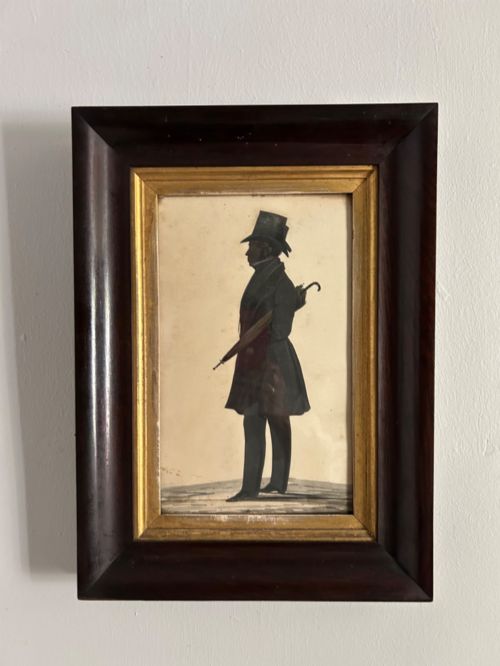
Victorian profile miniatures capture likenesses in silhouette and watercolour, offering a direct glimpse into nineteenth-century life.
Victorian Profile Miniatures
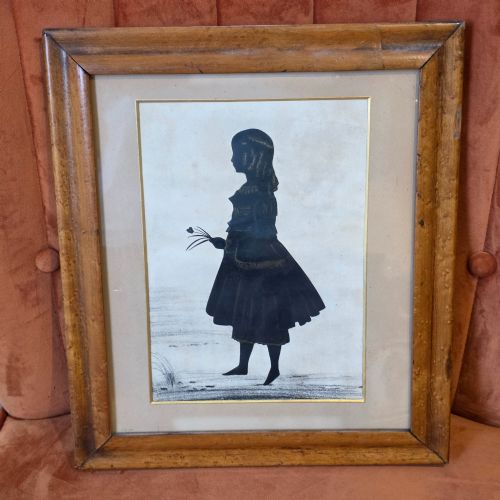
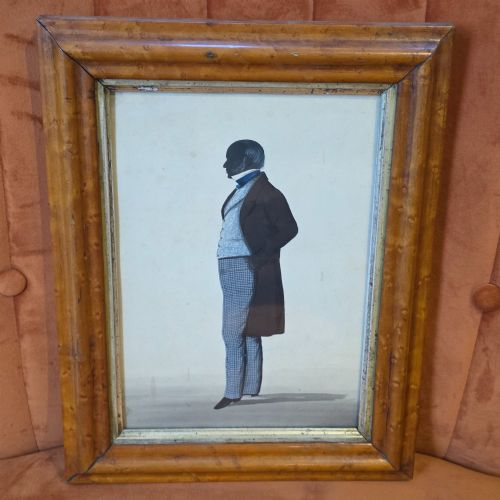
The pieces on this page span the Regency period through to the late nineteenth century, including works associated with specific practitioners like Augustin Edouart and Skeolan. Full-length figures and paired portraits appear frequently among the framed artworks.
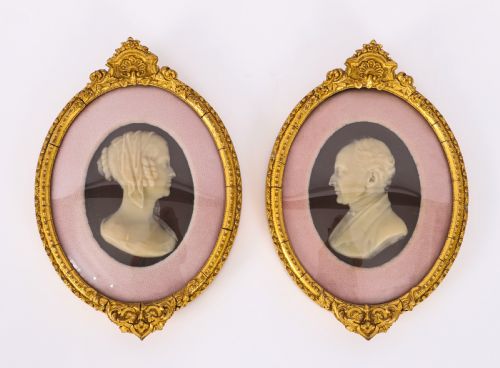
Buyers will encounter silhouettes executed in cut paper with watercolour detail, alongside pencil drawings and miniature portraits on card. These works preserve the likenesses of individuals such as Prince Albert and private sitters alike.
How they were made
Makers housed these delicate profiles behind glass within ebonised wood frames, frequently fitted with gilt brass bezels or hangers. The combination of glass, paper, and wood required precise framing to protect the fragile works from moisture and dust.
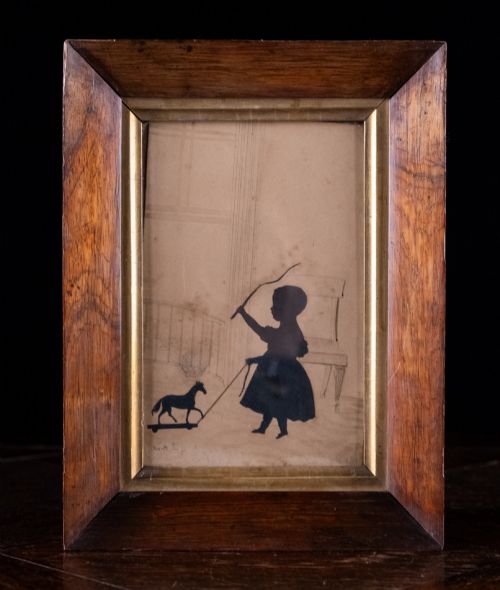
Portraits include full-length silhouettes of children accompanied by horses as well as domestic dogs.
What varies in quality
The precision of the hand-cutting and the fineness of the brushwork separate standard work from exceptional pieces. Skilled artists captured posture, costume details, and likeness with immense economy of line.
The preservation of the original framing, including ebonised wood and brass elements, influences the integrity of the piece. Intact paper surfaces free from heavy toning represent the upper tier of surviving examples.
Frith·Augustin Edouart·Hubard Gallery·Skeolan
The Victorian Profile Miniatures Glossary
- Silhouette
- A portrait profile filled in with a solid dark colour, typically black paper, against a light background. This technique relied entirely on outline and contour to convey a recognizable likeness.
- Wax relief
- A portrait modelled in low relief using tinted or pigmented wax. These pieces provide a three-dimensional alternative to flat paper profiles.
- Ebonised wood
- Timber stained or treated to imitate ebony, commonly used for nineteenth-century picture frames. It offered a dark, uniform border that made the pale background of a profile stand out.
- Gilt brass
- A brass fitting treated with a gold-coloured finish, often found surrounding the aperture of a framed miniature. This metalwork added a decorative border to the inner edge of the glass.
Victorian Profile Miniatures: Frequently Asked Questions
What is a silhouette portrait?
A silhouette portrait is an outline or cut-paper likeness shown in profile, popular throughout the nineteenth century before photography became widespread.
Artists used black paper or ink to capture the distinct facial contours and attire of their sitters.
How were these miniatures framed?
Most pieces are set behind glass within small ebonised wood frames, often featuring decorative gilt brass mounts.
This method of framing protected the delicate paper and watercolour surfaces from environmental damage.
Are these works signed?
Some pieces bear artist signatures or attributions to notable figures such as Augustin Edouart and Skeolan. Others remain unsigned but show distinctive cutting or painting techniques.
Studio stamps on the reverse sometimes indicate the origin, such as the Hubard Gallery.
How do I care for framed profiles?
Keep them away from direct sunlight to prevent the watercolour pigments and paper from fading over time. Ensure the environment remains stable to protect the historic paper, glass, and wooden frames.